
The Short Answer: Do Coolant Additives Prevent Overheating?
Under the intense tropical heat of the Philippines, many motorists look for a quick fix like a car engine coolant additive to protect their engines from overheating. The short answer is that while certain additives can offer minor, marginal improvements in heat transfer, they are not a cure-all for a failing cooling system. If your car has a mechanically sound cooling system, a high-quality, factory-specified coolant mixture is already fully capable of keeping the engine within its optimal operating temperature range.
Additives cannot compensate for mechanical wear, neglected maintenance, or physical damage. A clogged radiator core, a stuck thermostat, a worn water pump impeller, or a leaking hose will still cause your engine to overheat, regardless of what chemical booster you pour into the expansion tank. Think of these products as highly specialized, optional supplements rather than a primary line of defense.
For daily commuters navigating congested urban areas, maintaining the cooling system according to the manufacturer’s guidelines is infinitely more effective than relying on aftermarket additives. If your vehicle is already running hot, your first step should always be a thorough mechanical inspection rather than reaching for a bottle of chemical additive.
Products mentioned in this guide
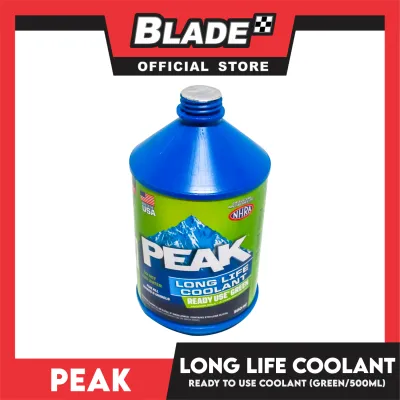
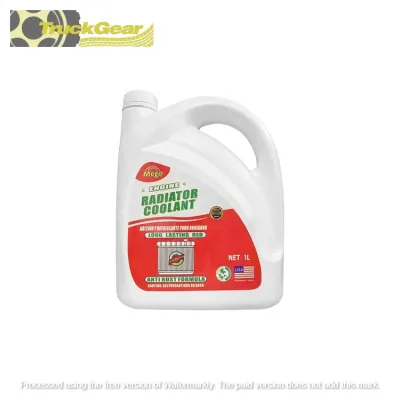
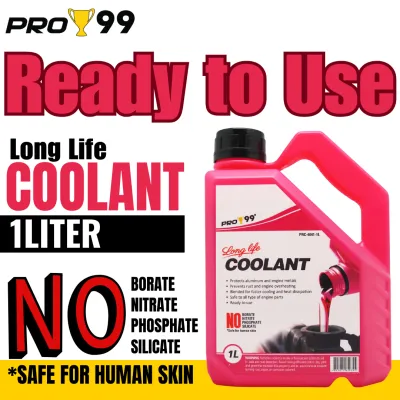
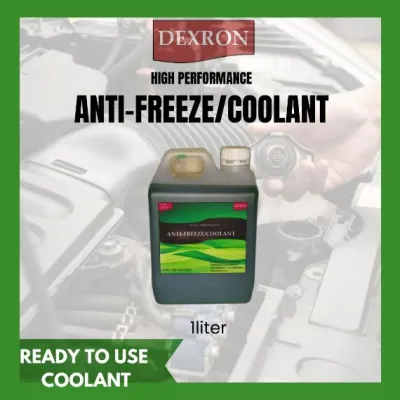
Prices are valid at publication and may change. Please refer to the product page for the latest price.
How Tropical Heat and Traffic Stress Your Cooling System
Operating a vehicle in the Philippines presents a unique set of thermal challenges that can push any automotive cooling system to its absolute limits. The combination of high year-round ambient temperatures, soaring relative humidity, and prolonged idling in heavy stop-and-go traffic creates a harsh environment for internal combustion engines. When ambient temperatures hover around 35°C or higher, the temperature differential between the hot radiator and the outside air is significantly reduced, which directly lowers the radiator’s heat dissipation efficiency.

In stop-and-go traffic, such as the daily gridlock on major thoroughfares like EDSA or during rush hours in Cebu and Davao, there is virtually no natural ram-air flowing through the grille to cool the radiator. The system must rely entirely on electric cooling fans to pull air through the radiator fins. This constant high-load state means the engine coolant must work continuously at or near its maximum thermal capacity to carry heat away from the engine block and cylinder heads.
To handle these extreme conditions, automotive manufacturers design cooling systems to run on a precise baseline mixture, typically a 50/50 blend of ethylene glycol-based antifreeze/coolant and distilled water. This specific ratio is chemically formulated to elevate the boiling point of the fluid—often to over 108°C at atmospheric pressure, and even higher when sealed under a pressurized radiator cap. Because this standard mixture is already highly optimized for extreme thermal loads, the marginal performance gains offered by aftermarket additives are secondary compared to the critical importance of maintaining a clean, leak-free, and fully functional cooling system.
What Car Engine Coolant Additives Actually Do (and Don't Do)
To make an informed decision about whether to purchase a car engine coolant additive, it is essential to understand the different formulations available on the market and what they can realistically achieve. These products are generally divided into three main categories, each targeting a specific aspect of cooling system performance, preservation, or emergency repair.
Water Wetters and Surfactants
Water wetters and surfactants are designed to improve the heat transfer properties of the coolant by reducing its surface tension. Water naturally has high surface tension, which can cause microscopic vapor bubbles to form and cling to the hot metal surfaces inside the engine’s cooling passages—a phenomenon known as nucleate boiling. These tiny bubbles act as thermal insulators, preventing the coolant from making direct contact with the metal and reducing heat absorption.
By lowering the surface tension, a surfactant allows the liquid coolant to “wet” the metal surfaces more thoroughly, eliminating the insulating vapor barrier and enhancing heat transfer from the engine block to the fluid. While this process can lower cylinder head temperatures by a few degrees under high-load conditions, it does not significantly raise the boiling point of the coolant mixture. Consequently, while water wetters are popular in high-performance or racing applications, their practical benefit in a standard commuter car operating under normal parameters is relatively minor.
Sealants and Stop-Leaks
Sealant additives, often sold as “stop-leak” formulas, are designed to temporarily plug minor leaks in the radiator, heater core, or gasket seals. These products typically contain suspended particles, fibers, or liquid sodium silicate (liquid glass) that circulate through the cooling system. When the additive reaches a leak point and is exposed to the outside air and localized heat, it solidifies to create a physical plug over the gap.
It is critical to understand that these sealants are strictly emergency, temporary measures intended only to help you drive your vehicle to the nearest qualified repair shop. They are not a permanent fix. Because these particles cannot distinguish between a leak and a narrow cooling passage, they carry a high risk of clogging the tiny tubes inside your radiator, blocking the heater core, or jamming the thermostat. In older vehicles with existing rust or scale buildup, pouring in a stop-leak additive can easily trigger a complete blockage, leading to severe, rapid engine overheating.
Anti-Corrosion and pH Balancers
Over time, the protective chemical inhibitors in your engine coolant naturally break down due to constant exposure to extreme heat, oxygen, and dissimilar metals. This degradation can cause the coolant to become acidic, leading to internal rust, scale buildup, and galvanic corrosion that eats away at aluminum cylinder heads and water pump impellers. Anti-corrosion additives and pH balancers are formulated to replenish these depleted inhibitors, extending the operational life of the coolant.
While these additives are highly effective at preserving the internal metals of your engine and preventing the formation of heat-insulating scale, they are preventative maintenance tools. They do not provide immediate cooling benefits or lower operating temperatures on their own. Furthermore, they should never be used as a substitute for a complete cooling system flush when the existing coolant has reached the end of its service life.
When to Use an Additive vs. Flushing the Cooling System
When faced with a rising temperature gauge or a cooling system that seems to be struggling under the Philippine sun, choosing the correct course of action is vital to preventing catastrophic engine failure. Pouring an additive into a malfunctioning cooling system is rarely the correct first step and can often delay a necessary mechanical repair.
If your vehicle’s temperature gauge is creeping into the red zone during your daily commute, you must perform a systematic mechanical check before considering any chemical solutions. Start by verifying the coolant level in both the expansion tank and the radiator itself, ensuring the engine is completely cold before opening any caps to prevent severe steam burns. Inspect the radiator cap’s rubber seal for cracks or degradation, as a cap that cannot hold pressure will cause the coolant to boil at a much lower temperature. Additionally, verify that the electric cooling fans engage when the engine reaches operating temperature and that the thermostat is opening correctly by checking if the upper and lower radiator hoses are both hot.
A complete cooling system flush is almost always superior to adding a chemical booster when dealing with an aging vehicle or degraded fluid. If your coolant appears brown, cloudy, or contains visible rust particles, it has lost its protective properties and is actively damaging your engine. A professional flush involves draining the old fluid, running a specialized cleaning solution through the system to dissolve scale and deposits, and refilling it with a fresh mixture of distilled water and the manufacturer-recommended coolant. This process restores the system’s factory heat-dissipation efficiency, which no additive can replicate in dirty, worn-out fluid.
Aftermarket additives, particularly high-quality water wetters, should be reserved as supplementary tools for very specific scenarios. They are highly suitable for modified engines that generate excess heat, vehicles frequently used for towing heavy loads up steep mountain routes like the Kennon Road to Baguio, or high-performance cars driven on track days. In these demanding situations, where the cooling system is mechanically perfect but pushed beyond normal design parameters, the slight heat-transfer advantage of a surfactant can provide a valuable safety margin.
Safety, Compatibility, and Warranty Checks Before Pouring
Before introducing any aftermarket chemical or additive into your vehicle’s cooling system, you must prioritize safety, compatibility, and manufacturer guidelines. Always check the applied product’s label and your vehicle manufacturer’s instructions. If instructions conflict, the product is unidentified, or the specific use is not covered, stop immediately and consult the manufacturer or a qualified professional. Modern automotive cooling systems are highly engineered and sensitive to chemical imbalances, meaning an incorrect mixture can easily result in severe engine damage and expensive repair bills.
First and foremost, always consult your vehicle’s owner’s manual to identify the exact type of coolant specified by the manufacturer. Modern vehicles utilize distinct coolant technologies, including Inorganic Additive Technology (IAT), Organic Acid Technology (OAT), and Hybrid Organic Acid Technology (HOAT), which are chemically incompatible with one another. Introducing an unapproved aftermarket additive can disrupt this delicate chemistry, causing the coolant to gel, form a thick sludge, or precipitate solid minerals that will quickly clog your radiator and cause severe overheating.
Furthermore, using unapproved chemical additives can instantly void your vehicle’s manufacturer powertrain warranty. If a cooling system component or engine block fails and dealership technicians detect unauthorized chemicals or sludge in the coolant, your warranty claim will likely be denied, leaving you fully responsible for the repair costs. Always check the product label of the additive to ensure it explicitly states compatibility with your specific vehicle make, model, and coolant type.
If your engine is consistently running hot or overheating, you must stop driving immediately, pull over to a safe location, and turn off the engine. Attempting to mask a persistent thermal issue with chemical additives is highly dangerous and can lead to warped cylinder heads, cracked engine blocks, or a completely seized engine. In such cases, skip the quick-fix products and consult a qualified professional mechanic to diagnose and repair the underlying physical fault.
Frequently Asked Questions (FAQ)
Can I use distilled water with a water wetter instead of antifreeze in the Philippines?
Although freezing temperatures are virtually non-existent in the tropical climate of the Philippines, you should never run your vehicle on pure distilled water and a water wetter alone for daily driving. Commercial antifreeze/coolant contains essential anti-corrosion inhibitors, anti-foaming agents, and lubricants that are absolutely vital for protecting the internal metal surfaces of your engine and ensuring the longevity of your water pump. Operating without these protective agents will lead to rapid rust formation, severe scale buildup, and premature water pump failure.
Will a coolant additive fix an overheating engine caused by a blown head gasket?
No, a coolant additive or stop-leak chemical cannot repair a blown head gasket or a cracked engine block. A blown head gasket is a severe structural failure that allows high-pressure combustion gases to leak into the cooling system, displacing the coolant and causing rapid, extreme overheating. No chemical sealant can withstand the immense pressures and temperatures of the combustion chamber. Attempting to use sealants in this scenario will only clog your radiator and heater core, significantly increasing your overall repair costs when the engine is inevitably disassembled for professional repair.

Community discussion
Share your experience or ask a question. Comments are reviewed before publication.