
When purchasing a premium motorcycle helmet like the mt revenge 2 in the Philippines, verifying its safety credentials is the most important step before hitting the road. As an imported full-face helmet, the mt revenge 2 must carry a valid Import Commodity Clearance (ICC) sticker to be legally used on public roads. While the Philippine Standard (PS) mark applies only to locally manufactured helmets, imported models rely on the ICC sticker issued by the Bureau of Philippine Standards (BPS) under the Department of Trade and Industry (DTI). To ensure your helmet is fully road-legal and authentic, you must verify the physical ICC sticker, inspect the inner certification labels, and cross-reference the serial number with official regulatory databases.
What PSB and ICC Marks Mean for Your Helmet Safety
Navigating the busy highways of the Philippines requires robust protective gear that can withstand unpredictable road conditions and intense tropical heat. The Department of Trade and Industry, through the Bureau of Philippine Standards, strictly regulates all motorcycle helmets sold in the country to protect riders from substandard equipment. These government bodies enforce compliance by issuing two distinct marks: the Philippine Standard mark and the Import Commodity Clearance sticker.
For riders considering the mt revenge 2, understanding the distinction between these two marks is crucial. The PS mark is reserved exclusively for protective gear manufactured locally within the Philippines, serving as a stamp of quality control at the domestic factory level. Conversely, the ICC sticker is mandatory for all imported helmets, including European-designed brands like MT Helmets. Because the MT Revenge 2 is an imported model, it must bear a genuine ICC sticker rather than a PS mark to be legally distributed and used on local roads.
Products mentioned in this guide
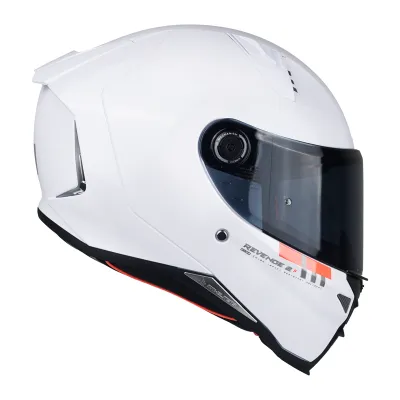
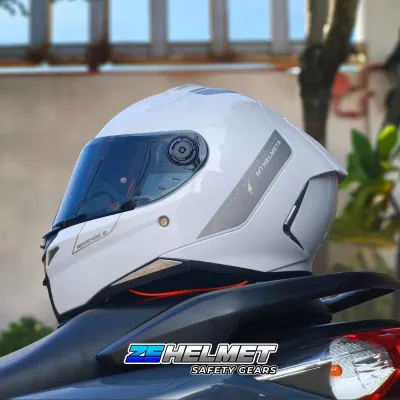
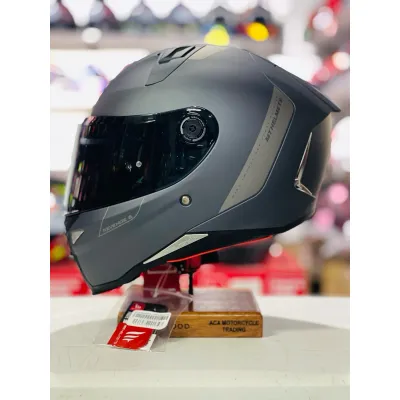
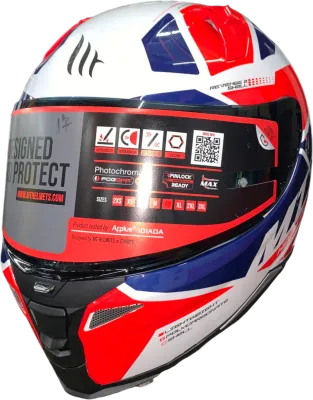
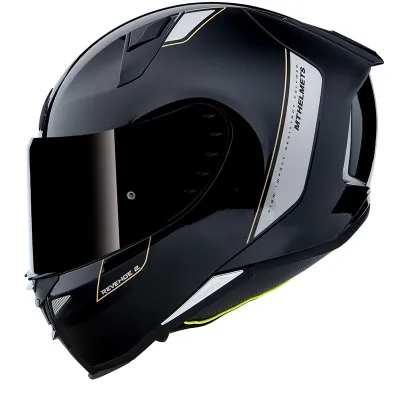
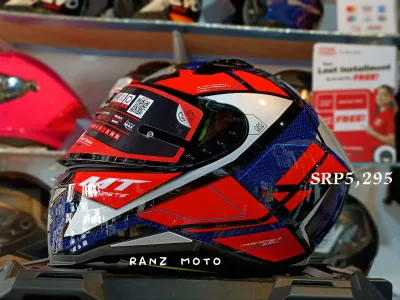
Prices are valid at publication and may change. Please refer to the product page for the latest price.
Operating a motorcycle on public roads without a properly certified helmet is a direct violation of Republic Act No. 10054, also known as the Motorcycle Helmet Act of 2009. Beyond the threat of steep traffic fines and confiscated licenses, riding without a certified helmet significantly increases the risk of severe head trauma during an accident. The ICC sticker is not merely a bureaucratic requirement; it serves as physical proof that a specific batch of imported helmets has undergone rigorous safety evaluations.
Before any imported helmet model receives an ICC sticker, representative samples must pass stringent laboratory testing designed for real-world road scenarios. These evaluations include impact absorption tests to measure how well the outer shell and EPS liner dissipate energy, retention system tests to ensure the chin strap remains securely fastened under extreme force, and field of vision assessments to guarantee the visor does not distort the rider’s peripheral sight. Only when these criteria are fully satisfied does the BPS authorize the placement of the holographic ICC sticker on the helmet shell.
How to Check the MT Revenge 2 for Legitimate Philippine Certifications
Verifying the legitimacy of your mt revenge 2 certification involves a series of physical and digital checks that protect you from counterfeit products. Start with a thorough visual inspection of the outer shell. A genuine ICC sticker is typically affixed to the back or lower side of the helmet’s exterior, positioned over the clear coat or directly on the shell surface. This sticker features distinct holographic elements that shift color when tilted under light, a unique serial number printed clearly at the bottom, and the official BPS logo.

Next, proceed to inspect the interior of the helmet for matching manufacturing details and compliance labels. Peel back the comfort liner to inspect the EPS foam and the labels sewn onto the chin strap or tucked inside the padding. A legitimate MT Revenge 2 will feature a manufacturing label specifying the exact model name, shell size, production date, and weight. If these internal labels are missing, printed with blurry text, or mismatch the external shell specifications, the helmet may be a counterfeit or an unauthorized grey-market import.
For absolute certainty, you can perform a digital verification using the official resources provided by the Department of Trade and Industry. The BPS maintains public databases and verification portals where riders can cross-reference the serial number printed on their helmet’s ICC sticker. By entering this unique alphanumeric code into the official portal, you can verify whether the sticker corresponds to an authorized shipment of MT Helmets imported by a licensed distributor.
Where you purchase your gear plays a significant role in ensuring its safety compliance. Buying from unauthorized storefronts on online marketplaces carries a high risk of acquiring counterfeit products that lack real impact protection. To safeguard your investment, prioritize purchasing your helmet from established, physical brick-and-mortar motorcycle gear shops. Always request an official receipt and ask the dealer to show their DTI import clearance certificates or proof of authorized distribution before finalizing your purchase.
Global Safety Specs vs. Local Road Compliance
Premium helmets like the MT Revenge 2 are engineered to meet highly respected international safety standards before they ever reach the local market. Depending on the specific production batch and region of origin, this model is built to comply with rigorous global standards, such as the European Union’s ECE 22.06 or the United States’ DOT certification. These international markings, typically printed on the rear of the helmet or woven directly into the chin strap, indicate that the helmet has undergone advanced testing for rotational acceleration, high-velocity impacts, and penetration resistance.
However, riders in the Philippines must understand that global safety specifications do not automatically translate to local road compliance. Even if a helmet boasts an ECE 22.06 rating—which represents some of the most advanced safety testing in the world—it remains legally non-compliant on Philippine public roads unless it also bears the official BPS-issued ICC sticker. Local traffic law enforcement officers look specifically for the physical ICC sticker during roadside inspections, and they are not authorized to accept foreign safety stamps as a substitute.
To ensure both maximum physical protection and complete legal peace of mind, a rider should verify that their helmet carries both sets of credentials. The presence of the ECE or DOT markings on the chin strap confirms the manufacturer’s high-quality engineering, while the holographic ICC sticker on the outer shell confirms that the specific batch was legally imported, inspected, and cleared by Philippine customs and trade authorities. This dual verification ensures you are wearing a helmet that is both globally safe and locally compliant.
Never assume a helmet is road-legal in the Philippines solely because of its international brand reputation or global marketing materials. Many grey-market importers bypass official channels to sell international-spec helmets directly to consumers, leaving riders without the legally required local certification. Always inspect the physical helmet for the local ICC sticker, rather than relying blindly on a manufacturer’s global website or online spec sheets.
What to Do If Your Helmet Lacks Proper Safety Marks
If you discover that your MT Revenge 2 lacks a legitimate ICC sticker, or if the sticker appears to be a low-quality counterfeit lacking holographic properties, you must stop using the helmet immediately. Riding with an uncertified helmet exposes you to significant physical danger, as counterfeit shells and substandard EPS liners can fail catastrophically during an impact. Furthermore, using a non-compliant helmet on public roads leaves you vulnerable to traffic citations and vehicle impoundment under local regulations.
If you recently purchased the helmet under the impression that it was fully certified, you should initiate a return process with the seller as soon as possible. Under the Consumer Act of the Philippines (Republic Act No. 7394), consumers are protected against deceptive sales practices and substandard products that pose safety hazards. Present your official receipt, document the missing or counterfeit safety marks, and demand a full refund or a replacement that carries a verified, legitimate ICC sticker.
When dealing with uncooperative sellers or identifying shops that actively distribute uncertified riding gear, you should report the business to the DTI or the BPS. Filing a formal complaint helps protect the broader riding community in the Philippines from dangerous, substandard equipment that floods the market. You can submit reports through the official DTI consumer care channels, providing details such as the shop’s name, location, and photos of the non-compliant helmets.
To avoid these complications entirely, always consult the official MT Helmets brand website or their designated regional social media channels to locate authorized local distributors. Purchasing your gear exclusively from these verified partners guarantees that your helmet is an authentic, legally imported product backed by a genuine manufacturer warranty. This simple step ensures that your investment provides the high-level impact protection you expect on every ride.
Frequently Asked Questions (FAQ)
Is an internationally certified helmet legal in the Philippines without an ICC sticker?
No, an internationally certified helmet is not legally compliant on public roads in the Philippines without a physical ICC sticker. While standards like ECE 22.06 or DOT prove that the helmet meets high safety and manufacturing benchmarks, local traffic laws specifically require the BPS-issued ICC sticker to verify legal importation and regulatory clearance. Riding without this local sticker can result in fines under the Motorcycle Helmet Act of 2009.
How can I verify if an online seller is an authorized MT Helmets dealer?
You can verify an online seller’s legitimacy by checking the official global or regional website of MT Helmets for their directory of authorized distributors and physical retail partners in the Philippines. Additionally, you can contact the brand’s official local social media pages or customer support to ask if a specific online marketplace storefront is an authorized dealer before making your purchase.

Community discussion
Share your experience or ask a question. Comments are reviewed before publication.