
Braking systems are the most critical safety feature of any vehicle, relying on hydraulic pressure to convert the force of your foot on the pedal into stopping power at the wheels. At the heart of this system is brake fluid, a specialized liquid designed to operate under extreme temperatures and pressures without boiling or freezing. For drivers in the Philippines, where high ambient temperatures, intense tropical humidity, and steep mountain routes like the Marcos Highway or the roads of Tagaytay place severe demands on a vehicle, choosing the correct brake fluid is a matter of direct safety. The two most common specifications found in passenger vehicles are DOT 3 and DOT 4, and understanding their differences is essential for maintaining your car’s stopping power.
Choosing between these two specifications requires a clear understanding of your vehicle’s engineering requirements, driving conditions, and maintenance history. While they appear similar on the shelf, their chemical properties, boiling thresholds, and viscosity profiles differ in ways that directly impact your braking performance and system longevity. Using the wrong fluid can lead to reduced braking efficiency, accelerated wear on internal seals, or even sudden brake failure under heavy load.
Quick Answer: How to Choose the Right Brake Fluid for Your Car
The absolute golden rule of brake system maintenance is to always use the exact DOT specification printed in your vehicle’s owner’s manual or stamped directly onto the brake fluid reservoir cap. Vehicle manufacturers engineer hydraulic systems around the specific properties of a designated fluid, and deviating from this specification can compromise your safety.
Products mentioned in this guide
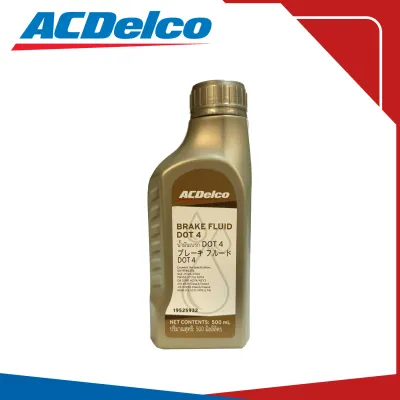
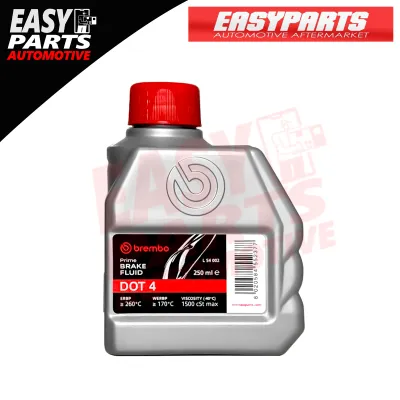
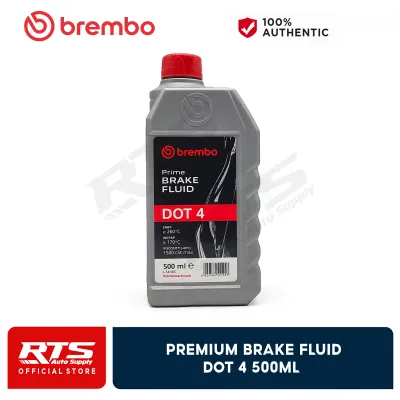
Prices are valid at publication and may change. Please refer to the product page for the latest price.
If your vehicle’s manufacturer specifies DOT 3, you can generally choose to upgrade to a high-quality DOT 4 fluid, such as Motorcraft brake fluid DOT 4, because DOT 4 fluids are formulated to meet and exceed the minimum performance standards of DOT 3. However, this upgrade is not a simple matter of pouring new fluid on top of old; it requires a complete, professional hydraulic system flush to ensure the older fluid is entirely evacuated.
Conversely, if your vehicle is engineered to require DOT 4 fluid, you must never downgrade to DOT 3. Doing so introduces a fluid with a lower boiling point into a system designed for higher thermal thresholds, which can lead to brake fade, vapor lock, and catastrophic braking failure under heavy usage or during emergency stops.
When selecting a brake fluid, choosing a reputable brand that aligns with specific Original Equipment Manufacturer (OEM) certifications is highly recommended. For instance, using Motorcraft brake fluid DOT 4 for Ford vehicles, or other vehicles that specify this exact formulation, ensures that the fluid’s specific additive package is fully compatible with the internal rubber seals, pistons, and metal components of your braking system, preventing premature degradation and leaks.
DOT 3 vs. DOT 4: Boiling Points, Chemistry, and ABS Compatibility
To understand why these fluids cannot be used interchangeably without precaution, it is necessary to examine their physical and chemical differences. The Department of Transportation (DOT) classifications establish strict performance baselines that manufacturers must meet to ensure road safety.

Boiling Points: Dry vs. Wet Specifications
Brake fluid operates in an environment of extreme heat generated by the friction of brake pads pressing against brake rotors or drums. If the fluid reaches its boiling point, it turns into gas bubbles, which are highly compressible; this results in a \”spongy\” brake pedal and a complete loss of hydraulic pressure. The DOT standard evaluates fluids based on two separate boiling points: the dry boiling point and the wet boiling point.
The dry boiling point refers to the temperature at which brand-new, uncontaminated fluid from a freshly sealed container will boil. The wet boiling point represents the boiling temperature after the fluid has absorbed 3.7% water by volume, which typically occurs after one to two years of real-world service. Because DOT 4 fluids are formulated with advanced chemical additives, they generally offer significantly higher dry and wet boiling points than DOT 3 fluids. This higher thermal resistance makes DOT 4 much more resilient against brake fade during prolonged braking down steep grades or in stop-and-go city traffic. When purchasing brake fluid, always inspect the container’s label to verify that it meets the Federal Motor Vehicle Safety Standard (FMVSS) 116 requirements for your specific vehicle.
Chemical Composition and Hygroscopic Properties
Both DOT 3 and DOT 4 brake fluids are glycol-ether-based liquids. A defining characteristic of glycol-based fluids is that they are highly hygroscopic, meaning they naturally and actively absorb moisture from the surrounding atmosphere. In a tropical country like the Philippines, where relative humidity levels frequently exceed 80 percent, this moisture absorption occurs more rapidly through microscopic pores in the rubber brake hoses, seals, and reservoir vent caps.
The primary chemical difference between the two is that DOT 4 fluid is formulated with borate esters in addition to the glycol-ether base. The inclusion of borate esters chemically binds the absorbed water molecules more effectively, which helps maintain a higher wet boiling point over time compared to DOT 3. However, this chemical advantage does not make DOT 4 immune to degradation; it simply slows the rate at which its boiling point drops. Regular replacement remains mandatory to prevent internal corrosion of steel brake lines and aluminum calipers caused by accumulated water.
Viscosity and Modern Active Safety Systems
Beyond boiling points, the viscosity—or thickness—of the fluid plays a critical role in the operation of modern vehicle safety systems. Anti-lock Braking Systems (ABS), Electronic Stability Control (ESC), and Traction Control Systems (TCS) rely on rapid, high-frequency cycling of micro-valves within the ABS modulator block to prevent wheel lockup and maintain vehicle stability.
Standard DOT 4 fluids are generally more viscous at very low temperatures than DOT 3 fluids, but modern vehicles equipped with advanced electronic stability systems often require low-viscosity formulations. These specialized fluids, frequently labeled as DOT 4 LV, Class 6, or ISO 4925, are engineered to flow freely through tiny valve orifices even in cold or rapidly changing conditions, ensuring instantaneous system response. If your vehicle’s owner’s manual specifies a low-viscosity fluid, using a standard DOT 4 fluid may slow the response time of your ABS or ESC during an emergency maneuver, highlighting the importance of verifying the exact sub-specification required.
Mixing and Switching Rules: What Is Safe and What Is Dangerous?
Understanding how these fluids interact when combined is essential for avoiding costly mechanical damage and hazardous driving conditions. Hydraulic braking systems are precision instruments, and altering the fluid composition can have immediate consequences.
The Danger of Mixing Fluids
It is highly recommended that you never mix DOT 3 and DOT 4 brake fluids within your vehicle’s reservoir. While they are chemically compatible in the sense that they will not immediately gel or precipitate solids, mixing them degrades the overall performance of the system. The boiling point of the mixture will drop toward the level of the lower-performing DOT 3 fluid, compromising the thermal safety margins engineered into a DOT 4 system. Furthermore, different brands utilize proprietary additive packages; mixing them can lead to unpredictable chemical interactions that can accelerate the wear of internal rubber seals.
Upgrading from DOT 3 to DOT 4
If your vehicle’s manual specifies DOT 3, upgrading to DOT 4 is a common and safe practice, provided it is executed correctly. This upgrade cannot be achieved by simply topping off a low reservoir with DOT 4 fluid. Instead, a technician must perform a comprehensive system flush, pushing fresh DOT 4 fluid through the entire hydraulic circuit until all traces of the old, degraded DOT 3 fluid and accumulated moisture are completely expelled from the calipers, wheel cylinders, and ABS modulator.
Additionally, a critical safety boundary must be observed for older classic cars or vintage models. The rubber hoses, seals, and gaskets used in classic braking systems were formulated for the specific chemical properties of older DOT 3 fluids. The borate esters and distinct additive packages found in modern DOT 4 formulations can occasionally cause these older elastomer compounds to swell, soften, or degrade prematurely. Before performing an upgrade on a vehicle manufactured several decades ago, consult a specialist or check the vehicle manufacturer’s original technical documentation to verify seal compatibility.
Downgrading from DOT 4 to DOT 3
Downgrading a braking system from DOT 4 to DOT 3 represents a severe safety hazard and must never be attempted. Vehicles designed for DOT 4 generate higher operating temperatures at the brake calipers due to their weight, engine power, or aerodynamic design. Introducing DOT 3 fluid into these systems significantly lowers the threshold at which the fluid will boil. Under heavy braking conditions—such as descending steep mountain roads or during emergency highway braking—the fluid can easily overheat, vaporize, and cause sudden, complete brake failure, leaving the driver unable to stop the vehicle.
Brake Fluid Maintenance: Inspection, Testing, and Safe Replacement
Proactive maintenance of your hydraulic braking system is the single most effective way to guarantee consistent stopping performance and avoid expensive repairs. Because brake fluid degrades silently, regular physical inspections and diagnostic checks are necessary.
Visual Inspection of Level and Color
A basic visual inspection should be performed at least once a month. Locate the translucent brake fluid reservoir in the engine bay and check the fluid level against the minimum (MIN) and maximum (MAX) markings molded into the plastic. The fluid level should always sit comfortably between these two lines. Avoid opening the reservoir cap unnecessarily, as doing so exposes the hygroscopic fluid to ambient moisture in the air.
Observe the color of the fluid through the plastic reservoir. Fresh, clean brake fluid is clear with a very pale yellow or amber tint. As the fluid ages, absorbs moisture, and becomes contaminated by wearing rubber seals and metallic debris, it gradually darkens. Fluid that has turned dark brown or black is severely degraded and contaminated, indicating that it has lost its protective anti-corrosive properties and must be flushed immediately to protect the hydraulic components.
Moisture Testing Methods
For a more objective assessment of the fluid’s condition, electronic brake fluid moisture tester pens can be used as a convenient, entry-level DIY diagnostic tool. These devices measure the electrical conductivity of the fluid, which increases as water content rises. While helpful for identifying heavily saturated fluid, these consumer-grade testers have limitations and can sometimes provide inaccurate readings depending on the specific additive package of the fluid brand being tested. For highly precise safety assessments, professional automotive service centers utilize specialized boiling-point testers that heat a small sample of the fluid to determine its exact physical boiling threshold, providing an absolute measurement of its safety margin.
Manufacturer Replacement Intervals
Brake fluid does not last the lifetime of the vehicle. Replacement intervals vary significantly depending on the manufacturer’s engineering standards, the vehicle’s operating environment, and individual driving habits. Many manufacturers recommend a complete brake fluid flush every two years or every 40,000 kilometers, whichever comes first. However, in highly humid tropical regions, more frequent intervals may be required. Always prioritize the specific maintenance schedule detailed in your vehicle’s owner’s manual over generic online advice.
Flushing and Bleeding Safety Boundaries
Flushing and bleeding a modern braking system is a precise mechanical procedure that requires specialized tools and technical expertise. Introducing even a tiny pocket of air into the hydraulic lines during a fluid change will result in a spongy brake pedal and severely compromised stopping power. Furthermore, vehicles equipped with complex ABS and ESC modules often require specific electronic scan tools to cycle the internal solenoids and purge trapped air from the modulator block during a flush.
If you lack the proper pressure-bleeding equipment, a lift, or the mechanical experience required to perform this task safely, it is highly recommended that you have the service performed by a qualified professional at a reputable service center. In the Philippines, a professional brake fluid flush typically ranges in cost from ₱1,500 to ₱4,000 depending on the vehicle model and workshop location, which is a minor investment for absolute safety on the road.
Finally, observe a strict safety warning regarding product handling: never use brake fluid from a bottle that has been opened and stored for more than a few weeks. Even with the cap tightly secured, the air trapped inside the bottle contains moisture that the fluid will absorb over time, rendering it partially degraded before it even enters your vehicle’s braking system. Always purchase fresh, sealed containers for every service.
Frequently Asked Questions (FAQ)
Is synthetic brake fluid better than standard DOT 3 or DOT 4?
There is a common misconception surrounding the term \”synthetic\” on brake fluid packaging. In reality, all standard DOT 3 and DOT 4 brake fluids are synthetic, as they are formulated from glycol-ether compounds rather than petroleum-based oils. Labeling a bottle as \”synthetic\” is often a marketing choice rather than an indication of a superior or different product class. It is critical not to confuse these standard fluids with silicone-based fluids, which are classified as DOT 5. Silicone-based DOT 5 fluids are completely different chemically, do not absorb water, are highly compressible, and are strictly incompatible with DOT 3, DOT 4, and modern ABS systems.
Can I use DOT 5.1 instead of DOT 4?
Yes, DOT 5.1 is a glycol-ether-based fluid and is chemically compatible with both DOT 3 and DOT 4 systems. It was developed to provide exceptionally high dry and wet boiling points while maintaining a very low viscosity, making it highly suitable for high-performance vehicles and extreme driving conditions. However, DOT 5.1 is typically much more expensive and harder to find than standard DOT 4. If you choose to transition to DOT 5.1, you must perform a complete hydraulic system flush to realize its performance benefits, and you should always verify that your vehicle manufacturer permits its use before proceeding.
What happens if I drive with low brake fluid?
Driving with a low brake fluid level is extremely dangerous and poses an immediate threat to your safety. As the fluid level drops, air can be drawn into the master cylinder, causing a soft, spongy brake pedal, significantly increased stopping distances, or a complete loss of braking ability. A dropping brake fluid level is rarely normal; it typically indicates either a physical leak in the hydraulic lines, calipers, or wheel cylinders, or that your brake pads have worn down significantly, causing the caliper pistons to remain extended and draw more fluid from the reservoir. If you notice a low fluid level, do not simply top it off; have the vehicle inspected immediately by a qualified mechanic to diagnose the underlying cause.

Community discussion
Share your experience or ask a question. Comments are reviewed before publication.