
Upgrading to a dual tip muffler is a popular customization for motorcycle riders in the Philippines looking to enhance their vehicle’s aesthetic and sound profile. However, navigating the legality of aftermarket exhaust systems can be challenging due to strict enforcement of noise and emission standards. The short answer is that a dual tip muffler itself is not inherently illegal in the Philippines; its legality depends entirely on whether the specific system complies with Land Transportation Office (LTO) regulations regarding noise levels, structural modifications, and emissions.
Many riders mistakenly believe that any aftermarket exhaust modification is subject to immediate confiscation. In reality, the LTO and local law enforcement agencies evaluate modified exhausts based on measurable criteria rather than visual design alone. Understanding how these regulations are applied, how dual tip designs affect vehicle inspections, and how to maintain compliance is essential for any rider wishing to avoid costly fines or impoundment.
Understanding Philippine Exhaust and Noise Regulations
The legal framework governing motorcycle modifications in the Philippines balances vehicle customization with public safety and environmental protection. The primary authority overseeing these standards is the Land Transportation Office (LTO), operating under the Department of Transportation (DOTr). To establish compliance, riders must familiarize themselves with national laws as well as local government unit (LGU) ordinances, which can sometimes impose stricter rules on exhaust noise.
Products mentioned in this guide
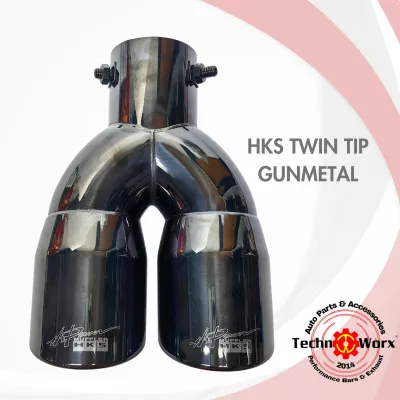

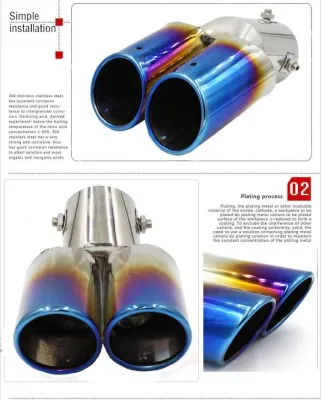



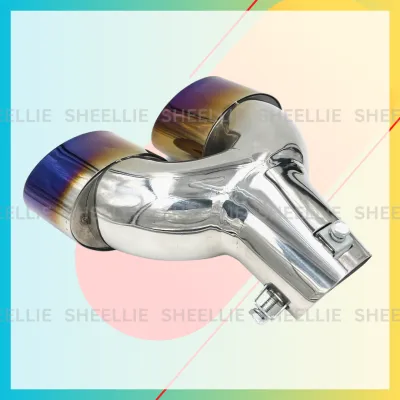
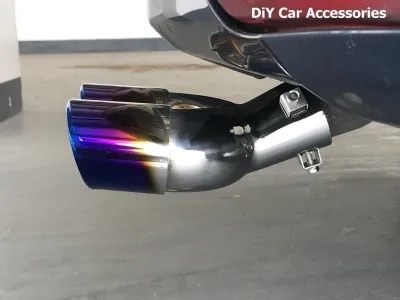
Prices are valid at publication and may change. Please refer to the product page for the latest price.
When it comes to noise regulations, the LTO utilizes specific testing protocols to determine if an exhaust system is compliant. While local standards often reference a maximum limit of 99 decibels (dB) when tested under specific conditions, you must verify the exact, current decibel limits, testing distances, and RPM procedures directly with the latest LTO administrative orders. Official testing typically involves placing a calibrated decibel meter at a 45-degree angle, approximately 0.5 meters away from the exhaust outlet, while the motorcycle is held at a specified engine speed.
Another critical legal distinction is the difference between manufacturer-approved accessories and unauthorized structural modifications. If a dual tip muffler is offered as an official, certified accessory by your motorcycle’s manufacturer for your specific model, it is generally considered compliant because it has undergone factory testing to meet local emission and noise standards. Conversely, installing an unbranded or universal aftermarket dual tip muffler that requires extensive modification to fit your bike carries a much higher risk of violating LTO guidelines.
To ensure you are operating within the law, always consult official administrative orders, such as those detailing the Motor Vehicle Inspection System (MVIS) guidelines, before purchasing any aftermarket exhaust. These documents outline the exact emission standards and noise thresholds that your motorcycle must meet during its annual registration renewal. Relying on hearsay or unverified online forums can lead to non-compliance and unexpected penalties at roadside checkpoints.
How Dual Tip Designs Affect Vehicle Inspections
Installing a dual tip muffler introduces specific physical and acoustic changes that are closely scrutinized during official vehicle inspections. The Motor Vehicle Inspection System (MVIS) and LTO inspectors employ both visual and mechanical tests to evaluate whether a modified exhaust system is road-legal. Understanding these inspection criteria can help you assess the compliance risks associated with a dual-outlet design.

From a structural standpoint, inspectors look at how the dual tip muffler is integrated into your motorcycle’s existing frame and exhaust system. If installing the dual tip system requires cutting the original header pipe, welding custom brackets directly to the frame, or altering the original mounting points, it may be flagged as an unauthorized structural modification. Any modification that compromises the structural integrity of the motorcycle’s exhaust mounts or swingarm clearance can lead to an immediate inspection failure.
Acoustically, a dual tip design alters how exhaust gases and sound waves exit the muffler. While some riders assume that splitting the exhaust flow into two outlets naturally dampens the sound, it can actually change the resonance and direction of the noise. During a roadside or MVIS decibel test, the presence of two outlets can complicate the measurement process. Inspectors may need to test both outlets or position the decibel meter differently to capture an accurate reading, and any concentration of sound that exceeds the legal limit will result in a violation.
Visual inspection criteria are also highly stringent. Inspectors are trained to look for the presence of a catalytic converter, a functional silencer or baffle, and secure heat shields. A dual tip muffler that lacks internal baffling or has visible modifications designed to bypass emission controls will be flagged immediately. Even if the exhaust note sounds relatively quiet to the ear, the absence of these mandatory internal components during a visual check is sufficient grounds for a non-compliance ruling.
Legal Risks and Penalties for Non-Compliant Exhausts
Riding with a non-compliant dual tip muffler in the Philippines carries significant legal and financial risks. Enforcement is carried out through various channels, including routine traffic stops by LTO officers, joint task force operations, anti-smoke belching checkpoints, and the mandatory annual MVIS checks required for registration renewal.
If your motorcycle is flagged at a checkpoint and fails a decibel or visual test, you can expect severe penalties under current LTO guidelines. Financial fines for operating a vehicle with an unauthorized or noisy modification are substantial, often starting at ₱5,000 for the first offense, though you must verify the exact, current schedule of fines with the LTO as these rates are subject to administrative updates. In addition to monetary penalties, authorities have the power to temporarily impound your motorcycle or confiscate the non-compliant exhaust component on the spot.
Beyond the immediate financial impact, dealing with a confiscated exhaust or an impounded vehicle causes significant logistical inconvenience and additional fees. To reclaim your motorcycle, you will typically be required to pay the fine, present proof of compliance, and in many cases, reinstall the original stock exhaust system under the supervision of LTO inspectors.
To avoid these escalating penalties, you should establish clear conditions for when to stop using an aftermarket dual tip muffler. If you notice a sudden increase in exhaust volume, if the system fails a local LGU noise check, or if you observe signs of physical degradation such as cracks or loose baffles, you should immediately stop using the modified exhaust. Reverting to your motorcycle’s stock system is the safest and most reliable way to ensure compliance while you address any issues with your aftermarket setup.
Steps to Verify and Maintain Exhaust Compliance
Ensuring your dual tip muffler remains legal requires a proactive approach that begins before you make a purchase and continues throughout the lifespan of the exhaust system. By following systematic verification and maintenance steps, you can enjoy the benefits of your modification without violating LTO regulations.
Before purchasing a dual tip muffler, perform thorough pre-purchase checks. Inspect the product packaging, labels, and documentation for official compliance markings, certifications, or manufacturer declarations of conformity that state the exhaust meets local noise and emission standards. Avoid purchasing unbranded, cheap exhausts from online marketplaces that do not provide clear specifications regarding decibel output or compatibility with your specific motorcycle model.
Proper installation is critical to maintaining both safety and compliance. Because modifying an exhaust system can significantly affect engine backpressure, fueling, and emissions, always refer to your motorcycle’s original manufacturer instructions before proceeding. It is highly recommended to have your dual tip muffler installed by a qualified professional mechanic. A professional installation ensures proper sealing at the joints, correct mounting torque to prevent vibrations, and the preservation of the original catalytic converter, which is essential for passing emission tests.
Once installed, establishing a regular maintenance routine is vital, especially given the tropical climate of the Philippines. High humidity, heavy monsoon rains, and coastal salt air can accelerate rust and corrosion on aftermarket exhaust components. Over time, the internal packing material (such as fiberglass or steel wool) inside the muffler degrades, and internal baffles can rust or loosen, leading to a gradual increase in noise output. Regularly inspect your dual tip muffler for exhaust leaks, loose heat shields, and deteriorating baffles, and repack or repair the system as necessary to ensure it continues to operate within legal decibel limits.
Frequently Asked Questions (FAQ)
Can I use a dual tip muffler if it has a removable baffle?
While a removable baffle (often called a DB killer) can help lower your dual tip muffler’s noise output to legal limits, it carries high inspection risks. LTO and local inspectors are highly suspicious of adjustable noise components because they can be easily altered after an inspection. If you are caught riding on public roads with the baffle removed, you will face immediate penalties for exceeding decibel limits. To minimize legal risks, it is safest to use an exhaust system with a permanently secured, factory-installed silencer.
Do I need to update my LTO registration after changing my muffler?
Generally, replacing your stock muffler with a compliant aftermarket dual tip muffler does not require a formal update to your LTO registration, provided the modification is a standard, bolt-on replacement that does not alter the motorcycle’s engine displacement, chassis structure, or primary vehicle classification. However, the modification must still pass the visual and decibel tests during your annual MVIS registration renewal. If you perform a full-system modification that alters the vehicle’s structural frame or emissions equipment, you should consult the LTO to verify if a change-of-specification registration is required.
Are slip-on dual tip exhausts treated differently from full systems?
Yes, slip-on dual tip exhausts and full exhaust systems are treated differently during regulatory and visual inspections. A slip-on system only replaces the muffler canister, leaving the stock header pipes and, crucially, the original catalytic converter intact, making it much easier to comply with emission standards. A full system replaces the entire exhaust assembly from the engine port to the tip, which often involves removing the catalytic converter. Removing the catalytic converter violates national emission laws and will result in an automatic failure during visual and emission checks at MVIS centers.

Community discussion
Share your experience or ask a question. Comments are reviewed before publication.