
Commuting to a farm on a motorcycle during the wet season requires gear that can withstand two completely different environments. You need a raincoat that blocks high-speed wind and torrential downpours on provincial roads, yet remains tough and flexible enough for physical labor once you step off the bike. The ideal farming raincoat for motorcycle riders must feature a secure, wind-resistant fit, heavy-duty waterproof construction, high-visibility elements for safety, and a design that accommodates muddy boots and active movement. Balancing these needs ensures you stay dry on the road and productive in the field.
Core Coverage and Weather Protection for Riding
When sitting on a motorcycle, standard jackets tend to ride up, exposing your lower back to water. Look for extended back panels—often called a drop-tail design—that keep the jacket draped securely over your seat. Overlapping front closures, such as a dual-zipper system or a heavy-duty zipper paired with a hook-and-loop storm flap, are essential to prevent water from being forced through the zipper teeth by oncoming wind.
Sealing the entry points is critical to prevent slow leaks during long rides. Adjustable cuffs with elastic or hook-and-loop straps allow you to seal the sleeves over or under your riding gloves. Ankle straps or snap closures on the pants prevent water from splashing up into your boots from the road. A high collar lined with soft material keeps water from trickling down your neck, which is one of the most common causes of discomfort during wet commutes.
Products mentioned in this guide
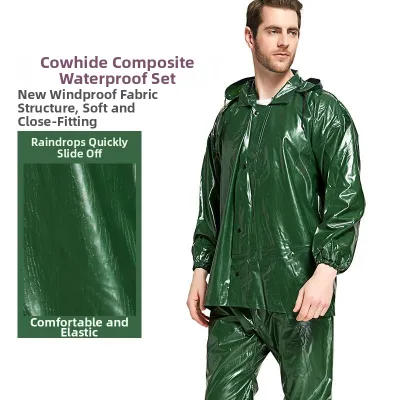
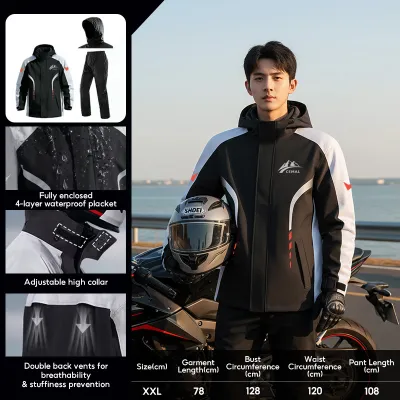
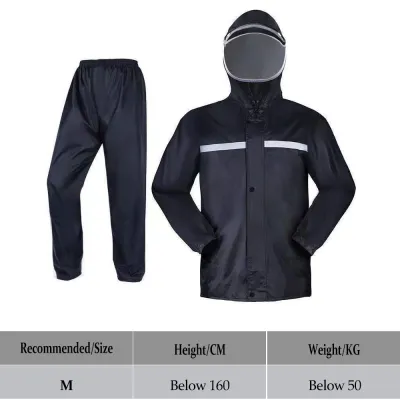
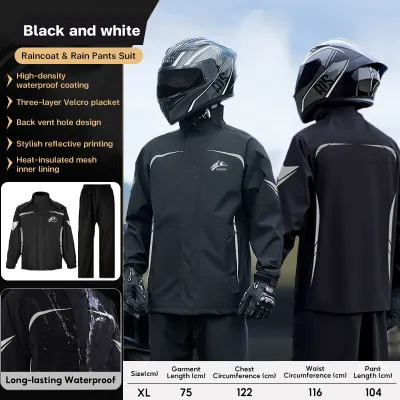
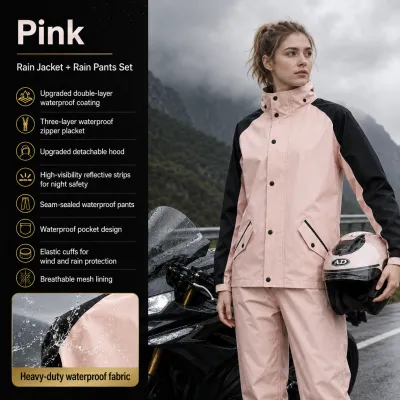
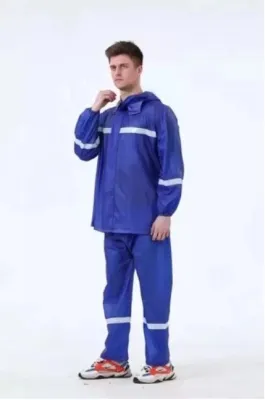
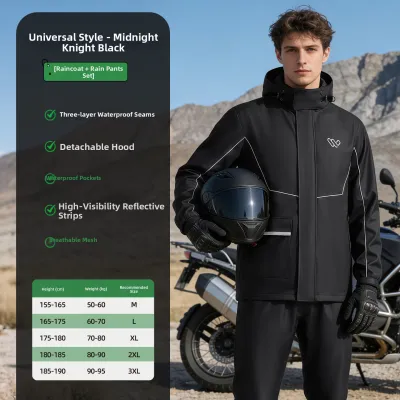
Prices are valid at publication and may change. Please refer to the product page for the latest price.
The hood design requires careful inspection before you ride. If you wear a full-face or modular helmet, a bulky hood can bunch up around your neck, restricting your ability to turn your head and check your blind spots. Look for raincoats with detachable hoods or ultra-thin, roll-away hoods that fit comfortably under your helmet without compromising your peripheral vision or neck mobility.
Mobility and Farm-Specific Utility
Transitioning from riding to active farming tasks like clearing brush, carrying tools, or tending crops demands excellent range of motion. Standard, stiff plastic raincoats often rip at the seams under physical stress. Look for garments with gusseted underarms and articulated elbows and knees. These design features use extra fabric panels or pre-curved stitching to allow you to bend, reach, and squat without pulling the fabric taut or tearing the seams.

Pocket placement must be highly strategic for a dual-purpose commute. When you are seated on your motorcycle or carrying a heavy backpack loaded with farm supplies, standard waist pockets become completely inaccessible. Raincoats with chest pockets or angled utility pockets allow you to retrieve essential items, such as gate keys, mobile phones, or small tools, without removing your pack or struggling against your riding position.
Muddy farm paths require specialized footwear, typically thick rubber boots. Trying to squeeze wide, mud-caked boots through narrow pant legs is frustrating and can damage the lining of your rain gear. Opt for rain pants featuring boot-compatible leg zippers, gussets, or wide hems with adjustable snaps. This allows you to slip the pants on or off quickly over your boots without needing to remove your footwear in the field.
Safety and Visibility on Rural Roads
Riding in heavy rain drastically reduces visibility for all motorists on provincial roads. To stay safe, your rain gear should feature bright, high-visibility color panels—such as neon yellow, orange, or green—along with wide reflective strips across the back, chest, and sleeves. These elements catch the headlights of oncoming and trailing vehicles, ensuring you remain visible even during dark, overcast afternoon downpours.
Loose, oversized garments pose a severe safety hazard on a motorcycle. Traditional loose-fitting ponchos should be strictly avoided for riding. The high winds experienced at highway speeds can cause loose fabric to flap violently, which distracts the rider, destabilizes the motorcycle, or worse, gets caught in moving parts like the drive chain, sprockets, or rear wheel. Always choose a fitted two-piece rain suit or a tailored riding coat.
Before setting off, verify that your rain gear does not block your motorcycle’s safety features. The coat must not drape over your taillight, turn signals, or license plate. Additionally, ensure the fit complies with local road safety guidelines, such as the Land Transportation Office (LTO) regulations regarding reflective wear, to avoid unnecessary roadside penalties during your commute.
Material Durability and Construction Checks
The harsh environment of a farm, combined with the friction of a motorcycle seat, will quickly destroy cheap, thin plastic rainwear. Check the product label for fabric thickness or denier (D) ratings; a higher denier, such as 150D to 300D polyester or nylon, indicates a tougher weave that resists punctures from thorns, branches, and farm tools. Reinforced seat panels are also highly beneficial to prevent the constant friction of riding from wearing down the waterproof barrier.
Water resistance relies heavily on construction quality rather than just the fabric itself. Inspect the interior seams of the garment to ensure they are fully taped or heat-welded. Unsealed stitched seams contain thousands of tiny needle holes that will inevitably leak under the pressure of wind-driven rain. Heavy-duty zipper storm flaps are another critical indicator of a well-constructed, waterproof garment.
Maintaining the integrity of your rain gear requires proper care. Always review the manufacturer’s care label before attempting to clean your raincoat. Many high-performance waterproof garments rely on a Durable Water Repellent (DWR) coating on the outer fabric. Machine washing with standard laundry detergents or using fabric softeners can strip this coating away, causing the fabric to absorb water rather than shed it.
Evaluating Fit and Sizing for Layering
When choosing a size, do not simply select your standard t-shirt size. You must account for the clothing you wear underneath, which may include a padded motorcycle riding jacket, thick denim jeans, or long-sleeve farm shirts. Sizing up by one or two sizes ensures that the raincoat fits comfortably over your protective gear without binding or restricting your circulation.
While a larger size is necessary for layering, it can create excess fabric that flaps in the wind at higher speeds. To counter this, look for raincoats equipped with adjustable waistbands, drawcords, or sleeve straps. These features allow you to cinch the excess material close to your body while riding, reducing wind drag and preventing the jacket from ballooning.
Before finalizing your purchase, perform a quick range-of-motion test while wearing your full riding and farming layers underneath the raincoat. Sit on your motorcycle (or mimic the riding position), reach fully forward to grip the handlebars, and bend your knees deeply. If the sleeves pull back past your wrists, the collar pinches your throat, or the pants ride up high enough to expose your shins, you need to adjust the sizing or look for a cut with better articulation.
Frequently Asked Questions (FAQ)
Can I use a standard motorcycle rain suit for farm work?
While a standard motorcycle rain suit offers excellent wind and water protection on the road, it often lacks the durability and utility needed for farm work. Riding suits are typically designed for a static, seated position and may use delicate, lightweight materials that can easily tear when brushing against thorns, wire fences, or rough farm equipment. Additionally, they rarely feature the accessible utility pockets or wide, boot-compatible leg openings required for transitioning smoothly to manual labor in muddy fields.
How should I clean mud and grease off my raincoat?
To clean mud, soil, and grease without damaging the waterproof membrane, always consult the manufacturer’s care label first. Generally, you should allow wet mud to dry completely, then gently brush it off with a soft-bristled brush. For stubborn dirt or grease, hand wash the garment in cold water using a mild, additive-free soap specifically formulated for technical outerwear. Avoid harsh household detergents, bleach, and fabric softeners, as these chemicals break down the waterproof coatings and seam tapes, rendering the raincoat ineffective.

Community discussion
Share your experience or ask a question. Comments are reviewed before publication.