
You do not always need to replace your Faito Ignition Coil 7400 every time you change your spark plugs, but doing so is highly recommended if the coil has reached its service limit, if you are experiencing persistent ignition issues, or if worn-out spark plugs have already overstressed the coil’s internal circuitry. In the tropical climate of the Philippines, where high humidity and intense engine bay heat accelerate the degradation of electrical components, coordinating these replacements can prevent repetitive labor costs and safeguard your engine’s combustion efficiency. While spark plugs are routine consumables with a relatively short lifespan, high-performance ignition coils like the Faito 7400 are built to last much longer, meaning a synchronized replacement is usually reserved for high-mileage service intervals or troubleshooting scenarios.
Understanding the relationship between these two components is essential for maintaining vehicle reliability. A weak spark plug forces the ignition coil to work harder to bridge the gap, which can lead to premature coil failure. Conversely, a failing coil cannot deliver the voltage required to get the most out of a new spark plug. By learning how to recognize the signs of wear and understanding when to replace them together, you can optimize your vehicle’s fuel economy, restore throttle response, and avoid unexpected breakdowns on the road.
Recognizing the Signs of a Failing Ignition Coil
A failing ignition coil struggles to deliver the high-voltage spark required to ignite the air-fuel mixture in the combustion chamber. This issue often manifests as a noticeable engine misfire, which you might feel as a sudden jerk, hesitation, or temporary loss of power when accelerating to merge into highway traffic or climbing steep inclines. You may also experience a rough, shaking idle while waiting at traffic lights, accompanied by a drop in fuel efficiency as unburned fuel escapes through the exhaust system.
Products mentioned in this guide
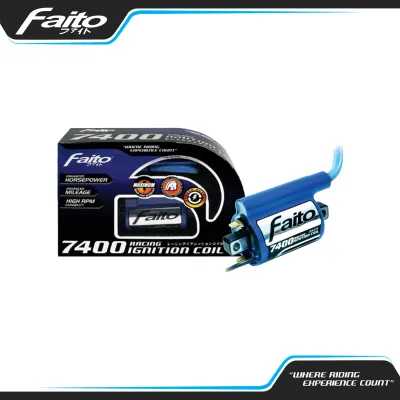
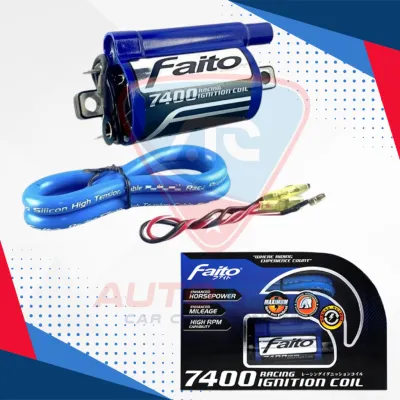
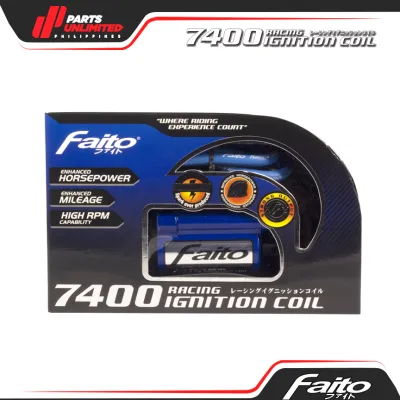

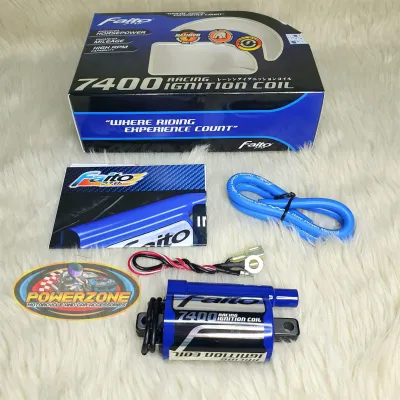
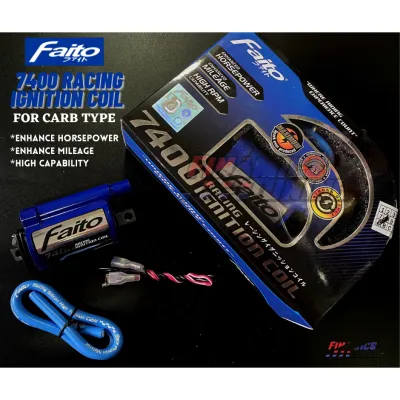
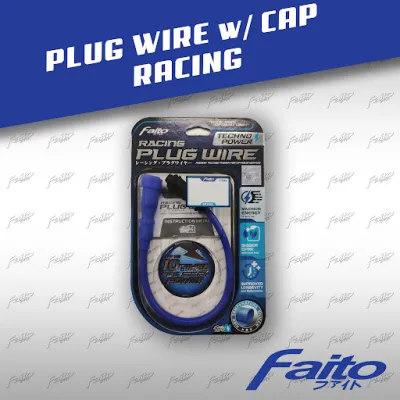
Prices are valid at publication and may change. Please refer to the product page for the latest price.
When the engine control unit detects these combustion inconsistencies, it typically illuminates the check engine light on your dashboard. Connecting a basic OBD2 diagnostic tool to your vehicle’s diagnostic port can help pinpoint the issue by retrieving cylinder-specific fault codes, such as P0301 through P0304. These codes indicate exactly which cylinder is experiencing the misfire, allowing you to focus your diagnostic efforts on the corresponding ignition coil and spark plug.
Beyond electronic diagnostics, a physical inspection of the Faito Ignition Coil 7400 can reveal clear signs of physical deterioration. Inspect the outer casing of the coil body for hairline cracks, swelling, or visible burn marks caused by electrical arcing. Additionally, check the electrical terminals and the spark plug boot for signs of corrosion, moisture intrusion, or green oxidation, which can disrupt the electrical path and cause intermittent ignition failures.
Deciding Whether to Replace the Coil and Spark Plugs Together
Deciding whether to replace your ignition coil and spark plugs at the same time depends largely on the current condition of your ignition system and your vehicle’s maintenance history. If your vehicle has accumulated high mileage and you are already replacing a set of worn-out spark plugs, installing a new Faito Ignition Coil 7400 can restore optimal ignition performance and prevent future labor costs. Severely worn spark plugs with excessively wide gaps force the ignition coil to work much harder to bridge the gap, which can prematurely degrade a new or existing coil.

Conversely, if you recently installed fresh spark plugs and one specific ignition coil fails prematurely due to an isolated defect or localized moisture damage, replacing only that single faulty coil is a highly cost-effective solution. There is generally no technical requirement to replace all ignition coils if only one has failed, provided the remaining coils and spark plugs are still well within their service limits. This approach saves you from spending several thousand pesos (₱) on unnecessary parts while still resolving the immediate performance issue.
To make an informed decision, always consult your vehicle owner’s manual and the manufacturer’s recommended maintenance schedules. These documents outline the specific replacement intervals for your ignition components and help you align your maintenance tasks. If you are upgrading to a high-performance coil like the Faito 7400 to support other engine modifications, it is highly recommended to install a fresh set of compatible spark plugs at the same time to ensure the entire ignition system operates at peak efficiency.
Understanding What Affects Ignition Coil Longevity
Several environmental and mechanical factors influence how long an ignition coil remains functional. In tropical regions, extreme under-hood temperatures combined with heavy stop-and-go traffic put immense thermal stress on electrical components. Over time, this constant heat cycling can degrade the internal copper windings and insulation of the coil, leading to internal short circuits and reduced voltage output.
The physical condition of your spark plugs plays a direct role in the lifespan of your Faito Ignition Coil 7400. As spark plugs age, their electrodes gradually erode, causing the spark gap to widen. This wider gap, along with carbon fouling from incomplete combustion, increases the electrical resistance and forces the coil to generate a much higher voltage to produce a spark, rapidly accelerating internal wear.
External contaminants also pose a significant threat to ignition coil longevity. Engine oil leaks from a leaking valve cover gasket can pool in the spark plug wells, submerging the coil boot and causing the rubber to swell and degrade. Similarly, high humidity, heavy rainfall, and improper engine bay washing can introduce moisture into the electrical connectors, leading to corrosion and electrical tracking that bypasses the spark plug entirely.
Essential Pre-Replacement Checks and Safety Steps
Before purchasing or installing a Faito Ignition Coil 7400, you must verify its compatibility with your specific vehicle model, year, and engine configuration. Check the manufacturer’s specifications to ensure the part number, mounting bracket design, and electrical terminal configuration match your original equipment exactly, as ignition systems vary widely across different vehicle makes. Never attempt to force a coil into a mounting position that does not align perfectly with the original mounting points.
Safety is paramount when working on a vehicle’s electrical and ignition systems. Always park the vehicle on a level surface, engage the parking brake, and disconnect the negative battery terminal to prevent accidental electrical shocks or short circuits. Allow the engine to cool completely to avoid severe burns from hot engine components or exhaust manifolds before touching any part of the ignition system.
During installation, applying a thin layer of high-quality dielectric grease to the inside of the spark plug boot can help seal out moisture and prevent the boot from sticking to the plug in the future. However, if you encounter complex electrical issues, damaged wiring harnesses, or if the misfire persists after replacing the coil and plugs, stop immediately. Consult a qualified mechanic to perform advanced diagnostics, as improper installation or handling of high-voltage ignition components can cause severe vehicle damage or personal injury.
Frequently Asked Questions (FAQ)
Can a bad spark plug ruin a new ignition coil?
Yes, a worn or damaged spark plug can quickly ruin a newly installed ignition coil. When a spark plug’s gap becomes too wide due to wear, or if the plug is heavily fouled with carbon or oil, the electrical resistance increases significantly. This forces the ignition coil to output a much higher voltage than it was designed to handle to jump the gap, causing the coil’s internal insulation to overheat and fail prematurely. Inspecting and replacing worn spark plugs is a critical first step before installing a new coil.
Is it safe to drive with a failing ignition coil?
Driving with a failing ignition coil is not recommended and can lead to costly secondary damage. A misfiring cylinder allows unburned fuel to pass directly into the exhaust system, where it can overheat and destroy the catalytic converter, damage oxygen sensors, and increase harmful emissions. If your vehicle is experiencing severe misfires, a flashing check engine light, or a sudden loss of power, it is safest to park the vehicle and have it towed to a professional service center for repair.

Community discussion
Share your experience or ask a question. Comments are reviewed before publication.