
Selecting the right 4-liter coolant for your car in the Philippines requires matching your vehicle manufacturer’s precise chemical specifications rather than relying on generic marketing claims or fluid colors. In a tropical climate characterized by intense humidity, high ambient temperatures, and punishing stop-and-go traffic in metropolitan areas, your engine’s cooling system operates under constant stress. A high-quality coolant does more than prevent overheating; it actively protects internal metal components from corrosion, prevents scale buildup, and maintains stable heat transfer efficiency.
While a 4-liter container is a highly convenient volume for typical passenger car cooling systems—often providing the exact amount needed for a standard drain-and-fill or serving as a substantial base for a full system flush—choosing the wrong formulation can lead to catastrophic engine damage. To safeguard your vehicle, you must evaluate products based on their chemical technology, OEM approvals, and suitability for local driving conditions. This guide outlines the critical factors to verify on product labels, such as those found on topbest coolant 4 liters options, to ensure your engine remains protected and efficient.
Understanding Coolant Types and Formulations
Modern automotive cooling systems are highly sensitive to the chemical composition of the fluids running through them. Vehicle manufacturers design engines using specific combinations of metals, plastics, and elastomers, each requiring a compatible additive package to prevent degradation. Using the incorrect coolant type can lead to rapid corrosion of aluminum cylinder heads, erosion of water pump impellers, and the breakdown of critical rubber seals.
Products mentioned in this guide
![[L-AX] 4 LITERS COOLANT TOPBEST BRAND](https://img.lazcdn.com/g/p/265a1ad5b28c2f5a6810dbf26c40a550.png_400x400q80.png_.webp)
![[YAMAS] 4 LITERS COOLANT TOP BEST BRAND](https://img.lazcdn.com/g/p/ab94097c9549efc206847bd80590eb26.png_400x400q80.png_.webp)
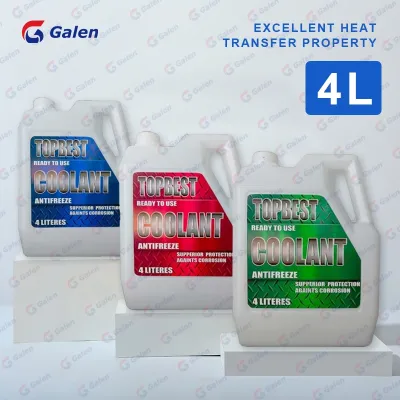
![[Iwas Overheat] Premium TOPBEST Radiator Coolant Anti-Boil Anti-Rust Iwas Kalawang Heavy Duty Engine Protection For Motorcycle Scooter Car Motor Accessories Maintenance Upgrade (Choose 1L 2L 4L 5L in Variation) COD](https://img.lazcdn.com/g/p/05b06cc1a465f66601c079ef77f95ce2.jpg_400x400q80.jpg_.webp)
![[Iwas Overheat]TOP Premium Radiator Coolant Liquid 1L 2L 4L 5L Iwas Kalawang Anti-Boil Anti-Corrosion For Motorcycle Car Tricycle SUV Heavy Duty Long Ride Safe Maintenance Motor Accessories Piliin Sa Variation Exact Fit Upgrade PnP COD](https://img.lazcdn.com/g/p/16e742d404499eb532baa88391c54542.jpg_400x400q80.jpg_.webp)
Prices are valid at publication and may change. Please refer to the product page for the latest price.
The oldest formulation is Inorganic Additive Technology (IAT), which typically contains silicates and phosphates to protect older cast-iron engines. However, these inhibitors deplete quickly, requiring frequent replacement. Organic Acid Technology (OAT) uses organic acids for long-lasting protection in newer aluminum engines but is incompatible with older materials. Hybrid Organic Acid Technology (HOAT) blends both approaches, with specialized variants like Phosphated HOAT (P-HOAT) for Asian vehicles and Silicated HOAT (Si-HOAT) for European brands.
Mixing these different coolant types is one of the most damaging mistakes a vehicle owner can make. When incompatible chemical formulations mix inside a hot engine, the additive packages can react negatively, causing the inhibitors to drop out of suspension. This reaction often results in a thick, gelatinous sludge that clogs the narrow passages of your radiator and heater core, severely restricting coolant flow and causing localized engine hot spots.
To find the exact formulation your vehicle requires, always consult your owner’s manual. Look for specific industry standards, such as ASTM codes, or original equipment manufacturer (OEM) approval codes. These specifications are the only reliable guide to compatibility, and any product you purchase must explicitly list these standards on its label to guarantee safe operation.
Evaluating Performance for Tropical Driving Conditions
Operating a vehicle in the Philippines presents unique thermal challenges that differ significantly from colder climates. While drivers in temperate regions must worry about sub-zero freezing protection, local motorists must focus almost entirely on boiling point elevation, heat transfer efficiency, and robust corrosion control under high ambient temperatures.

When evaluating a 4-liter coolant, pay close attention to the boiling point rating listed on the product label. A higher boiling point prevents the coolant from vaporizing under extreme heat, ensuring that the fluid remains in a liquid state to continuously absorb and dissipate heat from the engine block. This property is especially critical during prolonged idling in heavy urban traffic, where airflow through the radiator is minimal and the cooling system relies heavily on the chemical properties of the fluid and the vehicle’s electric fans.
Corrosion inhibitors play a vital role in maintaining heat transfer efficiency over time. In tropical environments, high humidity and heat accelerate chemical reactions, including oxidation and rust. If your coolant lacks adequate corrosion inhibitors, a layer of scale and rust will gradually coat the inner surfaces of your radiator tubes and engine water jackets. This buildup acts as an insulator, trapping heat inside the engine and reducing the overall efficiency of the cooling system. Additionally, high-quality formulations contain specific additives that protect against cavitation—where tiny vapor bubbles collapse violently against the water pump impeller, causing erosion and premature pump failure.
You must also choose between pre-mixed (often labeled as 50/50) and concentrated formulas. Pre-mixed coolants are pre-diluted with demineralized water, offering maximum convenience and eliminating the risk of using contaminated tap water, which introduces harmful minerals into the system. Concentrated formulas require manual dilution, typically at a 50:50 ratio with distilled water. While concentrates can be more economical, you must strictly avoid using ordinary tap or mineral water for dilution, as the dissolved minerals will quickly precipitate out, forming scale that clogs your radiator.
Matching the Right 4-Liter Coolant to Your Vehicle
Selecting a compatible coolant requires a systematic approach that prioritizes manufacturer specifications over generic marketing claims. When searching for a topbest coolant 4 liters option, the first step is to cross-reference the technical specifications printed on the back of the bottle with the requirements listed in your vehicle’s manual. Do not rely on broad statements like “suitable for all makes and models” unless the product explicitly lists your vehicle’s specific OEM approval code.
A common and dangerous misconception among car owners is that coolant color indicates compatibility. Many believe that any green coolant can be mixed with another green coolant, or that red fluids are universally interchangeable. In reality, coolant dye is completely arbitrary and is added by manufacturers solely for safety, leak detection, and brand identification. Two coolants of the identical color can have completely different chemical bases, while two coolants of different colors might actually be chemically compatible. Always ignore the color and read the chemical formulation and approval codes on the label.
When planning your purchase, consider whether a single 4-liter container is sufficient for your needs. The cooling system capacity of a typical compact passenger car or sedan usually ranges between 4 to 6 liters. If you are performing a simple drain-and-fill—which typically removes only about 50% to 70% of the total fluid because a significant portion remains trapped in the engine block and heater core—a single 4-liter bottle of pre-mixed coolant is often perfectly adequate.
However, if you are conducting a complete system flush, which involves draining the entire system, flushing it with distilled water, and refilling it completely, you will likely need more than 4 liters of fluid. In this scenario, purchasing two 4-liter bottles of pre-mixed coolant, or a single 4-liter bottle of concentrate to be diluted with an equal volume of distilled water, ensures you have enough fluid to complete the job without running short mid-procedure.
What to Inspect Before Purchasing and Using
Before purchasing any coolant from an auto supply shop or an online marketplace, a thorough physical inspection of the product packaging is essential to ensure safety and fluid integrity. Counterfeit or degraded automotive fluids are a persistent risk, and using substandard coolant can lead to severe engine damage that is costly to repair.
Begin by examining the container’s tamper-evident seals. The plastic cap should be firmly attached to the locking ring, and there should be a secure foil seal beneath the cap. Any signs of leaking, sticky residue, or a loose cap indicate potential tampering or exposure to air. Additionally, locate the manufacturing date and batch number stamped on the bottle. While sealed coolant has a long shelf life, using products that have sat on a shelf for several years is not recommended, as some additive packages can slowly destabilize over time.
Read the safety data and handling instructions printed on the label carefully. Most conventional coolants contain ethylene glycol, a highly toxic chemical that can be fatal if swallowed by humans or animals. Because ethylene glycol has a naturally sweet taste, it is particularly attractive to pets and young children. Ensure the product has clear warning labels and a child-resistant cap, and plan to store any leftover fluid in a secure, locked cabinet well out of reach.
Finally, assess your vehicle’s current condition to determine if a simple top-up is sufficient or if a professional intervention is required. If your coolant is clean but low, a simple top-up with a compatible fluid is appropriate. However, if you observe rust particles, oil droplets, or a milky emulsion in your overflow tank, these are symptoms of severe internal issues, such as a blown head gasket or a failing oil cooler. In such cases, a simple fluid change will not resolve the underlying problem, and you must seek a professional diagnostic assessment immediately.
Safe Handling and Maintenance Practices
Performing DIY coolant maintenance requires strict adherence to safety protocols to prevent severe personal injury and environmental contamination. The most critical rule of cooling system maintenance is to never, under any circumstances, open the radiator cap or the pressurized overflow tank cap while the engine is hot or even warm.
When an engine runs, the cooling system operates under high pressure, which raises the boiling point of the liquid. Opening the cap releases this pressure instantly, causing the superheated coolant to flash boil into steam. This can spray scalding liquid and steam, causing severe burns. Always allow the engine to cool completely—typically for at least two to three hours—and verify that the upper radiator hose is cool to the touch and soft when squeezed before slowly loosening the cap with a thick rag.
Proper disposal of used coolant is another vital responsibility. Because ethylene glycol is highly toxic to aquatic life and soil ecosystems, you must never pour used coolant down household drains, storm sewers, or directly onto the ground. Collect the drained fluid in a clean, leak-proof container with a secure lid, label it clearly as toxic waste, and transport it to a local recycling center or an authorized automotive service station that accepts hazardous waste.
While many coolant maintenance tasks are straightforward, you must recognize the limits of DIY service and know when to consult a professional mechanic. If you experience persistent overheating warnings after refilling the system, you may have an airlock—a pocket of trapped air that prevents coolant from circulating properly. Bleeding air from modern, complex cooling systems can be difficult and often requires specialized vacuum-filling equipment. Additionally, if you detect a sweet smell inside the cabin, notice damp carpets, or observe consistent fluid loss without any visible external leaks, you may have a leaking heater core or an internal engine leak. These issues require professional diagnostic tools, such as pressure testers and combustion leak detectors, to locate and repair safely. Attempting to drive with an unresolved cooling system leak risks catastrophic engine failure, making professional assistance the safest and most cost-effective choice.
Frequently Asked Questions (FAQ)
Can I mix two different brands of coolant if they are the same color?
No, you should not mix different brands of coolant based solely on their color. Color is not a standardized industry indicator of chemical composition; it is merely a dye added by manufacturers for identification and leak detection. Two coolants of the same color can use entirely different additive technologies, such as one being an Organic Acid Technology (OAT) and the other a Hybrid Organic Acid Technology (HOAT). Mixing incompatible chemical formulations can cause the corrosion inhibitors to react, resulting in chemical fallout, gel formation, and severe blockages within your radiator and engine block. Always verify that the chemical specifications and OEM approvals match before mixing any fluids.
How often should a 4-liter coolant be replaced in a tropical climate?
You should always follow the specific mileage or time-based replacement intervals detailed in your vehicle’s official maintenance schedule rather than relying on general climate assumptions. While tropical conditions in the Philippines subject the cooling system to continuous thermal stress, modern long-life coolants are engineered to maintain their protective properties for extended periods, often up to five years or 100,000 kilometers, depending on the manufacturer. To ensure ongoing protection, perform regular visual inspections of the fluid in your overflow tank. If the coolant appears discolored, cloudy, or contains visible rust particles or debris, it should be replaced immediately, regardless of the remaining time or mileage on your service schedule.

Community discussion
Share your experience or ask a question. Comments are reviewed before publication.