
Finding a safe, properly fitting helmet for a 7-year-old boy is one of the most critical decisions a parent can make when preparing for any ride. Whether he is joining you as a passenger on a weekend trip or learning to navigate neighborhood paths, protecting his developing head requires more than just picking a popular brand or a cool graphic design. Because children’s head shapes, neck strengths, and growth rates vary significantly, the ideal helmet is not a one-size-fits-all product. The best helmet is the one that perfectly matches his exact head circumference, aligns with his specific riding role, and carries verified safety standards.
In the Philippines, where tropical heat, heavy traffic, and varied road conditions are part of daily life, selecting the right protective gear involves balancing safety, comfort, and legal compliance. A helmet that is too loose will fail to protect him during an impact, while one that is too heavy can strain his neck muscles and cause fatigue. By focusing on precise measurements, structural designs, and official certifications, you can confidently choose a helmet that keeps your child secure on every journey.
Identify the Riding Type and Passenger Rules
Before browsing through helmet designs, you must first clarify how and where your 7-year-old boy will use the helmet. The safety requirements for a child riding as a pillion passenger on a motorcycle are vastly different from those for a child riding an e-bike or a non-motorized bicycle. Motorcycle helmets are engineered to withstand high-velocity impacts and slide along asphalt, which requires a much denser protective liner and a tougher outer shell. Conversely, bicycle and light e-bike helmets are designed for lower-speed falls and prioritize maximum ventilation to keep the rider cool.
Products mentioned in this guide
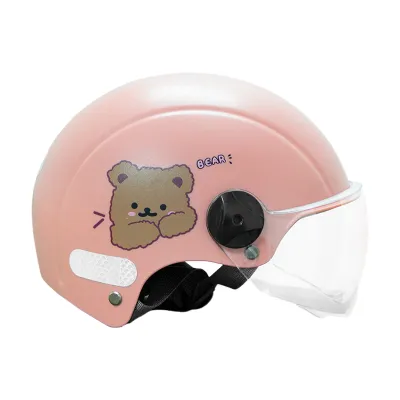
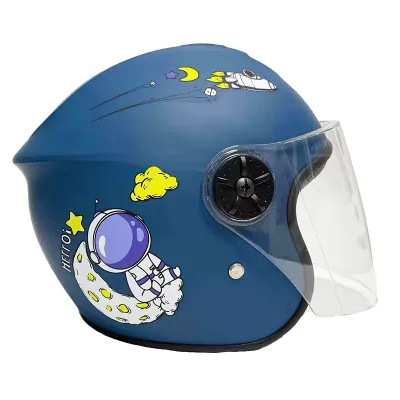
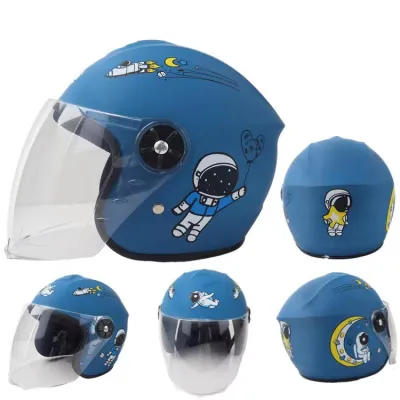
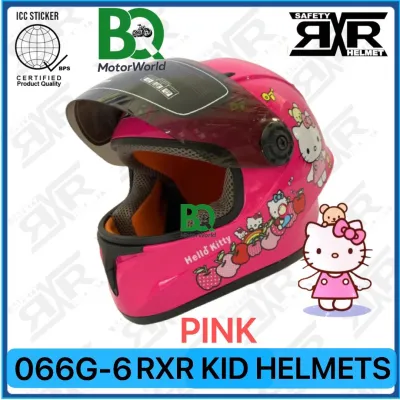
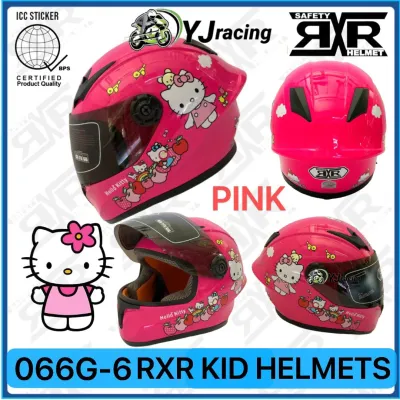
Prices are valid at publication and may change. Please refer to the product page for the latest price.
If you plan to have your child ride as a passenger on a motorcycle, you must strictly adhere to local traffic regulations in the Philippines. Under Republic Act No. 10666, also known as the Children’s Safety on Motorcycles Act, children are only permitted to ride on public roads under very specific conditions. The law dictates that the child’s feet must comfortably reach the standard foot pegs of the motorcycle, their arms must be long enough to fully wrap around the waist of the rider, and they must wear a standard protective helmet that fits them properly. If your 7-year-old does not meet these physical reach requirements, it is illegal and highly unsafe for him to ride on a motorcycle, regardless of how high-quality his helmet is.
Furthermore, you must evaluate your child’s physical readiness to support an automotive-grade helmet. Full-face and open-face motorcycle helmets are inherently heavier than bicycle helmets because of their robust construction. A 7-year-old’s neck muscles and cervical spine are still developing and may not be strong enough to bear the weight of a heavy helmet during sudden stops, turns, or prolonged rides. Always consult the manufacturer’s specifications regarding the helmet’s weight and ensure your child can hold his head upright and move it freely without any signs of strain or discomfort before taking him on the road.
How to Measure Head Circumference and Check the Fit
Achieving a perfect fit is the most critical factor in helmet safety, as an improperly sized helmet can slip off or fail to absorb impact during an accident. To find the correct size, you must measure your child’s head circumference using a soft, flexible measuring tape. Wrap the tape horizontally around his head at its widest point, which is typically about one inch or two and a half centimeters above his eyebrows and directly over his ears. Keep the tape snug but not tight, and record the measurement in centimeters, as most helmet manufacturers use metric sizing for precision.

Once you have this measurement, compare it directly to the specific size chart provided by the helmet manufacturer. Avoid relying on generic size labels such as ‘Youth Medium’ or ‘Kids Large,’ because sizing standards vary dramatically between different brands and models. A medium in one brand might correspond to a completely different centimeter range in another. If your child’s measurement falls directly between two sizes, it is generally safer to opt for the smaller size to ensure a snug fit, provided it does not cause painful pressure points.
After receiving the helmet, you must perform a physical fit check to verify that it sits correctly on his head. The helmet should sit level on his head, covering his forehead, with the front edge positioned about two finger-widths above his eyebrows. Have your child perform the ‘shake test’ by gently shaking his head from side to side and up and down; the helmet should not slide, rotate, or shift independently of his skin. Next, check the cheek pads, which should press firmly against his cheeks without pushing them into his eyes or causing discomfort. Finally, slide your finger under the chin strap; you should only be able to fit one or two fingers between the strap and his chin, ensuring the helmet remains locked in place.
Full-Face vs. Open-Face: Protection, Weight, and Comfort
When choosing between a full-face and an open-face helmet for a 7-year-old boy, you must weigh the trade-offs between maximum protection, overall weight, and riding comfort. A full-face helmet offers the highest level of safety because it features a solid chin bar that protects the lower face, jaw, and teeth, which are highly vulnerable areas in a fall. However, this comprehensive coverage adds noticeable weight and can feel restrictive or hot, especially during warm afternoons in the Philippines.
An open-face helmet, on the other hand, is significantly lighter and provides a wider field of vision, which can make a young child feel less claustrophobic. The open design also allows for superior ventilation, helping to keep your child cool in humid tropical weather. The major drawback is the complete lack of chin and facial protection, leaving your child exposed to flying debris, wind, and direct facial impacts. If your child is riding on public roads at moderate speeds, the added safety of a full-face helmet is highly recommended, provided his neck strength can support it.
To mitigate the risk of neck strain, look for helmets engineered specifically for youth riders that utilize lightweight shell materials, such as advanced polycarbonate or fiberglass composites. These materials offer excellent impact resistance without the heavy bulk of adult helmet shells. Always check the manufacturer’s stated weight on the product label or specification sheet, and compare it to your child’s physical comfort during a trial wear. Prioritizing a lightweight, youth-engineered model ensures that your child remains comfortable and alert throughout the ride, reducing the temptation to take the helmet off.
Essential Safety Certifications to Verify
Never rely on bright graphics, popular cartoon characters, or low prices when selecting a helmet for your child. Visual appeal and marketing claims do not guarantee protection during an impact. Instead, you must learn to locate and verify official safety certifications that prove the helmet has undergone rigorous laboratory testing. For street-legal use on motorcycles in the Philippines, look for the Import Commodity Clearance (ICC) sticker or the Philippine Standard (PS) mark, which are issued by the Bureau of Product Standards to certify compliance with national safety regulations.
In addition to local marks, reputable helmets will carry recognized international safety certifications. Look for the Department of Transportation (DOT) FMVSS 218 sticker, which is the standard certification in the United States, or the Economic Commission for Europe (ECE) 22.05 or 22.06 certification, which is widely regarded as one of the most stringent safety standards globally. These certification labels are typically found on the back of the helmet shell or sewn directly onto the chin strap or interior comfort liner.
Be highly vigilant against unbranded, novelty, or ‘toy’ helmets sold on online marketplaces or roadside stalls. These products are often made of cheap, brittle plastics and thin foam that will shatter upon impact, offering zero protection to your child’s head. If a helmet lacks a verifiable ICC, PS, DOT, or ECE certification mark, do not purchase it. Investing in a certified helmet ensures that the protective EPS (expanded polystyrene) liner is engineered to absorb and distribute impact forces, keeping your 7-year-old safe when it matters most.
The Final In-Store Fitting and Inspection Checklist
Before finalizing your purchase, conducting a thorough physical inspection of the helmet will ensure it is practical, comfortable, and durable for daily use. Start by examining the interior comfort liner. Because children sweat actively, especially in the humid Philippine climate, look for a helmet with a removable, washable, and hypoallergenic inner lining. Being able to easily remove and wash the pads prevents the buildup of sweat, dirt, and bacteria, keeping the helmet fresh and preventing skin irritation on your child’s face.
Next, inspect the chin strap fastening mechanism to ensure it is secure yet manageable. The two primary types are the double D-ring system and the quick-release micrometric buckle. While the double D-ring is highly secure and widely used in racing, a quick-release buckle is often more practical for children as it allows parents to quickly fasten and unfasten the helmet without accidentally pinching the child’s skin. Whichever system you choose, practice operating it several times to ensure the strap does not slip under tension and that the padding beneath the buckle protects your child’s neck from chafing.
Finalizing your purchase also requires verifying the manufacturing date of the helmet, which is usually printed on a white sticker inside the shell beneath the comfort liner. Helmet materials, particularly the protective EPS liner, degrade over time due to exposure to heat, humidity, and sweat, even when sitting on a retail shelf. Avoid buying helmets that are more than a few years old from their manufacture date. Additionally, confirm the retailer’s return or exchange policy before paying, as your child may find the helmet uncomfortable or tight after wearing it at home for a longer trial period.
Frequently Asked Questions (FAQ)
Can a 7-year-old safely wear a scaled-down adult helmet?
No, a 7-year-old child should never wear an adult helmet, even if it is a small or extra-small size that seems to fit his head circumference. Youth-specific helmets are engineered differently from adult models to accommodate the unique anatomy of a developing child. They feature lighter overall weights to prevent neck strain, different internal shell shapes that match a child’s head proportions, and softer EPS liners designed to absorb impacts at the lower forces typical of youth accidents. An adult helmet is too heavy and rigid, which can increase the risk of severe neck injury or fail to cushion a child’s head properly during an impact.
How often should a child's helmet be replaced?
A child’s helmet must be replaced immediately under several key conditions. First, you must replace the helmet after any impact, drop, or accident, even if there is no visible damage on the outer shell, because the internal EPS liner is designed to compress once to absorb shock and cannot protect a second time. Second, you should replace the helmet as soon as your child outgrows the current size parameters, as a tight helmet will cause pain and fail to sit correctly on his head. Lastly, even without an accident or growth spurt, standard industry guidelines recommend replacing a helmet every three to five years due to the natural degradation of protective materials from heat, sweat, and environmental exposure.

Community discussion
Share your experience or ask a question. Comments are reviewed before publication.