
Finding a reliable helmet for motorcycle use in the Philippines does not require spending a fortune, but it does require strict adherence to local safety laws. Whether navigating the congested streets of Metro Manila or cruising along provincial highways, your helmet is your primary line of defense. The market offers certified options across a wide range of price points, starting from budget-friendly commuter lids to professional-grade racing helmets. The absolute baseline for any purchase is verifying that the helmet carries a genuine local safety certification.
Understanding PSB and ICC Safety Standards for Local Riders
To legally ride on public roads in the Philippines, every motorcyclist must wear a helmet that complies with the standards set by the Department of Trade and Industry (DTI) through the Bureau of Product Standards (BPS). Under Republic Act No. 10054, also known as the Motorcycle Helmet Act, riders are required to use helmets marked with either the Philippine Standard (PS) mark—often referred to as the PSB mark—or the Import Commodity Clearance (ICC) sticker. The PS mark is typically issued for helmets manufactured locally, while the ICC sticker is affixed to imported helmets that have successfully passed rigorous verification and batch testing upon entering the country.
It is crucial to understand that these local marks represent a baseline of safety compliance rather than a premium performance rating. A certified helmet guarantees that the shell, impact-absorbing liner, and retention strap can withstand specific levels of impact and penetration during an accident. However, certification does not automatically mean the helmet will be the quietest, lightest, or most aerodynamically stable option on the road. It simply ensures that the helmet meets the minimum legal and physical protective thresholds required to save your life.
Products mentioned in this guide
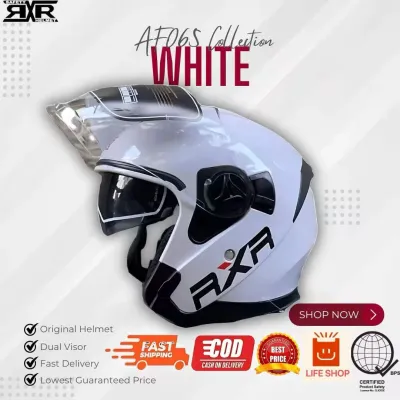
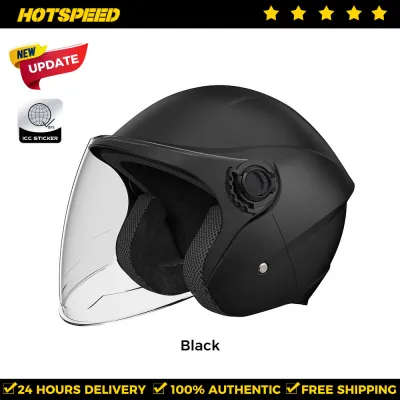
Prices are valid at publication and may change. Please refer to the product page for the latest price.
These local standards do not exist in a vacuum; they closely align with and recognize major international safety standards. For instance, the ICC sticker is often granted to imported helmets that have already secured United Nations Economic Commission for Europe (ECE) or United States Department of Transportation (DOT) certifications. While an ECE 22.05 or ECE 22.06 rating indicates exceptionally high safety engineering, local traffic enforcers specifically look for the physical PS or ICC sticker during checkpoints. Therefore, even if you purchase a highly rated international helmet, it must still bear the official local sticker to be fully road-legal in the country.
Navigating Budget Tiers: Features and Trade-Offs
Understanding what each price tier offers allows you to balance your personal budget with the comfort features required for your daily rides. While every price bracket contains legally compliant options, the materials, weight, and overall refinement of the helmet change significantly as you move up the scale.

Entry-Level: Meeting Baseline Safety on a Tight Budget
Entry-level helmets, typically priced under ₱3,000, prioritize affordable protection above all else. These helmets almost exclusively utilize injection-molded Acrylonitrile Butadiene Styrene (ABS) plastic for their outer shells. While ABS is highly durable and capable of dispersing impact energy effectively, it requires a thicker layer of material to achieve the necessary strength, which generally makes entry-level helmets heavier than their premium counterparts.
At this price point, you can expect basic clear visors without advanced anti-fog coatings and simplified ventilation systems with fewer adjustable ports. Comfort liners are functional but may use coarser fabrics that retain heat more easily during long rides. Despite these compromises, many reputable local and international brands offer entry-level models that fully pass PS or ICC testing. When shopping in this tier, focus heavily on securing a proper fit and ensuring the micrometric quick-release strap operates smoothly and locks securely.
Mid-Range: Balancing Daily Comfort and Cost
Stepping into the mid-range bracket, which generally spans from ₱3,000 to ₱10,000, introduces significant improvements in daily usability and comfort. Manufacturers at this level often upgrade shell materials to advanced polycarbonate blends or entry-level fiberglass composites. These materials allow the helmet to be lighter while maintaining excellent structural integrity, directly reducing neck strain during long daily commutes.
Functional features also receive a major upgrade in the mid-range tier. You will frequently find helmets equipped with dual-visor systems, featuring a drop-down internal sun shield that is incredibly convenient for transitioning between bright daytime sun and night riding. Visors are often scratch-resistant and come ready to accept Pinlock anti-fog insert lenses. Additionally, the interior comfort liners are typically fully removable, washable, and constructed from hypoallergenic, moisture-wicking fabrics that keep you cooler in tropical weather.
Premium: Advanced Materials and Aerodynamics
Premium helmets, ranging from ₱10,000 to well over ₱30,000, are engineered for maximum performance, long-distance touring, or track racing. These high-end models utilize advanced shell constructions made of carbon fiber, aramid, or complex multi-composite weaves. These materials offer the highest strength-to-weight ratio available, resulting in an exceptionally lightweight helmet that minimizes fatigue during hours of continuous riding.
The premium price tag also covers extensive aerodynamic research, often conducted in wind tunnels to reduce drag, lift, and wind noise at high speeds. Visors on premium helmets offer optical-class clarity to prevent distortion, robust locking mechanisms, and pre-installed Pinlock systems. Safety is further enhanced by features like Emergency Quick Release Systems (EQRS), which allow medical personnel to safely remove the cheek pads before taking off the helmet in an emergency. These helmets represent the pinnacle of rider comfort, quietness, and advanced protection.
Prioritizing Key Features for Tropical Riding Conditions
The hot, humid, and wet climate of the Philippines places unique demands on riding gear. To ensure your helmet remains comfortable and safe throughout the year, you should look for specific design elements tailored to tropical environments.
Helmet Style The choice between a full-face and an open-face helmet involves a direct trade-off between ventilation and protection. Full-face helmets provide complete coverage, protecting your chin, jaw, and face from direct impacts, debris, and heavy rain. Open-face helmets offer superior airflow and a wider field of view, making them popular for low-speed city commuting. However, because a significant percentage of motorcycle impacts occur in the chin and jaw area, a full-face helmet remains the highly recommended choice for comprehensive safety.
Ventilation Systems A highly efficient ventilation system is non-negotiable when riding in tropical humidity. Look for helmets designed with multiple intake vents on the chin and forehead, paired with active exhaust vents at the rear. This configuration creates a venturi effect, actively drawing cool air in and pulling hot, humid air out of the helmet. Proper airflow not only keeps your head cool but also helps prevent the inside of the visor from fogging up during sudden afternoon downpours.
Visor Technology The intense tropical sun can cause eye strain and fatigue, making UV-protected visors essential. A dual-visor system with an integrated, drop-down dark sun shield allows you to adapt instantly to changing light conditions without needing to swap visors or wear sunglasses underneath. For the rainy season, prioritize a visor that is compatible with Pinlock anti-fog inserts, as the temperature differential between the warm humid air outside and your breath inside will quickly fog up standard visors.
Interior Liners Sweating is inevitable when riding in tropical climates, making the choice of interior fabric critical. Look for helmets featuring moisture-wicking, quick-drying, and hypoallergenic liners that pull sweat away from your skin. Crucially, ensure that the cheek pads and crown liners are fully removable and washable. Regularly washing these components prevents the buildup of bacteria, mold, and unpleasant odors, extending the overall lifespan and hygiene of your gear.
Verifying Authenticity and Avoiding Counterfeit Helmets
As demand for certified riding gear grows, counterfeit helmets and fake certification stickers have become increasingly common on the market. Riding with a counterfeit helmet poses an extreme safety risk, as these imitation products often shatter upon impact, offering virtually no protection.
To verify authenticity, start by closely inspecting the physical certification marks. A genuine ICC sticker is a high-quality, metallic holographic decal with clear, sharp serial numbers that do not easily peel off. The PS mark is typically printed directly onto the helmet’s rear shell or on a permanent label inside the liner. Be highly suspicious of stickers that look crooked, have blurry text, or can be easily scraped off with a fingernail.
There are several immediate red flags that indicate a product may be counterfeit. If a helmet from a well-known premium brand is being sold at a fraction of its standard retail price—especially on unverified online marketplaces—it is almost certainly a fake. Other warning signs include poor paint finish, misaligned ventilation ports, thin and flimsy interior padding, and weak chin strap buckles that feel brittle.
The safest way to avoid counterfeits is to purchase exclusively from authorized distributors, official brand stores, or reputable physical motorcycle accessory shops. These establishments source their inventory directly from manufacturers and official importers, ensuring that every helmet has undergone legitimate customs clearance and safety verification. Before making a final purchase, you can also cross-reference the specific helmet model with the official list of certified brands maintained by the Bureau of Product Standards or consult guidelines from the Land Transportation Office (LTO).
Frequently Asked Questions (FAQ)
Can I use a DOT or ECE certified helmet instead of PSB/ICC in the Philippines?
While DOT and ECE are highly respected international safety standards, Philippine law strictly requires a physical PS or ICC sticker for a helmet to be considered road-legal. If you ride on public roads with a helmet that only displays a DOT or ECE mark without the local sticker, you may still face fines and confiscation at traffic checkpoints. Fortunately, many premium imported helmets sold through authorized local distributors come pre-cleared with the official ICC sticker alongside their international certifications.
Does a heavier helmet mean it is safer?
No, a heavier helmet does not equate to better protection. Modern helmet safety is determined by how effectively the outer shell and the inner Expanded Polystyrene (EPS) liner absorb and disperse impact energy, not by the sheer weight of the materials. In fact, heavier helmets can increase the risk of neck fatigue and strain during a crash. Premium materials like carbon fiber and advanced fiberglass composites are specifically engineered to be incredibly lightweight while offering superior impact protection compared to heavier, entry-level ABS plastics.
How often should I replace my motorcycle helmet?
As a general rule, helmet manufacturers and safety organizations recommend replacing your helmet every three to five years of regular use, or seven years from the date of manufacture. Over time, the internal EPS liner gradually degrades due to exposure to sweat, hair oils, heat, and environmental pollutants, reducing its ability to absorb impacts. Most importantly, you must replace your helmet immediately after any crash or significant impact, even if there is no visible damage on the outer shell, as the internal protective liner compresses permanently after a single impact to protect your head.

Community discussion
Share your experience or ask a question. Comments are reviewed before publication.