
Finding the top pink coolant for your car in the Philippines requires looking beyond the bright color on the shelf. While many vehicle owners assume that all pink coolants are identical, the pink hue is actually a synthetic dye added by manufacturers rather than an indicator of a universal chemical formula. To choose the right product for your vehicle, you must match the coolant’s underlying chemical technology with the specific requirements detailed in your car’s owner’s manual. In the tropical climate of the Philippines, where engines regularly endure high ambient temperatures, heavy urban traffic, and prolonged idling, selecting a compatible, high-quality coolant is essential for preventing overheating, boil-overs, and internal cooling system corrosion.
Using an incompatible coolant can lead to severe mechanical issues, including water pump failure, radiator clogging, and accelerated engine wear. Because different vehicle manufacturers design their cooling systems with distinct metals, gaskets, and seals, they require specific chemical inhibitors to protect these components. Consequently, the ideal pink coolant is not a one-size-fits-all product, but rather the formulation that aligns precisely with your vehicle’s original equipment manufacturer (OEM) specifications. By understanding how to read product labels, evaluate chemical technologies, and follow safe maintenance practices, you can ensure your engine remains properly protected under demanding tropical driving conditions.
Understanding Pink Coolant and Vehicle Compatibility
To make an informed decision, it is vital to understand that coolant color is not a standardized industry classification. Historically, coolant colors were highly consistent, with green representing traditional inorganic formulas and orange or pink representing newer organic acid technologies. Today, however, manufacturers use a wide spectrum of dyes, meaning a pink fluid from one brand may feature a completely different chemical composition than a pink fluid from another. Relying solely on color to choose a replacement fluid can result in severe compatibility issues.
Products mentioned in this guide
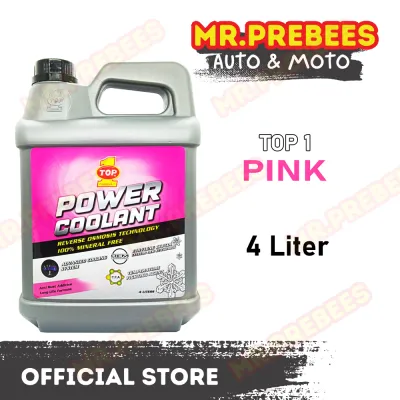
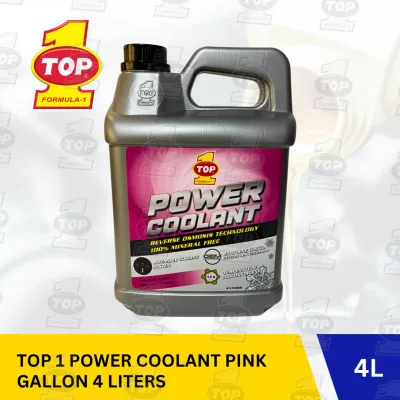
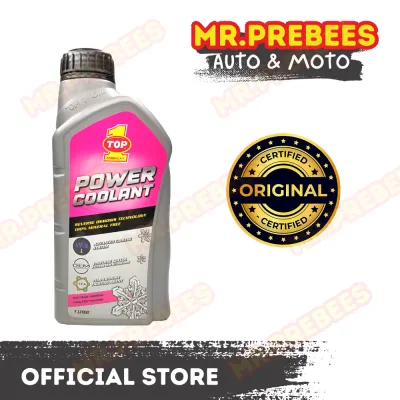
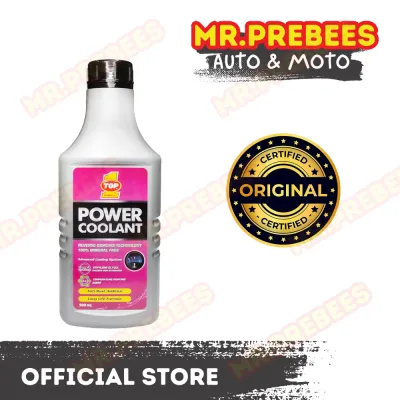
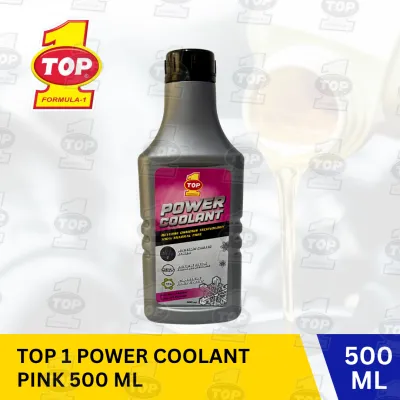
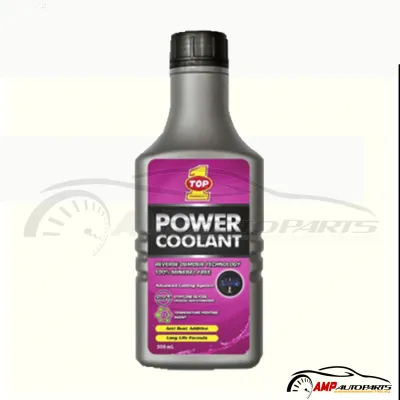
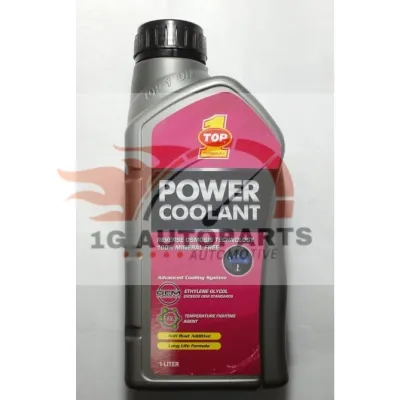
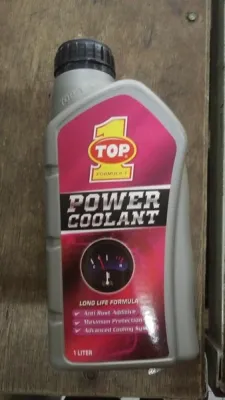
Prices are valid at publication and may change. Please refer to the product page for the latest price.
To verify compatibility before purchasing any coolant, your first step should always be to consult your vehicle’s owner’s manual or inspect the coolant reservoir cap. Automakers specify the exact coolant standards required for their engines, often using proprietary codes or industry-standard designations such as those from the American Society for Testing and Materials (ASTM) or the Japanese Industrial Standards (JIS). For instance, many modern Asian vehicles, particularly those from Japanese and Korean manufacturers, require specialized pink or blue formulations that are phosphate-rich but free of silicates and borates. Checking these official specifications ensures you select a fluid designed to protect the specific metallurgy of your engine block and radiator.
Mixing different coolant chemistries is one of the most common and costly mistakes a vehicle owner can make. When incompatible chemical inhibitors are combined—such as mixing an Organic Acid Technology (OAT) coolant with an Inorganic Acid Technology (IAT) coolant—a chemical reaction can occur. This reaction often causes the inhibitors to precipitate out of the liquid, forming a thick, gelatinous sludge or gel inside the cooling system. This gelling restricts the flow of fluid through the narrow passages of the radiator and heater core, leading to rapid engine overheating. Furthermore, the loss of active corrosion inhibitors leaves internal metal surfaces vulnerable to rapid rust, cavitation, and water pump seal failure, which can require expensive professional repairs.
Key Selection Criteria for Pink Engine Coolant
When evaluating pink engine coolants in the local market, you should use a structured checklist to assess their technical specifications and suitability for your driving environment.

Chemical Technology
The underlying chemical formulation determines how the coolant protects your engine over time. Most modern pink coolants utilize Organic Acid Technology (OAT) or Hybrid Organic Acid Technology (HOAT). OAT formulations rely on organic acids to provide long-lasting corrosion protection, typically lasting several years or hundreds of thousands of kilometers. These are highly common in modern European and American vehicles. HOAT formulations, on the other hand, combine organic acids with a small amount of inorganic inhibitors, such as phosphates or silicates, to provide rapid initial protection for specific metal alloys. Many Asian vehicle manufacturers specify a particular type of HOAT, often referred to as Phosphated Organic Acid Technology (P-OAT), which is dyed pink or blue. You must match this technology to your vehicle’s age and manufacturer specifications to prevent premature component degradation.
Temperature Protection
Although the Philippines does not experience freezing winter temperatures, the boiling point protection offered by a coolant is of paramount importance. In tropical climates, stop-and-go traffic in dense urban areas like Metro Manila can cause engine temperatures to rise rapidly. A high-quality coolant raises the boiling point of the water in the cooling system, preventing the fluid from vaporizing under extreme heat. When coolant boils, it creates steam pockets that cannot transfer heat away from engine components, leading to localized hot spots and potential cylinder head warping. When reviewing product labels, check the boiling point rating under standard operating pressure (usually indicated for a 15-psi radiator cap) to ensure it meets or exceeds your vehicle’s requirements for high-load driving.
Pre-mixed vs. Concentrate
Coolants are generally sold in two forms: 50/50 pre-diluted (pre-mixed) solutions and full-strength concentrates. Pre-diluted coolants are incredibly convenient, as they are formulated with the precise ratio of coolant to purified water and are ready to pour directly into your radiator or expansion tank. This eliminates the risk of mixing errors. Concentrates, however, must be manually diluted with water before use, typically in a 50/50 ratio. If you choose a concentrate, you must use distilled or deionized water for dilution. Never use tap water, well water, or mineral water from local sources. Tap water contains minerals like calcium and magnesium that precipitate out under high engine heat, forming hard scale deposits inside the radiator tubes and water jackets. This scale acts as an insulator, severely reducing heat transfer efficiency and eventually clogging the system.
Label Certifications
To verify quality claims and avoid counterfeit or substandard products, look for recognized automotive standards printed clearly on the packaging. Reputable manufacturers submit their products for rigorous testing to meet standards such as ASTM D3306 (the standard specification for glycol-base engine coolants for automobile and light-duty service) or JIS K2234 (the Japanese industrial standard for engine coolants). If a product packaging lacks these certifications or only features vague marketing claims without referencing specific industry standards, it is best to avoid it in favor of a fully certified alternative.
Leading Pink Coolant Formulations to Evaluate
To help you navigate the options available in the Philippines, it is helpful to categorize pink coolants into three main groups. This allows you to evaluate their suitability based on your vehicle type and maintenance preferences.
OEM-Specific Pink Coolants
For vehicle owners prioritizing absolute compatibility and warranty compliance, OEM-specific pink coolants sourced from authorized dealerships are the most reliable option. These fluids are formulated by or directly for the vehicle manufacturer to match the exact metallurgical and chemical requirements of your specific engine model. While OEM fluids often carry a price premium compared to aftermarket alternatives, they eliminate the guesswork associated with compatibility. Using the factory-specified pink coolant is highly recommended for vehicles still under manufacturer warranty, as using an unapproved aftermarket fluid could potentially void coverage in the event of a cooling system failure.
Multi-Vehicle Asian Formulations
Many reputable aftermarket chemical manufacturers produce pink coolants specifically tailored for Asian vehicles, including popular brands like Toyota, Lexus, Daihatsu, and Scion. These formulations are typically P-OAT (Phosphated Organic Acid Technology) fluids that are free of silicates, borates, and amines, matching the factory fill specifications of these automakers. When evaluating these aftermarket options, carefully read the back label to ensure the product explicitly lists your vehicle’s OEM specification code. These multi-vehicle formulations offer a balanced middle ground, providing high-quality, targeted protection at a more accessible price point than dealership-sourced OEM fluids.
Universal/Global Pink Coolants
Universal or global pink coolants are designed to be compatible with a wide range of makes and models, regardless of origin. These products often utilize a proprietary organic acid technology designed not to react negatively with other coolant types. While highly convenient for households with multiple vehicles from different manufacturers, universal coolants require careful verification. Before adding a universal pink coolant to your system, check the product documentation to confirm it is approved for use in your specific vehicle. For highly specialized cooling systems, an OEM-specific or dedicated Asian formulation remains the safer choice to ensure optimal long-term corrosion protection.
Coolant Evaluation Framework
To assist you in comparing the pink coolant options available at local auto supply shops or online marketplaces, use the following evaluation framework. This matrix helps you organize your findings based on key decision factors rather than relying on unverified marketing claims.
| Evaluation Factor | OEM-Specific Pink | Multi-Vehicle Asian Pink | Universal/Global Pink |
|---|---|---|---|
| OEM Specification Match | Exact match guaranteed by vehicle manufacturer | High match for specified Asian makes; check label | Broad compatibility; may lack specific OEM approvals |
| Formulation Type | Typically P-OAT or specialized OAT | Phosphated Organic Acid Technology (P-OAT) | General Organic Acid Technology (OAT) |
| Ideal User | Owners of vehicles under warranty; purists | Out-of-warranty Asian vehicle owners seeking value | Multi-car households; general top-ups |
| Dilution Requirement | Available in both pre-mixed and concentrate | Usually sold as 50/50 pre-mixed | Available in both pre-mixed and concentrate |
| Price per Liter (₱) | Premium pricing at authorized dealerships | Moderate pricing at local auto supply shops | Budget-friendly to moderate pricing |
Safe Handling, Flushing, and Maintenance Practices
Working on your vehicle’s cooling system carries inherent safety risks. It is essential to follow proper procedures and safety boundaries to protect yourself and your vehicle. If you are unsure about any part of the process, or if your vehicle requires complex disassembly, always consult your original-vehicle service manual or seek assistance from a qualified professional mechanic.
Safety First
The most critical safety rule when servicing a cooling system is to never open the radiator cap or expansion tank cap while the engine is hot or warm. Under operating conditions, the cooling system is highly pressurized, and the fluid temperature can exceed 100°C. Opening the cap on a hot system allows the pressure to drop instantly, causing the coolant to flash boil and spray scalding liquid and steam. This can result in severe, life-altering chemical and thermal burns. Always allow the engine to cool completely—typically for several hours—before touching any cooling system components. Additionally, wear appropriate personal protective equipment, including heavy-duty nitrile gloves and safety glasses, to protect your skin and eyes from chemical exposure.
System Flushing
Over time, even long-life pink coolants degrade as their corrosion inhibitors are gradually depleted. Determining whether your vehicle needs a simple top-up or a complete system flush depends on your vehicle’s maintenance schedule and the condition of the existing fluid. A simple top-up is appropriate if the coolant level in the reservoir is slightly low but the fluid remains clean, bright pink, and free of debris. However, if the coolant appears cloudy, discolored, rusty, or contains floating particles, a full system flush is required. A flush involves draining the old fluid, running distilled water or a specialized cooling system cleaner through the system to remove scale and sediment, and refilling it with fresh coolant. Refer to your owner’s manual for the recommended service intervals, which typically range from every 40,000 to 100,000 kilometers depending on the manufacturer.
Disposal Rules
Engine coolant is highly toxic to humans, pets, and the environment. Ethylene glycol, the primary ingredient in most coolants, has a sweet taste and smell that can attract animals and children, leading to accidental poisoning. Never pour used coolant down household drains, storm sewers, or onto the ground. Store drained coolant in a sealed, clearly labeled container and transport it to a designated hazardous waste disposal facility, a local recycling center, or a participating automotive service center that accepts used fluids. Promptly clean up any spills on your driveway or garage floor using absorbent materials like cat litter or sand, and wash the area thoroughly.
Post-Refill Checks
After refilling your cooling system with fresh pink coolant, you must bleed any trapped air from the system. Air pockets, or “airlocks,” can prevent coolant from circulating properly, leading to localized overheating and inaccurate temperature sensor readings. To bleed the system, follow the specific instructions in your vehicle’s service manual, which typically involves running the engine with the radiator cap off or using dedicated bleed valves until the engine reaches operating temperature and the cooling fans cycle on. Once the air is purged, replace the cap securely. Monitor the coolant level in the expansion reservoir daily for the first few drive cycles, topping it up with compatible pre-mixed coolant if the level drops as remaining air pockets escape.
Frequently Asked Questions (FAQ)
Can I mix pink coolant with green or blue coolant? (FAQ)
No, you should not mix pink coolant with green, blue, or any other color of coolant. Coolant colors represent different chemical formulations and inhibitor packages. Mixing them can trigger a chemical reaction that causes the protective additives to fall out of solution, forming a thick, jelly-like sludge. This sludge can clog your radiator, heater core, and engine water jackets, leading to severe overheating and catastrophic engine damage. If you need to switch coolant colors or are unsure what type of fluid is currently in your vehicle, perform a complete system flush with distilled water before refilling the system with your chosen pink coolant.
How often should pink long-life coolant be replaced? (FAQ)
The replacement interval for pink long-life coolant varies significantly depending on your vehicle manufacturer’s specifications and your driving conditions. Many modern pink OAT and P-OAT coolants are designed to last for extended periods, often up to 5 years or 100,000 kilometers, and in some factory-fill cases, even longer. However, driving in the harsh tropical climate of the Philippines—characterized by high ambient heat, humidity, and severe stop-and-go traffic—can accelerate fluid degradation. You should inspect your coolant reservoir monthly for signs of color fading, cloudiness, or contamination. Always refer to your vehicle’s owner’s manual for the definitive service interval, and consider shortening the interval if your vehicle is frequently subjected to severe driving conditions.

Community discussion
Share your experience or ask a question. Comments are reviewed before publication.