
To maintain a healthy engine, you must understand that modern automotive cooling systems do not merely run on water and generic green dye. The fluid circulating through your Ford Fiesta’s engine block, cylinder head, and radiator is a highly engineered chemical solution designed to perform multiple critical functions under extreme operating conditions. Using the wrong fluid can lead to catastrophic mechanical failures that are both difficult and expensive to repair.
The primary function of modern engine coolant is heat transfer. As fuel burns inside the combustion chamber, temperatures can easily exceed limits that would warp or melt metal components. The coolant absorbs this excess thermal energy and carries it to the radiator, where it is dissipated into the passing air. Without a properly formulated coolant, the heat transfer efficiency drops significantly, leading to localized hot spots within the engine.
In addition to heat transfer, coolant must elevate the boiling point of the water within the system. Under pressure, a high-quality coolant prevents the fluid from vaporizing into steam. Steam cannot absorb heat from metal surfaces, meaning a boiling cooling system quickly leads to a blown head gasket or cracked engine block. Conversely, the coolant must also prevent freezing, though this is less of a concern in tropical environments.
Products mentioned in this guide
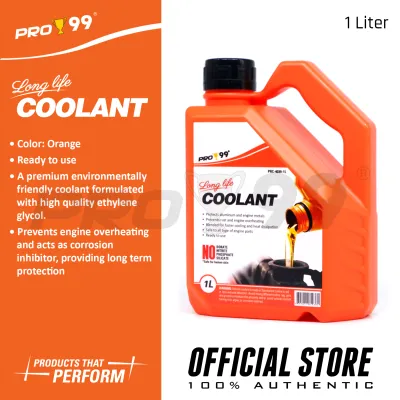
![[1L ORANGE] Coolant for Ford Ranger Ford Everest Ford Ecosport Ford Fiesta - Pro99 Brand](https://img.lazcdn.com/g/p/d1384cc25d3defd8c36b28642daa8eef.jpg_400x400q80.jpg_.webp)
![[4L ORANGE] Coolant for Ford Ranger Ford Everest Ford Ecosport Ford Fiesta - Pro99 Brand](https://img.lazcdn.com/g/p/429661799b6728390eb4bd8f48fc921b.jpg_400x400q80.jpg_.webp)
Prices are valid at publication and may change. Please refer to the product page for the latest price.
Corrosion inhibition is the third critical duty of modern coolant. Modern engines, including the Duratec and EcoBoost engines found in various Ford Fiesta generations, rely heavily on aluminum components like cylinder heads and engine blocks. Other cooling system parts may contain cast iron, steel, brass, copper, or solder. Each of these metals reacts differently to water and chemical additives. A specific coolant formulation contains a tailored inhibitor package designed to coat these metal surfaces, preventing oxidation, pitting, and galvanic corrosion.
Using an incorrect coolant specification introduces severe chemical risks. When incompatible coolant chemistries are mixed, the additives can react negatively, causing a phenomenon known as gelation or “fallout.” This results in the formation of a thick, jelly-like sludge that settles in the narrow passages of your cooling system. This sludge can easily clog the heater core, block the radiator tubes, restrict overall coolant flow, and cause premature water pump seal failure.
Furthermore, modern engines are highly sensitive to the specific chemical family of their coolant. These families are broadly categorized as Inorganic Additive Technology (IAT), Organic Acid Technology (OAT), and Hybrid Organic Acid Technology (HOAT). Each family uses distinct chemical compounds to protect metal surfaces. Mixing an OAT coolant with an IAT coolant, for example, rapidly depletes the corrosion inhibitors, leaving the aluminum components of your Fiesta’s engine vulnerable to accelerated chemical attack and cavitation erosion.
Identifying the Exact Coolant Specification for Your Ford Fiesta
Determining the precise coolant specification for your Ford Fiesta requires looking past generic product labels and focusing on manufacturer-defined standards. Relying on guesswork or aftermarket recommendations can lead to selecting a fluid that is chemically incompatible with your vehicle’s internal seals and metallurgy.
To locate the exact specification, your primary source of truth must always be the official Ford Fiesta owner’s manual. Navigate to the “Capacities and Specifications” or “Maintenance” section of the manual. Here, Ford lists the precise fluid requirements for every engine variant, whether you drive a 1.4L Duratec, a 1.6L Ti-VCT, or a 1.0L EcoBoost. Additionally, you can often find a brief specification summary printed directly on the coolant expansion tank cap or on a label nearby within the engine bay.
Ford defines its fluid requirements using specific Worldwide Standard Specification (WSS) codes. For the Ford Fiesta, these codes are critical because they dictate the exact chemical package required. A common specification for Fiestas manufactured from the late 2000s through the mid-2010s is Ford WSS-M97B44-D. This specification corresponds to an orange-colored Organic Acid Technology (OAT) formulation. Newer Ford models or updated service guidelines may specify Ford WSS-M97B57-A1 or A2, which is a yellow-colored Phosphated Organic Acid Technology (P-OAT) fluid.
It is vital to understand that these WSS standards are not interchangeable unless explicitly stated by Ford in an official service bulletin. For example, using an older Ford WSS-M97B51-A1 (a gold-colored HOAT fluid) in a system designed for WSS-M97B44-D can lead to reduced corrosion protection and premature component degradation. Always cross-reference the WSS code in your manual with the technical specifications listed on the back of any coolant bottle you intend to purchase.
One of the most dangerous pitfalls in cooling system maintenance is relying on coolant color to determine compatibility. This is known as the color myth. Historically, coolants were color-coded to indicate their chemistry—green for conventional IAT, orange for OAT, and yellow or gold for HOAT. However, in the modern automotive market, color is no longer a reliable standard. Manufacturers use various dyes for branding, marketing, or regional preferences.
For instance, you might find a green-dyed coolant that is formulated as an OAT, or a pink-dyed coolant that is a P-OAT. Conversely, two coolants of the exact same orange color might use completely different chemical inhibitor packages that will react catastrophically if mixed. Never buy or add coolant based solely on what color you see in your Fiesta’s reservoir. Always verify that the product explicitly states compliance with the required Ford WSS code on its physical label.
Tropical Climate Considerations for the Philippines
Operating a Ford Fiesta in the Philippines presents unique environmental challenges that directly impact how you must maintain your vehicle’s cooling system. The combination of high ambient temperatures, intense relative humidity, and severe urban traffic congestion puts a constant, heavy thermal load on the engine.

In colder climates, the primary role of antifreeze/coolant is preventing the fluid from freezing and cracking the engine block. In the tropical climate of the Philippines, however, freeze protection is virtually irrelevant. Instead, the primary physical benefit of the coolant is raising the boiling point of the water. In stop-and-go traffic along major thoroughfares, engine bay temperatures can soar. A high boiling point ensures that the coolant remains in a liquid state, allowing it to continuously absorb and transport heat away from the engine.
Furthermore, the chemical role of coolant—specifically corrosion and rust inhibition—becomes even more critical in hot, humid environments. High temperatures accelerate chemical reactions, including oxidation and galvanic corrosion. Without a robust, fully functional inhibitor package, the aluminum cylinder head of your Fiesta’s engine can quickly develop micro-pitting, leading to coolant leaks, head gasket failures, and compromised structural integrity.
When selecting coolant in the Philippines, you will generally choose between pre-mixed (often labeled as 50/50) and concentrated formulas. For the vast majority of car owners, pre-mixed coolant is highly recommended. Pre-mixed products are diluted at the factory using highly purified, demineralized, or deionized water in the exact ratio required for optimal thermal performance and corrosion protection. This eliminates any risk of human error during the mixing process.
If you choose to purchase concentrated coolant, you must dilute it yourself, which introduces significant risks regarding water quality. You must never use tap water to dilute coolant concentrate or to top up your Fiesta’s cooling system. Tap water contains dissolved minerals such as calcium, magnesium, and silica. When subjected to the high heat inside an engine, these minerals precipitate out of the solution, forming scale deposits on the internal walls of the radiator and engine water jackets.
This scale acts as a thermal insulator, severely reducing the cooling system’s ability to transfer heat. Over time, scale buildup can also clog the radiator tubes and damage the water pump impeller. Even bottled drinking water, which is treated for human consumption, still contains added minerals for taste and must be avoided. If you must dilute a concentrate, you must use only verified distilled or deionized water to prevent scale formation and maintain the chemical balance of the inhibitor package.
Matching Coolant Products: OEM and Aftermarket Options
Finding the right coolant for your Ford Fiesta in the Philippine market involves evaluating both Original Equipment Manufacturer (OEM) products and third-party aftermarket alternatives. Your goal should always be to match the exact Ford WSS specification required for your vehicle’s model year.
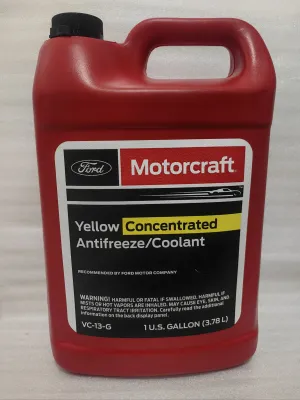
The most straightforward and safest route is choosing the OEM option, which for Ford vehicles is Motorcraft. Motorcraft coolants are formulated specifically to meet Ford’s strict engineering standards. For example, Motorcraft Specialty Orange Engine Coolant is designed to meet the WSS-M97B44-D specification, while Motorcraft Yellow Prediluted Antifreeze/Coolant meets the newer WSS-M97B57-A1/A2 standard. Purchasing genuine Motorcraft products from authorized Ford dealerships or reputable automotive supply shops ensures that you are getting the exact chemistry your Fiesta’s cooling system was engineered to use.
If you decide to look for aftermarket alternatives, which are often more readily available in local auto parts stores or online marketplaces, you must exercise caution. Many aftermarket brands produce excellent coolants that are fully compatible with Ford specifications, but you must verify this compatibility yourself. Look at the back label of the bottle and search for the specific Ford WSS code. The label should state that the product is approved, meets, or exceeds this specific standard.
Avoid products that use vague, generic marketing terms on the front label, such as “universal coolant,” “suitable for all makes and models,” or “compatible with all colors.” These universal formulations often use a compromise chemistry that may not provide optimal protection for the specific aluminum alloys used in your Fiesta’s engine. Over time, using a non-compliant universal fluid can lead to accelerated wear of the water pump seals or localized corrosion in the cylinder head.
To help you navigate the selection process, use the following checklist when evaluating coolant products for your Ford Fiesta:
| Check Item | What to Look For | Warning Sign |
|---|---|---|
| OEM Specification Approval | Explicit mention of the required Ford WSS code (e.g., WSS-M97B44-D or WSS-M97B57-A2) on the back label. | Generic claims like "suitable for all Ford models" without listing a specific WSS code. |
| Formulation Type | Correct chemical family (such as OAT or P-OAT) as mandated by your Fiesta's owner's manual. | Labels that do not state the chemical technology or mix incompatible terms. |
| Dilution State | 50/50 Pre-mixed (prediluted) for ease of use and guaranteed water purity. | Concentrates that require manual mixing unless you have verified distilled water on hand. |
| Water Source (if mixing) | Only verified distilled or deionized water for diluting concentrated formulas. | Suggestions to use tap water, well water, or standard bottled drinking water. |
| Product Authenticity | Secure packaging, clear batch codes, and purchase from authorized dealers or highly rated local shops. | Unusually low prices, blurry label printing, or broken safety seals on the bottle. |
Before purchasing any coolant, always verify your vehicle model, year, and engine type against the product documentation to ensure compatibility. If you are unsure which specification your specific Fiesta requires, consult an authorized Ford service center or a qualified professional mechanic before adding any fluid to your vehicle.
Safe Inspection and Topping Up Procedures
Performing routine maintenance on your Ford Fiesta’s cooling system is a simple task, but it requires strict adherence to safety protocols. Because the cooling system operates under high pressure and extreme temperatures, improper handling can result in severe thermal burns or physical injury.
The most critical safety rule when working with any automotive cooling system is to never open the radiator cap or the coolant reservoir cap while the engine is hot or even warm. As the engine runs, the coolant expands, building significant pressure within the sealed system. If you open the cap while the system is hot, the sudden drop in pressure will cause the superheated coolant to instantly boil and spray out of the reservoir, risking severe burns to your face, hands, and body. Always allow the vehicle to sit with the engine completely off for at least a few hours until the engine block and radiator are cool to the touch before attempting to open the system.
To inspect the coolant level safely, park your Fiesta on a level surface. Look at the translucent plastic coolant expansion tank located in the engine bay. You do not need to open the cap to perform a basic visual inspection. The side of the reservoir features molded index marks labeled MIN and MAX. When the engine is completely cold, the coolant level should sit between these two marks, ideally closer to the MAX line.
If the visual inspection reveals that the coolant level has fallen below the MIN mark, you must top it up. Before doing so, ensure you have the exact same coolant specification that is currently in the system. Carefully unscrew the reservoir cap counterclockwise, venting any residual pressure slowly. Pour the pre-mixed coolant directly into the reservoir until the fluid reaches the MAX line. Do not overfill the reservoir, as the fluid needs space to expand when the engine reaches operating temperature.
If you find yourself in an emergency situation where the coolant level is dangerously low and the correct specification is unavailable, you may use a small amount of distilled water as a temporary top-up. This will prevent the engine from overheating in the short term. However, adding water dilutes the concentration of corrosion inhibitors and lowers the boiling point of the mixture. If you must use water in an emergency, have the cooling system inspected, flushed, and refilled with the correct pre-mixed coolant by a qualified professional as soon as possible.
You should also be aware of signs that indicate your Fiesta requires professional mechanical attention. If you find yourself frequently topping up the coolant, there is likely a leak in the system. Look for visible signs of coolant pooling under the car, crusty white or colored residues around hose connections, or a sweet smell coming from the engine bay when hot. Additionally, if the coolant in the reservoir appears dark, rusty, muddy, or has an oily sheen, the system is contaminated. This indicates a severe internal issue, such as a failing head gasket or advanced system corrosion, which requires immediate professional diagnosis and repair.
Always remember to check your vehicle’s specific owner’s manual and the coolant product’s label instructions before performing any maintenance. If the instructions conflict, or if you are unsure of the correct procedure, stop immediately and consult a qualified automotive professional.
Frequently Asked Questions (FAQ)
Can I mix different coolant colors or brands in my Ford Fiesta?
No, you should never mix different coolant colors, types, or brands in your Ford Fiesta. Even if two coolants look similar, they may use completely different chemical inhibitor packages (such as OAT and HOAT). Mixing incompatible chemistries can cause a chemical reaction that forms a thick sludge or gel, which can clog your radiator, heater core, and engine passages. If you accidentally mix different coolants, you should have your cooling system professionally flushed and refilled with the correct specification immediately.
How often should I replace the coolant in a tropical climate?
You should always follow the specific mileage or time intervals detailed in your Ford Fiesta owner’s manual. However, operating in a tropical climate with frequent idling in heavy city traffic is considered a severe driving condition. These harsh conditions accelerate the depletion of the coolant’s corrosion inhibitors. While you should inspect the fluid level and condition during every regular oil change, the complete replacement interval must strictly adhere to Ford’s official maintenance schedule to ensure continued engine protection.
Is it safe to use bottled drinking water to top up in an emergency?
No, standard bottled drinking water is not safe for long-term use in your cooling system. Bottled water contains added minerals that will precipitate under high engine temperatures, leading to scale buildup and reduced heat transfer efficiency. In an absolute emergency where you must prevent immediate engine overheating, you can use distilled or deionized water as a temporary measure. Afterward, you must take your vehicle to a professional technician to have the system flushed and refilled with the correct pre-mixed coolant.

Community discussion
Share your experience or ask a question. Comments are reviewed before publication.