
Finding the right shift knob cover for your Ford Ranger requires a clear understanding of your vehicle’s specific interior configuration. While a shift knob cover is a popular and affordable way to protect your cabin’s interior or customize its appearance, choosing an incompatible model can lead to frustrating installation issues or, worse, safety hazards while driving. A loose or poorly fitted cover can slip during gear changes, potentially causing missed shifts or distracting you in heavy traffic. To ensure a secure fit and smooth operation, you must evaluate several key factors, including physical dimensions, attachment mechanisms, model year variations, and material performance under local driving conditions.
By taking the time to verify these details before making a purchase, you can avoid the hassle of returning ill-fitting accessories. This guide provides a systematic approach to checking compatibility, helping you select a cover that integrates seamlessly with your truck’s cabin and enhances your daily driving experience.
Measure Your Current Shift Knob Dimensions and Shape
Before browsing online marketplaces or local auto accessory shops, you should obtain precise measurements of your Ford Ranger’s existing shift knob. Relying solely on generic product descriptions can be risky, as manufacturers often use standardized templates that do not account for the subtle design variations across different trim levels. To establish an accurate baseline, use a flexible sewing tape measure or a set of digital calipers to record the physical dimensions of your shifter.
Products mentioned in this guide
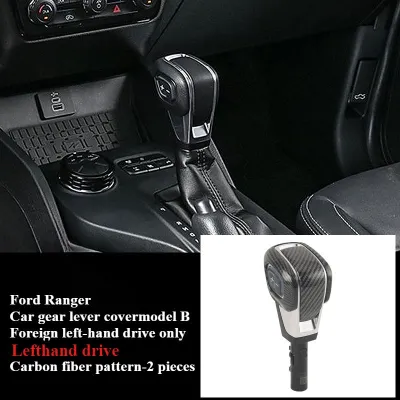
Prices are valid at publication and may change. Please refer to the product page for the latest price.
Start by measuring the height of the shift knob from its top surface down to the point where it meets the shift boot or the lever shaft. Next, measure the widest diameter of the knob, which is typically near the top or middle section depending on the shape. Finally, wrap your measuring tape around the thickest part of the knob to determine its maximum circumference. Documenting these three key measurements—height, diameter, and circumference—will allow you to cross-reference them directly with the technical specifications provided by accessory manufacturers.
In addition to numerical dimensions, you must identify the specific shape profile of your shift knob. Ford Ranger models have featured various knob designs over the years, ranging from classic spherical shapes on older manual transmissions to elongated, teardrop-shaped profiles on automatic models. Some modern trims also feature highly contoured, ergonomic shapes with distinct finger grooves or asymmetrical sides. A cover designed for a symmetrical, round knob will not sit properly on an asymmetrical, contoured shifter, leading to unsightly bunching or loose pockets of material.
Finally, take note of the original surface material and texture of your shift knob. If your Ranger is equipped with a smooth leather-wrapped knob, a cover with a slick inner lining may slide around easily during use. Conversely, a textured plastic or rubberized factory knob provides more natural friction to hold a cover in place. Understanding this baseline texture helps you determine whether you need a cover with an anti-slip inner coating or a specialized adhesive backing to keep it firmly anchored.
Check the Attachment Method and Shifting Clearance
How a shift knob cover attaches to your gear lever directly impacts both its visual appeal and its operational safety. There are several common attachment methods available on the market, each offering a different balance of installation ease and security. Understanding these options allows you to choose a design that matches your aesthetic preferences and physical requirements.

Wrap-around covers that require manual stitching or lacing offer the most secure and custom-looking fit. These covers are typically supplied with a needle and high-strength thread, allowing you to pull the material tightly around the contours of the knob. While this method requires patience and time to install, it minimizes the risk of the cover slipping or twisting during gear changes. On the other hand, elastic slip-on covers are incredibly easy to install and remove, but they rely entirely on tension to stay in place. If the elastic degrades over time or if the cover is slightly too large, it can easily slide around during operation.
Zippered or drawstring closures represent a middle ground, offering relatively quick installation with a moderate level of security. However, you must ensure that the zipper mechanism or drawstring toggle does not scratch the surrounding console plastics or irritate your hand while shifting. Regardless of the attachment style you prefer, the cover must fit snugly enough to prevent any independent movement when you apply lateral force to the shifter.
Another critical factor to verify is the clearance around the base of the shift knob and the surrounding shift boot. When you shift gears, the lever moves through a specific range of motion, and the shift boot flexes accordingly. If a cover is too long or bulky at the bottom, it can bunch up against the boot, preventing the shifter from fully engaging certain gears. This is particularly important for manual transmissions, where incomplete gear engagement can lead to transmission wear or gear grinding. Ensure the cover’s lower edge terminates cleanly above the boot attachment point.
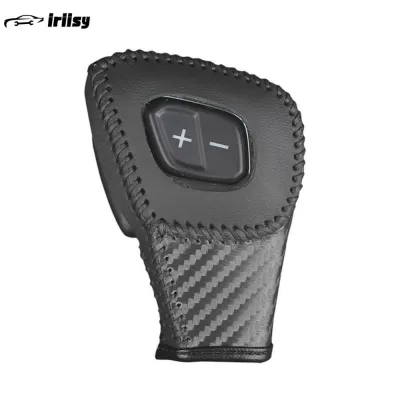
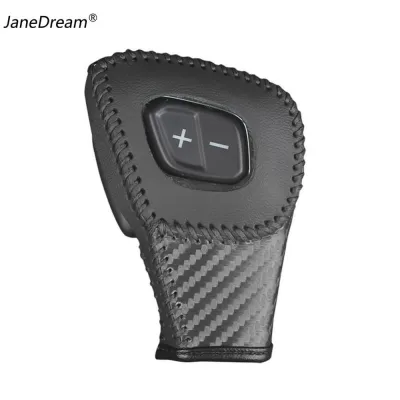
Furthermore, you must verify that the cover does not obstruct any integrated buttons, switches, or release mechanisms. Many automatic Ford Ranger models feature a thumb-release button on the side of the knob that must be depressed to shift out of Park or Neutral. Newer models may also feature manual gear selection buttons (+/-) on the side of the shifter. If a cover is too thick or lacks precise cutouts for these controls, it can restrict their movement, making it difficult or impossible to operate the transmission safely. Always prioritize covers that feature dedicated, reinforced openings for all factory buttons.
Account for Model Year and Transmission Differences
One of the most common mistakes buyers make is assuming that all Ford Ranger shift knobs are identical. In reality, the Ranger has undergone multiple generational redesigns, each bringing significant changes to the interior layout, dashboard ergonomics, and shifter geometry. A cover designed for a previous-generation Ranger will almost certainly not fit a Next-Gen model, making it essential to verify your vehicle’s exact model year and generation before purchasing.
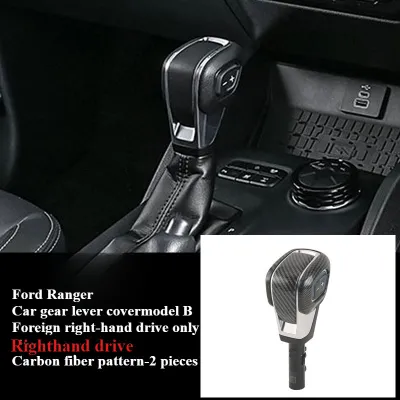
For instance, the Next-Gen Ford Ranger features a highly modernized cabin with distinct shifter designs depending on the trim level. High-spec automatic variants, such as the Wildtrak or Raptor, often utilize an electronic shifter (e-shifter) that is compact, short, and ergonomically contoured. This e-shifter has a completely different physical footprint compared to the traditional mechanical shift levers found in the previous T6 generation. If you own a Next-Gen model, you must look specifically for covers labeled as compatible with the e-shifter, as standard automatic covers will be far too large and loose.
Transmission type is another major dividing line in shifter geometry. Manual transmission knobs are typically simpler and rounder, but they often feature a reverse lockout collar directly beneath the knob. This collar must be pulled upward toward the knob to engage reverse gear. If you install a cover that extends too far down the shaft, it can physically block the upward travel of the lockout collar, preventing you from shifting into reverse. Manual-specific covers are usually shorter and tapered to accommodate this mechanism, whereas automatic covers are designed to wrap around larger, button-equipped handles.
Additionally, keep in mind that special edition or high-trim variations of the Ranger may feature unique interior packages. These trims might include factory leather wrapping, contrast stitching, or slightly altered knob dimensions compared to base utility trims. These subtle differences can affect how tightly a cover fits. When researching products, look for manufacturers that explicitly list compatibility with your specific trim level, rather than relying on a broad “fits all models” claim.
Choose the Right Material for Grip and Climate
Selecting the right material for your shift knob cover is not just about aesthetics; it also plays a vital role in driving comfort and control. In the tropical climate of the Philippines, interior car temperatures can soar rapidly when the vehicle is parked under direct sunlight. A shift knob that has absorbed intense heat can be painful to touch, making a heat-resistant cover a highly practical upgrade. However, the material you choose must be able to withstand these harsh environmental conditions without degrading.
Perforated leather and high-quality synthetic suede (such as Alcantara) are excellent choices for hot and humid climates. These materials offer natural breathability, which helps prevent sweat from accumulating on your palms during long drives. They also provide a high-friction tactile surface, ensuring a secure grip even if your hands are damp. If you opt for leather, ensure it is treated to resist UV fading and cracking, as constant exposure to sunlight through the windshield can quickly dry out untreated materials.
Silicone is another popular material due to its durability, water resistance, and ease of cleaning. Silicone covers can be easily wiped down with a damp cloth to remove dirt, oils, and sweat. However, some low-grade silicone materials can become sticky or uncomfortably warm when exposed to high cabin temperatures. If you prefer silicone, look for premium, food-grade silicone with a matte, textured finish that resists dust accumulation and maintains a comfortable temperature.
Regardless of the material, you must consider how the added thickness of the cover will alter the overall feel of the shifter. A cover that is too thick can make the shift knob feel excessively bulky, which can lead to hand fatigue during extended periods of driving, such as navigating heavy traffic in Metro Manila. If you have smaller hands, look for ultra-thin materials that provide protection and grip without significantly increasing the knob’s diameter. Conversely, if you prefer a more substantial grip, a slightly padded leather cover can improve shifting comfort.
Finally, review the manufacturer’s care and maintenance instructions before making your decision. A shift knob is one of the most frequently touched surfaces in your vehicle, meaning the cover will inevitably accumulate dirt, skin oils, and sweat over time. Materials that require specialized chemical cleaners or delicate hand-washing may become a chore to maintain. Prioritize materials that can be easily cleaned with mild soap and water or standard automotive interior wipes to ensure your cabin remains hygienic and fresh.
Build Your Shortlist and Verify Fitment Before Buying
Once you have documented your measurements, identified your shifter’s shape, and selected your preferred material, you can begin building a shortlist of potential products. When browsing online marketplaces or specialty automotive retailers, use your gathered specifications as a strict filter. Do not rely solely on search terms like “Ford Ranger shift knob cover,” as these often return generic, universal products that may not provide the precise fit you need.
Instead, carefully examine the product descriptions for detailed dimensional charts. Compare the manufacturer’s listed height, diameter, and circumference against your manual measurements. If a listing does not provide specific dimensions and only claims to be “universal,” proceed with caution. Look for sellers who provide clear, high-resolution photos of the cover installed on an actual Ford Ranger shifter that matches your model year and transmission type. This visual confirmation is one of the most reliable ways to verify compatibility.
Avoid listings that make absolute, unconditional claims of fitting every vehicle model. High-quality accessory manufacturers are transparent about the limitations of their products and will explicitly state which model years, trims, or transmission types are not compatible. They will also provide clear, step-by-step installation instructions, often accompanied by video guides, to help you achieve a professional-looking fit.
Before finalizing your purchase, take a moment to review the seller’s return and exchange policies. Even with careful measurement, there is always a slight chance that a cover may not fit perfectly due to minor manufacturing tolerances or unexpected aftermarket modifications made by a previous owner. Ensure the seller offers a straightforward return process in case the cover interferes with your shift boot, blocks a release button, or fails to stay securely in place. Investing a few hundred ₱ in a high-quality, verified cover is far better than wasting money on a cheap, ill-fitting alternative that compromises your driving safety.
Frequently Asked Questions (FAQ)
Can I use a universal shift knob cover on my Ford Ranger?
While universal shift knob covers are widely available and often very budget-friendly, they carry a high risk of poor fitment when used on a Ford Ranger. Universal covers are designed to stretch over a wide variety of shapes, which often results in loose pockets of material, bunching at the base, or constant slipping during gear changes. This lack of security can be dangerous if the cover slides while you are actively shifting gears.
However, a universal cover may work acceptably if it utilizes a highly adjustable wrap-and-lace design, as you can manually tension the material to match your knob’s specific contours. If you choose a simple elastic slip-on universal cover, it is highly likely to fail on the Ranger’s more complex, ergonomic automatic shifters or manual knobs with reverse lockout collars. For the best safety and aesthetic results, a model-specific or dimension-matched cover is always recommended.
Will a thick cover affect my shifting accuracy?
Yes, an excessively thick or heavily padded shift knob cover can negatively impact your shifting accuracy and overall driving control. Shifting relies heavily on tactile feedback; you need to feel the mechanical engagement of the gear lever to ensure the transmission has successfully transitioned. A thick cover can dull this physical sensation, making your gear changes feel vague or disconnected.
Furthermore, adding significant bulk to the knob alters your hand’s natural grip angle and can make it difficult to wrap your fingers securely around the shifter. This is particularly critical for manual transmission drivers who shift frequently. To maintain optimal control, look for thin, high-friction materials like perforated leather or synthetic suede that provide excellent grip and surface protection without adding unnecessary volume to the shifter assembly.

Community discussion
Share your experience or ask a question. Comments are reviewed before publication.