
Riding a motorcycle in the Philippines during the wet season presents a unique set of challenges. Torrential downpours can strike suddenly, and the combination of high-speed wind and heavy rain will quickly penetrate standard casual rainwear. To stay dry, comfortable, and safe on the road, you need a dedicated waterproof rain jacket for men designed specifically to withstand the rigors of motorcycling.
Choosing the right gear requires looking beyond basic water resistance. The high humidity of a tropical climate means that a completely sealed, non-breathable plastic jacket can cause you to sweat profusely, leaving you just as wet on the inside as you would be from the rain. By understanding the key technical features, material specifications, and fit requirements, you can confidently select a jacket that keeps the elements out while maintaining the comfort and mobility needed for safe riding.
Core Features to Look for in a Motorcycle Rain Jacket
When you are riding at highway speeds, rain does not just fall; it is driven against your body with significant force. This wind-driven pressure can easily push water through standard zippers, seams, and closures. To prevent water ingress, a high-quality motorcycle rain jacket must feature robust storm flaps. Look for a main front zipper covered by a double storm flap system, which uses a fold-over design secured by hook-and-loop fasteners or heavy-duty snaps to block water from reaching the zipper teeth.
Products mentioned in this guide
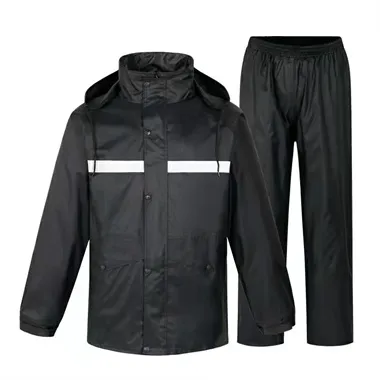
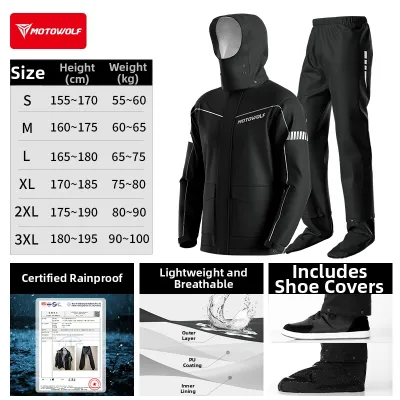
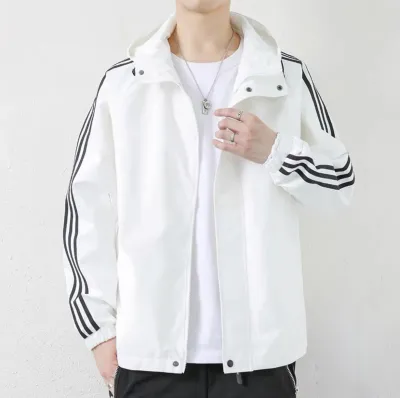
![[COD] Military Rain Casual Sport Waterproof Riding Tactical Outerwear hoodie Windbreaker Jacket Coat](https://img.lazcdn.com/g/p/5ce8498aae9c38bb5e0fef2867ea5f7c.jpg_400x400q80.jpg_.webp)
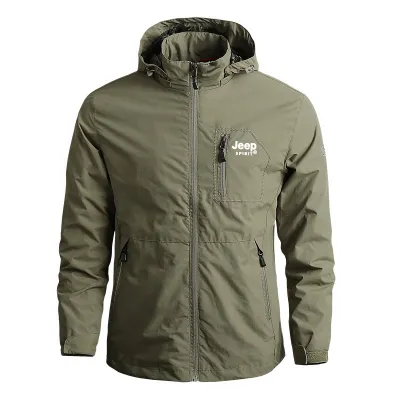
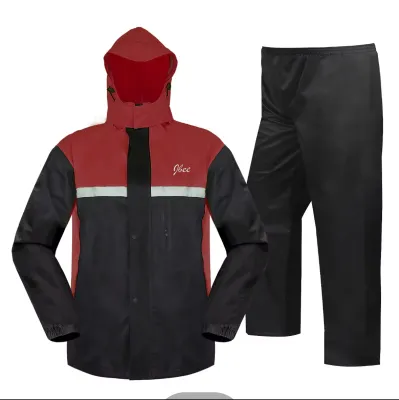
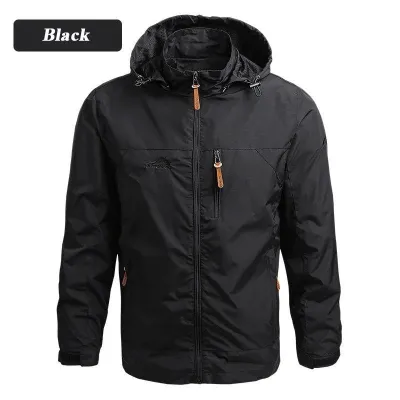
Prices are valid at publication and may change. Please refer to the product page for the latest price.
Adjustable closures at the critical entry points of the jacket are equally essential. The collar should be high enough to cover your neck and feature an adjustable drawcord or strap to prevent water from running down your chest. Wrists are another common failure point, as wind can force water up your sleeves. Look for wide, adjustable cuffs that can be tightened securely over or under your riding gloves. An adjustable waist drawcord or strap helps seal the bottom of the jacket, preventing wind from lifting the hem and blowing rain upward.
Visibility drops dramatically during heavy tropical downpours, making passive safety features a top priority. A dark-colored rain jacket can render you virtually invisible to other motorists in low-light conditions. Opt for jackets that incorporate high-visibility fluorescent panels in neon yellow, green, or orange. Additionally, ensure the jacket features generous reflective piping or retroreflective prints across the back, shoulders, and chest to catch the headlights of surrounding vehicles.
Finally, consider the placement and construction of pockets. External pockets must have deep fold-over flaps and secure closures to keep water out. However, for highly sensitive items like mobile phones, wallets, and registration documents, look for dedicated internal waterproof pockets located behind the main storm flap. External pockets should also feature small drainage grommets at the bottom, allowing any water that enters during opening to drain out quickly rather than pooling inside.
Jacket Styles and Fit for the Riding Posture
Motorcycle rain gear is generally available in two main styles: two-piece jacket-and-pant sets or one-piece riding suits. Two-piece sets are highly popular among daily commuters due to their versatility and ease of use. You can quickly throw on just the jacket during a light drizzle, and the separate pieces are much easier to pack into a compact under-seat compartment or backpack. One-piece suits offer the ultimate protection against water entry at the waist, but they can be cumbersome to put on quickly at the roadside and take up significantly more storage space.

Sizing a motorcycle rain jacket requires careful consideration of what you wear underneath. A common mistake is purchasing a rain jacket based on your standard casual clothing size. A proper riding rain jacket must fit comfortably over your existing armored riding jacket or daily work clothes without restricting your range of motion. If the rain jacket is not explicitly designed and sized by the manufacturer to go over riding gear, you will generally need to select one or two sizes larger than your usual size.
When trying on a jacket, always test the fit in a simulated riding posture. Sit down, reach your arms forward as if holding the handlebars, and bend slightly at the waist. In this position, the sleeves should not pull back excessively to expose your wrists, and the back hem of the jacket must remain long enough to cover your lower back completely. Look for jackets with articulated sleeves, underarm gussets, and stretch panels, which are specifically designed to accommodate these movements without pulling the fabric taut or stressing the seams.
How to Verify Waterproof Claims and Material Specs
Understanding the terminology used on product tags is crucial for evaluating a jacket’s performance. Garments labeled as “water-resistant” are only treated to repel light moisture for a short duration and will quickly saturate in a heavy downpour. “Water-repellent” fabrics feature a surface treatment that causes water to bead up and roll off, but they lack a solid barrier to stop water under pressure. For motorcycle riding, you must look for garments explicitly labeled as “waterproof,” which indicates the presence of a physical barrier membrane or a heavy, non-porous coating.
When manufacturers provide technical specifications, look for the hydrostatic head rating, which measures waterproofness in millimeters (mm). A rating of 5,000mm is suitable for light rain, but for motorcycle riding where wind pressure accelerates water penetration, a rating of 10,000mm or higher is highly recommended. To combat the intense heat and humidity of the Philippines, check for breathability ratings, often measured in grams per square meter over 24 hours (g/m²/24h). A higher breathability rating allows body heat and sweat vapor to escape, preventing the clammy, sauna-like effect inside the jacket.
Most high-performance waterproof jackets rely on a Durable Water Repellent (DWR) coating applied to the outermost fabric layer. This chemical treatment prevents the face fabric from absorbing water, a process known as “wetting out.” If the outer fabric becomes saturated, it blocks the breathable membrane underneath, causing condensation to build up inside the jacket and making you feel wet even if the membrane is not leaking. Understanding that DWR is a wear item that requires periodic maintenance will help you keep your jacket performing at its best.
Building Your Shortlist: Evaluating Options and Purchasing
When searching for a rain jacket on online marketplaces, using precise search terms will help you filter out low-quality options. Instead of searching for generic terms like “men’s raincoat,” use specific keywords such as “motorcycle rain jacket waterproof,” “taped seams riding jacket,” or “heavy-duty rider rain gear.” This helps target products designed with the durability and features required for high-speed riding rather than thin, single-use plastic ponchos.
Before making an online purchase, take time to verify the credibility of the seller. Look for official brand stores or authorized distributors to ensure you are purchasing a genuine product. Read customer reviews carefully, paying close attention to feedback from other motorcycle riders who have tested the jacket in actual tropical downpours. Look for comments regarding zipper durability, seam integrity, and how well the sizing accommodates riding armor. Always check the seller’s return and exchange policies to ensure you can swap the jacket if the fit over your gear is not correct.
If you prefer to shop at a physical motorcycle accessory store, use a hands-on inspection checklist to evaluate quality. Turn the jacket inside out and closely examine the seams. A truly waterproof jacket must have smooth, continuous waterproof tape hot-pressed over every stitched seam to seal the needle holes. Check the zippers for stiffness and look for rubberized water-resistant coatings or thick fabric flaps that cover them completely. Feel the material thickness; it should feel substantial enough to resist flapping and tearing at speed, but flexible enough to allow comfortable movement.
Setting a realistic budget is the final step in building your shortlist. Basic, reliable polyester or PVC-coated rain jackets typically range from ₱1,000 to ₱2,500 and offer excellent water protection, though they may lack advanced breathability. Premium jackets featuring breathable membranes, advanced ventilation systems, and integrated armor pockets generally cost between ₱3,000 and ₱6,000 or more. Consider your riding frequency and commute distance when deciding how much to invest; a durable, high-quality jacket will save you money over time by outlasting multiple cheap alternatives.
Care and Maintenance for Long-Lasting Waterproofing
Proper care is essential to preserve the waterproof integrity of your motorcycle rain jacket over multiple riding seasons. Always consult the care label inside the garment before cleaning. Avoid using standard household laundry detergents, fabric softeners, or bleach, as these harsh chemicals can strip away the DWR coating and degrade the waterproof membrane or seam tape. Instead, hand wash the jacket using a mild, additive-free soap or a specialized technical wash designed for outdoor gear.
Over time, friction, road grime, and exposure to UV rays will cause the DWR coating to wear off. You can easily identify DWR degradation when rainwater stops beading on the surface and instead begins to soak into the outer fabric. To restore this water-repellent property, wash the jacket to remove dirt and oils, then apply a spray-on waterproofing treatment designed for technical apparel while the garment is still damp. Allow the jacket to air dry completely in a shaded area.
The high humidity of the Philippine climate makes proper storage critical to prevent the growth of mold and mildew, which can damage fabric coatings and cause seam tape to delaminate. Never pack a wet or damp rain jacket into its compact storage bag or a dark under-seat compartment. After every ride in the rain, hang the jacket on a wide, padded hanger in a well-ventilated, shaded indoor area until it is completely dry. Store the jacket hung up or loosely folded rather than tightly compressed to prevent the waterproof backing from cracking or creasing permanently.
Frequently Asked Questions (FAQ)
Can I use a regular hiking rain jacket for motorcycle riding?
While a hiking rain jacket may keep you dry during a walk, it is not designed to handle the unique demands of motorcycle riding. At highway speeds, the wind will cause a lightweight hiking jacket to flap violently, which can distract you, fatigue your shoulders, and quickly tear the seams. Hiking jackets also lack the specific cut needed to fit comfortably over bulky elbow and shoulder armor, and they do not offer the abrasion resistance required to protect you in the event of a slide on asphalt.
How do I know if the seams are properly sealed before buying?
To verify the seam sealing, turn the rain jacket inside out and inspect the stitching lines along the shoulders, sleeves, and sides. A fully waterproof jacket will have a clear or colored waterproof tape hot-pressed smoothly over every single stitched seam, completely covering the needle holes. If you see exposed stitching, gaps in the tape, or tape that is bubbling, lifting, or peeling at the edges, the jacket is not fully sealed and will inevitably leak under the pressure of riding in heavy rain.
Should I buy a rain jacket with a built-in thermal liner?
For riding in the Philippines, it is highly recommended to avoid rain jackets with built-in thermal liners. The tropical climate remains warm and extremely humid even during heavy downpours, meaning an insulated liner will quickly cause you to overheat and sweat excessively. Instead, choose a single-layer, unlined waterproof shell. This approach keeps you dry while allowing maximum airflow, and you can easily layer a lightweight long-sleeve shirt or sweater underneath if you ride in cooler upland areas like Baguio.

Community discussion
Share your experience or ask a question. Comments are reviewed before publication.