
Parking your motorcycle outdoors in the Philippines exposes it to some of the harshest environmental conditions in Southeast Asia. Between the intense, paint-stripping ultraviolet rays of the dry season and the torrential downpours of the monsoon months, an unprotected motorcycle can quickly suffer from faded plastics, rusted chains, and degraded electrical components. A heavy-duty motorcycle canopy serves as a vital shield, offering a semi-permanent or portable garage solution that preserves your vehicle’s condition and resale value. Choosing the right shelter requires looking past generic marketing buzzwords and evaluating concrete specifications like fabric density, frame coatings, and anchoring systems to ensure your investment survives the local climate.
Understanding Canopy Types for Outdoor Parking
To select the most effective shelter, you must first understand the primary canopy designs available and how they align with your specific parking space. Freestanding metal shelters, often designed as retractable “clamshell” or accordion-style tents, offer complete enclosure. These structures feature a metal frame that sits on the ground, allowing you to pull the fabric cover completely over the motorcycle. They provide excellent 360-degree protection from rain, dust, and prying eyes, making them ideal for open yards or spacious driveways. However, they require a completely flat, level surface and a relatively large footprint to operate smoothly without scraping your bike.
Wall-mounted awnings present a space-saving alternative if you park alongside your home or a sturdy perimeter wall. These structures bolt directly into concrete or brick, extending outward to form a protective roof over your motorcycle. Because they lack ground-level legs on one side, they keep your driveway clear of obstructions and are highly resistant to being knocked over by wind. The trade-off is that they offer limited lateral protection; blowing rain can still reach your motorcycle from the sides, and their installation is permanent, requiring drilling into your property’s masonry.
Products mentioned in this guide
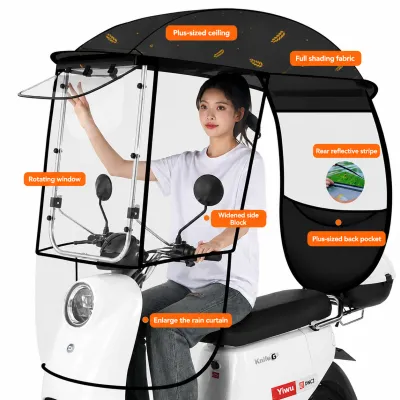
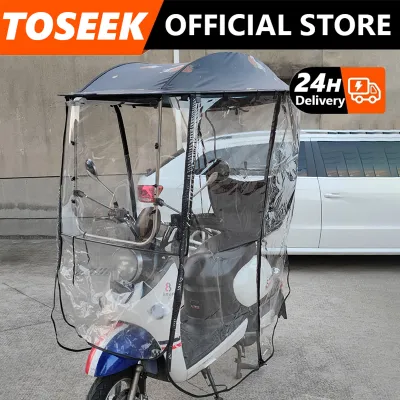
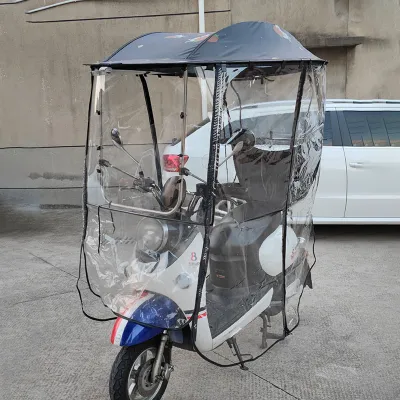
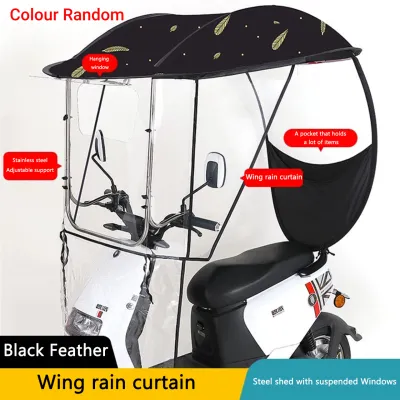
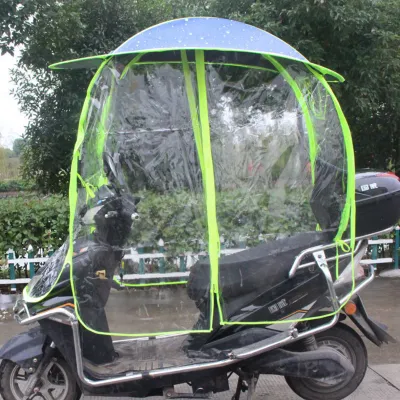
![🔥🔥🔥[HOT] 2026 Upgrade Bold Motorcycle Awning Electric Car Canopy Rainproof and Windproof UV Sunscreen awning](https://img.lazcdn.com/g/p/20dcc093a67d233c2571457e22953949.png_400x400q80.png_.webp)
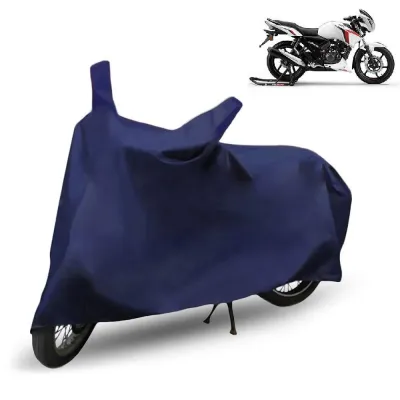
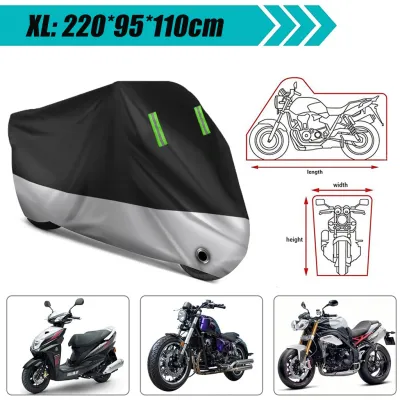
Prices are valid at publication and may change. Please refer to the product page for the latest price.
For those with highly restricted spaces or temporary living arrangements, heavy-duty tarpaulin covers supported by poles offer a flexible, tension-based solution. Similar to camping tarps, these setups rely on heavy-duty poles, guy lines, and tension adjusters to create a custom-angled roof. While they require more effort to set up and fine-tune, they can be adapted to awkward spaces, narrow alleyways, or shared carports where a rigid metal frame would block pedestrian traffic.
Before purchasing any canopy, you must carefully evaluate your property’s physical and legal constraints. Measure both the ground footprint and the overhead clearance of your intended parking spot, keeping in mind that you need enough room to maneuver yourself and the motorcycle safely inside the structure. If you live in a rented property, a condominium, or a subdivision governed by a homeowners’ association (HOA), check the local guidelines regarding outdoor structures. Many HOAs prohibit permanent or highly visible semi-permanent structures in front yards or shared driveways, making easily collapsible or low-profile freestanding shelters the only viable option.
Evaluating Heavy-Duty Materials and Weather Protection
The longevity of your motorcycle canopy depends heavily on the quality of its fabric and protective coatings. When browsing online marketplaces or local specialty shops, look past vague “waterproof” labels and inspect the technical specifications. A reliable indicator of water resistance is the hydrostatic head (HH) rating, measured in millimeters. This rating determines how much water pressure the fabric can withstand before leaking; for tropical downpours, look for fabrics with a minimum rating of 2000mm to 3000mm.

UV resistance is equally critical in the Philippines, where prolonged sun exposure can degrade untreated fabrics within a single season. Verify that the manufacturer specifies UV-resistant coatings or treatments, often labeled as UV50+ or silver-coated inner linings. These treatments reflect solar radiation, preventing the fabric from becoming brittle and tearing under the intense midday sun, while also keeping the temperature underneath the canopy significantly cooler.
Fabric density is typically measured in denier (D), which indicates the thickness of the individual threads used in the weave. Common materials include Oxford cloth (ranging from 150D to 1200D) and heavy-duty PVC-coated polyester or tarpaulin. While a higher denier count generally translates to superior tear resistance and durability, it also increases the weight of the canopy. For a durable freestanding shelter, a fabric density of at least 600D Oxford cloth or a heavy-grade PVC tarpaulin is recommended to withstand the friction of wind and the impact of falling debris like small branches or heavy rain.
Beyond the fabric itself, the construction details often dictate where a canopy will fail first. Inspect the seams of the canopy; high-quality models feature heat-sealed or taped seams that prevent water from seeping through the needle holes. Look for reinforced metal grommets at tension points and double-stitched seams along the edges and corners. If the canopy uses zippers or velcro closures, ensure they are heavy-duty, marine-grade components that will not corrode or lose their grip when exposed to constant moisture and road dust.
Assessing Structural Stability and Anchoring
A canopy is only as good as the frame that supports it, especially when sudden afternoon thunderstorms bring gusty winds. When evaluating frame materials, you will primarily choose between powder-coated steel and aluminum. Powder-coated steel frames offer excellent weight and structural rigidity, making them highly stable in moderate winds. However, if the powder coating chips or scratches, the underlying steel will quickly rust in high-humidity environments. Aluminum frames are lighter and naturally resistant to rust, but their lower weight means they require more robust anchoring to prevent them from lifting off the ground during a storm.
Proper anchoring is the single most important factor in preventing your canopy from becoming airborne and damaging your motorcycle or surrounding property. If you are installing the canopy on soil, grass, or gravel, use heavy-duty steel ground stakes driven deep into the earth at an angle. For concrete driveways or paved carports, stakes are not an option; instead, you must rely on weighted bases, heavy-duty expansion bolts, or sandbags. Many riders fill heavy-duty bags with sand or gravel and strap them securely to the frame legs to provide the necessary downward force.
You must establish a clear safety boundary regarding weather limitations. No portable or semi-permanent motorcycle canopy, regardless of its “heavy-duty” marketing, is designed to withstand the extreme wind forces of a tropical cyclone. When the Philippine Atmospheric, Geophysical and Astronomical Services Administration (PAGASA) issues active typhoon signals for your area, you must have a plan to collapse, dismantle, or securely store the canopy fabric and frame. Leaving a canopy fully erected during a typhoon risks destroying the shelter, damaging your motorcycle, and creating a hazardous projectile that could injure others or damage nearby homes.
Installation, Clearance, and Safety Checks
Installing your canopy requires careful planning to ensure it protects your motorcycle without causing accidental damage. Begin by measuring the physical dimensions of your motorcycle, including the widest points such as the handlebars, side mirrors, crash guards, and any installed top boxes or side panniers. Ensure there is at least several inches of clearance on all sides between the motorcycle and the canopy fabric. If the fabric is too tight or constantly rubs against the bike, wind-induced movement will cause the material to act like sandpaper, gradually scratching your paintwork, tearing decals, or wearing down plastic fairings.
The heat generated by your motorcycle’s engine and exhaust system presents a significant safety hazard. Standard canopy fabrics, even heavy-duty ones, can melt or catch fire if they come into direct contact with a hot exhaust pipe immediately after a ride. To mitigate this risk, verify if the canopy model features built-in heat-resistant panels near the lower rear sections. If it does not, you must establish a strict routine of allowing your motorcycle’s engine and exhaust to cool down completely before pulling the canopy cover over it, or install aftermarket exhaust heat wraps to reduce surface temperatures.
Finally, consider the social and legal aspects of your installation. Position the canopy so that rainwater runoff does not drain directly onto your neighbor’s property, public sidewalks, or common walkways. Ensure the structure does not encroach on public easements, block shared driveways, or obstruct the line of sight for drivers exiting nearby properties. Consulting with your local barangay officials or subdivision administration before installation can help you avoid costly disputes, fines, or requests to dismantle your shelter.
Routine Maintenance for Tropical Climates
The hot, humid climate of the Philippines accelerates the wear and tear on outdoor fabrics and metals, making regular maintenance essential to maximize your canopy’s lifespan. Clean the canopy fabric periodically to remove acidic bird droppings, tree sap, industrial fallout, and road grime. Use a soft-bristled brush, mild soap, and lukewarm water to gently scrub the surface; avoid harsh chemical detergents, bleach, or high-pressure washers, as these can strip away the waterproof coatings and UV-resistant treatments.
Moisture management is critical to preventing the growth of mold and mildew, which can rot fabric fibers and create unpleasant odors. Never fold, pack away, or tightly collapse a wet or damp canopy. If you must dismantle the canopy during a rainstorm, unfold it and allow it to dry completely in the sun at the earliest opportunity before storing it long-term.
Conduct a thorough inspection of the entire structure at least once a month. Check the metal frame for signs of rust, especially at joint connections, weld points, and areas where the protective coating may have chipped. Treat any surface rust immediately with a rust converter and touch-up paint to prevent it from spreading and weakening the frame. Inspect the fabric for small tears, fraying seams, or degraded bungee cords and tension straps. Patching small holes early with heavy-duty outdoor repair tape can prevent them from expanding into catastrophic tears during the next heavy downpour, saving you the cost of a premature replacement.
Frequently Asked Questions (FAQ)
Can a heavy-duty canopy protect my motorcycle during a typhoon?
No, a heavy-duty canopy is not designed to withstand the extreme wind speeds associated with tropical cyclones in the Philippines. While these shelters excel at protecting your motorcycle from daily sun, heavy monsoon rains, and moderate wind gusts, the intense forces of a typhoon can easily bend metal frames, tear heavy fabrics, and rip anchoring systems out of the ground. When a typhoon warning is active, you should dismantle or collapse the canopy and store it safely indoors. The motorcycle itself should be moved to a fully enclosed structure, such as a garage, concrete carport, or inside the home, to protect it from flying debris and falling trees.
How do I prevent the canopy fabric from melting near the exhaust?
To prevent the canopy fabric from melting or catching fire, you should always allow your motorcycle’s engine and exhaust pipe to cool down for at least 15 to 20 minutes before covering it. If your parking routine requires immediate coverage, look for canopy models that feature integrated heat-resistant fabric panels in the areas likely to contact the exhaust. Alternatively, you can install high-temperature exhaust heat wraps on your motorcycle’s pipe, or adjust the parking angle within the shelter to maximize the physical clearance between the hot components and the canopy walls.
Should I buy a pre-made canopy or build a custom shelter?
The choice between a pre-made canopy and a custom-built shelter depends on your budget, property ownership, and long-term plans. Pre-made heavy-duty canopies offer excellent convenience, portability, and a lower initial cost, making them ideal for renters or those who may need to relocate their parking setup. They can be assembled quickly without professional help. On the other hand, a custom-built shelter made of steel framing and polycarbonate or metal roofing offers superior durability, exact spatial integration, and a much longer lifespan. However, custom structures require a significantly higher upfront investment, may require building permits, and cannot be easily moved if you relocate.

Community discussion
Share your experience or ask a question. Comments are reviewed before publication.