
Upgrading your Honda Click with a big disc brake involves choosing between the absolute compatibility of Original Equipment Manufacturer (OEM) parts and the enhanced heat dissipation or aesthetic options of aftermarket alternatives. The decision depends on your daily riding conditions, budget, and willingness to perform regular safety checks. While OEM parts offer a direct fit with zero modifications, aftermarket big discs often require specialized brackets and careful verification of material standards to ensure safe, reliable stopping power on tropical roads.
Deciding on a brake upgrade requires a clear understanding of how changes to the rotor diameter affect the entire hydraulic system. A larger disc provides more leverage for stopping, but it also alters the mechanical and thermal dynamics of your scooter. Before purchasing any components, you must evaluate whether your specific Honda Click model can safely accommodate the modification without compromising structural integrity.
Understanding the Brake System Requirements for Honda Click
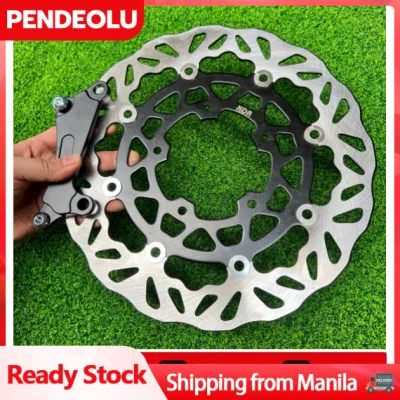
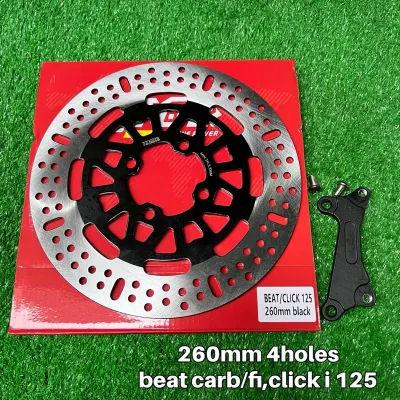
Before mounting a larger disc to your Honda Click, you must verify the compatibility of your front fork legs and caliper mounting points. The stock Honda Click typically comes with a 190mm front disc. Upgrading to a larger size, such as 220mm, 240mm, or 260mm, means the brake caliper must be moved outward to align with the new outer edge of the disc. This relocation requires a precise caliper adapter bracket designed specifically for your scooter’s model year and fork leg configuration.
Products mentioned in this guide
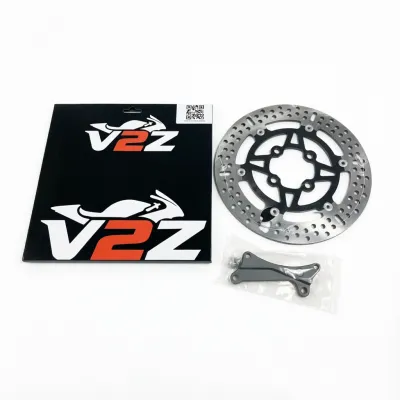
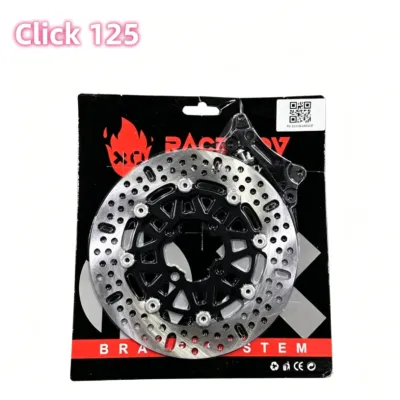
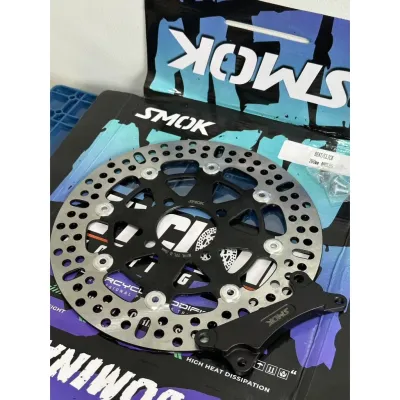
![[Fast Delivery] Big Disc 260mm 5holes w/bracket click 125i v3/click 150i(5holes)](https://img.lazcdn.com/g/p/6134a083b2e4325443b86d972441f067.png_400x400q80.png_.webp)
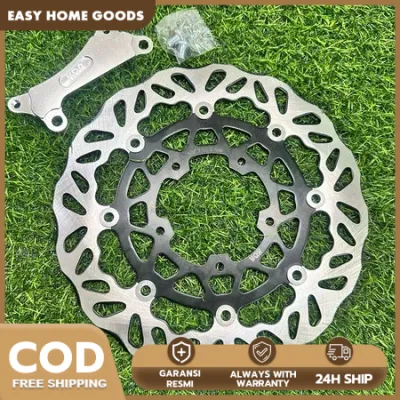
![[Fast Delivery] ALLOY FLOATING DISC 260MM (4 HOLES) WITH ALLOY BRACKET FOR CLICK 125](https://img.lazcdn.com/g/p/55ea199d4e9870c529a6789426c8986f.jpg_400x400q80.jpg_.webp)
Prices are valid at publication and may change. Please refer to the product page for the latest price.
Modifying the caliper position changes the leverage and stress exerted on the aluminum fork legs during hard braking. You must inspect the mounting ears on the fork legs for any signs of hairline cracks or wear before installing an adapter. Using an incorrectly machined bracket or forcing a fit can lead to caliper misalignment, which causes uneven pad wear, brake drag, and potential system failure under sudden loads.
Another critical factor is the fluid displacement capacity of your master cylinder. If you retain the stock single-piston or dual-piston caliper, the original master cylinder on your handlebar will continue to function normally because the volume of fluid required to push the pistons remains unchanged. However, if you plan to upgrade to a larger aftermarket caliper alongside the big disc, you must calculate whether the stock master cylinder can displace enough fluid to actuate the larger pistons without requiring excessive lever travel.
Finally, check the physical clearance inside your front wheel assembly. A larger disc rotor must clear the inner barrel of the wheel rim, the speedometer cable or ABS sensor bracket (if your model is equipped with one), and the fork leg itself. Ensure that the axle specifications match your wheel hub perfectly, as any lateral play will cause the disc to wobble, leading to rapid wear and inconsistent braking pressure.
OEM Big Disc Brakes: Reliability and Factory Standards
When discussing OEM big disc options for the Honda Click, riders typically refer to sourcing larger genuine Honda brake discs from other models within the manufacturer’s lineup, such as the Honda AirBlade or PCX, provided the bolt pattern and offset match. Choosing genuine factory parts ensures that the rotor has undergone rigorous metallurgical testing and quality control standards set by the manufacturer.

Genuine Honda discs are engineered with a specific blend of steel alloys designed to balance friction, wear resistance, and structural integrity under a wide range of operating temperatures. Because these parts conform to strict factory specifications, they offer guaranteed fitment and predictable performance. This eliminates the guesswork associated with third-party manufacturing tolerances and ensures that the rotor will not warp prematurely under normal daily use.
Using OEM parts also has significant implications for your motorcycle’s warranty and insurance coverage. In many jurisdictions, installing unapproved aftermarket modifications on critical safety systems like brakes can void the manufacturer’s warranty on related components, such as the front suspension and wheel bearings. Furthermore, in the event of an accident, insurance adjusters often scrutinize modified braking systems; using genuine factory-spec parts minimizes the risk of claim denials based on unauthorized modifications.
Sourcing genuine parts is highly straightforward through authorized dealerships and official service centers. While the initial purchase price of an OEM rotor may be higher than budget aftermarket alternatives, the long-term reliability and peace of mind make it a highly practical choice for daily commuters who rely on their Honda Click for trouble-free transportation.
Aftermarket Big Disc Brakes: Evaluating Third-Party Options
The aftermarket industry offers a vast selection of big disc rotors for the Honda Click, ranging from budget-friendly solid discs to premium floating rotors. When screening third-party options, you must look past colorful anodized finishes and focus on the material specifications and manufacturing standards printed on the product packaging or technical data sheets.
High-quality aftermarket discs typically use SUS420 stainless steel for the outer braking rotor. This material provides an excellent friction coefficient when paired with various brake pad compounds and offers superior corrosion resistance, which is vital in highly humid and wet tropical climates. The inner carrier of premium discs is often machined from lightweight, high-tensile aluminum alloys, such as 6061-T6 or 7075-T6, to reduce unsprung weight.
When choosing an aftermarket disc, you will encounter two primary designs: fixed and floating. Fixed discs are constructed from a single piece of stamped or machined steel. They are highly durable, cost-effective, and perfectly adequate for standard daily commuting. Floating discs, on the other hand, feature a two-piece design where the outer rotor is connected to the inner carrier by metal buttons or rivets. This design allows the outer ring to expand and contract independently when subjected to extreme heat, preventing the rotor from warping during prolonged braking down steep hills or in heavy stop-and-go traffic.
Be highly vigilant against counterfeit or substandard aftermarket parts. Red flags include exceptionally low prices (such as rotors sold for under ₱500 on unverified online marketplaces), rough or uneven edge finishes, missing laser-etched batch numbers, and unbranded adapter brackets. Substandard rotors often use cheap cast iron or low-grade steel that can crack under sudden thermal shock, posing an immediate safety hazard to the rider.
Comparing Stopping Power, Durability, and Value
To make an informed decision, you must weigh the performance characteristics of OEM and aftermarket setups against your actual riding environment. The primary performance difference lies in the initial bite and progressive feel of the brake lever. OEM braking systems are deliberately tuned to offer a progressive, forgiving feel. This prevents the front wheel from locking up easily, especially on wet, sandy, or poorly paved roads where traction is limited.
Aftermarket big discs, particularly when paired with high-performance sintered or semi-metallic brake pads, tend to deliver a much sharper initial bite. While this reduces the physical effort required at the lever to slow the scooter down, it demands a more disciplined braking technique. On slippery asphalt during a sudden downpour, an overly aggressive initial bite can easily cause the front tire to lose traction if your scooter lacks an Anti-lock Braking System (ABS).
Heat dissipation is another critical area of comparison. A larger aftermarket disc, especially a floating design with drilled holes or slotted patterns, excels at shedding heat. If you frequently carry a pillion rider, transport heavy cargo, or regularly navigate steep mountain passes, the superior heat management of a big disc will prevent brake fade—a dangerous condition where the brake fluid overheats, causing the lever to feel soft and spongy while losing stopping power.
When calculating the total cost of ownership, look beyond the price tag of the disc itself. An aftermarket upgrade requires purchasing a compatible caliper adapter bracket, high-quality replacement brake pads that match the new rotor’s metallurgy, and fresh brake fluid. Additionally, aftermarket rotors often wear down brake pads faster than OEM setups due to aggressive slotting or drilling patterns, resulting in more frequent maintenance intervals and higher long-term operating costs.
Installation Safety and Professional Setup
Modifying your motorcycle’s braking system carries inherent risks. If you do not have the proper tools, mechanical experience, or a clean workspace, you should have the installation performed by a qualified motorcycle technician. A single loose bolt or misaligned component can lead to a catastrophic failure while riding.
During installation, using a calibrated torque wrench is non-negotiable. The bolts securing the disc to the wheel hub must be tightened to the exact torque specifications outlined in your Honda Click service manual (typically between 20 to 25 Nm, though you must verify this for your specific model year). Always apply a medium-strength thread-locking compound to the bolt threads to prevent them from backing out due to engine and road vibrations.
If the installation requires disconnecting the hydraulic brake line or replacing the caliper, you must thoroughly bleed the system to purge all air bubbles. Air is compressible, whereas brake fluid is not; any trapped air will result in a spongy brake lever and a drastic reduction in braking force. Use only fresh brake fluid from a sealed container that meets the DOT rating specified on your master cylinder reservoir cap.
After installing the new disc and pads, you must perform a proper bedding-in (or burnishing) procedure before riding at high speeds. This process involves making 10 to 15 controlled, gradual stops from approximately 40 km/h down to 10 km/h without coming to a complete stop, allowing the brakes to cool slightly between runs. Bedding-in transfers a microscopic, uniform layer of brake pad material onto the new rotor, ensuring optimal friction, preventing squealing, and extending the lifespan of both components.
Immediately cease riding and consult a professional mechanic if you observe any of the following warning signs after installation:
- Brake fluid weeping or leaking around the banjo bolts, bleed screw, or caliper pistons.
- The front wheel binding or failing to spin freely when the scooter is on its center stand.
- A brake lever that pulls all the way back to the handlebar grip with minimal resistance.
- Unusual scraping, grinding, or clicking noises coming from the front wheel assembly while in motion.
Decision Framework: Which Option Fits Your Riding Style?
To finalize your choice, evaluate your daily riding habits, mechanical aptitude, and budget against these clear decision rules:
Choose an OEM setup (or maintain the stock configuration) if:
- Your daily route consists of low-speed city commuting with minimal steep inclines.
- You prefer a low-maintenance, "set-and-forget" braking system with predictable wear.
- Your Honda Click is still under factory warranty, and you want to avoid any potential claims disputes.
- You prefer a progressive, forgiving lever feel that minimizes the risk of front-wheel lockup on wet roads.
Choose an Aftermarket big disc upgrade if:
- You frequently ride with a pillion passenger or carry heavy delivery loads, requiring extra stopping power.
- You regularly travel on hilly or mountainous terrain where brake fade is a genuine concern.
- You are willing to invest in high-quality, certified components (such as SUS420 stainless steel rotors) and professional installation.
- You want to customize the visual appearance of your scooter and are prepared for more frequent brake pad inspections and maintenance.
Regardless of the path you choose, always prioritize safety over aesthetics. Verify the compatibility of your adapter bracket, inspect your brake lines for wear, and ensure that every bolt is torqued to factory specifications before heading out onto the road.
Frequently Asked Questions (FAQ)
Do I need to change the master cylinder when installing a big disc?
No, you do not need to change the master cylinder if you are keeping your stock brake caliper. The stock master cylinder is designed to displace the exact volume of fluid required to actuate the stock caliper pistons. However, if you upgrade to a larger aftermarket caliper with more or larger pistons, the stock master cylinder may not displace enough fluid, resulting in excessive lever travel and a spongy feel. Always check the piston volume requirements of any aftermarket caliper before installation.
Will a bigger disc drain my motorcycle battery faster?
No, a bigger brake disc will not affect your motorcycle’s battery or electrical system. Hydraulic disc brakes operate on purely mechanical and hydraulic principles; squeezing the brake lever forces fluid through the brake hose to push the caliper pistons against the rotor. The only electrical component associated with your brakes is the brake light switch on the handlebar lever and, if equipped, the ABS wheel speed sensor, neither of which draws additional power when a larger mechanical rotor is installed.
How often should I inspect the brake disc for warping or wear?
You should visually inspect your brake disc during every routine oil change or at least once every 1,500 kilometers. Run your fingernail gently across the braking surface to check for deep grooves, scoring, or an uneven lip at the outer edge. To check for warping (lateral runout), place the scooter on its center stand, spin the front wheel by hand, and watch the disc pass through the caliper. If you feel a pulsating sensation in the brake lever when slowing down, or if the wheel binds at a specific point in its rotation, the disc may be warped and should be measured with a dial indicator or replaced immediately.

Community discussion
Share your experience or ask a question. Comments are reviewed before publication.