
Choosing the correct engine oil viscosity grade is one of the most critical decisions you can make to maintain your Honda’s performance and longevity. The right oil ensures that internal engine components are properly lubricated, reducing friction, heat, and wear. For Honda owners, selecting between common viscosity grades like 0W-20, 5W-30, and 10W-40 depends heavily on your vehicle’s model year, engine design, and typical driving conditions. In tropical climates like the Philippines, where engines must cope with high ambient temperatures, high humidity, and stop-and-go traffic, understanding these grades helps you make informed choices during your next change oil service.
How to Find the Correct Viscosity for Your Honda Model
To determine the exact oil viscosity your Honda requires, always start with the manufacturer’s official recommendations. The quickest physical reference is often located right under the hood, stamped directly onto the engine’s oil filler cap. This cap typically displays the preferred viscosity grade, such as 0W-20, for quick identification during routine maintenance.
For a comprehensive understanding, consult your Honda owner’s manual. The manual provides detailed specifications based on your vehicle’s specific engine family, model year, and regional market requirements. Viscosity recommendations are not universal; they are carefully calculated by engineers to match the internal clearances and operating pressures of your specific engine. For instance, a modern turbocharged Honda Civic has vastly different lubrication needs compared to an older, naturally aspirated Honda CR-V.
Products mentioned in this guide
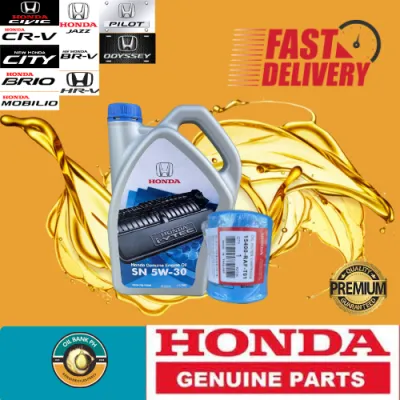
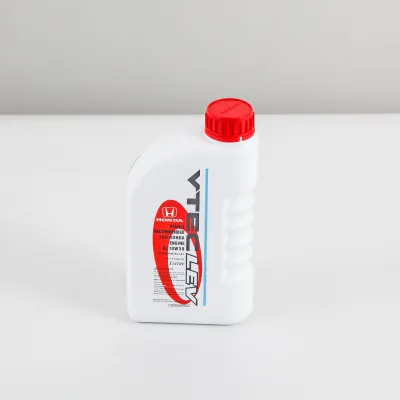
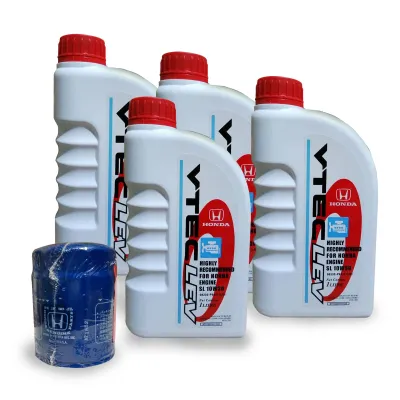
Prices are valid at publication and may change. Please refer to the product page for the latest price.
If you purchased your vehicle second-hand and do not have access to the original owner’s manual, or if you suspect the engine has undergone significant wear or modifications, do not guess the viscosity. Instead, seek professional advice from an authorized Honda service center or a qualified mechanic who can look up the official technical specifications for your exact vehicle identification number (VIN).
Decoding Honda Oil Viscosity Grades: 0W-20, 5W-30, and 10W-40
Understanding what the numbers and letters on an oil bottle mean is essential for evaluating your options. Engine oil viscosity is rated using a system established by the Society of Automotive Engineers (SAE), which describes how the oil flows at both low and high temperatures.

In a multi-grade oil rating like 0W-20, the first number followed by the “W” stands for “Winter” and indicates the oil’s flow characteristics at cold temperatures. A lower number before the “W” means the oil remains more fluid in cold conditions, allowing it to circulate quickly when you first start the vehicle. The second number (such as 20, 30, or 40) represents the oil’s viscosity, or thickness, at the engine’s normal operating temperature of 100°C. A higher second number indicates a thicker, more robust oil film at high temperatures.
0W-20: Fuel Efficiency and Cold Start Protection
Modern Honda engines are built with incredibly tight tolerances and precise internal clearances. To protect these highly engineered systems, Honda widely specifies 0W-20 oil for its newer vehicle lineup. This low-viscosity oil is designed to flow rapidly through narrow oil passages immediately upon starting the engine, which is when the majority of engine wear occurs.
By flowing easily, 0W-20 minimizes the resistance against moving engine parts. This reduction in internal friction directly supports better fuel economy, allowing your engine to operate more efficiently. It is the standard recommendation for modern Honda Earth Dreams engines, including those found in recent generations of the Civic, City, and CR-V. Using a thicker oil in these engines can restrict flow, increase operating temperatures, and reduce overall fuel efficiency.
5W-30: Balanced Protection for Moderate Conditions
For many years, 5W-30 was the go-to standard for a wide variety of passenger vehicles, and it remains highly relevant for specific Honda models. This grade offers a balanced compromise, providing a slightly thicker protective film at operating temperatures than 0W-20, while still maintaining reliable flow characteristics during startup.
You will often find 5W-30 specified for slightly older Honda models, or in regional specifications where extreme fuel-economy standards are balanced against heavy-duty driving demands. It is also suitable for vehicles that frequently carry heavy loads or operate in demanding conditions. However, you must avoid substituting 5W-30 in a modern Honda engine that explicitly mandates 0W-20, as the thicker oil can prevent proper lubrication of tight variable valve timing components.
10W-40: High-Temperature Stability for Older Engines
As engines age and accumulate high mileage, the physical clearances between internal moving parts—such as piston rings and cylinder walls—gradually widen. In these scenarios, a thicker oil like 10W-40 can be highly beneficial. The higher viscosity provides a robust, heavy-duty oil film that helps seal these wider clearances, maintaining critical oil pressure and reducing oil consumption.
This grade is particularly suited for older Honda models built in the 1990s or early 2000s, or engines that operate under severe stress and high ambient temperatures. The thicker film prevents the oil from thinning out excessively under extreme heat. However, using 10W-40 in a modern Honda engine designed for thin oils carries significant risks, including poor lubrication during cold starts, increased wear on delicate engine components, and a noticeable drop in fuel economy.
Evaluating a Honda Change Oil Package: What to Check Before Booking
When shopping for a honda change oil package at an independent service center or automotive shop, it is crucial to look beyond the price tag. Not all packages are created equal, and using the wrong components can compromise your engine’s health.
First, confirm that the service provider will use the exact viscosity grade required by your vehicle’s manual, rather than a generic, high-viscosity oil they use for all cars. Second, check that the oil provided meets modern industry certification standards. Look for labels indicating API SP or ILSAC GF-6 certifications, which guarantee the oil has been tested to protect against low-speed pre-ignition (LSPI) in turbocharged engines and offers superior sludge control.
Finally, ensure the package includes a high-quality, compatible oil filter designed specifically for your Honda model. A cheap, generic filter can restrict oil flow or fail to filter out microscopic contaminants effectively. The package should also include a new oil drain plug crush washer; reusing an old washer is a common cause of slow oil leaks after a service.
When to Consult a Professional for Oil Viscosity Changes
While sticking to the manufacturer’s recommended viscosity is the safest path for most drivers, certain mechanical conditions may warrant a change. If your Honda is experiencing excessive oil consumption, emitting blue smoke from the exhaust, or making unusual ticking noises from the engine bay, these are signs that your engine may have internal wear or damage.
In such cases, a qualified mechanic can perform diagnostic checks to determine if switching to a slightly thicker viscosity grade is a suitable temporary measure to protect the engine. However, you should never conduct DIY viscosity experiments without professional guidance. Using an incorrect oil grade can lead to oil starvation, accelerated wear, or even catastrophic engine failure. Always consult an authorized Honda service center or a certified automotive professional to address persistent engine symptoms.
Frequently Asked Questions (FAQ)
Can I mix 0W-20 and 5W-30 oil in my Honda engine?
Mixing different viscosity grades is not recommended because it alters the carefully engineered flow and protection characteristics of the oil. While doing so in an emergency to top up a dangerously low oil level is better than running the engine dry, it should only be a temporary fix. You should schedule a complete drain and fill service as soon as possible to restore the consistent viscosity and additive balance required by your engine.
Does the brand of oil matter if the viscosity is correct?
The industry certification standards and viscosity grade are far more important than the brand name on the bottle. As long as the oil carries the correct viscosity rating (such as 0W-20) and meets or exceeds the API and ILSAC standards specified in your Honda owner’s manual, it will provide the necessary protection. While reputable brands offer high-quality formulations, any certified oil that matches your vehicle’s specifications is safe to use.

Community discussion
Share your experience or ask a question. Comments are reviewed before publication.