
There is no single “best” clutch lining material for your Honda PCX. The ideal choice depends entirely on your daily riding habits, typical passenger or cargo loads, and local environmental conditions. In the tropical climate of the Philippines, where stop-and-go city traffic and high humidity are common, selecting the right material is crucial for maintaining smooth acceleration and preventing premature wear.
The three primary options available in the aftermarket and original equipment manufacturer (OEM) spaces are organic, semi-metallic, and sintered clutch linings. Organic linings are designed for quiet, smooth engagement during standard city commuting. Semi-metallic options offer a balanced compromise for mixed highway and urban riding, while sintered linings are engineered to withstand extreme heat and heavy loads. To ensure safety and optimal performance, you must always verify part compatibility with your specific PCX model year and engine displacement before purchasing any replacement components.
Understanding PCX Clutch Lining Material Options
The continuously variable transmission (CVT) in your Honda PCX relies on a centrifugal clutch system to transfer power from the engine to the rear wheel. When you twist the throttle, engine speed increases, causing the clutch shoes to swing outward. This outward movement forces the clutch linings to press against the inner wall of the clutch bell, creating the friction necessary to propel your scooter forward.
Products mentioned in this guide
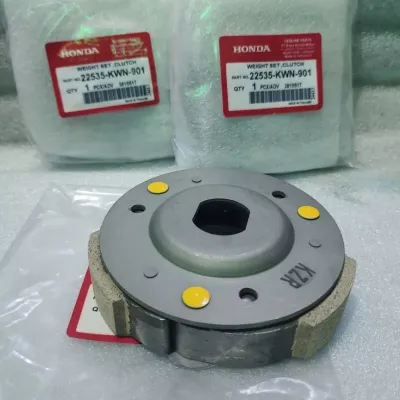
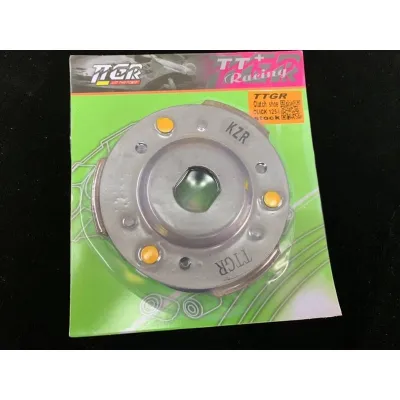
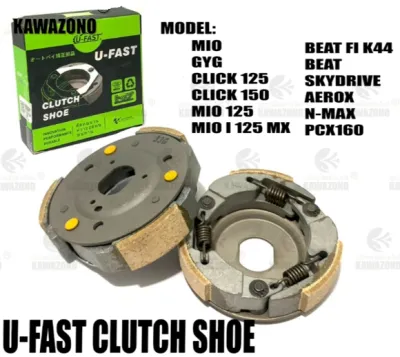
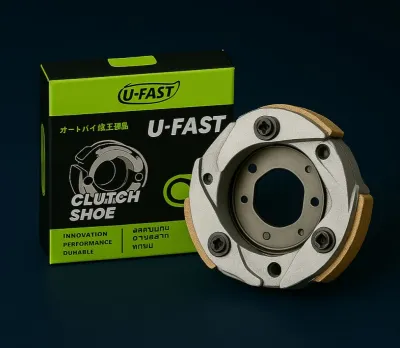
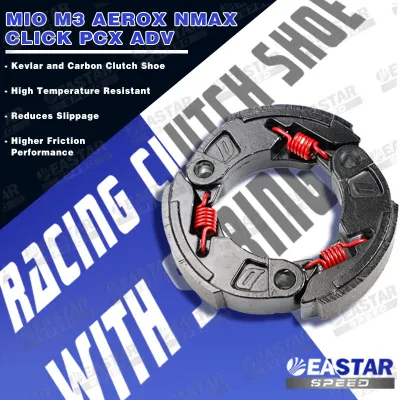
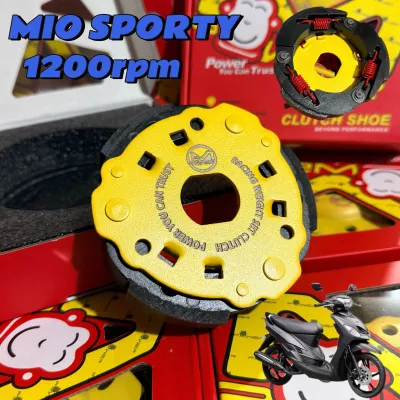
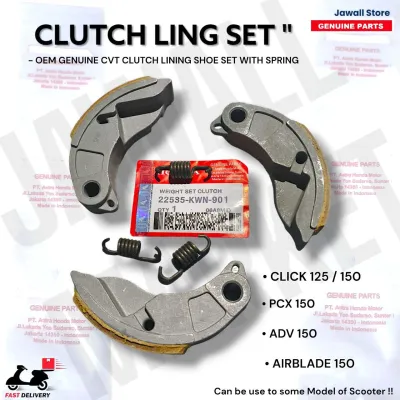
Prices are valid at publication and may change. Please refer to the product page for the latest price.
Because the clutch lining is the direct point of contact during this engagement process, its material composition dictates how your scooter behaves when accelerating from a complete stop. A lining that grips too softly may slip excessively under load, while a lining that grips too aggressively can cause a jerky or shuddering sensation.
Organic, semi-metallic, and sintered materials represent different approaches to balancing friction, heat resistance, and component longevity. Organic linings utilize softer, non-metallic fibers bound together by heat-resistant resins. Semi-metallic linings introduce fine metallic particles into this organic mix to enhance heat dissipation and durability. Sintered linings consist of metallic powders fused together under high pressure and temperature, creating a highly durable, heat-tolerant friction surface.
Understanding these material differences allows you to choose a replacement lining that matches your specific riding environment. Whether you navigate the congested streets of Metro Manila or take weekend rides along steep, winding routes, the right material will help maintain consistent transmission performance.
Organic vs. Semi-Metallic vs. Sintered: A Material Comparison
To help you evaluate these options, the table below outlines the general characteristics of each clutch lining material based on standard industry observations.

| Material Type | Engagement Feel | Heat Tolerance | Noise Level | Ideal Use Case |
|---|---|---|---|---|
| Organic | Very smooth and progressive | Moderate | Low | Standard city commuting, solo riding |
| Semi-Metallic | Balanced and predictable | Medium-High | Low to Moderate | Mixed urban and highway riding, occasional passenger |
| Sintered | Firm and aggressive | High | Moderate to High | Heavy loads, steep terrain, high-heat environments |
Organic clutch linings are highly regarded for their quiet operation and exceptionally smooth engagement. Because the material is relatively soft, it conforms easily to the clutch bell surface, minimizing the vibrations or “dragging” sensations that can occur during low-speed crawling. However, this softness means organic linings wear down faster under high-heat conditions, such as prolonged idling in heavy traffic or carrying heavy cargo.
Semi-metallic linings serve as a versatile middle ground. By blending organic fibers with metals like copper or brass, manufacturers create a lining that handles higher operating temperatures without losing its grip. This composition provides a predictable engagement feel that remains stable across a wider temperature range, making it a popular choice for riders who experience a mix of open highway cruising and congested city streets.
Sintered clutch linings are engineered for maximum durability and heat resistance. The manufacturing process fuses metallic particles together, resulting in a dense, hard friction surface that does not easily degrade under extreme thermal stress. While sintered linings excel at transferring power under heavy loads or during steep climbs, their hard composition can result in a firmer, more abrupt engagement feel and may generate more noise during operation.
Please note that exact friction coefficients, wear rates, and specific performance characteristics vary significantly between different aftermarket brands. You should always consult the product packaging, manufacturer specifications, and official labels to verify the exact properties of the lining you are purchasing.
How to Choose the Right Lining for Your Riding Style
Selecting the right clutch lining requires a realistic assessment of how and where you ride your Honda PCX. A material that works perfectly for a solo commuter may not perform well for a rider who frequently carries heavy delivery loads or navigates steep, hilly terrain.
You should choose an organic clutch lining if your daily routine consists primarily of solo commuting in stop-and-go city traffic. If you prioritize a quiet ride, smooth acceleration from a standstill, and want to minimize wear on your clutch bell, organic is the most suitable option. This material is ideal for standard, unmodified scooters operating under normal load conditions.
A semi-metallic clutch lining is the preferred choice if you need a versatile, all-weather option. If you frequently carry a passenger (backrider), transport moderate cargo, or split your time between city streets and faster bypass roads, semi-metallic linings offer the necessary heat resistance without sacrificing too much engagement comfort. They provide a reliable balance of longevity and smooth operation in tropical climates.
You should opt for a sintered clutch lining if your PCX is subjected to demanding operating conditions. If you regularly carry heavy delivery loads, frequently ride up steep inclines like those in Antipolo or Tagaytay, or have experienced clutch slipping and glazing with standard linings, the high heat tolerance of sintered metal is highly beneficial. However, you must be prepared for a firmer, more immediate clutch engagement and the potential for increased wear on the clutch bell.
Regardless of your preference, a lining is only suitable if it is explicitly certified to fit your specific PCX model year and engine displacement (such as the PCX 150 or PCX 160). Never attempt to install a lining that does not match your clutch shoe dimensions, as an improper fit can lead to immediate transmission failure or severe safety hazards on the road.
Compatibility Checks and Installation Safety
Before purchasing any replacement clutch lining, you must verify its physical compatibility with your Honda PCX. Scooter specifications can change between model generations, meaning a lining designed for an older PCX 150 may not fit the clutch assembly of a newer PCX 160. Always cross-reference the aftermarket part number with your scooter’s model year, engine code, and the official Honda service manual.
When replacing the clutch lining, it is critical to inspect the condition of your clutch bell. A worn, scored, glazed, or warped clutch bell will prevent a new lining from seating properly, leading to rapid wear, severe shuddering, or slipping. If you observe deep grooves or blue discoloration on the inner surface of the bell—which indicates extreme overheating—you should replace the clutch bell alongside the new linings.
Working on a scooter’s CVT system involves safety hazards that require proper tools and mechanical knowledge. Disassembling the rear pulley assembly requires compressing a high-tension contrast spring. Attempting to loosen the clutch center nut without a proper clutch holding tool or a spring compressor can cause the assembly to fly apart, posing a serious risk of personal injury or damage to the components.
If you do not possess the specialized tools, such as a calibrated torque wrench and a clutch holder, or if you lack experience with CVT maintenance, you should have the new clutch lining installed by a qualified motorcycle mechanic. Proper torque specifications must be followed when reassembling the clutch and pulley nuts to prevent them from backing off while riding.
Finally, always adhere to the manufacturer’s recommended break-in procedure after installation. New clutch linings require a period of gentle riding—typically involving moderate acceleration and avoiding heavy loads or high speeds for the first few dozen kilometers—to allow the lining material to mate perfectly with the clutch bell surface. Skipping this step can lead to localized overheating and permanent glazing of the new friction material.
Frequently Asked Questions (FAQ)
Can I mix different clutch lining materials on the same clutch?
No, you must never mix different clutch lining materials or brands within a single clutch assembly. The centrifugal clutch on your Honda PCX utilizes multiple clutch shoes that must engage simultaneously and with equal force against the clutch bell. Mixing materials—such as installing two organic shoes and one sintered shoe—will cause uneven friction levels across the shoes. This imbalance leads to uneven wear, severe transmission vibration, clutch shuddering, and can damage the clutch bell or input shaft bearings. Always replace all clutch linings as a complete, matching set.
How do I know if my PCX clutch lining needs replacement?
Several physical and operational symptoms indicate that your PCX clutch linings are worn or damaged. The most common sign is clutch slipping, where the engine’s RPMs rise significantly when you twist the throttle, but the scooter does not accelerate accordingly. You may also experience a delayed or jerky engagement from a complete stop, accompanied by a shuddering sensation throughout the chassis. Additionally, unusual squealing, scraping, or rattling noises coming from the CVT case during acceleration suggest that the lining material has worn down close to the metal backing, requiring immediate inspection and replacement.
Do sintered linings require a different clutch bell?
While sintered clutch linings can physically operate with a standard OEM clutch bell, their hard metallic composition typically accelerates wear on the bell’s inner friction surface. Because sintered materials are much harder than organic or semi-metallic compounds, they generate higher friction temperatures and can score or groove a standard steel bell over time. If you decide to upgrade to sintered linings, it is highly recommended to inspect your clutch bell regularly or consider upgrading to a heavy-duty, reinforced, or grooved aftermarket clutch bell designed specifically to handle the abrasive nature and high heat of sintered metallic materials.

Community discussion
Share your experience or ask a question. Comments are reviewed before publication.