
Choosing a 45L hard plastic top box for your motorcycle in the Philippines requires balancing storage capacity, structural durability, and vehicle safety. A 45-liter capacity is widely considered the sweet spot for daily commuters and weekend tourers alike, offering enough room for essential gear without excessively compromising the motorcycle’s handling. To make a confident purchase, you must evaluate your cargo needs, verify rack compatibility, inspect security and weatherproofing features, and follow safe installation practices.
Hard plastic top boxes, typically constructed from high-grade polypropylene or acrylonitrile butadiene styrene (ABS), provide a lightweight, impact-resistant, and highly weather-resistant alternative to aluminum cases or soft luggage. They are designed to flex slightly under stress, absorbing road vibrations and minor impacts without denting or cracking. By understanding how to assess these accessories, you can ensure your investment protects your gear through heavy monsoon rains, intense tropical heat, and rough road conditions.
Is a 45L Hard Plastic Top Box Right for Your Ride?
Determining if a 45L top box fits your lifestyle starts with analyzing your daily cargo. A 45-liter interior volume typically accommodates one full-face helmet along with daily essentials like a set of heavy-duty rain gear, a change of clothes, and a small laptop bag or groceries. If your daily routine involves securing your riding gear when parked in public spaces, this capacity provides a practical balance between utility and physical size. The typical dimensions of a 45L box allow it to sit comfortably on most mid-sized scooters and underbones without creating an overly wide profile.
Products mentioned in this guide
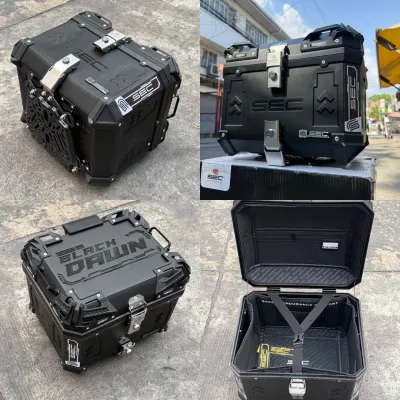
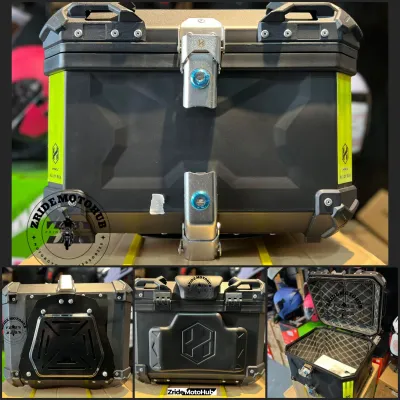
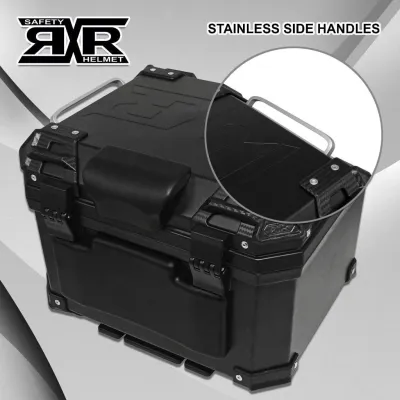
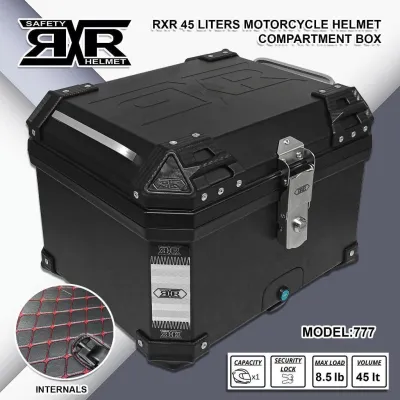
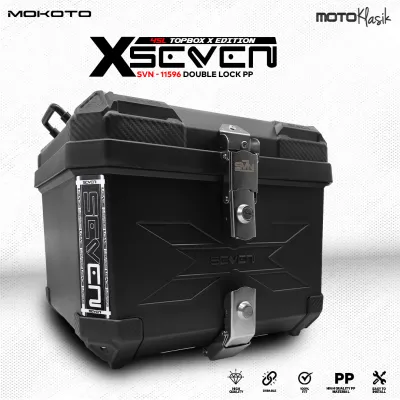
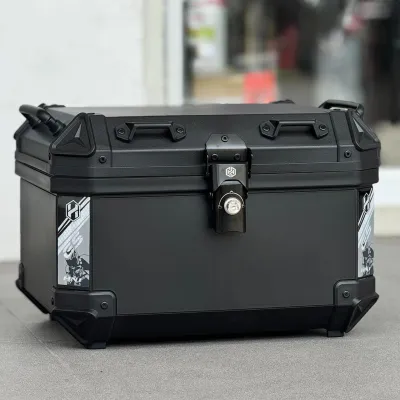
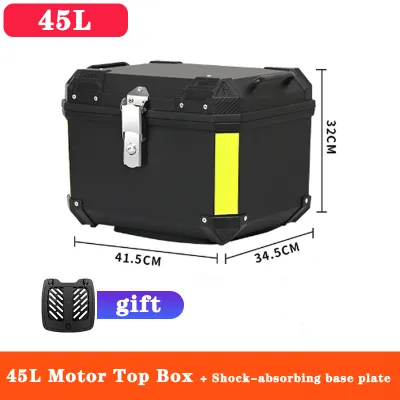
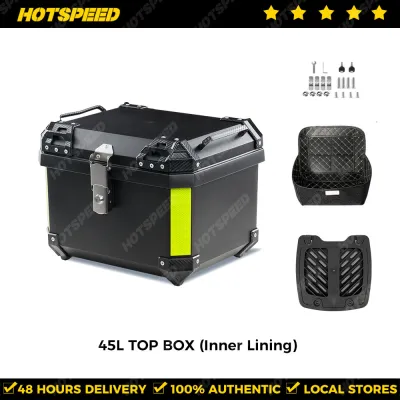
Prices are valid at publication and may change. Please refer to the product page for the latest price.
Weighing the material trade-offs is essential when comparing hard plastic to alternative luggage options. Aluminum boxes are highly durable and offer a rugged aesthetic, but they are significantly heavier, more expensive, and can negatively affect your motorcycle’s center of gravity. Soft luggage is lightweight and versatile but lacks built-in locking security and absolute weather protection. Hard plastic boxes offer excellent impact absorption, resist UV degradation when properly treated, and keep your overall setup lightweight and cost-effective, with prices typically ranging from ₱1,500 to ₱6,000.
Your typical riding scenarios will also dictate whether a 45L rigid box is the right choice. For daily city commuting, a box of this size remains narrow enough to allow safe lane filtering without protruding past your handlebars or mirrors. For weekend touring across provinces, it provides secure, dry storage that keeps your belongings safe from sudden tropical downpours and road dust during long hours on the highway. The rigid structure also ensures that your cargo remains protected from being crushed if the motorcycle is parked in tight, crowded public parking lots.
Verifying Motorcycle Compatibility and Mounting Requirements
Before purchasing any top box, you must verify your motorcycle’s rear rack or grab rail load capacity against the box’s specifications. Every motorcycle manufacturer specifies a maximum load limit for the rear subframe, which is detailed in your owner’s manual. Many standard underbone and scooter racks are rated for only 3 kg to 5 kg. Because an empty 45L hard plastic top box can weigh between 3 kg and 4 kg, you must ensure your rack can support both the box and your intended cargo without exceeding these limits.

You must also check the compatibility of the top box base plate with your existing rear rack. Most top boxes include a universal mounting plate, but mounting hole configurations vary widely. For many popular scooter and motorcycle models, you will need a model-specific, heavy-duty steel or reinforced alloy rack to distribute the weight safely to the motorcycle’s frame. Never infer compatibility solely from generic category terms; always cross-reference the rack manufacturer’s model-year application guides and physical dimensions.
Exceeding the motorcycle’s Gross Vehicle Weight Rating (GVWR) or overloading the rear rack can severely compromise vehicle handling, cause front-wheel lofting, and lead to subframe cracking. Always calculate the combined weight of the rack, base plate, empty top box, and your cargo. To maintain stability, place the heaviest items at the bottom of the box and as close to the passenger seat as possible, rather than packing heavy objects at the very top or rear. This minimizes the leverage effect on your rear suspension and helps prevent steering wobble at higher speeds.
Key Features to Inspect: Security, Weatherproofing, and Usability
A top box is only as reliable as its locking mechanism and latching system. When inspecting potential models, look for robust, metal-reinforced locking assemblies and keys that resist bending or shearing. Some systems allow you to lock the box to the base plate while keeping the lid unlocked, while others require the key to be inserted to close the latch. Choose a system that prevents accidental opening while riding over bumpy roads and deters opportunistic theft when parked. Ensure the quick-release mechanism that detaches the box from the plate is secure and cannot be accessed without the key.
Philippine weather presents extreme challenges, from intense tropical sun to torrential monsoon rains. Inspect the rubber gasket or seal running along the rim of the box lid. A deep tongue-and-groove design with a continuous, high-quality rubber seal is highly effective at preventing water ingress. Additionally, check the hinge design and drainage channels to ensure water is directed away from the opening rather than pooling inside when you open the lid. The plastic itself should have UV-stabilizing additives to prevent it from becoming brittle and fading under constant sun exposure.
Usability features can significantly enhance your daily riding experience. A removable felt or foam interior lining helps protect delicate items like laptops or helmet visors from scratches and dampens road vibrations. If you frequently ride with a pillion passenger, look for boxes that accept an optional padded backrest, ensuring it does not push the passenger too far forward or cause discomfort. Finally, check for integrated reflectors or light-reflective panels to improve your visibility to other motorists during night rides or heavy downpours.
Building Your Shortlist: Sourcing and Validating Top Box Models
When building your shortlist, prioritize purchasing channels that offer genuine products and reliable customer support. Authorized physical dealers and established local motorcycle accessory shops allow you to inspect the plastic thickness, test the latch mechanism, and verify the physical fit of your helmet before buying. If you choose to buy from online marketplaces, ensure the seller is an official brand store or an authorized distributor to avoid counterfeit products. Physical inspection is always recommended to assess the rigidity of the plastic under manual pressure.
Verifying product authenticity and warranty terms is crucial for long-term satisfaction. Counterfeit top boxes often use inferior, brittle plastics that degrade rapidly under UV exposure or shatter upon minor impact. Ensure the product comes with a manufacturer’s warranty covering latch failures or structural defects. Additionally, check if the seller stocks replacement parts, such as spare keys, lock cylinders, base plates, and mounting hardware, as these are subject to wear and tear over time and are difficult to source for generic, unbranded models.
Cross-reference user reviews with a focus on long-term durability and real-world performance. Look past initial impressions and seek out feedback from riders who have used the box for several months in tropical conditions. Pay close attention to comments regarding latch reliability, water leaks during heavy storms, and whether the mounting bolts tend to back out due to engine and road vibrations. This feedback provides valuable insight into how the box holds up under the daily stresses of local road infrastructure.
Safe Installation Practices and Ongoing Maintenance Limits
When installing the mounting plate and rack, always refer to the torque specifications and instructions provided in both your motorcycle’s service manual and the top box installation guide. Use a torque wrench to avoid over-tightening, which can strip threads in aluminum grab bars or crush thin-walled steel racks. Apply a medium-strength thread-locking compound to all mounting bolts to prevent them from vibrating loose over time. If your installation requires modifying the motorcycle’s subframe or routing electrical wiring for integrated brake lights, seek qualified professional installation to ensure road legality and safety.
Establish a routine inspection schedule to maintain the structural integrity of your setup. Every few weeks, check the tightness of the mounting bolts holding the rack to the motorcycle frame, and the bolts securing the base plate to the rack. Inspect the plastic base plate and the bottom of the top box for any signs of stress whitening, hairline cracks, or warping caused by road vibrations and heavy loads. For cleaning, use only mild soap and water as authorized by the manufacturer, avoiding harsh chemical solvents or petroleum-based cleaners that can degrade the plastic or damage the rubber seals.
Identify immediate stop conditions that require you to cease using the top box until it is professionally assessed or replaced. These conditions include stripped mounting threads, visible cracks in the plastic box shell or base plate, a latch that fails to click securely into place, or excessive play between the box and the base plate. Continuing to ride with a compromised top box poses a severe safety hazard, as the box could detach at speed, causing a serious accident or creating a dangerous obstacle for trailing motorists.
Frequently Asked Questions (FAQ)
Can I fit two full-face helmets in a standard 45L top box?
Generally, a standard 45L top box cannot comfortably accommodate two full-face helmets. While 45 liters is a generous volume, the physical dimensions and shell shapes of modern full-face helmets—especially those with prominent rear spoilers, ventilation ducts, or external Bluetooth communicators—require significant physical clearance. Typically, a 45L box will fit one full-face helmet plus additional soft gear like jackets or gloves. If you must store two full-face helmets simultaneously, you will usually need to look at larger boxes in the 50L to 55L range, or physically test your specific helmets inside the box before purchasing.
Do I need a professional mechanic to install the top box mounting kit?
For most standard motorcycles and scooters, installing a basic bolt-on rear rack and top box base plate is a straightforward task that can be completed with basic hand tools like sockets, Allen keys, and wrenches. However, if your installation requires modifying the motorcycle’s subframe, drilling into body panels, or integrating electrical wiring for built-in brake lights or turn signals, you should seek professional assistance. Improper electrical splicing can void your motorcycle’s warranty, drain the battery, or cause short circuits, while incorrect structural modifications can compromise the frame’s integrity.

Community discussion
Share your experience or ask a question. Comments are reviewed before publication.