
Riding a classic motorcycle through the bustling streets of Manila or along scenic coastal highways requires gear that matches your bike’s aesthetic without compromising your personal safety. Retro helmets have surged in popularity, blending vintage mid-century designs with modern protective technology. However, finding a helmet that looks the part while meeting strict local safety standards requires a careful approach. In the Philippines, ensuring your helmet carries the proper safety certifications is not just a legal necessity to avoid heavy fines; it is a critical measure that can save your life in an accident.
As a primary safety restraint system, a helmet’s performance depends entirely on proper usage and structural integrity. Always consult the manufacturer’s user manual for specific instructions on strap fastening, fitment adjustments, and post-impact replacement guidelines before operating your motorcycle. By understanding what to look for at different price points, you can secure a compliant, stylish helmet that fits both your head and your budget.
Understanding Safety Certifications for Retro Helmets
Before focusing on paint finishes or visor shapes, every rider in the Philippines must prioritize legal safety certifications. The Land Transportation Office (LTO) and the Department of Trade and Industry (DTI) mandate specific markings to prove a helmet has undergone rigorous impact and penetration testing. The two primary marks you will encounter are the Philippine Standard (PS) mark and the Import Commodity Clearance (ICC) sticker.
Products mentioned in this guide
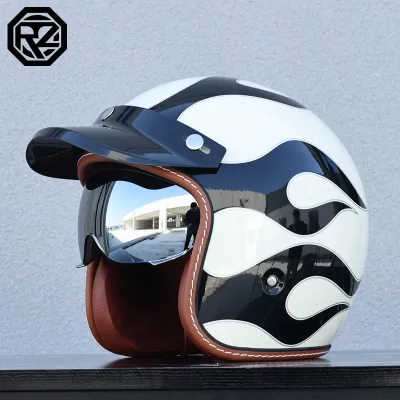
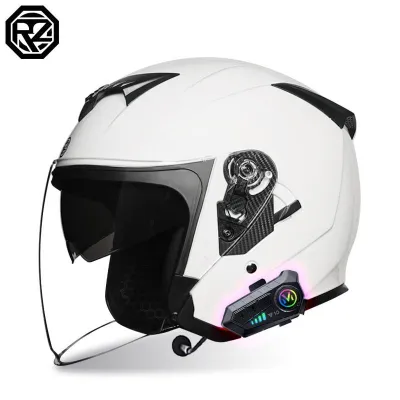
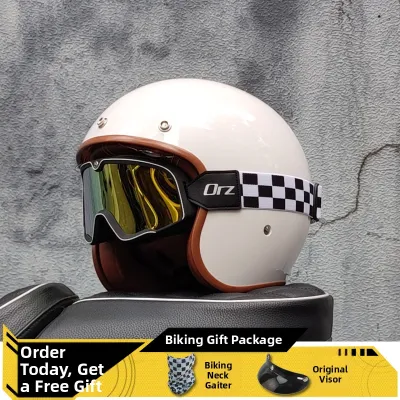
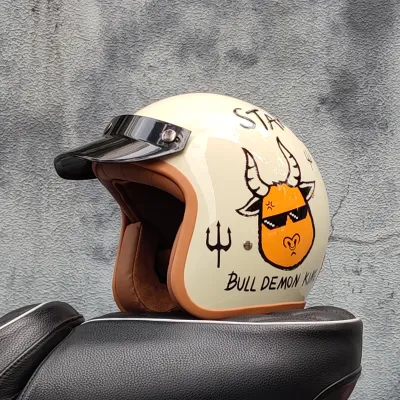
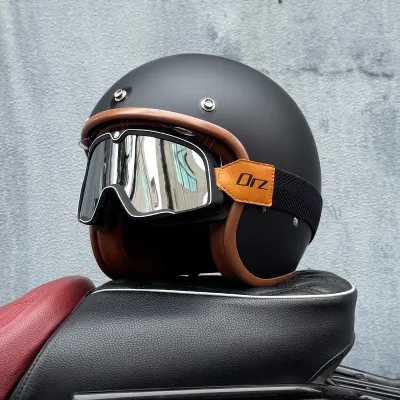
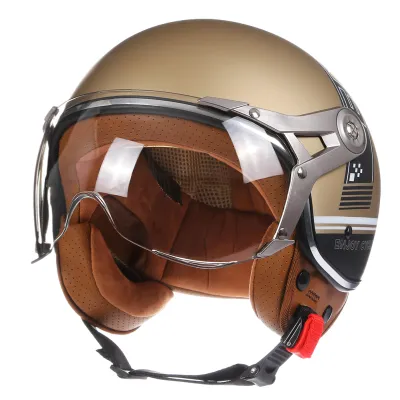
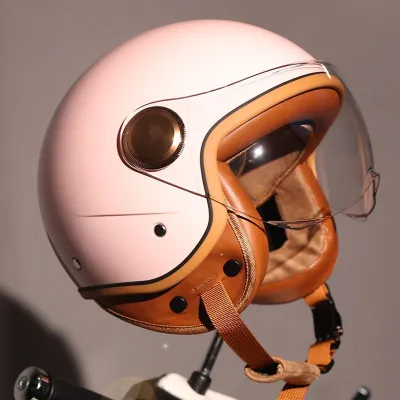
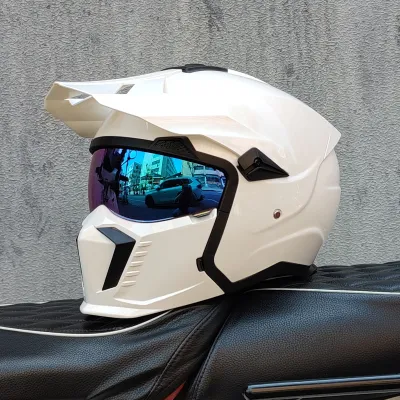
Prices are valid at publication and may change. Please refer to the product page for the latest price.
The PS mark is typically issued for helmets manufactured locally, though it is also applied to certified imported brands that have undergone systemic factory audits. This mark is often printed directly onto the helmet’s rear shell or permanently affixed as a durable label. Conversely, the ICC sticker is a holographic decal applied to imported helmets that have passed batch testing upon arrival in the country. This sticker features a unique serial number and a security hologram that shifts color when tilted under direct light.
To ensure you are not purchasing a counterfeit helmet with a fake sticker, perform a systematic visual inspection before riding:
- Check the holographic quality: Genuine ICC stickers have a distinct metallic sheen with crisp, clear micro-printing that does not look blurry or pixelated.
- Verify the serial number: The unique tracking number on the sticker should be clean and legible, not printed with uneven spacing or smudged ink.
- Inspect the adhesion: Authentic stickers are designed to destroy themselves or leave a distinct pattern if someone attempts to peel them off and transfer them to another helmet.
- Look for international standards: Embossed or printed certification standards on the rear of the helmet, such as UNECE R22.05 or R22.06, often accompany local PS/ICC approvals.
Riding with an uncertified or fake-certified retro helmet carries severe consequences. Legally, traffic enforcers can apprehend you under Republic Act No. 10054 (the Motorcycle Helmet Act), resulting in steep fines starting at ₱1,500 for the first offense and escalating to license confiscation for repeated violations. More importantly, uncertified helmets often use cheap, brittle plastics that shatter upon impact, failing to absorb the energy of a crash and leaving your head completely unprotected.
Setting Your Budget: What to Expect Across Price Tiers
Setting a realistic budget is the next step in your purchasing journey. While all road-legal helmets must meet the baseline safety requirements to earn their PS or ICC stickers, higher price points offer significant upgrades in materials, comfort, and longevity. Understanding these tiers helps you manage your expectations and identify where your money is actually going.

At the entry-level tier, which typically ranges from ₱1,500 to ₱3,500, helmets are almost exclusively constructed with injection-molded Acrylonitrile Butadiene Styrene (ABS) plastic. ABS is a reliable, cost-effective material, but it requires a thicker shell to achieve the necessary impact resistance, making these helmets heavier—often weighing over 1,400 grams for an open-face model. The interior liners in this price bracket are usually fixed or feature only partially removable cheek pads. Ventilation is often minimal, relying on a few small, non-adjustable mesh ports that can feel warm in tropical Philippine humidity.
Moving into the mid-range tier, generally spanning ₱4,000 to ₱8,000, you begin to see advanced composite materials and highly refined interiors. Manufacturers in this segment often use lightweight fiberglass composites, which reduce overall weight while maintaining excellent structural integrity. The interior liners are typically fully removable, washable, and treated with hypoallergenic or moisture-wicking properties—a crucial feature for daily commuting in hot, humid weather. Ventilation systems are also more sophisticated, incorporating adjustable brow vents and rear exhaust ports that channel air efficiently without disrupting the classic retro silhouette.
The premium tier, starting from ₱9,000 and extending upward, represents the pinnacle of retro helmet design and material science. Here, you will find shells crafted from advanced fiberglass blends or pure carbon fiber, dropping the helmet’s weight significantly to minimize neck fatigue on long weekend rides. These helmets feature multi-density Expanded Polystyrene (EPS) liners designed to absorb varying levels of impact energy. The paint finishes are highly durable, featuring deep metallic flakes, hand-painted pinstripes, or premium matte clear coats. Additionally, premium models often include integrated, optically correct drop-down sun visors and luxurious leather-trimmed interiors.
When planning your budget, remember to account for hidden costs that can affect your final checkout total. If you are ordering online, local shipping fees or international import duties can add several hundred pesos to the price. Furthermore, you may want to budget for essential accessories, such as a replacement tinted visor for daytime riding, an anti-fog insert (like a Pinlock lens) to handle sudden afternoon downpours, or a protective helmet bag to keep your vintage paint job free of scratches.
Key Retro Helmet Features to Evaluate Before Checkout
Beyond safety certifications and price tags, several retro-specific design elements directly impact your daily riding experience. Evaluating these features beforehand ensures your helmet remains comfortable and functional over years of use.
First, consider the visor configuration. Retro helmets generally come in three styles: open-face with no visor, open-face with a bubble visor, or full-face with a flat visor. Bubble visors offer a distinct vintage look and excellent peripheral vision, but their curved shape can sometimes create minor optical distortion and increase wind resistance at higher speeds. Flat visors provide a more modern, distortion-free view and are easier to equip with anti-fog inserts. If you choose a model with a visor, verify if it is pinlock-ready, as tropical humidity and heavy rains will quickly fog up a standard shield.
Second, pay close attention to ventilation and weight. Classic retro designs prioritize clean, uninterrupted lines, which often means they have fewer intake and exhaust vents than modern sport helmets. In the Philippines’ warm climate, a lack of airflow can lead to rapid heat buildup. Look for retro models that subtly integrate ventilation channels along the forehead or chin bar. Always check the manufacturer’s official weight specifications; a helmet that feels fine during a five-minute try-on can cause severe neck strain after an hour of navigating bumper-to-bumper traffic.
Finally, ensure an accurate fit and interior compatibility. Never guess your helmet size based on a previous brand. Use a flexible measuring tape to measure your head circumference at its widest point, just above your eyebrows. Compare this measurement to the manufacturer’s specific sizing chart. Additionally, determine your head shape—most riders fall into the intermediate oval, round oval, or long oval categories. A helmet designed for a round oval head will create painful pressure points on a long oval head. Check if the manufacturer offers interchangeable cheek pads of varying thicknesses, allowing you to customize the fit for a secure, comfortable seal around your jawline.
Choosing Reliable Retailers and Verifying Authenticity
With the rise of online shopping, counterfeit riding gear has become a widespread issue. To protect your safety and your wallet, you must be highly selective about where you purchase your retro helmet.
Always prioritize buying directly from official brand stores, authorized physical dealerships, or verified flagship stores on major e-commerce platforms. Authorized dealers are contractually obligated to sell genuine products that meet local safety standards, and they have direct access to manufacturer support if you encounter any issues.
Before finalizing your purchase, perform several critical pre-checkout verifications:
- Confirm the return policy: Ensure the seller allows exchanges for sizing issues. A helmet that does not fit perfectly cannot protect you properly, so you must be able to exchange it easily.
- Verify the warranty coverage: Reputable manufacturers offer warranties against material and manufacturing defects, usually ranging from one to five years.
- Request physical proof: Ask the seller to provide clear, high-resolution photos of the actual PS or ICC certification marks on the specific helmet they plan to ship to you.
Be on high alert for common red flags. If a premium retro helmet is listed at a price that seems significantly below the standard market average, it is highly likely to be a counterfeit. Avoid sellers who cannot provide clear documentation of local safety compliance, and never agree to off-platform transactions, as these bypass the buyer protection policies offered by established online marketplaces.
Frequently Asked Questions (FAQ)
Can I use a retro helmet without a visor on Philippine highways?
While you can legally ride with an open-face retro helmet, Philippine traffic regulations mandate that all motorcycle riders must wear adequate eye protection. If your retro helmet does not have an integrated visor or a built-in drop-down sun shield, you must pair it with certified riding goggles or impact-resistant glasses. Riding without any eye protection is a traffic violation and poses a severe safety hazard, as road debris, insects, and heavy rain can instantly impair your vision and cause serious accidents.
How do I clean the interior of a retro helmet safely?
To maintain hygiene and prevent odors in hot, tropical weather, clean your helmet’s interior regularly. When cleaning, only use care products and mild soaps that are explicitly authorized by the manufacturer’s label instructions. Unapproved household chemicals or solvents can silently degrade the protective EPS liner or weaken the outer shell, compromising its ability to absorb impacts.
If your helmet has a removable liner, gently hand-wash it in warm water using a mild, non-chemical soap or baby shampoo. Avoid harsh detergents or fabric softeners, which can degrade the hypoallergenic fabrics. Allow the liner to air-dry completely in a well-ventilated, shaded area before reassembling; never use a clothes dryer or direct sunlight, as extreme heat can warp the plastic snaps. For non-removable liners, use a specialized helmet interior foam cleaner or mild antibacterial wipes, then let the helmet air-out completely in a cool, dry room.

Community discussion
Share your experience or ask a question. Comments are reviewed before publication.