
Navigating the daily commute on a motorcycle requires a balance of agility, safety, and preparedness. In busy metropolitan areas and provincial roads alike, riders face a unique set of challenges, from sudden tropical downpours to the need for secure storage when leaving the bike parked in public spaces. A small top box for motorcycle commuting offers a practical solution, providing a secure, weather-resistant compartment for your helmet, rain gear, and daily essentials without compromising the nimble handling of your motorcycle.
Selecting the right top box is not as simple as picking the first compact option you see online. Because “small” is a subjective term that varies widely across different manufacturers, finding the ideal fit requires a systematic approach. You must evaluate the internal dimensions against your specific gear, understand the structural limits of your motorcycle’s rear rack, and ensure the mounting system complies with local road safety standards. This guide provides a comprehensive framework to help you make an informed decision, ensuring your new top box enhances your daily ride.
Defining the Right Size for Your Daily Commute
When evaluating a small top box for motorcycle use, capacity is typically measured in liters, with small models generally falling between 25 and 35 liters. However, relying solely on liter capacity can be misleading because the internal shape of the box determines what actually fits inside. A box with a rounded design might have the same volume as a square-shaped box, but the distribution of that space will differ significantly, affecting how you pack your daily gear.
Products mentioned in this guide
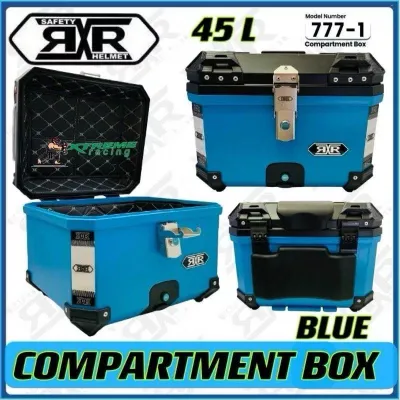
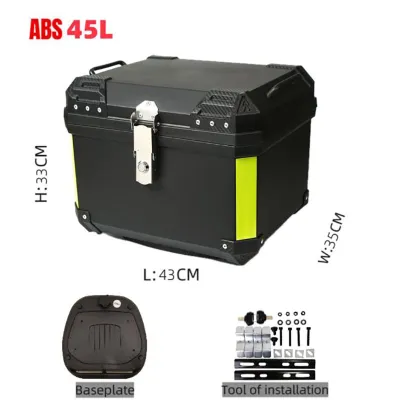
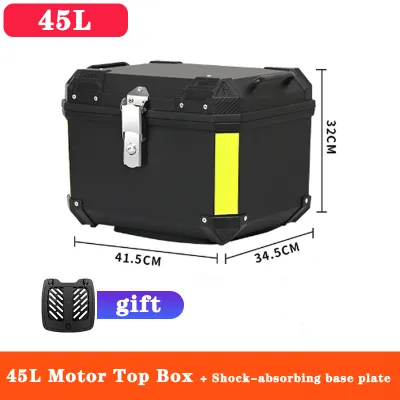
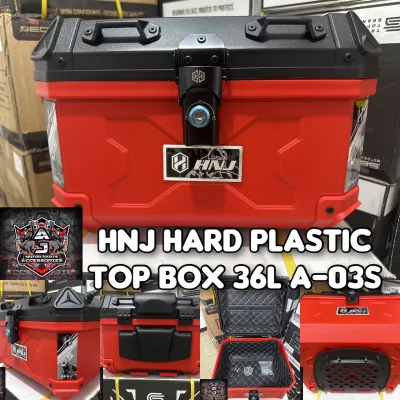
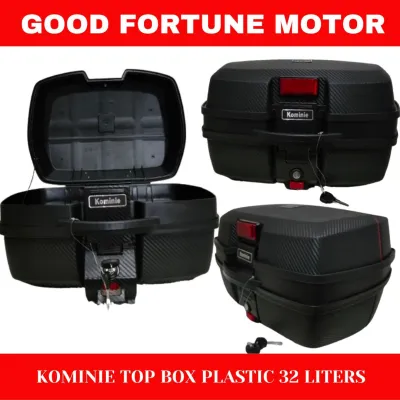
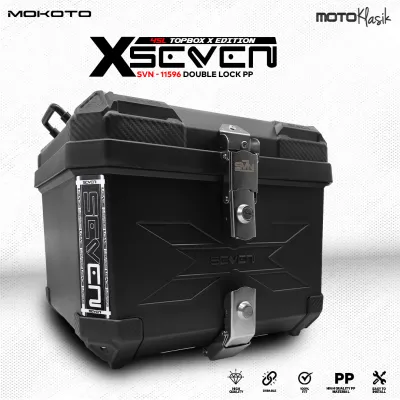
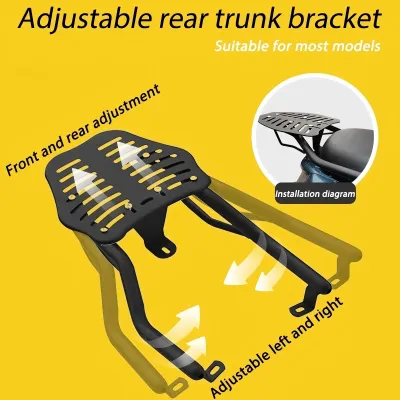
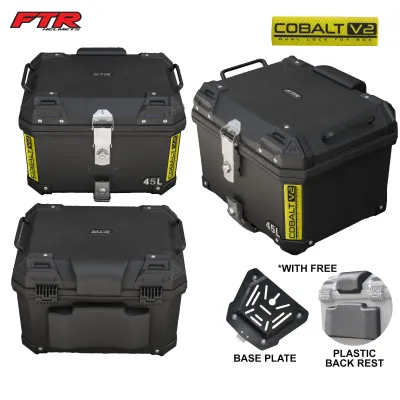
Prices are valid at publication and may change. Please refer to the product page for the latest price.
The primary item most commuters want to store is their helmet, and this is where precise measurements become critical. A standard open-face helmet has a relatively compact profile and will easily fit into almost any small top box. In contrast, a full-face or modular helmet features a much larger shell, a prominent chin bar, and top ventilation ducts that increase its overall height and width. If your helmet is equipped with an external Bluetooth communication system or a peak visor, these accessories add extra bulk. To avoid purchasing a box that cannot close, measure the widest, tallest, and longest points of your helmet with a tape measure, and compare these figures directly to the manufacturer’s listed internal dimensions.
Beyond the helmet, your daily commute demands space for other essential riding gear. In tropical climates, carrying a reliable set of rain gear, such as a heavy-duty jacket and pants, is a daily necessity. You must also account for riding gloves, a change of clothes, work documents, or a small laptop bag. If you plan to leave your helmet in the box while parked, these smaller items must either fit inside the helmet’s interior cavity or be carried with you. When riding, ensure that your packed items do not force you to press down hard on the lid to lock it, as this puts excessive strain on the latch mechanism and can lead to premature failure.
The physical footprint of the top box on the exterior of your motorcycle is another crucial factor. A box that is too wide or positioned too far forward can interfere with your ability to mount and dismount the bike comfortably, especially when swinging your leg over the seat. It can also crowd the passenger seating area, making rides uncomfortable or unsafe if you frequently travel with a pillion. Choosing a compact, streamlined box ensures that your motorcycle retains its narrow profile, allowing you to filter through tight traffic safely while keeping the center of gravity balanced.
Essential Features for Daily Commuting
Daily commuting subjects your motorcycle accessories to harsh environmental conditions, including intense sunlight, high humidity, and sudden torrential rains. To protect your belongings, the top box must feature robust weatherproofing. Look for a box equipped with a high-quality rubber or silicone gasket along the rim where the lid meets the base. A tongue-and-groove closure system that compresses this gasket when latched provides the best defense against water ingress, ensuring that your electronics, spare clothes, and documents remain completely dry even during heavy downpours.

Security is a major concern when parking your motorcycle in public areas, transit terminals, or street-side parking slots. The locking mechanism of the top box must be durable and reliable. Many entry-level boxes utilize simple plastic latches that can be easily bypassed or broken with basic tools. For better security, look for systems that feature metal locking plates, reinforced steel hinges, and secure cylinder locks. Some advanced locking systems allow you to remove the key only when the box is fully locked, preventing you from accidentally leaving your gear unsecured.
The material composition of the top box directly affects its durability and weight. High-impact plastics, such as polypropylene or polycarbonate, are excellent choices for small top boxes because they are lightweight, highly resilient to impacts, and resistant to UV degradation. Over time, constant exposure to intense sunlight can make cheap plastics brittle and prone to cracking. If you prefer a more rugged aesthetic, small aluminum top boxes offer exceptional strength, though they are generally heavier and require a sturdier mounting setup.
Inside the box, the environment should protect your gear from damage caused by road vibrations. Hard plastic or bare aluminum interiors can easily scratch expensive helmet visors and paint finishes as you ride over uneven pavement. To prevent this, look for boxes that come with a soft fabric lining, foam padding, or integrated elastic retention straps. These straps keep your helmet and other loose items securely in place, preventing them from shifting around, which not only protects your gear but also prevents sudden shifts in weight that could affect your motorcycle’s handling.
Verifying Motorcycle Compatibility and Safety
Before purchasing any top box, you must verify that it can be safely mounted on your specific motorcycle model. Every motorcycle has a maximum weight limit designated by the manufacturer for the rear subframe and the tail section. This limit is crucial because overloading the rear of the motorcycle can severely compromise its structural integrity and handling characteristics. You must calculate the total weight of the empty top box, the mounting plate, the rear rack, and the maximum payload of gear you plan to carry.
Overloading the rear rack shifts the motorcycle’s center of gravity backward and upward. This shift can lighten the front wheel, leading to vague steering feel, reduced front-tire traction, and a higher susceptibility to wind gusts. To maintain safe handling, always adhere to the weight limits specified in your motorcycle’s owner’s manual and the top box manufacturer’s guidelines. If your daily commute requires carrying heavy tools or equipment, a small top box may not be the appropriate solution, and you should consider distributing the weight using side panniers or a tank bag instead.
The mounting system itself must be robust and compatible with your bike. While most small top boxes include a “universal” mounting plate, this plate cannot be bolted directly to the motorcycle’s bodywork; it requires a model-specific rear rack. You must ensure that a compatible, high-quality rear rack is available for your specific motorcycle make, model, and year. When installing the mounting plate, use only the high-tensile bolts, washers, and self-locking nuts provided by the manufacturer, and check them regularly to ensure they have not vibrated loose from daily road use.
Road legality and visibility are paramount safety considerations. In the Philippines, the Land Transportation Office (LTO) enforces specific regulations regarding the installation and dimensions of motorcycle top boxes to ensure they do not pose a hazard to other road users. The top box must be securely attached and must not obstruct the visibility of your tail light, brake light, or turn signals from any rear angle. Additionally, the box must fit within the prescribed dimensional limits relative to the width of your motorcycle. Ensuring your top box complies with these regulations keeps you safe on the road and prevents costly fines during roadside inspections.
Smart Shopping and Evaluation Checklist
When shopping for a small top box on ecommerce platforms or at local motorcycle accessory shops, a structured evaluation process will help you avoid common purchasing mistakes. Start by ignoring generic marketing labels like “universal fit” or “one-size-fits-all.” Instead, locate the manufacturer’s official specification sheet and note the exact internal dimensions. Compare these measurements directly with the physical dimensions of your helmet and daily gear to guarantee a proper fit.
If you are purchasing online, leverage the feedback of other riders by carefully analyzing user reviews. Rather than just looking at the overall star rating, filter the reviews for specific keywords such as “leak,” “rattle,” “latch,” or “bracket.” Pay close attention to reviews written by daily commuters who ride in wet weather, as they provide the most accurate assessment of the box’s long-term durability, water resistance, and mounting hardware quality. If multiple reviews mention that the latch mechanism fails or that water enters the box during rain, it is best to consider other options.
Finally, clarify exactly what is included in the listed price in ₱. Some retailers list the top box at an attractive price point but do not include the mounting plate, brackets, or keys in the base package, requiring you to purchase them as separate add-ons. Ensure you are buying a complete kit that includes all necessary mounting hardware. If your motorcycle does not already have a rear rack installed, remember to budget for a high-quality, model-specific rack to complete your setup safely.
Frequently Asked Questions (FAQ)
Can a small top box fit a full-face helmet?
Whether a full-face helmet fits inside a small top box depends entirely on the specific dimensions of both the helmet and the box. While many top boxes in the 25-to-30-liter range are designed to accommodate a single standard full-face helmet, larger helmet sizes, modular designs, or helmets fitted with external accessories like action camera mounts and Bluetooth intercoms may require a slightly larger capacity or a box with a taller profile. To be certain, measure the maximum height, width, and length of your helmet and compare those measurements to the internal dimensions provided by the top box manufacturer before purchasing.
Do I need a professional to install a top box?
For most standard installations where a model-specific rear rack is already fitted to the motorcycle, installing a top box using the included universal mounting plate is a straightforward task that can be completed with basic hand tools. However, if your motorcycle requires custom fabrication, subframe reinforcement, or if you are installing a premium top box with integrated LED brake lights that must be spliced into your bike’s electrical system, professional installation is highly recommended. A qualified mechanic ensures that the mounting is structurally secure and that any electrical work is performed safely without risking damage to your motorcycle’s wiring harness or voiding its warranty.

Community discussion
Share your experience or ask a question. Comments are reviewed before publication.