
Selecting the right clutch lining for your Honda Click 125 requires balancing compatibility, material composition, and your specific daily riding conditions. The continuously variable transmission (CVT) in your scooter relies heavily on the clutch lining to transfer power smoothly from the engine to the rear wheel. In tropical climates characterized by intense heat, high humidity, and dense, stop-and-go traffic, the clutch assembly experiences significant thermal stress, making your choice of lining critical for preventing slippage and premature wear.
Making an informed decision involves looking beyond generic product listings and understanding the physical and mechanical specifications of your vehicle. By focusing on precise fitment, material quality, brand authenticity, and your typical riding environment, you can maintain optimal fuel efficiency and a smooth ride. This guide outlines the essential factors to evaluate before purchasing a replacement clutch lining for your scooter.
Verify Compatibility With Your Specific Click 125 Model
Ensuring the physical dimensions and mounting points of the clutch lining match your exact scooter variant is the most critical step in the buying process. The Honda Click 125 has gone through multiple generations and design updates over the years. While many engine components remain similar across these iterations, subtle variations in the CVT components, clutch bell diameter, and shoe weight can exist between different model years.
Products mentioned in this guide
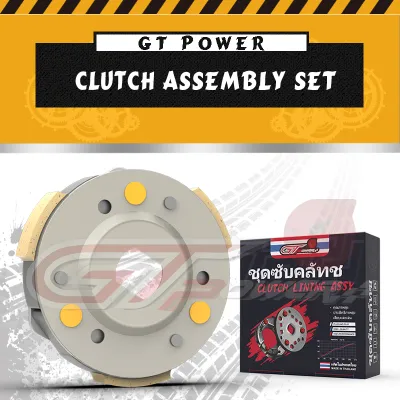
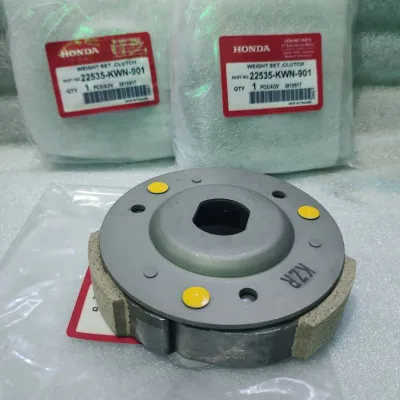
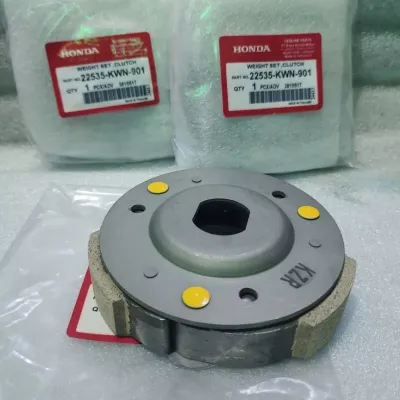
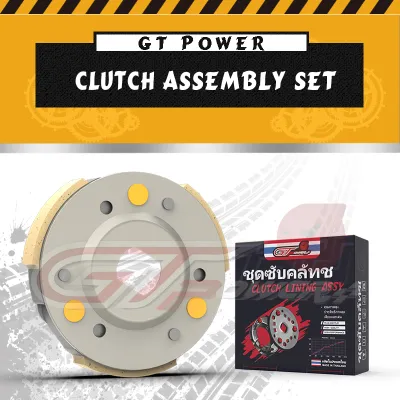
Prices are valid at publication and may change. Please refer to the product page for the latest price.
To prevent purchasing an incompatible part, locate the exact model year and variant of your scooter. This information is typically found on your vehicle registration documents, the chassis plate welded to the frame, or the emissions label under the seat. Knowing whether your scooter is a standard model or features specific braking and idling systems will help you narrow down the correct replacement parts.
Once you have identified your scooter’s specifications, cross-reference the Original Equipment Manufacturer (OEM) part number. You can find this number in your official owner’s manual, a factory service manual, or by inspecting the worn clutch lining currently installed in your vehicle. Reputable aftermarket manufacturers always list compatible OEM part numbers on their packaging to ensure a precise match.
Avoid relying solely on generic compatibility labels on online marketplaces. Many listings use broad terms like “universal fit for scooter” or group different engine displacements together without verifying actual dimensions. Installing a lining that is even slightly misaligned or has incorrect mounting holes can lead to severe transmission vibration, uneven wear, or catastrophic failure of the clutch assembly while riding.
Evaluate Material Quality and Construction
The durability and friction characteristics of a clutch lining depend heavily on its material composition and manufacturing quality. When browsing your options, identify the specific friction material type stated on the product packaging. The most common options include standard organic composites, Kevlar-infused fibers, and carbon-composite materials, each offering distinct performance profiles.

Standard composite linings are highly recommended for daily commuting because they offer smooth, quiet engagement and consistent performance under normal operating temperatures. Kevlar and carbon-composite linings are designed to withstand higher temperatures and resist fading under extreme stress, making them suitable for demanding conditions. However, these harder materials may require a matching heavy-duty clutch bell to prevent accelerated wear on the bell’s inner surface.
Inspect the physical construction of the clutch lining before purchase or installation. Examine the backing plate, which is the metal shoe that holds the friction material. The metal should have a consistent thickness, clean casting lines, and a high-quality finish free of burrs or sharp edges. Ensure the friction material is securely bonded or riveted to the backing plate with no visible gaps, adhesive squeeze-out, or loose fibers.
Reject any products that exhibit uneven surfaces, cracks in the friction material, or loose mounting pins. High-quality manufacturers provide clear specifications on the packaging, including the friction coefficient and temperature limits. If a product lacks basic manufacturing details, brand markings, or clear specifications, it is best to avoid it in favor of a fully documented component.
Check for Authenticity and Packaging Standards
The market for motorcycle spare parts contains numerous counterfeit and substandard components that mimic genuine brands. Installing a counterfeit clutch lining poses a significant safety risk, as low-grade bonding agents can fail under high heat, causing the friction material to detach from the metal shoe and lock up your transmission.
To protect your vehicle, learn to distinguish between genuine factory parts and reputable aftermarket alternatives. Genuine parts feature specific security measures, such as high-definition holographic seals that shift color when tilted, unique QR codes that link directly to official verification portals, and precise, smudge-free printing on the box. Many manufacturers also use tamper-evident packaging that cannot be resealed once opened.
Examine the packaging materials closely for signs of poor quality. Substandard parts often arrive in flimsy boxes with blurry text, spelling errors, or incorrect part numbers. Reputable aftermarket brands invest in high-quality packaging that protects the components from moisture and physical damage during transit, ensuring the parts arrive in pristine condition.
Be highly cautious of unusually low prices that deviate significantly from the standard retail rates at authorized dealers. While finding a good deal is appealing, a price that seems too good to be true is often a warning sign of a counterfeit product. Investing in a verified, authentic clutch lining ensures reliable performance and protects your CVT system from expensive secondary damage.
Assess Your Riding Needs and Usage Conditions
Your daily riding environment and how you use your scooter should heavily influence the type of clutch lining you select. A scooter used primarily for solo commuting on flat, open roads has very different transmission demands than one used for carrying heavy loads through congested urban areas or climbing steep hills.
For standard daily commuting in typical city traffic, standard OEM-equivalent clutch linings are generally the best choice. These linings are engineered to provide smooth engagement at lower engine speeds, minimizing the jerky movements often experienced during stop-and-go riding. They also generate less heat under normal loads, which helps prolong the lifespan of the entire CVT assembly.
If you frequently carry heavy cargo, ride with a pillion passenger, or regularly navigate steep inclines, you may want to consider heavy-duty or high-friction aftermarket options. These specialized linings are formulated to grip the clutch bell more aggressively, reducing the slippage that occurs when the engine is under heavy load. This can help eliminate the common “dragging” or shuddering sensation during initial acceleration.
However, you must understand the trade-offs associated with aggressive friction materials. Harder linings can cause harsher clutch engagement, which might feel less comfortable during slow-speed maneuvering. Additionally, because they grip more tightly, they can accelerate wear on the clutch bell, potentially requiring you to replace the bell sooner than you would with standard organic linings.
Installation Considerations and Professional Help
Replacing a clutch lining is a precise mechanical task that directly affects your scooter’s safety and performance. Before deciding to attempt a do-it-yourself replacement, evaluate whether you have the necessary specialized tools and mechanical experience to complete the job safely.
Servicing the CVT system requires specific tools, including a clutch holding tool (often called a Y-tool), a torque wrench, and a clutch spring compressor. Attempting to disassemble the clutch assembly without a spring compressor is highly dangerous, as the large center spring is under significant tension and can fly apart, causing severe personal injury or damage to the parts.
Always refer to your vehicle’s service manual for the correct torque specifications for all fasteners. Over-tightening the clutch nut or casing bolts can strip the threads, while under-tightening can cause the assembly to come loose while riding. If you encounter seized bolts, stripped threads, or are unsure of the correct assembly sequence, stop immediately and consult a qualified motorcycle mechanic.
After successfully installing the new clutch lining, it is essential to follow a proper bedding-in procedure. Avoid sudden, full-throttle acceleration and high-speed runs for the first few dozen kilometers of riding. Allowing the new friction material to gradually mate with the clutch bell surface ensures even wear, prevents glazing, and maximizes the overall longevity of your new transmission components.
Frequently Asked Questions (FAQ)
How often should I replace the clutch lining on my Click 125?
There is no fixed mileage interval for replacing the clutch lining, as wear rates depend heavily on your riding habits, payload, and traffic conditions. Instead of relying solely on an odometer reading, monitor your scooter for physical symptoms of wear. Common signs include sluggish acceleration, the engine revving high without a proportional increase in speed, a burning smell from the CVT case, or severe shuddering when starting from a complete stop.
To determine if a replacement is necessary, inspect the physical thickness of the friction material. Remove the CVT cover and measure the lining thickness using a vernier caliper. Compare this measurement to the service limit specified in your owner’s manual; if the lining is worn down close to the metal backing plate or the wear indicators are no longer visible, it must be replaced immediately.
Can I use clutch linings from other Honda scooters on my Click 125?
While some Honda scooters share similar CVT layouts, you should not assume that clutch linings are interchangeable across different models. Even if a lining from another scooter physically fits onto the clutch carrier, it may have different dimensions, shoe weights, or friction characteristics designed for a different engine torque curve.
Using a lining designed for a different engine displacement can result in poor transmission engagement, excessive heat buildup, or reduced fuel efficiency. To ensure safe and reliable operation, always stick to the exact OEM part number or aftermarket equivalents that are explicitly verified and listed by the manufacturer for the Honda Click 125.

Community discussion
Share your experience or ask a question. Comments are reviewed before publication.