
Selecting the correct high tension wire set for your Toyota is essential for maintaining engine efficiency, fuel economy, and smooth idling. High tension (HT) wires, also known as spark plug cables, carry high-voltage electrical current from the ignition coil or distributor to the spark plugs. In tropical environments like the Philippines, where high humidity, intense engine bay heat, and heavy seasonal rains are common, these wires are subjected to severe thermal and environmental stress. A mismatched or low-quality wire set can lead to electrical leakage, engine misfires, poor acceleration, and increased fuel consumption. To ensure your engine runs reliably, you must look beyond the basic model name of your vehicle and match the exact technical specifications of your engine family and ignition system.
Identify Your Toyota's Exact Engine and Model Specifications
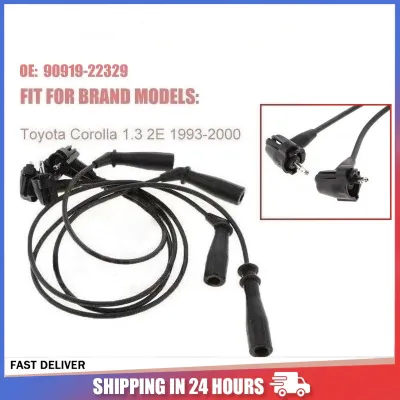
To find the correct high tension wire set, you must first identify the exact engine code of your Toyota. Relying solely on the model name on the trunk badge—such as Corolla, Corona, Tamaraw FX, or Revo—is often insufficient. For instance, a classic Toyota Corolla from the 1990s could be equipped with a 1.3-liter 2E carburetor engine, a 1.6-liter 4A-FE fuel-injected engine, or even a high-performance 4A-GE engine. Each of these engines utilizes a completely different ignition layout, wire length configuration, and boot design.
To locate your exact engine code, check the metal identification plate typically riveted to the vehicle’s firewall inside the engine bay. This plate lists the engine model, chassis code, and transmission type. Additionally, the engine code is stamped directly onto the engine block itself, usually near the joint where the engine meets the transmission. If the identification plate is missing or unreadable, you can find these details in your vehicle’s original owner’s manual or by running the chassis frame number through an authorized Toyota dealer’s database.
Products mentioned in this guide
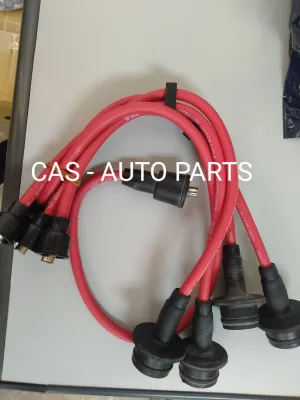
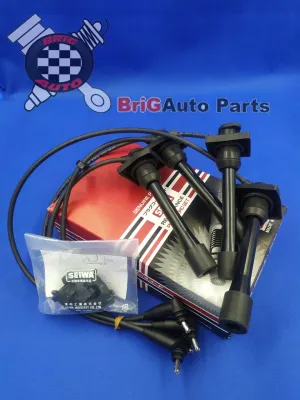
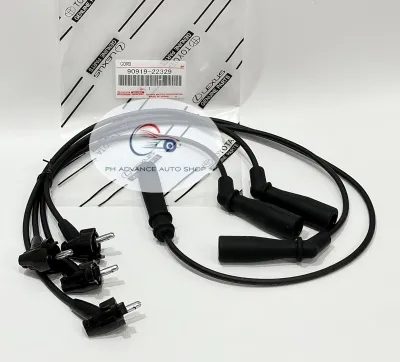
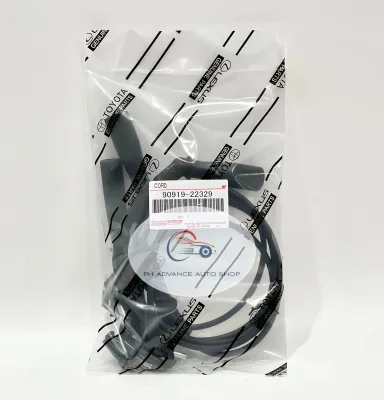
Prices are valid at publication and may change. Please refer to the product page for the latest price.
Understanding regional variations and mid-cycle facelifts is also crucial. Toyota frequently updated ignition systems within the same model generation. For example, earlier versions of a specific engine might use a traditional distributor with a central coil wire, while later facelifts of the same model might transition to a distributorless waste-spark system that uses only individual plug wires without a central coil lead. Verifying these details beforehand prevents the common mistake of purchasing a wire set that has the wrong number of cables or incompatible terminal connections.
Understand High Tension Wire Specifications and Core Materials
High tension wires are engineered with specific core materials that dictate their electrical resistance and suppression of radio frequency interference (RFI). The three primary core types available in the automotive aftermarket are carbon-suppression cores, copper cores, and spiral-wound (or magnetic) cores. Carbon-suppression cores are highly common in original equipment setups because they offer excellent RFI suppression, preventing electrical noise from interfering with your car radio or onboard electronics. However, carbon cores naturally exhibit higher electrical resistance, which can increase over time as the carbon fibers degrade under high operating temperatures.

Copper-core wires offer outstanding electrical conductivity with virtually zero resistance, but they provide no inherent RFI suppression. To prevent electrical interference, copper-core wire sets must utilize specialized resistor boots at the spark plug and distributor ends. Spiral-wound cores, often referred to as mag-cores, feature a ferromagnetic base wrapped in fine wire. This design provides a balanced combination of low electrical resistance and highly effective RFI suppression, making them a popular upgrade for drivers seeking consistent spark energy without electronic interference.
When selecting a wire set, you must verify that the wire diameter and resistance parameters match your Toyota’s factory specifications. Most standard Toyota engines utilize 5mm or 7mm diameter wires, while some aftermarket performance options offer 8mm or larger insulation jackets. While thicker insulation provides better protection against voltage leaks and physical wear, the internal resistance must remain within the range specified in your service manual. Using wires with excessively high resistance can strain your ignition coil, leading to premature coil failure and a weak spark that struggles to ignite the fuel-air mixture in humid tropical conditions.
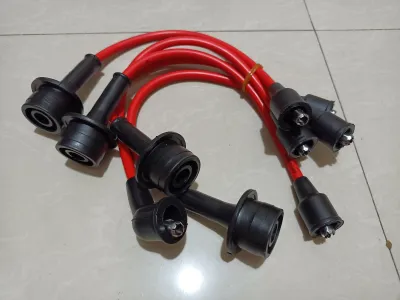
Physical compatibility also depends heavily on the terminal end designs. You must inspect the shape of the spark plug boots—whether they are straight, angled at 45 degrees, or bent at 90 degrees—to ensure they can reach the spark plugs without pressing against hot engine components. The distributor or ignition coil connectors must also match, as some systems use push-on male terminals while others require clip-on female sockets.
Verify Fitment and Compatibility Before Purchasing
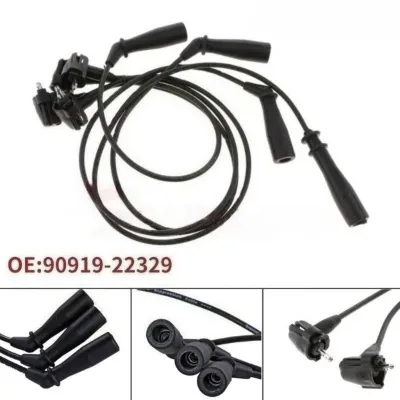
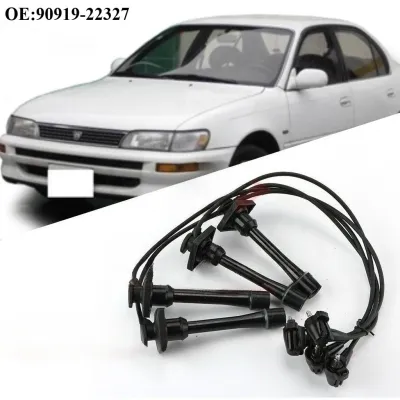
Before finalizing your purchase, cross-reference the Original Equipment Manufacturer (OEM) part number with the aftermarket catalog listings. Reputable manufacturers of ignition components maintain detailed application guides that cross-reference Toyota part numbers with their own product codes. If you are purchasing from a local auto parts dealer or an online marketplace, always verify that the product listing explicitly matches your engine code and model year rather than relying on broad, generic titles like “high tension wire for Toyota.”
Evaluate the physical wire lengths and routing layout of the replacement set. The wires in a vehicle-specific set are pre-cut to precise lengths corresponding to each cylinder’s distance from the distributor or ignition coil. Wires that are too short will be subjected to mechanical tension, which can damage the internal core or pull the terminals loose during engine movement. Conversely, wires that are too long will sag, potentially coming into contact with hot exhaust manifolds, sharp metal brackets, or moving drive belts.
Ensure the wire set includes all necessary mounting hardware, such as plastic routing clips or separators. Proper routing is essential to keep the high-voltage cables separated from one another and from the engine block. When high tension wires run too close together or touch metal surfaces, the high voltage can jump across the insulation—a phenomenon known as cross-firing or arcing—which causes engine misfires and rough running.
Inspect the New Wire Set Upon Delivery
Once your new high tension wire set arrives, perform a thorough physical inspection before beginning the installation process. Examine the outer insulation jacket of each wire along its entire length. The jacket, typically made of silicone or high-grade synthetic rubber, should be smooth, uniform in thickness, and completely free of cracks, cuts, pinholes, or manufacturing bubbles. Any defect in the outer insulation can allow high-voltage current to escape, especially when moisture levels are high.
Next, inspect the terminal boots at both ends of each cable. Ensure the rubber or silicone boots are securely bonded to the wire jacket and do not slide off easily. Look inside the boots to verify that the metal terminals are clean, bright, and free of surface corrosion or manufacturing debris. The internal locking clips should be properly formed and positioned to ensure they snap securely onto the spark plug tips and distributor terminals.
Finally, lay the new wires out alongside the old ones to verify that the lengths and boot angles match your engine’s layout. Count the number of wires in the package to ensure the set is complete. For a standard four-cylinder distributor-type Toyota engine, the set should contain four spark plug wires and one central coil wire. If any wire is missing, damaged, or of an incorrect length, do not attempt to install the set; contact the seller or manufacturer immediately for a replacement.
When to Seek Professional Verification
Working on automotive ignition systems involves high-voltage electrical currents that can deliver a painful shock or damage sensitive electronic components. Always prioritize safety: ensure the engine is turned off, the ignition key is removed, the battery is disconnected, and the engine bay has cooled down completely before touching any ignition components. If you are uncomfortable working with electrical systems, it is highly recommended to have the wire set installed by a qualified mechanic.
Professional verification is particularly important if your Toyota has undergone engine swaps, ignition system modifications, or non-standard performance upgrades. For example, if an older carburetor-equipped engine has been replaced with a modern fuel-injected engine, standard catalog listings for your vehicle’s model year will no longer apply. A professional technician can measure the physical clearances, determine the correct resistance requirements, and select a compatible wire set that matches the modified setup safely.
If you encounter conflicting information between aftermarket catalogs and the physical parts on your vehicle, stop the selection process and consult an authorized Toyota dealership or a specialist technician. Attempting to force an incompatible wire set onto your engine can lead to persistent misfires, unburned fuel entering and damaging the catalytic converter, poor fuel economy, and potential damage to expensive electronic ignition coils or modules.
Frequently Asked Questions (FAQ)
Do I need to replace high tension wires every time I change spark plugs?
No, high tension wires do not need to be replaced with every spark plug change, as they generally have a longer service life than standard spark plugs. However, the insulation and internal cores of the wires do degrade over time due to constant exposure to extreme engine heat, vibration, and moisture. It is best practice to inspect the wires during every spark plug replacement. Look for physical signs of wear, such as cracked or brittle boots, stiffened wire jackets, or visible electrical arcing when the engine is running in a dark environment. If your Toyota exhibits rough idling, hesitation during acceleration, or a drop in fuel efficiency, and the spark plugs are in good condition, the high tension wires may be failing and should be replaced. Always refer to your vehicle’s specific factory maintenance schedule for recommended replacement intervals.
Can I use a universal high tension wire kit for my Toyota?
While universal or cut-to-fit high tension wire kits are available, they are generally not recommended for standard Toyota models. Universal kits require you to cut the wires to length and crimp the terminals yourself, which introduces a high risk of improper assembly. Poorly crimped terminals can lead to high electrical resistance, weak spark delivery, and loose connections that easily vibrate off. Additionally, generic boots may not seal tightly against the spark plug wells or distributor towers, allowing moisture and dirt to enter and cause electrical tracking or misfires. Pre-assembled, model-specific wire sets are highly recommended because they are manufactured to exact factory lengths with pre-installed, moisture-resistant boots, ensuring a reliable, plug-and-play installation that maintains your engine’s original performance and reliability. Universal kits should only be considered for highly customized, non-standard engine builds where factory-style pre-assembled sets are not compatible.

Community discussion
Share your experience or ask a question. Comments are reviewed before publication.