
To choose the right F2R oil variant for your motorcycle engine, you must match the oil’s viscosity and formulation to your manufacturer’s exact specifications, specifically checking the SAE viscosity grade, the JASO standard (MA for manual wet clutches, MB for automatic scooters), and the API service classification. Selecting the correct variant is not about finding the most expensive option, but ensuring the oil’s properties align with your engine’s mechanical design and your typical riding environment.
Every motorcycle engine is engineered with specific tolerances, operating temperatures, and clutch configurations. Using an incompatible oil variant can lead to severe issues, such as clutch slippage in manual motorcycles, insufficient lubrication in automatic scooters, or accelerated wear on critical internal components. By systematically identifying your vehicle’s requirements and verifying them against the product label, you can confidently select the appropriate F2R oil to keep your engine running smoothly.
Identify Your Motorcycle's Required Oil Specifications
Before purchasing any F2R oil variant, you must consult your motorcycle’s owner’s manual or check the physical markings on the engine itself, such as the oil filler cap. Manufacturers design engines with precise clearances between moving parts, and they mandate specific oil characteristics to protect these components. You must verify your specific vehicle model, year, and engine type in your official documentation rather than inferring compatibility from generic category terms.
Products mentioned in this guide
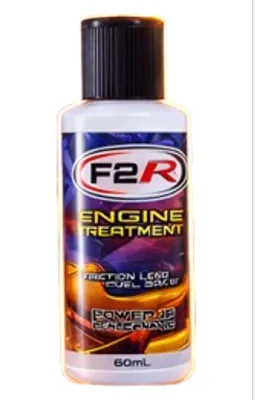
Prices are valid at publication and may change. Please refer to the product page for the latest price.
The first and most critical specification to locate is the recommended Society of Automotive Engineers (SAE) viscosity grade. Common grades include 10W-30, 10W-40, 15W-40, and 20W-50. This grade dictates how the oil flows at low temperatures (indicated by the number before the “W”) and how it maintains its protective film at high operating temperatures (indicated by the number after the “W”).
The second specification to identify is the Japanese Automotive Standards Organization (JASO) standard. This classification is vital for motorcycles because of how their transmissions and clutches are lubricated. Most manual motorcycles utilize a wet clutch system, where the engine, transmission, and clutch share the same oil reservoir. These engines require a JASO MA (or MA1/MA2) certified oil, which contains specific friction modifiers that prevent the clutch plates from slipping under load.
Conversely, automatic scooters typically use a continuously variable transmission (CVT) with a dry clutch system. Because the oil in a scooter only lubricates the engine and does not come into contact with the clutch, these vehicles require a JASO MB certified oil. JASO MB oils are formulated with low-friction properties to maximize fuel efficiency and reduce drag, but using them in a wet-clutch manual motorcycle will cause severe clutch slippage and damage.
Finally, you must check the minimum American Petroleum Institute (API) service classification required for your engine. The API rating consists of two letters, typically starting with “S” for spark-ignition gasoline engines, followed by a second letter that indicates the performance level (such as SG, SH, SJ, SL, SM, or SN). Newer letters represent standards designed for modern engines with advanced emission controls and tighter tolerances.
While you can generally use an oil with a higher API letter than what is recommended (for example, using an API SN oil when API SL is required), you should never use an oil with a lower rating than the manufacturer’s baseline specification. Doing so may deprive your engine of the necessary additives to prevent oxidation, sludge buildup, and premature wear.
Read F2R Oil Labels to Match Your Requirements
Once you have noted your motorcycle’s required specifications, you can systematically read the labels on F2R oil bottles to find the matching variant. The front label of the bottle typically displays the brand name, the product line, and the prominent SAE viscosity rating. For instance, if your owner’s manual specifies a 10W-40 oil, you must locate an F2R bottle that clearly displays “10W-40” on the front.

The “10W” indicates that the oil remains fluid enough at cold starts to quickly reach the cylinder head, while the “40” ensures the oil remains thick enough to provide a robust protective barrier when the engine reaches its full operating temperature in hot weather.
Next, turn the bottle over to inspect the back label for official certification marks and detailed specifications. Look for the JASO certification square or statement. It is critical to verify whether the bottle is labeled as JASO MA (or MA2) or JASO MB. Do not rely on generic marketing terms like “scooter oil” or “4T motorcycle oil” without verifying the exact JASO code.
A genuine JASO MA2 rating on an F2R bottle guarantees that the oil has undergone testing to ensure optimal friction performance for high-torque wet clutches. If you ride an automatic scooter, look specifically for the JASO MB mark to ensure the oil is optimized for low friction in dry-clutch engines.
Additionally, the label will indicate the oil’s base formulation: mineral, semi-synthetic, or fully synthetic. Mineral oils are refined directly from crude oil and are suitable for older, low-displacement engines or during the initial break-in period of a new engine. Semi-synthetic oils combine mineral bases with synthetic stocks to offer enhanced thermal stability and wear protection at a balanced price point.
Fully synthetic oils are highly engineered formulations that provide superior resistance to thermal breakdown, oxidation, and viscosity loss under extreme heat. While fully synthetic F2R variants offer the highest level of protection, you must still ensure that the chosen synthetic oil matches the exact viscosity and JASO requirements specified by your motorcycle manufacturer.
Adapt Your Choice to Riding Conditions and Engine Wear
While the manufacturer’s manual provides the baseline requirements, you may need to adapt your F2R oil selection within the approved limits based on your local riding conditions and the age of your engine. In tropical climates like the Philippines, engines are subjected to high ambient temperatures and intense humidity year-round.
If you frequently ride in heavy, stop-and-go urban traffic—such as daily commuting through congested city streets—your engine experiences prolonged idling and elevated operating temperatures. Under these severe conditions, the oil degrades faster. If your manufacturer’s manual permits a range of viscosities (for example, both 10W-30 and 10W-40), opting for the slightly higher viscosity grade (such as 10W-40) can provide a more stable oil film to protect internal components from extreme heat.
Engine wear and mileage also play a significant role in your selection. As a motorcycle accumulates high mileage, the constant friction gradually increases the clearances between internal moving parts, such as the piston rings and cylinder walls. This wear can lead to minor oil consumption, reduced compression, and increased engine noise.
For older engines with significant wear, switching to a slightly thicker approved viscosity grade within the manufacturer’s guidelines can help seal these wider clearances, reduce oil consumption, and cushion worn components. However, you should never exceed the maximum viscosity recommended by the manufacturer, as excessively thick oil can restrict flow during cold starts and increase internal drag, leading to overheating.
Regardless of your riding style, climate, or engine age, you must maintain the strict separation between scooter-specific (JASO MB) and manual motorcycle (JASO MA) oils. Some riders mistakenly believe that a high-performance fully synthetic JASO MB oil will provide “better” protection for their manual sportbike.
This is a dangerous misconception; the low-friction additives in JASO MB oil will cause the wet clutch in a manual motorcycle to slip, leading to power loss, accelerated clutch wear, and eventual transmission failure. Always prioritize the correct JASO standard over any perceived performance upgrade.
Verify Authenticity and Follow Safe Maintenance Practices
To ensure your engine receives the full protection of F2R oil, you must verify the authenticity of the product before purchase and follow safe, precise maintenance procedures during the oil change. Counterfeit engine oils are a risk in many markets, and using substandard lubricants can cause catastrophic engine failure.
When purchasing F2R oil, inspect the packaging carefully. Check that the tamper-evident seal on the cap is intact and has not been broken or glued back together. Look for clearly printed batch codes, manufacturing dates, and high-quality label printing without blurry text or misaligned graphics. Purchasing your oil from authorized dealers, official brand stores, or reputable retail outlets is the most effective way to guarantee you are getting a genuine product.
Before performing an oil change, verify the exact oil capacity required for your specific motorcycle model. This information is typically found in the owner’s manual or stamped near the engine oil fill cap. Overfilling the engine can lead to high pressure, oil foaming, blown seals, and oil entering the airbox, while underfilling will cause inadequate lubrication, overheating, and severe mechanical damage.
Always use a clean measuring cup to pour the precise amount, and verify the level using the engine’s dipstick or sight glass while the motorcycle is parked on a level surface on its center stand.
Safety is paramount when performing any automotive maintenance. If you choose to change the oil yourself, always allow the engine to cool down sufficiently before draining the oil to prevent severe burns from hot engine components or scalding oil. Always wear protective gloves and safety glasses.
When removing the drain plug, inspect the crush washer; it is highly recommended to replace this washer with a new one during every oil change to ensure a proper seal and prevent slow leaks. Tighten the drain plug to the manufacturer’s specified torque using a torque wrench to avoid stripping the threads on the aluminum crankcase. If you are uncomfortable performing these steps, or if your vehicle requires specialized tools, always seek the assistance of a qualified professional mechanic.
Frequently Asked Questions (FAQ)
Can I mix different F2R oil variants or brands?
Mixing different F2R oil variants or combining F2R oil with other lubricant brands is generally not recommended by manufacturers. Every engine oil is formulated with a carefully balanced package of additives, including detergents, dispersants, anti-wear agents, and friction modifiers. When you mix different formulations, these additive packages can conflict with one another, potentially reducing the oil’s overall effectiveness, altering its viscosity, or compromising its ability to protect wet clutches.
If you find yourself in an emergency situation where your oil level is dangerously low and the exact F2R variant is unavailable, topping up with a different high-quality motorcycle oil of the same viscosity and JASO rating is acceptable to prevent engine starvation. However, this should only be treated as a temporary measure. You should schedule a complete oil and filter change as soon as possible to restore the engine to a single, consistent formulation.
How do I know if my current F2R oil needs replacing early?
While you should always follow the manufacturer’s recommended oil change intervals, certain operating conditions can cause the oil to degrade prematurely, requiring an early replacement. You can monitor the condition of your oil by regularly checking the dipstick or the crankcase sight glass. Fresh oil is typically amber or light brown and translucent.
If the oil appears pitch black, opaque, or gritty when rubbed between your fingers, it has accumulated a high volume of carbon deposits and contaminants and should be replaced. If the oil has a milky or cloudy appearance, this indicates water or coolant contamination, which requires immediate professional inspection.
Physical changes in your motorcycle’s performance can also signal that the oil has lost its viscosity and protective properties. If you notice that gear shifting has become stiff or clunky, the engine is running hotter than usual, or there is a noticeable increase in mechanical noise from the cylinder head, the oil may no longer be providing adequate lubrication. Replacing the oil early under these circumstances will protect your engine from unnecessary wear.

Community discussion
Share your experience or ask a question. Comments are reviewed before publication.