
Selecting the right Fribella raincoat for motorcycle riding requires a careful balance of water resistance, wind proofing, and structural safety. Standard rain gear designed for walking often fails under the high-speed wind and heavy downpours experienced on a motorcycle. To stay dry and safe during sudden tropical downpours, riders must evaluate how a raincoat performs while seated, how it fits over protective riding gear, and how well it maintains visibility in low-light conditions. By focusing on specific design elements and verification steps, you can find a model that keeps you dry without compromising your control of the motorcycle.
When riding in regions prone to intense monsoon seasons, a raincoat is not just a comfort item but a critical piece of safety gear. The force of riding at 60 km/h or faster drives rainwater through weak seams and loose openings that would easily withstand a casual walk. Therefore, understanding the technical requirements of motorcycle-specific rain gear is the first step toward making a smart purchase that protects your investment and your safety on the road.
Essential Features for Motorcycle Rain Gear
Motorcycle riding subjects rain gear to unique physical forces, making standard casual raincoats highly ineffective. When you are seated on a motorcycle, water naturally pools in your lap and runs down your chest, while the wind forces moisture against your arms and torso. To combat this, a proper riding raincoat must feature a design that prevents water from pooling or entering through the front zipper. Look for models that incorporate a double-flap storm closure over the main zipper, which channels water away from the opening rather than letting it seep through the teeth.
Products mentioned in this guide
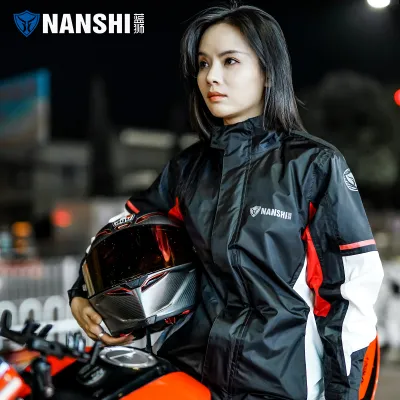
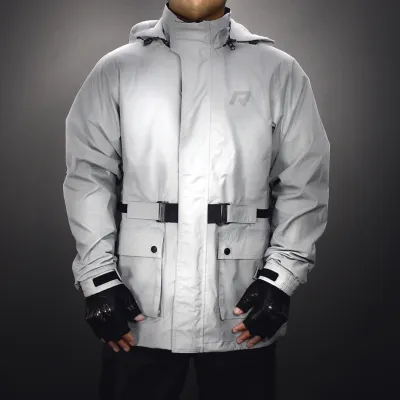
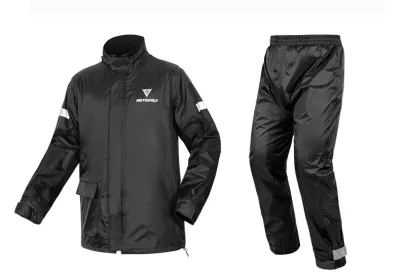
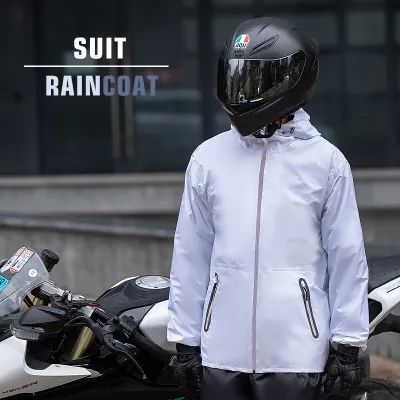
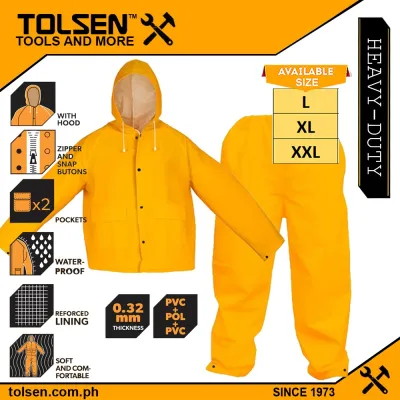
Prices are valid at publication and may change. Please refer to the product page for the latest price.
Fit and mobility are equally critical when selecting your gear. A motorcycle raincoat must be spacious enough to fit comfortably over your standard riding jacket, elbow guards, and other protective equipment without restricting your movement. If the raincoat is too tight, it will limit your ability to steer, reach for controls, or check your blind spots. Conversely, an excessively loose fit will cause the fabric to flap violently at high speeds, which quickly leads to rider fatigue and can even destabilize your balance on the road.
Visibility drops dramatically during heavy rain, making high-visibility features a non-negotiable safety requirement. When navigating wet roads during an afternoon downpour, you need to ensure that other motorists can see you clearly through wet windshields and spray. Opt for raincoats that feature wide, retroreflective strips across the back, shoulders, and sleeves. These reflective elements catch the headlights of surrounding vehicles, significantly increasing your safety profile in low-light or misty conditions.
How to Verify Fribella Specifications and Labels
Before purchasing a Fribella raincoat, it is essential to verify its technical specifications by carefully reading the product labels and manufacturer documentation. Do not rely solely on a product’s visual appeal; instead, look for explicit mentions of waterproof ratings and construction methods. High-quality riding gear typically features heat-sealed or taped seams on the interior. This construction method involves applying a waterproof tape over the stitched seams to prevent water from leaking through the needle holes under wind pressure.

Inspect the packaging and official product descriptions to identify the intended use cases of the specific Fribella model. Manufacturers often categorize their rainwear into lines designed for casual walking, active outdoor sports, or heavy-duty utility work. For motorcycle riding, you should prioritize models labeled for active or heavy-duty use, as these are constructed with more durable fabrics capable of resisting the friction and wind shear associated with riding. Avoid lightweight, single-layer plastic models that are prone to tearing at the first sign of high wind.
Material composition plays a vital role in both durability and comfort. Check the manufacturer’s care and usage instructions to verify what materials are used in the raincoat’s construction. Polyester or nylon fabrics coated with polyurethane (PU) or polyvinyl chloride (PVC) are common choices that offer a good balance of water resistance and durability. Additionally, look for mentions of breathable membranes if you frequently ride in hot, humid tropical climates, as these materials allow sweat vapor to escape while keeping rainwater out.
Checking Fit and Coverage for the Riding Posture
To ensure a raincoat will perform well on the road, you must evaluate its fit while mimicking your actual motorcycle riding posture. When you reach forward to grip the handlebars, your arms extend, which naturally pulls the sleeves of your jacket backward. If the sleeves are too short, your wrists will be exposed to the wind and rain, allowing water to run directly into your riding gloves. Look for a Fribella model with extended sleeve lengths and adjustable, elasticized cuffs that can be secured tightly over or under your glove gauntlets.
Similarly, the seated position on a motorcycle alters how a jacket covers your lower back and waist. When you lean forward, the back of the jacket rides up, potentially exposing your lower back to water seeping in between the jacket and your rain pants. A proper riding raincoat should feature an extended back hem, often referred to as a drop-tail design, which remains low enough to cover your seat even when you are tucked forward. If you are opting for a two-piece rain suit, ensure the pants have a high waistband that overlaps significantly with the jacket hem.
If the Fribella model you are considering includes a hood, you must assess how it interacts with your motorcycle helmet. A loose, flapping hood is a major distraction and a safety hazard at high speeds. Verify whether the hood can be rolled up and secured into a collar pocket, detached completely, or worn comfortably underneath your helmet. If you plan to wear the hood under your helmet, ensure it is thin enough not to interfere with the helmet’s fit or compromise your peripheral vision while riding.
Maintaining Waterproof Performance and Gear Longevity
To get the most value out of your Fribella raincoat, proper maintenance is essential to preserve its waterproof coatings and seam seals. Always consult the manufacturer’s care label before attempting to clean your gear. Standard household detergents and fabric softeners can strip away durable water repellent (DWR) coatings and degrade the adhesive used on seam tapes. Instead, hand wash the raincoat using cold water and a mild, tech-wash soap designed specifically for waterproof fabrics, and avoid machine washing or tumble drying unless explicitly approved by the manufacturer.
Over time, even the highest-quality rain gear will show signs of wear and tear from regular exposure to the elements. Inspect your raincoat periodically for common indicators of degradation, such as peeling inner linings, lifting seam tape, or fabric that absorbs water rather than letting it bead up and roll off. If you notice the outer fabric is beginning to “wet out” but the inner lining is still intact, you can often restore the water-repellent performance by applying an approved spray-on DWR treatment after a thorough cleaning.
Proper storage between rides is critical for preventing mold, mildew, and material degradation, especially in humid tropical environments. Never fold up a wet or damp raincoat and stuff it into your motorcycle’s under-seat compartment or top box, as this creates a breeding ground for bacteria and can cause the waterproof coatings to delaminate. Instead, hang the raincoat on a wide, padded hanger in a well-ventilated, shaded area away from direct sunlight until it is completely dry before storing it in a cool, dry place.
Frequently Asked Questions (FAQ)
Can I use a standard Fribella poncho for motorcycle riding?
Using a standard poncho for motorcycle riding is highly discouraged due to significant safety risks. Ponchos feature loose, open-sided designs that lack a tailored fit, which causes the fabric to flap violently in the wind at riding speeds. This flapping can block your mirrors, obscure your vision, or even get caught in moving motorcycle parts like the rear wheel, chain, or sprockets, leading to a dangerous accident. Additionally, ponchos do not provide a secure seal against wind-driven rain, allowing water to easily enter from the sides and bottom. Always check the manufacturer’s guidelines and choose a structured, two-piece rain suit or a fitted riding jacket instead.
How do I know if my Fribella raincoat is still waterproof?
You can perform a simple visual and water-beading test to check if your raincoat’s waterproof integrity is still intact. Lay the raincoat flat and spray a small amount of water onto the outer fabric surface; if the water beads up and rolls off easily, the outer water-repellent coating is functioning properly. However, if the fabric absorbs the water and darkens, the outer coating has degraded. Next, turn the raincoat inside out and inspect the seams; if you notice any peeling, cracking, or lifting of the inner seam tape, the waterproofing has been compromised. If the fabric or seams are damaged beyond repair, consult the product’s care instructions for approved re-waterproofing treatments or consider replacing the gear.

Community discussion
Share your experience or ask a question. Comments are reviewed before publication.