
Choosing a Gille full-face helmet in the Philippines requires matching your daily riding conditions and budget to the specific safety certifications, shell materials, and comfort features of each model tier. While price is a major factor for many riders, safety standards and a proper fit must always serve as your baseline. By understanding what features scale with price, you can make an informed decision that protects your head without overspending.
Core Safety and Certification Checks for Gille Helmets
Before evaluating any Gille helmet model across different price points, you must establish a non-negotiable safety baseline. In the Philippines, road legality dictates that any motorcycle helmet worn on public roads must bear the appropriate safety markings. Look for the Import Commodity Clearance (ICC) sticker or the Philippine Standard (PS) mark, which indicate that the helmet has passed local safety evaluations. Additionally, reputable helmets carry international certifications such as the United States Department of Transportation (DOT) FMVSS 218 standard or the Economic Commission for Europe (ECE) standard, such as ECE 22.05 or the more stringent ECE 22.06. These certifications are typically printed on the back of the helmet shell or sewn onto the chin strap, and they serve as your primary assurance of impact protection.
Beyond external labels, you must physically inspect the helmet’s manufacturing date and the condition of its internal protective liner. Helmets have a limited shelf life because the Expanded Polystyrene (EPS) foam—the crucial layer that absorbs impact energy—degrades over time due to environmental exposure, temperature fluctuations, and humidity. You can usually find the production date stamped on a sticker underneath the comfort liner or on the EPS itself. Avoid purchasing old stock that has been sitting on a shelf for several years, as the foam may have already begun to lose its elasticity. Inspect the EPS foam visually; it should feel firm, uniform, and free of any cracks, indentations, or crumbling.
Products mentioned in this guide
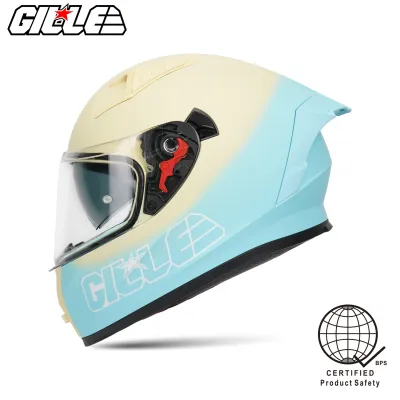
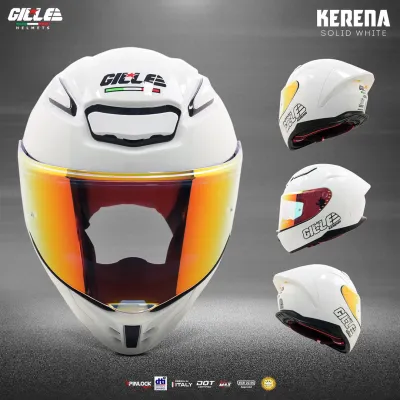
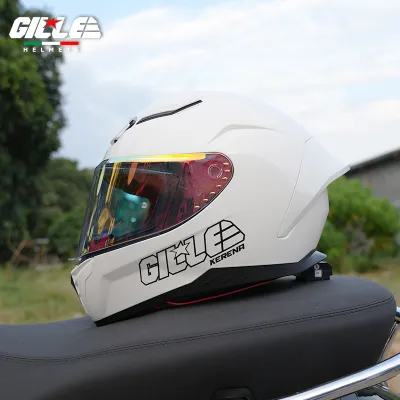
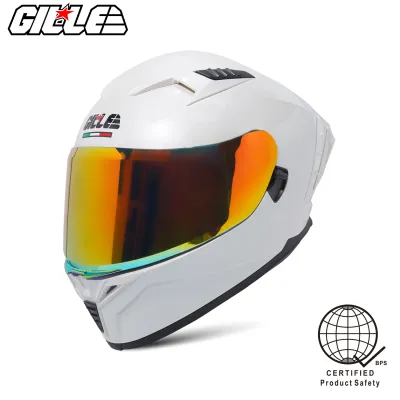
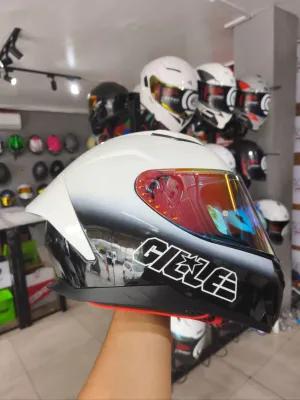
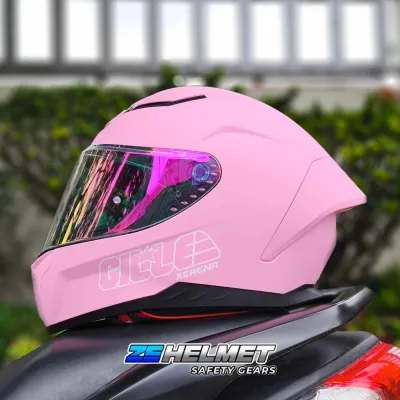
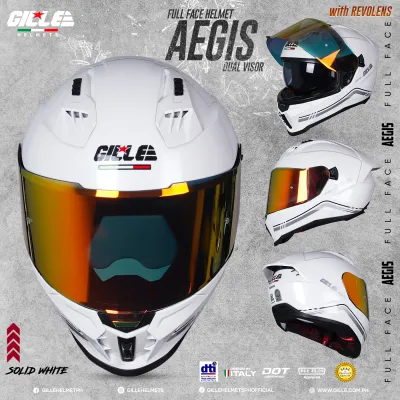
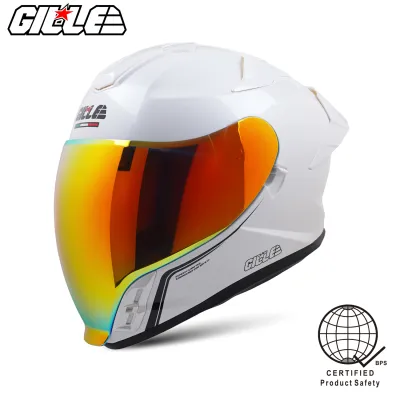
Prices are valid at publication and may change. Please refer to the product page for the latest price.
The visor mechanism is another critical safety component that requires close inspection before purchase. A high-quality visor does more than shield your eyes from the wind; it protects your face from flying debris and maintains clear visibility in diverse weather conditions. Check that the visor mechanism operates smoothly, locks securely in place, and offers scratch-resistant properties. For riders in the Philippines, where sudden tropical downpours and high humidity are common, anti-fog readiness is essential. Verify if the visor is compatible with Pinlock inserts, which prevent condensation from forming on the inside of the shield and blocking your view during wet rides.
Matching Gille Helmet Features to Your Budget Tier
As you move up the Gille price ladder, you will notice a clear progression in shell materials, ventilation efficiency, and interior comfort. While entry-level models focus on providing reliable basic protection, higher-tier models introduce advanced composites and specialized features designed for long-distance touring or high-speed track use. To make an accurate comparison, always verify specific model names, features, and current prices against the official Gille catalog or authorized local distributors, as specifications and market rates can change over time.

Entry-Level and Commuter Models
Entry-level Gille full-face helmets are designed primarily for daily city commuting and short-distance rides. These models typically feature outer shells constructed from standard thermoplastic or Acrylonitrile Butadiene Styrene (ABS). While ABS is highly impact-resistant and durable, it is inherently heavier than advanced composite materials, which may lead to mild neck fatigue during extended riding sessions.
Ventilation in this budget tier is usually straightforward, consisting of basic forehead and chin vents that can be opened or closed manually. The interior comfort liners in these commuter models are generally removable and washable, which is a vital feature for maintaining hygiene in hot and humid tropical climates. If you primarily ride at lower city speeds and require a dependable helmet for your daily commute, these entry-level options offer practical functionality without unnecessary complexity.
Mid-Range and Touring Models
For riders who frequently travel on highways or embark on long-distance weekend tours, upgrading to a mid-range Gille model offers significant benefits in comfort and aerodynamics. Helmets in this tier often utilize advanced shell composites or refined polycarbonate blends that reduce overall weight while maintaining excellent structural strength.
These models feature multi-channel ventilation systems designed to pull cool air in through the front vents and expel hot, humid air through rear exhaust ports, creating a continuous cooling effect. You will also find quick-release visor systems that allow you to swap shields without tools, along with integrated dual-visor systems featuring a drop-down inner sun shield to combat intense tropical glare. Improved aerodynamic shaping and specialized neck rolls help minimize wind drag and reduce cabin noise, making long highway journeys much quieter and less tiring.
Premium and Performance Models
At the top of the lineup, premium and performance Gille helmets are engineered for aggressive sport riding, track days, or riders who demand the highest level of technical specification. These high-end models often incorporate advanced materials such as fiberglass composites or carbon fiber, which dramatically reduce the helmet’s weight while offering superior energy dissipation during an impact.
Performance models are designed with track-focused certifications and optimized aerodynamics tailored for tucked-in, aggressive riding postures. The interior comfort liners utilize premium, moisture-wicking fabrics that dry rapidly and feel exceptionally soft against the skin, even during intense physical exertion. Additionally, these helmets frequently feature enhanced safety mechanisms, such as Emergency Quick Release Systems (EQRS) that allow medical personnel to safely remove the cheek pads before taking off the helmet in the event of an accident.
Critical Fit and Comfort Evaluations Before Purchase
No matter how advanced a helmet’s features are or how perfectly it fits your budget, it cannot protect you effectively if it does not fit your head correctly. Before making a purchase, you must accurately measure your head circumference using a flexible measuring tape. Wrap the tape horizontally around your head, approximately 2.5 centimeters above your eyebrows and just above your ears, to find your largest measurement. Cross-reference this measurement with the official Gille size chart, keeping in mind that different helmet models may be designed around specific head shapes, such as intermediate oval or round oval.
When you try on the helmet, evaluate how the pressure is distributed across your head. A properly fitting helmet should feel snug all the way around, applying even pressure without creating painful hot spots on your forehead, temples, or the back of your head. The cheek pads should press firmly against your cheeks, pushing them up slightly—a fit often described as a “firm handshake.” To test stability, fasten the chin strap securely and shake your head side-to-side and up-and-down; the helmet should move with your skin and scalp rather than sliding independently over your head.
Furthermore, consider your personal gear requirements, such as whether you wear prescription glasses or plan to install a communication system. Look for helmets that feature dedicated eyeglass channels in the comfort padding, which prevent the temple arms of your glasses from being pressed painfully against your skull. If you intend to use an intercom, verify that the helmet’s EPS liner includes recessed speaker pockets and integrated wire routing channels. Never attempt to carve, compress, or otherwise modify the EPS foam to accommodate aftermarket speakers, as altering this safety layer can severely compromise the helmet’s ability to absorb impacts.
Purchasing Channels and Authenticity Verification in the Philippines
To ensure you are purchasing a genuine, safe Gille helmet rather than a counterfeit or structurally compromised imitation, you must be selective about where you shop. Prioritize buying from official brand stores, authorized physical motorcycle gear shops, or verified flagship stores on major e-commerce platforms. Visiting a physical store is highly recommended, as it allows you to inspect the build quality firsthand, verify the presence of authentic safety decals, and try on different sizes to guarantee a perfect fit.
When shopping online, exercise a high degree of caution and thoroughly scrutinize the seller’s credentials. Read customer reviews carefully, paying close attention to user-uploaded photos that show the physical ICC or PS certification stickers, the manufacturing date stamp, and the original packaging. Be highly suspicious of listings offering Gille helmets at prices significantly lower than the standard rates shown in the official catalog, as these are often counterfeit products, gray-market imports, or old stock that may have been stored improperly.
Finally, always verify the warranty terms and return policies before finalizing your purchase. Authorized dealers typically offer a manufacturer’s warranty that covers defects in materials and workmanship, providing you with essential consumer protection. Avoid buying clearance items from unverified sellers who do not offer returns, as you may end up with a helmet that does not fit correctly or has hidden structural defects. Investing in a genuine helmet from an authorized source is the only way to guarantee that your riding gear will perform as intended when you need it most.
Frequently Asked Questions (FAQ)
Are Gille full-face helmets suitable for tropical weather?
Yes, Gille full-face helmets are designed to handle tropical climates, provided you choose a model with an effective ventilation system. Look for models featuring multi-channel airflow designs, which utilize intake vents on the chin and forehead to draw in fresh air, alongside rear exhaust vents that actively pull out heat and humidity. Additionally, selecting a helmet with a UV-protected visor helps shield your eyes from intense sunlight, while a Pinlock-ready or anti-fog treated visor is crucial for maintaining clear visibility during sudden, humid rainstorms.
How often should I replace my Gille helmet?
As a general safety standard, you should replace your helmet every three to five years of regular use, or seven years from its manufacturing date, even if it has never been involved in an accident. Over time, exposure to sweat, hair oils, UV rays, and temperature changes gradually degrades the protective EPS foam liner and the outer shell. Crucially, you must replace your helmet immediately after any significant impact, drop, or crash. Motorcycle helmets are designed to deform and absorb impact energy only once; even if there is no visible damage on the outside, the internal EPS foam may be permanently compressed and unable to protect you in a subsequent impact.
Can I install an aftermarket Bluetooth communicator in a Gille helmet?
Most modern Gille full-face helmets are compatible with aftermarket Bluetooth communication systems, but you must verify the specific design features of your chosen model before purchasing. Look for models that explicitly feature pre-cut speaker pockets in the EPS liner and dedicated channels for routing microphone and power wires. When installing a communicator, ensure that the clamp or adhesive mount does not interfere with the helmet’s visor mechanism or structural integrity. Always follow the manufacturer’s instructions, and never drill holes, cut the shell, or compress the protective EPS foam to force a device to fit, as doing so voids the warranty and compromises your safety.

Community discussion
Share your experience or ask a question. Comments are reviewed before publication.