
Choosing the right motorcycle clutch lining requires matching the exact specifications of your engine, your typical riding environment, and the physical condition of your transmission assembly. In high-demand environments—such as navigating congested city streets or hauling heavy loads on a utility motorcycle like the Barako—the clutch lining serves as the critical link between engine power and rear-wheel traction. Selecting the correct replacement ensures that engine torque is transferred efficiently without slippage, overheating, or premature wear. To make an informed decision, you must evaluate the friction material, verify precise physical dimensions, align the choice with your daily riding demands, and perform a thorough inspection of the surrounding clutch components before installation.
Understanding Clutch Lining Materials and Their Best Uses
Modern motorcycle clutches operate as wet systems, meaning the clutch plates are submerged in engine oil to help dissipate heat and lubricate the moving parts. The clutch lining, or friction plate, is the component that physically presses against the steel plates to engage the transmission. These linings are manufactured using several distinct material compounds, each engineered to perform under specific thermal and mechanical conditions.
Standard organic or cork-based linings are the most common option for everyday motorcycles. These plates are constructed from organic fibers, rubber, and cork particles bonded together with high-strength resins. They are highly favored for standard street commuting because they offer exceptionally smooth, progressive engagement and a forgiving lever feel. Because they are relatively soft, they cause minimal wear on the mating steel plates, though they have lower thermal thresholds and can wear down more quickly under extreme loads.
Products mentioned in this guide
![[KV-BLK] Kawasaki BARAKO BC175 CLUTCH LINING SET 13088-1068 - 5pcs in 1set](https://img.lazcdn.com/g/p/5c20e4ff20de106ba29ea76b1f497fef.jpg_400x400q80.jpg_.webp)
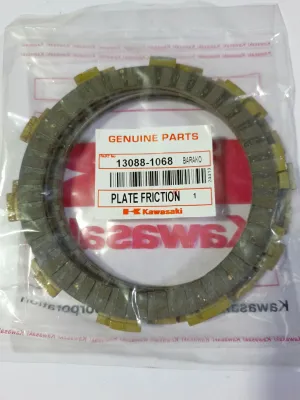
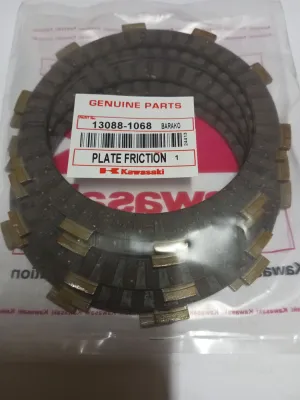
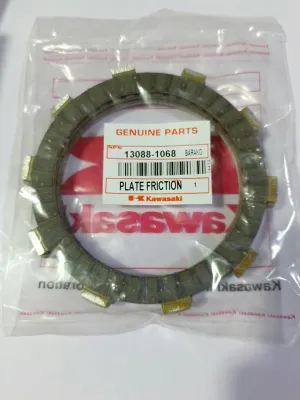
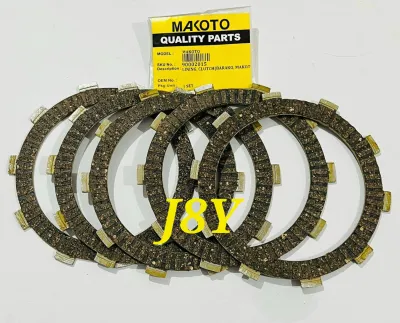
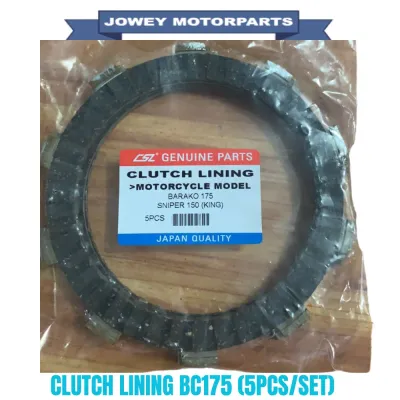
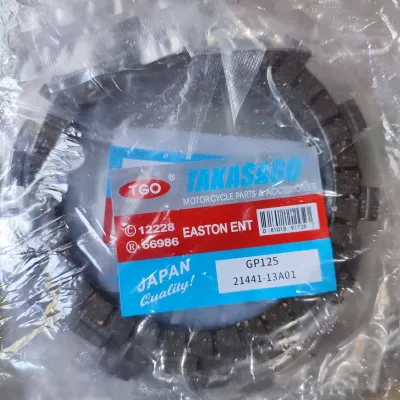
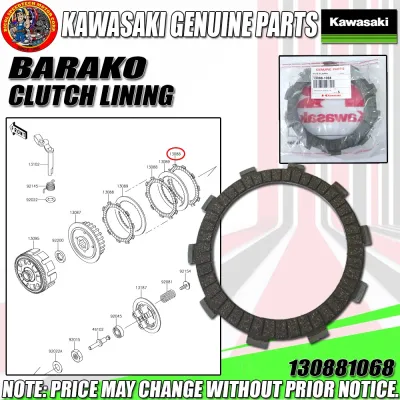
Prices are valid at publication and may change. Please refer to the product page for the latest price.
Sintered or metallic compounds are engineered by fusing metallic particles under intense heat and pressure. This manufacturing process results in a highly durable lining that offers excellent heat tolerance and resistance to fading under sustained, heavy loads. Sintered plates are highly suitable for heavy-duty applications, utility hauling, and steep terrain where the clutch is subjected to prolonged friction. However, they tend to engage more abruptly and can accelerate wear on the clutch basket and steel plates over time.
Kevlar, carbon, or ceramic options represent the high-performance segment of the market. These materials are reinforced with advanced fibers to provide an aggressive grip and maintain a stable friction coefficient even at extremely high operating temperatures. They are typically marketed for racing, high-RPM sport riding, or highly modified engines where standard organic plates would quickly glaze or slip.
To ensure you select the correct material, always read the product label, packaging, and manufacturer specifications rather than assuming performance characteristics based solely on the material name or brand marketing. Different manufacturers use proprietary blends, and verifying the intended use case on the official product documentation is the only reliable way to confirm compatibility with your riding environment.
Matching the Clutch Lining to Your Motorcycle Model
Physical compatibility is the most critical factor when purchasing a new clutch lining. Even a minor discrepancy in plate thickness, outer diameter, or tab configuration can prevent the clutch from disengaging fully, leading to gear dragging, transmission damage, or severe slippage. You must treat the selection process as a precise technical match rather than relying on generic category descriptions.

Before purchasing, cross-reference your exact motorcycle make, model, engine displacement, and production year against the official parts catalog or OEM documentation. For popular utility models like the Barako, parts can vary significantly between different generations, such as the older Barako 175 and the newer Barako II. A clutch lining designed for one model year may not fit another, even if the engine displacement appears identical on paper.
During your verification, check the required number of friction plates, the outer diameter, and the specific thickness measurements of the plates. Together, the friction plates and steel plates make up the “stack height” of the clutch assembly. If the replacement linings are too thick, the overall stack height will exceed the manufacturer’s specifications, preventing the pressure plate from releasing fully and causing the clutch to drag. Conversely, a stack height that is too thin will result in insufficient clamping force and immediate slipping.
Additionally, verify the design of the clutch hub and basket splines. The outer tabs of the friction plates must slide smoothly into the grooves of the clutch basket without excessive play or binding. Mismatched tab dimensions can cause the plates to hang up in the basket, leading to erratic engagement and accelerated wear on the aluminum basket fingers.
If the exact model variant of your motorcycle is unclear, if the production year overlaps with a generation change, or if the parts catalog is ambiguous, stop the purchase process immediately. Do not attempt to force a near-fit component into your transmission. Consult a qualified mechanic or contact the parts manufacturer directly to verify the exact part number required for your vehicle.
Evaluating Riding Styles: Daily Commuting vs. Heavy Load
Your daily riding habits and the primary utility of your motorcycle should dictate the type of clutch lining material you choose. Selecting a compound that matches your typical operating conditions balances durability, grip, and lever comfort, preventing you from over-specifying for performance characteristics you do not need.
For daily city commuting in stop-and-go traffic, prioritize materials that offer smooth, progressive engagement and low lever effort. In congested urban areas, you will constantly engage and disengage the clutch, which can quickly lead to hand fatigue. Organic or high-quality OEM-equivalent linings are highly suited for this style of riding because they provide a predictable, gentle engagement zone and require less physical effort to operate.
If your motorcycle is used for heavy-duty utility work, such as pulling a sidecar, carrying heavy cargo, or transporting passengers over steep inclines, your drivetrain experiences constant, high-stress loads. Under these conditions, standard organic plates can overheat, leading to thermal expansion and clutch slip. For these applications, look for heavy-duty organic or sintered metallic linings that offer a higher friction coefficient and superior heat dissipation to maintain reliable power transfer.
Aggressive riding, sport riding, or closed-course track use demands materials engineered to withstand rapid heat buildup and high RPMs. When executing rapid downshifts or launching from a stop, the clutch experiences extreme thermal shock. Kevlar or carbon-reinforced linings are designed to handle these high-energy transfers without glazing, ensuring that the friction surface remains effective under severe operating conditions.
Every material choice involves a direct trade-off. Linings optimized for aggressive grip or extreme heat resistance often cause a firmer, more abrupt engagement and require stiffer clutch springs, which can make low-speed maneuvering difficult and uncomfortable. For a balanced daily ride, choosing a lining that matches your actual daily usage is far more practical than installing a specialized racing compound.
What to Check Before Buying and Installing a New Clutch Lining
Replacing a clutch lining is not simply a matter of swapping out the old plates; you must evaluate the entire clutch assembly to ensure the new components can function correctly. Installing fresh friction plates into a worn or damaged clutch housing will lead to rapid wear and premature failure of the new parts.
Before purchasing your new linings, perform a thorough physical inspection of the clutch basket and the inner hub. Look closely at the aluminum fingers of the clutch basket where the tabs of the friction plates ride. Over time, the constant impact of the tabs can wear deep notches or grooves into these fingers. If notches are present, the new friction plates will catch in the grooves instead of sliding smoothly, resulting in a clutch that drags, slips, or fails to disengage. If the basket or hub shows significant wear, they must be smoothed or replaced.
Next, check the condition and free length of the clutch springs using a vernier caliper, comparing your measurements against the wear limits specified in your motorcycle’s service manual. Clutch springs provide the vital clamping force that holds the friction and steel plates together. Over time and through countless heat cycles, these springs lose their tension and shrink. If you install new linings with weak, out-of-spec springs, the clutch will continue to slip under load, quickly ruining your new friction plates.
It is also essential to verify your engine oil specification before completing the installation. Wet clutches rely on the engine oil to cool the plates and control friction. You must use an oil that is certified for wet clutches, typically carrying a JASO MA or JASO MA2 rating. Standard automotive engine oils often contain friction modifiers designed to reduce friction in car engines; if introduced to a motorcycle wet clutch, these modifiers will saturate the new lining, causing permanent slippage and requiring another replacement.
Clutch replacement involves critical safety components and precise torque specifications. If the clutch basket requires specialized pullers or holding tools that you do not possess, if the engine casing shows signs of internal damage, or if the service manual mandates specific torque sequences and values you cannot safely execute, halt the installation. Seek professional service from a qualified mechanic to ensure your motorcycle is assembled safely and operates reliably on the road.
Frequently Asked Questions (FAQ)
How do I know if my motorcycle clutch lining needs replacement?
The most common symptom of a worn clutch lining is slippage under acceleration, where the engine RPMs increase rapidly but the actual speed of the motorcycle does not match the engine’s revs. This is often most noticeable when climbing hills, carrying a passenger, or riding in higher gears. You may also experience a spongy, overly loose, or inconsistent feel at the clutch lever that cannot be resolved through standard cable adjustments. Difficulty shifting gears, finding neutral when stopped, or a noticeable loss of top-end acceleration are also strong indicators that the friction material has worn below its service limit and requires replacement.
Can I mix different brands of clutch friction plates?
It is highly recommended to replace the entire friction plate set with plates of the same brand, material compound, and production batch. Different manufacturers use unique friction formulations, thicknesses, and thermal expansion rates. Mixing different brands or compounds within the same clutch pack can lead to uneven pressure distribution, localized hot spots, and unpredictable engagement. This uneven wear can quickly warp your steel plates and cause the clutch to drag or slip prematurely. If parts availability forces you to consider a partial replacement, always consult the manufacturer’s technical support or a professional mechanic before proceeding.
Does a higher-performance clutch lining require heavier clutch springs?
High-performance or high-friction clutch linings are designed to transfer more torque, which often requires a corresponding increase in clamping force to prevent slippage under high loads. If you are upgrading your clutch lining to handle a modified engine or aggressive riding, installing stiffer or heavy-duty clutch springs is often necessary to fully utilize the capabilities of the new material. However, stiffer springs will directly increase the physical effort required to pull the clutch lever, which can lead to severe hand fatigue during long rides or in heavy traffic. Always consult your motorcycle’s service manual and the lining manufacturer’s guidelines to balance clamping force with rider comfort before altering your spring rates.

Community discussion
Share your experience or ask a question. Comments are reviewed before publication.