
Choosing the best OSER coolant variant for the tropical climate of the Philippines requires matching your vehicle manufacturer’s exact chemical specifications rather than relying on color alone. In high-temperature environments, the ideal coolant must raise the boiling point of the cooling system and prevent corrosion under heavy traffic conditions. To find the correct variant, vehicle owners must verify the required technology—whether Inorganic Additive Technology (IAT), Organic Acid Technology (OAT), or Hybrid Organic Acid Technology (HOAT)—as specified in their vehicle’s owner’s manual, and then cross-reference these requirements with the specifications printed on the OSER coolant label.
Understanding Coolant Requirements for Tropical Climates
The year-round high temperatures and intense humidity of the Philippines place an extraordinary burden on automotive cooling systems. Unlike temperate regions where antifreeze properties are critical to prevent freezing during winter, tropical climates demand a fluid that excels at heat dissipation and boiling point elevation. When crawling through heavy traffic in urban centers or climbing steep mountain roads under the midday sun, your engine generates massive amounts of heat that must be efficiently transferred away from the engine block to the radiator.
Using pure water in a modern cooling system is a common but highly damaging practice. While water has excellent heat transfer properties, its boiling point is too low for pressurized modern engines, especially when operating under high ambient temperatures. Pure water also lacks the essential chemical inhibitors needed to prevent rust, scale buildup, and galvanic corrosion inside the cooling passages. Over time, these mineral deposits insulate the engine’s internal components, reducing heat transfer efficiency and eventually leading to localized hot spots and severe engine damage.
Products mentioned in this guide
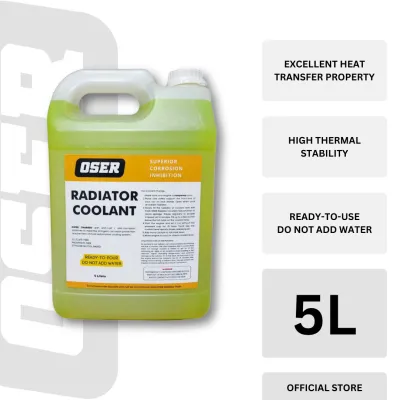
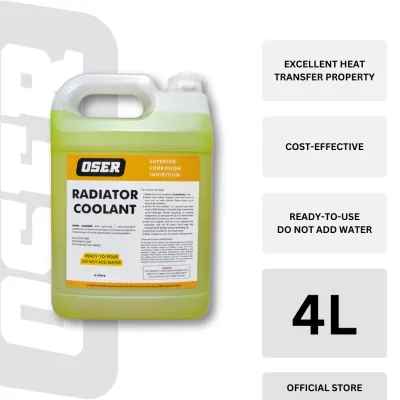
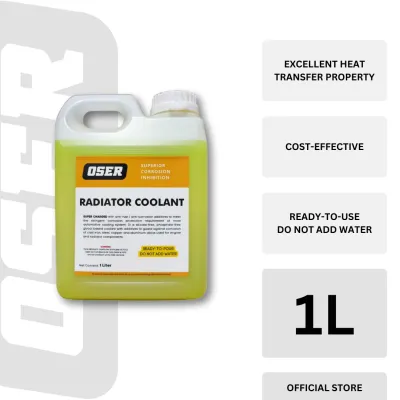
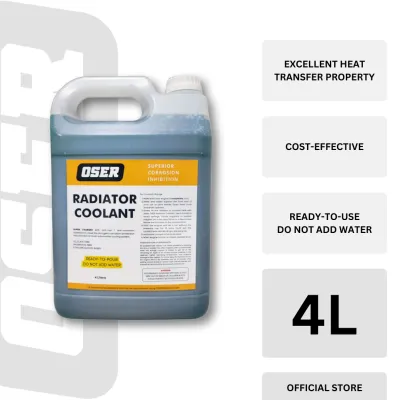
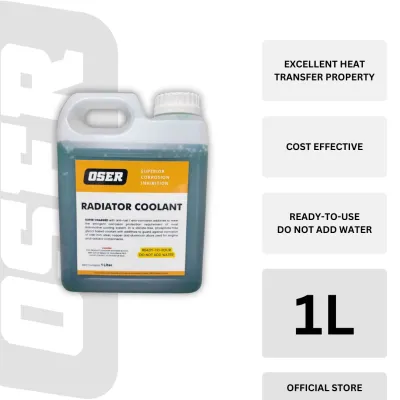
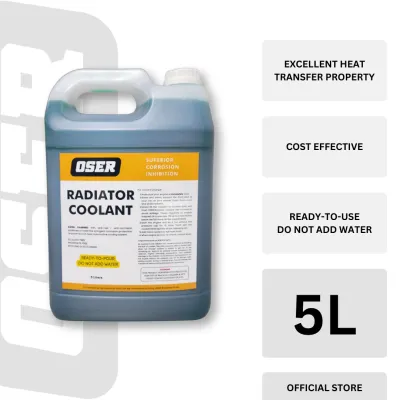
Prices are valid at publication and may change. Please refer to the product page for the latest price.
Maintaining the correct concentration of coolant—typically a 50/50 mixture of ethylene glycol and water—is vital even in tropical climates. This specific ratio significantly raises the boiling point of the pressurized cooling system, preventing the fluid from vaporizing under extreme operating conditions. When coolant vaporizes, it forms air pockets or “vapor locks” within the system, which completely halts heat transfer and causes rapid, catastrophic engine overheating. Furthermore, the glycol and additive package protects the water pump from cavitation, a phenomenon where collapsing vapor bubbles erode the metal impeller blades over time.
How to Identify the Correct OSER Coolant Specification
To select the appropriate OSER coolant variant, you must first consult your vehicle’s owner’s manual to identify the original equipment manufacturer (OEM) specification. Many drivers mistakenly believe that coolant selection is as simple as matching the color of the fluid currently in their radiator. However, coolant color is not standardized across the automotive industry; different manufacturers use various dyes for the same chemical formulations, and some aftermarket brands use colors arbitrarily. Relying solely on color can lead to choosing an incompatible fluid that damages your engine.

Modern vehicles require specific chemical technologies depending on the materials used in their engines and radiators. Inorganic Additive Technology (IAT) is typically found in older vehicles with copper and brass radiators, utilizing silicates and phosphates to provide rapid but short-lived corrosion protection. Organic Acid Technology (OAT) is standard in many modern vehicles, offering long-lasting protection without the use of silicates or phosphates, making it ideal for aluminum engines. Hybrid Organic Acid Technology (HOAT) combines elements of both, often tailored to the specific metallurgical requirements of European or Asian manufacturers.
Before purchasing any OSER coolant variant, carefully inspect the product packaging or technical data sheet to verify that it explicitly states compliance with your vehicle’s required industry standards. Look for specific certifications such as ASTM D3306 or JIS K2234, or direct manufacturer approvals like Toyota Super Long Life, Honda Type 2, or Ford WSS-M97B44-D. Ensuring that the chemical formulation matches your engine’s metallurgy prevents premature degradation of gaskets, silicone seals, and aluminum components.
Key Formulation Features to Check on the Product Label
When evaluating OSER coolant options for tropical performance, the boiling point listed on the product label is a critical metric to verify. A high-quality formulation should clearly state its boiling point under standard operating pressures, typically around 129°C (264°F) for a 50/50 mixture under a standard 15 psi radiator cap. This thermal headroom is essential for preventing boil-over during prolonged idling in tropical heat, ensuring that the fluid remains in a liquid state to continuously absorb and transport heat away from critical engine components.
You must also decide between pre-mixed (ready-to-use) and concentrated formulations based on your maintenance preferences and access to proper mixing agents. Pre-mixed OSER coolant variants are highly recommended because they are blended at the factory with high-purity demineralized or distilled water, ensuring the perfect 50/50 ratio and eliminating the risk of mineral contamination. If you choose a concentrated variant, you must strictly avoid using tap water for dilution. Tap water contains dissolved minerals like calcium and magnesium that react with the coolant’s additive package, forming scale deposits that clog the radiator’s microscopic tubes and reduce cooling efficiency.
Additionally, examine the label for specific additive packages designed to protect the cooling system’s vulnerable non-metal components. High ambient heat accelerates the degradation of rubber hoses, plastic thermostat housings, and water pump seals. The correct OSER formulation should contain advanced corrosion inhibitors and stabilizers that prevent these materials from becoming brittle or cracking. Cavitation-resistant additives are also crucial, as they form a protective microscopic barrier on the water pump impeller, preventing the physical erosion caused by high-velocity fluid flow.
Safe Handling, Flushing, and Maintenance Practices
Working with automotive cooling systems requires strict adherence to safety protocols to prevent severe personal injury. You must never attempt to open the radiator cap or the pressurized coolant reservoir cap while the engine is hot or even warm. Under operating conditions, the cooling system is highly pressurized, and opening the cap releases this pressure instantly, causing the boiling coolant to erupt violently as steam and scalding liquid. Always allow the vehicle to sit idle for several hours until the engine block and radiator are completely cool to the touch before performing any inspections or fluid additions.
If you are switching to a different OSER coolant technology or if the service history of the vehicle is unknown, performing a complete system flush is absolutely necessary. Simply draining the radiator leaves a significant volume of old fluid inside the engine block and heater core. Mixing incompatible coolant chemistries—such as adding an OAT coolant to a system containing older IAT fluid—can trigger a chemical reaction that causes the additives to precipitate out of solution. This results in the formation of a thick, gelatinous sludge that blocks coolant passages, restricts flow, and causes rapid engine overheating.
Regular maintenance and visual inspections are key to ensuring the longevity of your cooling system in tropical climates. Check the coolant level in the expansion tank at least once a month, ensuring it falls between the minimum and maximum markings when the engine is cold. Inspect the fluid’s physical appearance; it should remain clear and vibrant. If the coolant appears cloudy, milky (which indicates engine oil contamination from a blown head gasket), or brown and rusty, the system must be serviced immediately. For complex tasks such as a full system flush, radiator replacement, or diagnosing persistent leaks, always consult a qualified professional mechanic to ensure the work is performed safely and in accordance with original-vehicle instructions.
Frequently Asked Questions (FAQ)
Can I mix different OSER coolant colors or types?
No, you should never mix different coolant colors or chemical types. Color is not a reliable indicator of chemical compatibility, as different manufacturers use different dyes for similar formulations. Mixing incompatible chemistries, such as Organic Acid Technology (OAT) with Inorganic Additive Technology (IAT), can cause a chemical reaction that forms a thick gel. This gel can clog your radiator and engine passages, leading to severe overheating. If you are unsure of the coolant type currently in your vehicle, it is safest to perform a complete system flush before adding new OSER coolant.
Is it necessary to use a 50/50 coolant mix in a hot climate like the Philippines?
Yes, maintaining a 50/50 coolant-to-water ratio is highly necessary in hot climates like the Philippines. A common misconception is that tropical climates do not require glycol because there is no freezing risk. However, the glycol component is essential for raising the boiling point of the mixture, which prevents the coolant from boiling and vaporizing under high engine temperatures and heavy traffic. Additionally, the coolant concentrate contains vital corrosion inhibitors and water pump lubricants that pure water cannot provide.
How often should I replace the coolant in my vehicle?
The replacement interval for your coolant depends entirely on your vehicle manufacturer’s recommended maintenance schedule and the specific chemical technology of the coolant used. Conventional IAT coolants typically require replacement every two years or 40,000 kilometers, while modern long-life OAT or HOAT formulations can last up to five years or 150,000 kilometers or more. Always refer to your vehicle’s owner’s manual for the authoritative service intervals and follow the original-vehicle instructions to maintain optimal cooling performance.

Community discussion
Share your experience or ask a question. Comments are reviewed before publication.