
Finding a compatible gear shift knob for your vehicle requires looking beyond aesthetic appeal to verify precise mechanical and safety specifications. To determine which gear shifter is compatible with your car, you must first identify your vehicle’s transmission type, check for integrated safety interlocks—such as automatic shift locks or manual reverse lock-out collars—and measure the exact thread diameter and pitch of your shifter stalk. While universal options exist, achieving a secure, direct-fit connection is paramount for maintaining safe control of your vehicle under all driving conditions.
Replacing an ill-fitting or worn shifter is a practical interior upgrade, but choosing the wrong specification can lead to dangerous driving hazards, such as a knob detaching during sudden maneuvers or a safety lock failing to engage. By taking systematic measurements and understanding how your specific transmission communicates with the shift assembly, you can confidently select an aftermarket option that matches your vehicle’s engineering. This guide outlines the essential mechanical boundaries, precise measurement steps, adapter evaluations, and material choices tailored to both your vehicle’s requirements and your regional driving environment.
Understand Transmission Types and Safety Interlocks
Before purchasing a new gear shifter, you must understand the mechanical and safety differences between manual and automatic transmission assemblies. Manual gearboxes rely on a direct, physical linkage or cable system connecting the shifter stalk to the transmission gears. The shifter knob on a manual vehicle serves as a simple tactile handle to help you guide the selector fork into the desired gear gate. Automatic transmission shifters, conversely, are complex control interfaces that often incorporate mechanical plungers, electrical switches, and solenoid-driven safety mechanisms that communicate directly with the vehicle’s transmission control unit and braking system.
Products mentioned in this guide
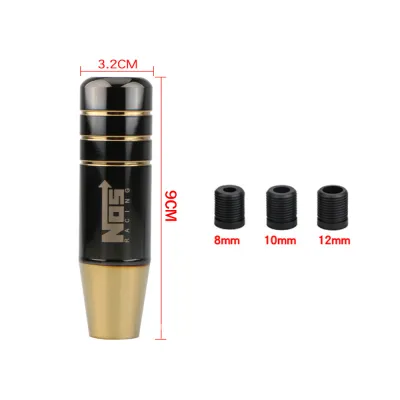
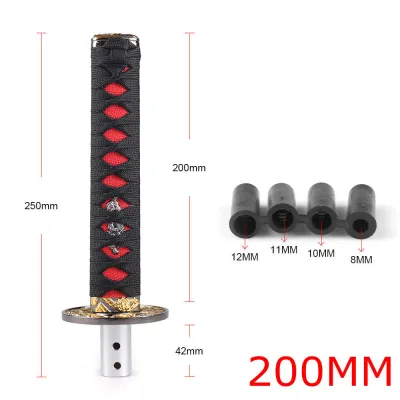

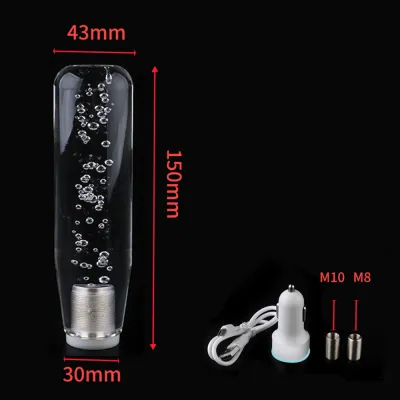
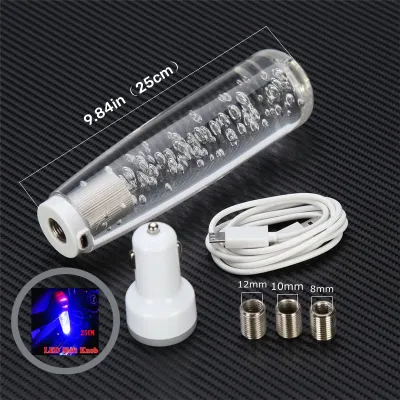
Prices are valid at publication and may change. Please refer to the product page for the latest price.
A critical element of gear shifter compatibility is the presence of built-in safety interlocks designed to prevent accidental gear changes. On automatic vehicles, the primary safety mechanism is the shift lock release button. This button prevents the driver from accidentally shifting out of Park (P) or into Reverse (R) or Neutral (N) without actively pressing the brake pedal and depressing the button. On many manual vehicles, particularly those with six-speed gearboxes, a reverse lock-out collar is installed at the base of the shifter stalk. This mechanical collar must be pulled upward toward the knob to allow the shifter to slide into the reverse gear gate, preventing the driver from accidentally engaging reverse when downshifting from a high forward gear.
Under no circumstances should you bypass, disable, or remove these safety interlocks to install an aftermarket gear shifter. Disabling an automatic shift lock or removing a manual reverse lock-out collar compromises the fundamental safety architecture of your vehicle. A bypassed automatic shifter can easily be bumped into Neutral or Reverse by a passenger, pet, or cargo while driving at high speeds, leading to catastrophic transmission failure or a sudden loss of vehicle control. In the Philippines, operating a vehicle with disabled safety controls violates national roadworthiness standards and will cause the vehicle to fail mandatory Land Transportation Office (LTO) vehicle inspections or private motor vehicle inspection center (PMVIC) evaluations.
Before you begin searching for a replacement knob or attempting to disassemble your current setup, consult your vehicle’s official owner’s manual to identify any specific warnings regarding the shift assembly. Take time to carefully observe how your existing shifter operates during daily driving. Note whether the shift boot moves with the knob, whether there are visible wires running into the stalk, or if a mechanical collar must slide up into the base of the knob. This initial observation establishes the exact physical and electronic boundaries you must respect when selecting a compatible replacement.
How to Measure Your Gear Shifter Thread Size and Pitch
To ensure a secure, direct-fit replacement, you must determine the exact thread size and pitch of your vehicle’s shifter stalk. The process begins with the safe removal of the existing gear shifter knob. For most manual and simple automatic vehicles, the knob is secured by internal threads and can be unscrewed by turning it counterclockwise. However, you must proceed with caution to avoid damaging the surrounding interior trim or the shift boot. If the shift boot is attached directly to the base of the knob, use a trim removal tool to gently unclip the boot collar before unscrewing the knob. For vehicles where the knob is secured by retaining clips or hidden set screws, consult the manufacturer’s service manual to release these fasteners safely without bending the shifter stalk or tearing the leather boot.

Once the original knob is removed, you will expose the threaded portion of the shifter stalk. To measure this area accurately, do not rely on a standard household ruler, which lacks the precision required for automotive threads. Instead, use a pair of digital calipers to measure the outer diameter of the threaded shaft in millimeters. This measurement gives you the thread diameter (for example, a reading of approximately 10mm indicates an M10 thread). Next, use a metric thread pitch gauge to identify the exact distance between the peaks of the threads. If you do not own a thread pitch gauge, you can carefully thread a known metric nut onto the stalk to verify the fit, ensuring it spins on smoothly by hand without any resistance or cross-threading.
Most vehicles distributed globally and in the Asian market utilize standard metric thread sizes on their shifter stalks. Understanding these common patterns can help you narrow down your search:
- M8 x 1.25: This thread size features an 8mm outer diameter and a 1.25mm pitch. It is highly common on automatic transmission shifters for major brands such as Toyota, Lexus, Mazda, and Nissan.
- M10 x 1.25: Sporting a 10mm outer diameter and a 1.25mm pitch, this size is a standard configuration for manual transmissions in Mitsubishi, Nissan, Mazda, and modern Hyundai vehicles.
- M10 x 1.5: This configuration has a 10mm outer diameter with a wider 1.5mm pitch. It is the signature thread specification found on almost all Honda and Acura manual transmission models.
- M12 x 1.25: Featuring a 12mm outer diameter and a 1.25mm pitch, this robust thread size is standard on manual Subaru models and many manual Toyota vehicles.
If you are unable to measure the stalk physically or want to double-check your measurements before making a purchase, alternative verification methods are highly recommended. You can search for the Original Equipment Manufacturer (OEM) part number of your factory shift knob through authorized online parts databases. Alternatively, you can contact your local dealership’s parts department with your vehicle’s Vehicle Identification Number (VIN) to request the exact thread specifications. Reputable, vehicle-specific enthusiast forums and manufacturer-approved technical wikis are also excellent resources for cross-referencing shifter dimensions for specific model years and trim levels.
Evaluating Shift Knob Adapters for Universal Fitments
When a direct-fit gear shifter matching your vehicle’s exact thread pattern is unavailable, or if you have fallen in love with a universal aftermarket design, you may consider using a shift knob adapter. These adapters are threaded sleeves—typically manufactured from brass, aluminum, or durable engineering plastics—designed to bridge the gap between different sizes. For example, a universal shift knob might feature a large, standard internal thread of M12x1.25, and include a set of plastic or brass insert adapters to downsize the inner diameter to match an M10x1.5 or M8x1.25 shifter stalk.
While adapters offer great flexibility, they require a strict safety check before you take the vehicle on the road. The most critical factor is ensuring adequate thread engagement depth on both interfaces. The adapter must thread fully onto the shifter stalk until it bottoms out securely, and the aftermarket shift knob must thread completely onto the outer threads of the adapter. As a general safety rule, you should achieve at least five to six full turns of thread engagement. Insufficient thread engagement creates a weak joint that can fail under stress. If the knob suddenly detaches, spins, or slips off the stalk during a critical downshift or emergency maneuver, you could lose the ability to select gears, posing an immediate danger to yourself and other motorists.
Using universal adapters also introduces several physical and mechanical drawbacks that can alter your driving experience. Because adapters sit between the stalk and the knob, they often add extra height to the entire assembly. This added height increases the physical travel distance (throw) required to shift between gears, which can make manual shifting feel vague or sluggish. Additionally, raising the knob alters the center of gravity of the shifter mechanism, potentially increasing the leverage on the shift linkage. Over time, the multiple threaded connections in an adapter setup can develop play, leading to annoying rattles, vibrations, or a loose tactile feel. To mitigate this, you should use a medium-strength, removable thread-locking fluid (such as blue threadlocker) on the metal-to-metal threads, provided this is permitted by both the adapter and vehicle manufacturers.
There are specific scenarios where shift knob adapters should be avoided entirely to ensure operational safety. If your vehicle’s shifter stalk has very short thread lengths (less than 10mm of exposed thread), an adapter will not have enough surface area to grip securely. Furthermore, you must never use universal adapters on shifter stalks that house integrated electronic sensors, overdrive buttons, or complex manual reverse lock-out mechanisms. In these advanced configurations, the physical bulk of an adapter can block the mechanical travel of the lock-out collar or pinch internal wiring, leading to electrical shorts or mechanical lockouts that prevent you from engaging gears.
Key Selection Criteria for Your New Gear Shifter
Once you have confirmed mechanical compatibility and thread specifications, you can evaluate the design, material, and weight of your new gear shifter to ensure it complements your driving habits and environment. In the tropical climate of the Philippines, material selection is not merely a matter of style; it directly impacts daily driving comfort and safety. Cabin temperatures in vehicles parked under the intense sun in urban centers like Manila, Quezon City, or Davao can easily exceed 50°C. If you install a bare, uncoated metal shift knob made of solid aluminum, stainless steel, or brass, the metal will absorb and retain this heat. Touching a scorching hot metal shifter can cause painful burns or force you to drive with an improper grip. For tropical daily drivers, it is highly recommended to choose premium leather-wrapped, polished wood, high-grade acrylic resin, or specialized thermal-coated materials that remain comfortable to the touch even after hours in the sun.
The physical weight of the shift knob also plays a significant role in the mechanical feel of your transmission. Weighted shift knobs, which typically weigh between 300 and 500 grams, are designed to enhance manual gearboxes by using kinetic momentum. When you push or pull the shifter, the added mass of a weighted knob helps carry the linkage smoothly through the gate, reducing the physical effort required and masking any notchiness in the transmission. Conversely, lighter shift knobs (often weighing under 150 grams and made of carbon fiber, light resin, or hollow aluminum) are favored by performance drivers. Lighter knobs do not carry momentum, meaning they transfer raw, unfiltered mechanical feedback from the transmission directly to your palm, allowing for rapid, highly precise gear changes on the track.
Ergonomic design is another critical factor that dictates how comfortable the shifter feels during long commutes or spirited driving. The most common shapes include:
- Spherical (Ball) Knobs: The classic round shape is highly versatile, accommodating various hand positions, whether you prefer to grip the shifter from the top (palm-down) or from the side.
- Teardrop and Contour Knobs: These designs are anatomically shaped to fit the natural curve of your closed hand, offering a highly comfortable grip for drivers who prefer a side-entry shifting style.
- Cylindrical (Pistol/Stick) Knobs: Often used in rally or drift vehicles, these tall, vertical shifters bring the knob physically closer to the steering wheel, reducing the time your hand spends away from the wheel. However, they increase shift throw distance on standard manual gearboxes.
Finally, before completing your purchase, perform a comprehensive physical clearance check. Install the knob loosely and run the shifter through every single gear gate, including Reverse. Verify that the physical dimensions of the new knob do not pinch, stretch, or tear the leather shift boot. Crucially, ensure that when the shifter is in its lowest or furthest positions (such as 2nd, 4th, 6th, or Reverse), the knob does not strike the center console trim, dashboard panels, air conditioning controls, or any aftermarket accessories installed nearby. Ensuring full, unobstructed clearance is the final step in achieving a successful and safe gear shifter upgrade.
Frequently Asked Questions (FAQ)
Can I install a manual shift knob on an automatic car?
Installing a standard manual shift knob on an automatic vehicle is generally not possible or safe if the automatic shifter requires a button to release the shift lock. Manual knobs are solid, passive handles that lack the internal mechanical plungers, springs, or electrical triggers necessary to actuate an automatic transmission’s safety lock-out mechanism. Attempting to install a manual knob on such a system usually requires permanently bypassing or disabling the shift lock. This creates a severe safety hazard, as the vehicle could easily be bumped out of Park or into Reverse while in motion. For automatic vehicles, you must purchase a specialized automatic shift knob that features an integrated, functional button or a push-down activation mechanism designed to safely engage the shift lock.
How do I know if my shift knob uses a set screw instead of threads?
To determine if your shift knob is secured by set screws rather than traditional threads, inspect the base of the knob or gently pull down the shift boot collar to expose the lower neck of the shifter. Look for one or more small, recessed holes containing hexagonal (Allen-head) or small slotted screws. If you locate these screws, your vehicle features a smooth, unthreaded shifter stalk, and the knob is held in place by the tension of the screws clamping against the metal shaft. When replacing a set-screw knob, you must select an aftermarket shifter designed with a smooth internal bore of the exact matching outer diameter, which is then secured using the provided set screws and a matching hex key.
Will a weighted shift knob damage my manual transmission?
Using a moderately weighted shift knob (typically between 300 and 500 grams) will not cause damage to your manual transmission when paired with proper driving habits. The added mass helps smooth out gear changes by utilizing momentum. However, installing an excessively heavy knob (over 600 grams) can accelerate wear on your shift linkage, bushings, and internal synchronizer rings if you habitually rest your hand on the shifter while driving. This habit, known as ‘riding the shifter’, allows the heavy knob to apply constant, gentle lateral force to the selector forks inside the transmission, leading to premature wear. To protect your gearbox, always remove your hand from the gear shifter once you have completed a gear change.

Community discussion
Share your experience or ask a question. Comments are reviewed before publication.