
Finding a matching helmet set for you and your riding partner involves balancing style, budget, and, most importantly, safety. While buy-1-take-1 (BOGO) deals and couple bundles are highly popular on online marketplaces, securing a pair that genuinely protects both riders requires looking beyond attractive graphics and low price tags. The key to a successful purchase lies in verifying official safety certifications, understanding what each price tier offers, and ensuring a precise fit for both individuals.
By focusing on certified protection rather than just aesthetic symmetry, you can enjoy your rides with peace of mind. This guide will walk you through the essential steps to verify safety marks, set a realistic budget, navigate promotional deals, and find the perfect fit for both riders.
How to Verify PS and ICC Safety Certifications
In the Philippines, road safety regulations mandate that all motorcycle helmets must carry either a Philippine Standard (PS) mark or an Import Commodity Clearance (ICC) sticker. The PS mark is typically issued to locally manufactured helmets, while the ICC sticker is affixed to imported helmets that have successfully passed rigorous safety testing. These marks are usually located on the back of the helmet shell or stitched onto the retention strap, serving as visible proof that the gear can withstand significant impact forces.
Products mentioned in this guide
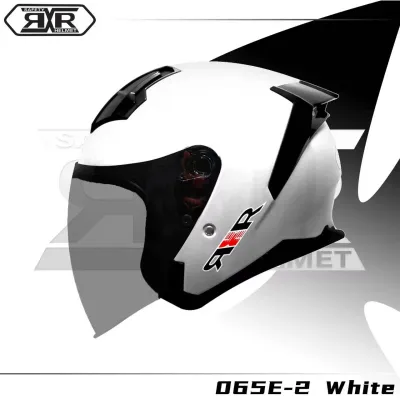
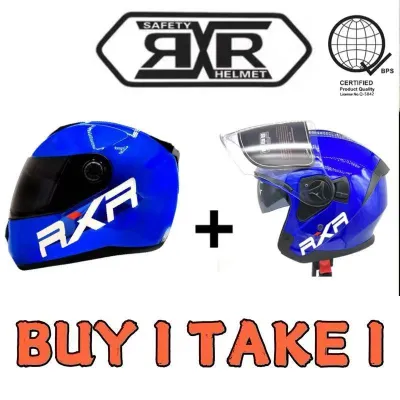
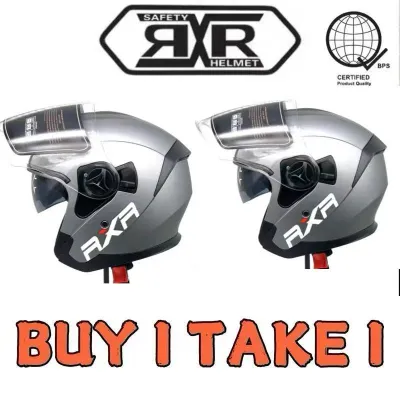
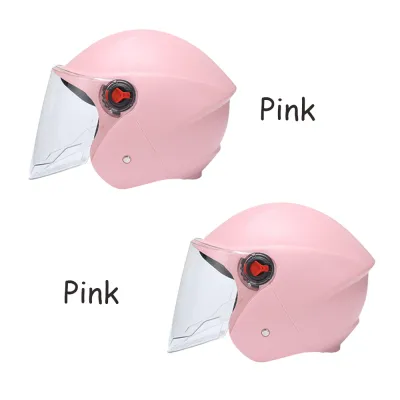
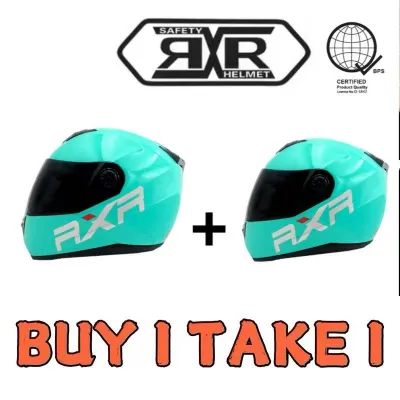
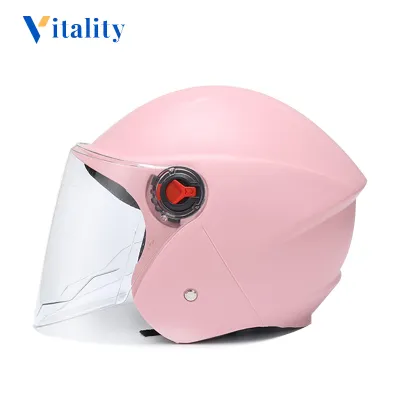
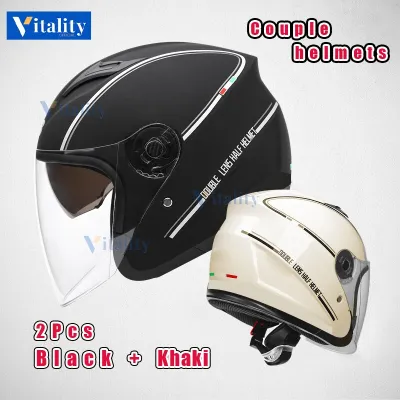
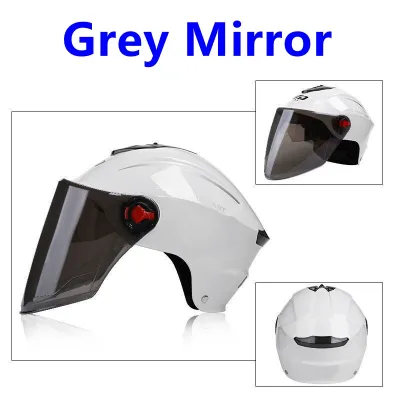
Prices are valid at publication and may change. Please refer to the product page for the latest price.
To verify the authenticity of these safety marks, look for specific security features rather than relying on a simple printed image. Genuine ICC stickers feature holographic elements that shimmer when tilted under light, along with unique serial numbers that can be cross-referenced with official databases. Some modern manufacturers also include tamper-proof QR codes on the packaging or the helmet itself, allowing you to scan and instantly verify the product’s certification status.
Never rely solely on a seller’s text claims, product titles, or edited promotional photos when shopping online. Counterfeit stickers are unfortunately common on unverified ecommerce platforms, where substandard helmets are often marketed as certified. Always request real-time, high-resolution photos of the actual physical stickers and the manufacturing dates before finalizing your purchase, and inspect them closely upon delivery.
Setting Your Budget and Non-Negotiable Priorities
Establishing a budget for a couple’s helmet set requires distinguishing between features that keep you alive and features that merely add convenience. Your non-negotiable priorities must always center on the core protective components of the helmet. This includes a robust outer shell made of impact-resistant materials, a high-density expanded polystyrene (EPS) inner liner designed to absorb shock, a secure retention system like a double-D ring or a micro-metric ratchet buckle, and a clear, distortion-free visor.

If you need to keep costs down, look for areas where compromises do not affect structural safety. Opting for solid, plain colors instead of complex, licensed graphics can save a significant amount of money without reducing protection. You can also compromise on luxury features, such as ultra-plush interior fabrics, extensive ventilation ports, integrated sun visors, or quick-release visor mechanisms, which are convenient but not critical for basic safety.
Additionally, remember to factor in the total cost of ownership when setting your budget. A seemingly cheap bundle might become expensive once you add regional shipping fees, especially when shipping bulky items to provincial areas. You should also consider the future cost of replacement visors or anti-fog inserts, as riding in tropical downpours can quickly compromise visibility if your visor is prone to fogging.
Navigating Buy-1-Take-1 and Bundle Promotions
Buy-1-take-1 promotions and couple bundles are highly appealing, but they require a critical eye to avoid dangerous safety traps. A common tactic among unscrupulous sellers is bundling one high-quality, certified helmet with a cheap, uncertified “free” helmet. Both the rider and the pillion passenger deserve equal protection, so you must verify that both units in any promotional package carry their own independent PS or ICC certification stickers.
Another critical factor is size customization. Many generic buy-1-take-1 deals force you to accept two identical sizes, or limit your choices to a single standard size like medium or large. Because proper fit is essential for a helmet to function correctly during an accident, you must ensure the promotion allows you to select two different, precise sizes tailored to each rider’s head measurements.
Before clicking the checkout button, always calculate the individual cost of the helmets to verify if the bundle actually saves you money. Compare the total promotional price against the cost of buying two separate, entry-level certified helmets from reputable brands. In many cases, purchasing two individual, properly fitted helmets offers better value, superior safety, and a wider range of style options than a restrictive bundle deal.
What to Expect Across Different Price Tiers
Understanding what you get at different price points helps manage expectations and prevents you from overpaying. In the entry-level budget tier, which typically ranges from ₱1,500 to ₱3,000 per pair, helmets are generally constructed from standard Acrylonitrile Butadiene Styrene (ABS) plastic. These helmets are fully certified and safe, but they tend to be heavier, have basic non-removable liners, and offer limited ventilation, making them best suited for short daily commutes.
Moving up to the mid-range tier, roughly ₱3,500 to ₱7,000 for a set, you will find a significant upgrade in comfort and usability. Helmets in this category often feature advanced polycarbonate shells, multi-density EPS liners, and fully removable, washable interior paddings that help manage sweat in hot, humid weather. They also provide superior wind noise reduction, better visor sealing mechanisms, and more efficient ventilation channels to keep both riders cool.
In the premium budget tier, which starts above ₱8,000 for a pair, the focus shifts to lightweight performance and advanced materials. These helmets utilize fiberglass composites or carbon fiber blends, which drastically reduce the strain on your neck during long rides. Premium options also offer superior aerodynamic profiles to minimize wind drag, optical-class visors with Pinlock anti-fog compatibility, and highly customizable cheek pads to achieve a perfect, tailored fit.
Sizing and Fit Strategies for Two Riders
Achieving a perfect fit is a highly individualized process that cannot be rushed or guessed. A common mistake couples make is purchasing matching sizes simply for aesthetic symmetry or assuming they wear the same size because they are of similar height. To find the correct size, use a soft measuring tape to measure the widest part of each rider’s head, about one inch above the eyebrows and ears, and compare the measurements to the manufacturer’s specific size chart.
In addition to circumference, you must consider the internal shape of the helmet, which generally falls into round oval, intermediate oval, or long oval categories. A helmet that matches your head circumference but conflicts with your head shape will cause painful pressure points on your forehead or sides. Since different brands cater to different head shapes, it is highly recommended to try on various models in a physical store before committing to an online purchase.
If either partner’s measurement falls directly between two sizes, always prioritize the smaller, snugger option. A helmet must fit snugly against your cheeks and forehead without causing pain; if you can easily shake your head and feel the helmet shifting, it is too loose. Over time, the interior comfort padding will naturally compress or “break in,” meaning a slightly tight helmet will become more comfortable, whereas a loose helmet will become dangerously unstable.
Pre-Purchase Checklist and Red Flags
Before finalizing your purchase, run through a strict checklist to protect your investment and your safety. First, verify the seller’s return and exchange policy, ensuring they allow size swaps if the helmets do not fit perfectly upon arrival. Check who covers the return shipping costs, as shipping bulky helmet boxes back to a seller can be expensive, and confirm that the hygiene seals on the visors must remain intact for a valid return.
Be highly suspicious of red flags, such as prices that seem too good to be true. If a seller offers a “buy-1-take-1” deal on full-face helmets for a price significantly lower than the market average of a single certified helmet, the products are likely counterfeit or structurally compromised. Other warning signs include vague product descriptions, blurred photos of safety stickers, and stores with low ratings or high volumes of negative reviews regarding product authenticity.
Finally, review the total checkout cost carefully, paying close attention to any hidden fees or regional shipping surcharges. Because helmets are bulky and heavy, shipping rates can vary widely depending on your location. Ensure that the final price, including all taxes and delivery fees, still fits within your established budget before completing the transaction.
Frequently Asked Questions (FAQ)
Is It Safe to Use a Half-Helmet for the Passenger to Save Money?
While half-helmets or open-face helmets are legally permitted in the Philippines as long as they carry the required PS or ICC certification, they offer significantly less protection than full-face helmets. Statistics show that a large percentage of helmet impacts during a crash occur on the chin and jaw area, which half-helmets leave completely exposed. Saving money by compromising on the passenger’s safety is a dangerous trade-off; both riders face the same road risks and deserve the comprehensive protection of a full-face helmet.
Do Matching Helmet Designs Cost More Than Plain Ones?
Yes, helmets featuring matching couple designs, complex graphics, or licensed character artwork generally cost more than their plain, solid-colored counterparts. Manufacturers charge a premium for the design rights and the complex water-decal application processes required for detailed graphics. If you are on a tight budget, a highly cost-effective alternative is to purchase plain, solid-colored certified helmets and customize them yourself using high-quality, reflective aftermarket decals that do not compromise the structural integrity of the outer shell.

Community discussion
Share your experience or ask a question. Comments are reviewed before publication.