
Finding a compatible Simota air filter full set for your motorcycle requires matching the exact physical dimensions of your intake system, verifying your engine’s fuel delivery type, and ensuring there is adequate physical clearance within your bike’s frame. Because motorcycles vary widely in their chassis designs and engine layouts, a generic “one-size-fits-all” approach to aftermarket intakes can lead to severe engine damage, poor performance, or costly installation failures. By systematically measuring your intake tract and understanding the components included in a complete kit, you can safely select an upgrade that protects your engine while supporting its air intake needs.
Understanding Simota Air Filter Full Set Components
A complete aftermarket intake upgrade is fundamentally different from a simple drop-in replacement filter. While a drop-in filter is designed to slide directly into your motorcycle’s original, factory-installed plastic airbox, a full set completely replaces this factory housing. This modification alters how air is drawn into the engine, shifting from a closed, baffled chamber to an open or shielded high-flow configuration.
A genuine full set typically includes several critical components that must work in perfect harmony to maintain engine health. These components generally consist of the high-flow filter element itself, a dedicated intake pipe or adapter flange, heavy-duty hose clamps, mounting brackets, and specialized breather hoses. Some kits also feature a heat shield or protective outer cover to shield the filter from direct engine heat and road debris.
Products mentioned in this guide
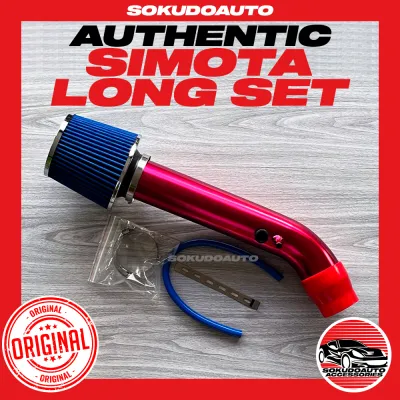
Prices are valid at publication and may change. Please refer to the product page for the latest price.
Each of these parts plays a vital role in preserving the structural integrity of your engine’s intake tract. The adapter flange secures the filter directly to the carburetor or throttle body, preventing unfiltered air from bypassing the filter media. Meanwhile, the breather hoses ensure that crankcase gases can still vent safely without creating pressure imbalances or introducing contaminants into the combustion chamber.
When shopping, you will encounter both model-specific kits and universal kits. Model-specific sets are pre-engineered to match the exact mounting points, sensor ports, and space limitations of a particular motorcycle model. Universal kits, on the other hand, provide a generalized filter and adapter but require you to source custom brackets, determine correct routing, and manually adapt the assembly to your specific machine.
Step-by-Step Guide to Verifying Motorcycle Compatibility
To guarantee a successful fitment, you must first document your motorcycle’s precise technical specifications. Do not rely solely on the marketing name of your bike, as manufacturers often update intake designs across different model years or engine generations. Locate your owner’s manual or the vehicle identification plate to confirm the exact model year, engine displacement, and whether your bike uses a carburetor or electronic fuel injection (EFI).

Next, you must measure the outer diameter of your engine’s intake inlet. If your motorcycle is carbureted, use a vernier caliper to measure the exact outer diameter of the carburetor’s air intake mouth where the stock rubber boot attaches. For fuel-injected motorcycles, perform this same measurement on the outer lip of the throttle body, ensuring you measure the outer edge rather than the inner bore.
Once you have these measurements, cross-reference them directly with the adapter sizes provided in the Simota kit. A secure, airtight seal is non-negotiable; an adapter that is even a millimeter too large can allow dirty air to slip past, leading to rapid cylinder wear. Conversely, an adapter that is too small will pinch, tear, or fail to seat completely on the intake mouth.
Physical clearance within the motorcycle’s frame is another critical factor that requires careful inspection. On automatic scooters, the airbox is frequently mounted directly to the swingarm, meaning the entire intake assembly moves up and down with the rear suspension. You must verify that a larger aftermarket pod filter will not strike the rear shock absorber, frame rails, or under-seat storage compartment when the suspension compresses fully.
For underbone and backbone motorcycles, space beneath the plastic fairings or fuel tank is often exceptionally tight. Measure the total length and width of the available space around your current intake tract before purchasing a full set. If the aftermarket filter housing is too bulky, you may be forced to permanently modify your expensive factory fairings or run the bike without proper bodywork, exposing the intake to the elements.
Finally, identify any sensors integrated into your factory airbox, such as the Intake Air Temperature (IAT) sensor or Mass Air Flow (MAF) sensor. A compatible full set must feature dedicated, sealed ports to accommodate these sensors in their original operating positions. If you are unsure how to safely relocate these sensors or route the vacuum lines, consult your vehicle’s service manual or seek assistance from a qualified motorcycle mechanic before proceeding.
Evaluating Performance Claims and Material Specifications
When evaluating aftermarket air filters, it is essential to focus on verifiable material specifications rather than generalized performance promises. The filter media is the heart of the system, and different materials require distinct maintenance protocols. Cotton gauze filters, for example, rely on a specialized tackifying oil to trap microscopic dust particles, whereas synthetic dry filters must never be oiled and are cleaned using low-pressure compressed air.
The environmental conditions of your daily rides should heavily influence your choice of filter media. In tropical climates characterized by high humidity, heavy seasonal rains, and dusty urban roads, a filter must offer robust structural integrity. Ensure the filter mesh is constructed from corrosion-resistant materials, such as epoxy-coated aluminum or stainless steel, to prevent rust from weakening the pleats over time.
Examine the construction of the intake pipe and coupling adapters included in the full set. High-quality kits utilize heat-resistant silicone couplers and durable aluminum or high-grade composite piping. These materials resist warping under intense engine bay heat, ensuring that the intake tract remains perfectly sealed even during long, hot commutes in stop-and-go traffic.
It is a common misconception that installing an aftermarket air filter will instantly and dramatically increase engine horsepower. In reality, any changes to your engine’s airflow capacity are entirely dependent on the overall tuning state of the vehicle. To realize any practical performance benefits, the engine’s fueling system must be adjusted to match the increased air volume, which requires re-jetting the carburetor or remapping the ECU on fuel-injected models.
Rather than relying on anecdotal reviews or unverified marketing claims, focus on the manufacturer’s official specifications regarding filtration efficiency and recommended service intervals. A high-flow filter that allows fine dust to pass through will quickly ruin your engine’s piston rings and cylinder walls. Always prioritize a filter that balances improved airflow with robust, multi-layer filtration to ensure long-term engine reliability.
Sourcing Authentic Parts and Navigating Online Retailers
The popularity of aftermarket motorcycle upgrades has unfortunately led to a proliferation of counterfeit products in the online marketplace. To protect your engine from the catastrophic failure of a poorly made imitation filter, you should always prioritize purchasing from authorized dealers, official brand stores, or highly reputable motorcycle parts specialists. Avoid unverified third-party sellers who cannot provide proof of authenticity.
When your package arrives, perform a meticulous inspection of the packaging and product details before opening any sealed components. Genuine kits typically feature high-quality packaging, clear branding, holographic security stickers, and unique serial numbers. If the printing on the box appears blurry, the materials feel unusually flimsy, or the brand logo is misspelled, do not install the product on your motorcycle.
Before finalizing your purchase on any e-commerce platform, carefully review the seller’s return and exchange policies. Many retailers enforce strict return restrictions on aftermarket engine components, refusing to accept returns once the parts have been test-fitted, bolted on, or modified. Confirming that you can return an unused, uninstalled kit if you discover a compatibility mismatch will save you from a frustrating financial loss.
Compare pricing across multiple trusted local retailers to establish a realistic baseline price in Philippine Pesos (₱). Be highly suspicious of listings that offer a “full set” at a price significantly below the standard market rate. Extremely cheap listings often indicate counterfeit goods made with inferior filter media that can disintegrate and be sucked directly into your engine’s combustion chamber.
Installation Boundaries and Post-Installation Safety Checks
Installing an aftermarket intake system is a significant modification that alters your motorcycle’s operating parameters. Before beginning, you must determine if the installation requires removing critical factory components, such as the entire original airbox assembly, or modifying original wiring harnesses. Always refer to your motorcycle’s original-vehicle instructions to identify any safety boundaries or warranty limitations associated with these changes.
If you find that the aftermarket kit interferes with critical motorcycle systems, such as fuel lines, throttle cables, brake lines, or electrical wiring, stop the installation immediately. Forcing a filter to fit by pinching a fuel line or bending a wiring harness creates an extreme safety hazard. In these situations, you must consult a professional motorcycle technician or a qualified tuner to custom-configure the setup safely.
Once the physical installation is complete, perform a rigorous inspection of all connection points. Check that every hose clamp is positioned squarely over the adapter flange and tightened securely to prevent vacuum leaks. A vacuum leak—where unmetered, unfiltered air enters the engine behind the filter—will cause the engine to run dangerously lean, leading to erratic idling, severe overheating, and potential piston seizure.
Conduct a controlled post-installation test in a safe, quiet area before taking the motorcycle onto public roads. Start the engine and let it idle, listening closely for any unusual whistling sounds that might indicate an air leak. Monitor the engine’s behavior as it warms up, paying close attention to throttle response, idling stability, and the color of the exhaust smoke.
If you experience engine bogging, hesitation upon acceleration, or an unusually high idle, turn off the engine immediately. These symptoms indicate that the air-fuel mixture has become unbalanced due to the increased airflow. You must address this by adjusting your carburetor’s jetting or having a professional tuner recalibrate your fuel injection system before riding the motorcycle any further.
Frequently Asked Questions (FAQ)
Will installing a Simota full set void my motorcycle's factory warranty?
Yes, installing an aftermarket intake system that replaces the factory airbox will generally void the warranty on your engine and related fuel systems. Motorcycle manufacturers design their warranties around stock configurations, and modifications that alter engine breathing or sensor placement are typically excluded from coverage. Always consult your authorized dealer to verify their specific warranty terms before making any modifications.
How often should I clean and re-oil the Simota filter element?
You should clean and service your filter element according to the manufacturer’s recommended maintenance schedule, which is typically every 5,000 to 10,000 kilometers. However, if you frequently ride in highly dusty environments, heavy urban smog, or during the wet monsoon season in the Philippines, you must inspect and clean the filter much more frequently. Only use manufacturer-approved cleaning and oiling products as specified on the product label.
Can I use a universal Simota kit if a model-specific one is unavailable?
Yes, you can use a universal kit, but it requires significant additional preparation and mechanical expertise. You must manually measure and source the correct adapter sleeves to match your throttle body or carburetor diameter perfectly. Additionally, you will need to fabricate custom mounting brackets to secure the filter housing and safely route any crankcase breather hoses or factory sensors to prevent engine damage.

Community discussion
Share your experience or ask a question. Comments are reviewed before publication.