
Upgrading your Honda Click with a 260mm brake disc is a popular modification in the Philippines, often chosen to enhance stopping power and heat management during daily commutes. However, the popularity of this upgrade has led to a rise in counterfeit and substandard brake components in the local market. Spotting a fake 260mm disc requires a systematic approach, combining close physical inspection, packaging verification, and careful sourcing. Because your motorcycle’s braking system is its most critical safety feature, knowing how to distinguish genuine parts from dangerous imitations is essential for every rider.
Why Counterfeit Brake Discs Compromise Motorcycle Safety
Using a counterfeit brake disc on your Honda Click introduces severe mechanical risks that directly threaten your safety on the road. Substandard discs are typically manufactured from low-grade steel or inferior alloys that cannot withstand the intense heat generated during braking. In the tropical climate of the Philippines, where high ambient temperatures are compounded by stop-and-go city traffic or long descents down mountain passes, heat dissipation is critical. Fake discs often fail to dissipate this heat properly, leading to rapid brake fade, a condition where your brake lever feels spongy and your stopping distance increases dangerously.
Furthermore, poor-quality alloys lack the structural integrity required to handle sudden, high-pressure stops. Under heavy load, a counterfeit disc is highly susceptible to warping, cracking, or even catastrophic shattering. These structural failures can lock up your front wheel instantly, leading to a loss of control and potential accidents. Inconsistent friction surfaces and improper thickness variations across the disc also prevent the brake pads from making uniform contact, resulting in uneven wear, severe vibrations, and unpredictable braking performance.
Products mentioned in this guide
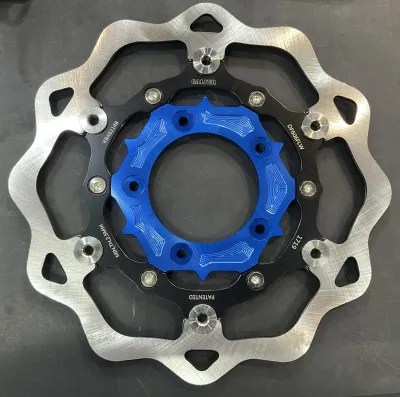
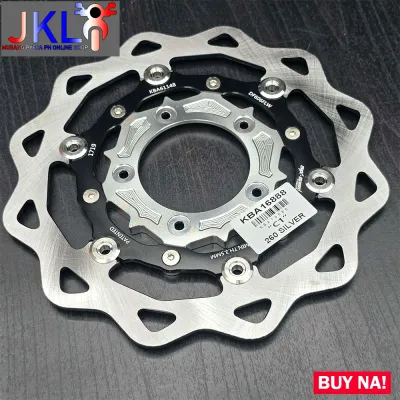
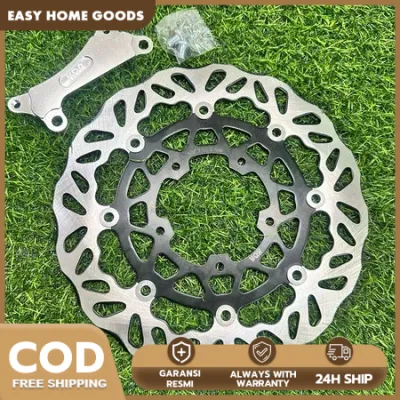
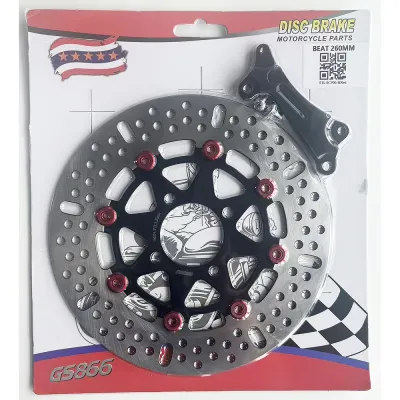
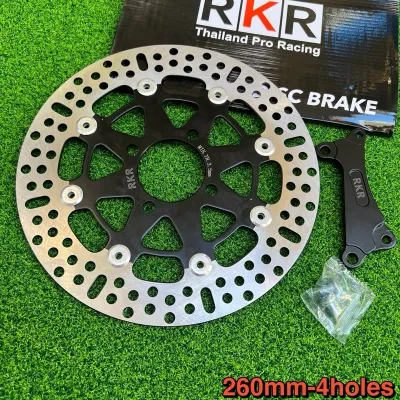
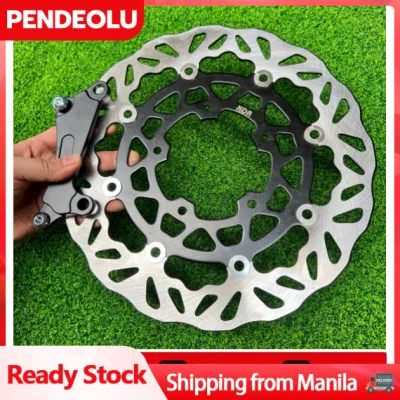
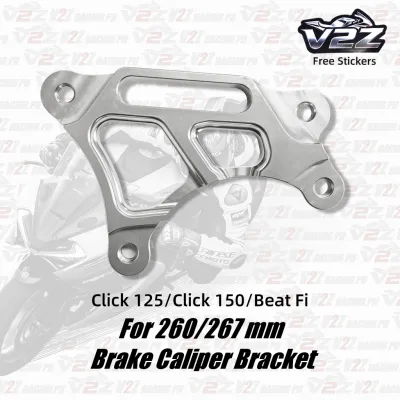
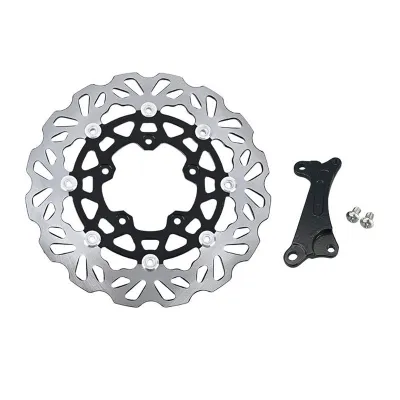
Prices are valid at publication and may change. Please refer to the product page for the latest price.
Before undertaking any modifications to your motorcycle’s braking system, always review the original vehicle manufacturer’s guidelines regarding disc dimensions and caliper compatibility. Because altering these components affects the vehicle’s handling dynamics and road legality, it is highly recommended to have all installation work performed by a qualified motorcycle mechanic.
Visual and Physical Checks to Spot Fake 260mm Discs
Before you install any aftermarket 260mm disc on your Honda Click, performing a thorough physical audit of the product is your first line of defense against counterfeits. Many replica parts look convincing at a distance, but close inspection reveals shortcuts taken during manufacturing.

Inspecting Packaging and Security Labels
Genuine manufacturers invest heavily in high-quality packaging to protect their products and secure their brand reputation. When examining the box of a 260mm brake disc, look for official security features such as holographic stickers, tamper-evident seals, or unique scratch-off verification codes. Counterfeiters often struggle to replicate these high-security elements, resulting in blurry holograms, peeling stickers, or codes that do not register on official databases.
Pay close attention to the print quality, typography, and spelling on the exterior packaging. Genuine boxes feature crisp, high-resolution graphics, consistent fonts, and accurate product information, including the correct part numbers and compatibility details for the Honda Click. In contrast, fake packaging frequently exhibits faded colors, spelling errors, or generic labels that lack specific manufacturing details. Additionally, check for the inclusion of official documentation, such as user manuals, safety warnings, or warranty cards, which are standard in genuine product packages but often missing from counterfeits.
Evaluating Build Quality and Surface Finish
The physical construction of the brake disc itself provides immediate clues about its authenticity. Genuine 260mm discs undergo precise CNC machining, leaving clean, uniform chamfers on the edges and perfectly smooth ventilation slots or drill holes. Run your fingers carefully along the edges of the disc; rough, sharp, or uneven edges indicate poor finishing processes typical of low-cost counterfeit operations.
Next, inspect the mounting holes where the disc secures to your Honda Click’s wheel hub. On a genuine disc, these holes are drilled with absolute precision, showing clean inner walls and exact spacing to ensure a flush, wobble-free fit. Counterfeit discs often have misaligned or poorly finished mounting holes, which can stress the mounting bolts and lead to shearing under braking pressure. Additionally, look for casting flaws, such as tiny air bubbles, pits, or uneven thickness across the friction surface. A genuine disc will have a consistent, ground finish with no visible casting defects or suspicious discoloration in the metal.
Verifying Authenticity Through Official Channels
Relying solely on visual checks may not always be enough, as some high-grade counterfeits can mimic the look of genuine parts quite closely. To ensure absolute certainty, you should utilize the official verification channels provided by reputable brake manufacturers. Many established brands print unique serial numbers or QR codes directly on the brake disc or its packaging. Scanning these codes or entering the serial numbers on the manufacturer’s official website allows you to instantly verify if the part is registered in their production database.
If you are uncertain about the results of an online check, contact the authorized local distributors or the manufacturer’s official customer support channels in the Philippines. These representatives can verify batch numbers, confirm whether a specific seller is an authorized dealer, and help you validate the product’s authenticity. Be cautious of third-party verification apps or unofficial seller-provided links, as counterfeiters sometimes set up fake verification websites that mimic official portals to trick unsuspecting buyers. Always navigate directly to the manufacturer’s official domain to perform your checks.
Safe Purchasing Strategies for Motorcycle Parts
The most effective way to avoid counterfeit 260mm brake discs is to establish safe purchasing habits. Whenever possible, prioritize buying your motorcycle parts from authorized Honda dealerships, official brand flagship stores, or highly reputable, certified motorcycle parts shops. These businesses source their inventory directly from manufacturers or official distributors, virtually eliminating the risk of stocking counterfeit goods.
When shopping on online marketplaces or e-commerce platforms, navigate with caution. Look for official store badges, high seller ratings, and positive customer reviews that include real photos of the installed product. Avoid sellers who have limited transaction histories, generic store names, or a high volume of negative feedback regarding part quality. Always review the seller’s return and refund policies before making a purchase, ensuring you have a clear recourse option if the part arrives and fails your initial authenticity checks.
Price is another critical indicator of authenticity. While everyone appreciates a good deal, a price that seems too good to be true is a major red flag. If a premium 260mm brake disc is listed at a price significantly below the standard market rate in ₱, it is highly likely to be a counterfeit. Manufacturing high-quality, heat-treated steel discs requires expensive materials and precise machining, meaning genuine safety components cannot be sold at bargain-basement prices.
Steps to Take If You Suspect a Counterfeit Part
If you suspect that the 260mm brake disc you purchased is a counterfeit, do not install it on your Honda Click under any circumstances. If the disc is already installed, halt the use of your motorcycle immediately. Riding with a suspected fake brake disc poses an immediate safety hazard to you and other road users, as the component could fail unexpectedly during a sudden stop.
Begin by documenting the product thoroughly. Take clear, high-resolution photos of the brake disc, focusing on any machining flaws, uneven surfaces, or suspicious markings. Document the packaging from all angles, capturing any blurry printing, incorrect labels, or damaged security seals. Keep all transaction records, including receipts, online order confirmations, and communication with the seller, as this documentation will serve as vital evidence.
Contact the seller immediately to request a return and a full refund, stating your concerns about the product’s authenticity. If the purchase was made through an e-commerce platform, report the seller and submit your documented evidence to the platform’s customer support team to initiate a dispute. Finally, consider taking the part to a qualified, independent mechanic for a professional assessment. Their expert opinion can provide additional leverage when dealing with disputes and ensure your motorcycle is fitted with a safe, genuine replacement.
Frequently Asked Questions (FAQ)
Can I use a 260mm brake disc from a different motorcycle brand on my Honda Click?
No, you should not attempt to install a 260mm brake disc designed for another motorcycle brand unless it is explicitly certified as compatible with the Honda Click. Brake discs must match the exact mounting pattern, bolt circle diameter, hub center hole diameter, and offset of your specific wheel hub. Even a minor discrepancy in these dimensions can prevent the disc from seating flat, leading to severe caliper misalignment, uneven pad wear, and potential brake failure. Always consult your motorcycle’s official service manual or a professional mechanic to verify exact compatibility before purchasing any aftermarket brake components.
How often should I inspect my brake discs for wear or damage?
You should perform a visual inspection of your brake discs during every routine maintenance interval, or roughly every 1,500 to 3,000 kilometers. Look closely for deep grooves, scoring, rust, or abnormal blue discoloration, which indicates excessive heat buildup. Additionally, pay attention to any unusual vibrations, pulsing in the brake lever, or squealing noises during braking, as these are common signs of a warped disc or uneven wear. Always use a micrometer to check that the disc thickness remains above the manufacturer’s specified minimum limit, which is typically stamped directly on the disc itself, and replace the component immediately if it falls below this safety threshold.

Community discussion
Share your experience or ask a question. Comments are reviewed before publication.