
Upgrading your vehicle’s interior often begins with the touchpoints you use most, and replacing a worn or plain gear shifter is a common starting point. If you are looking to customize your cockpit, finding a new shif knob handle that fits securely is essential for both driving comfort and safety. To know if a universal shift knob will fit your car’s gear shifter, you must identify your vehicle’s specific shifter shaft design, determine the exact thread size or mounting style, and verify if the replacement knob includes or supports the correct adapter.
In the tropical climate of the Philippines, where cabin temperatures can soar when parked under the sun, ensuring a precise and secure fit is doubly important. High heat and humidity can cause poorly fitted components or cheap plastic adapters to expand, soften, or slip, leading to a loose knob during critical gear changes. Understanding the mechanical interface of your shifter before purchasing an aftermarket accessory prevents costly installation mistakes and ensures your vehicle remains safe and reliable on the road.
How to Identify Your Shifter Type and Thread Size
Before shopping for an aftermarket gear accessory, you must understand that gear shifters are not universally identical. Vehicle manufacturers design shifter shafts using different mechanical interfaces, which generally fall into three distinct categories: threaded, non-threaded, and push-button or clamp-style shifters.
Products mentioned in this guide
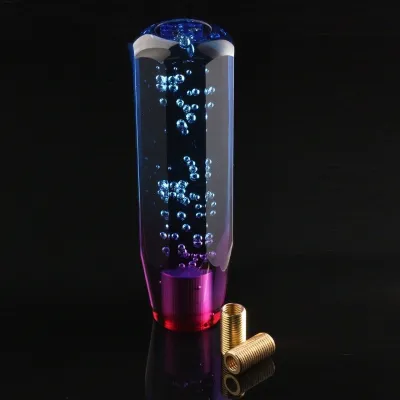

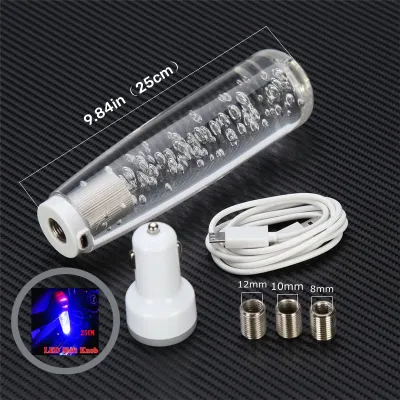
![Gear Shift Knob Sparco Silver - 8cm | Car Racing Styling Universal Shift Knob | Easy to Install [🇵🇭Ready Stock]](https://img.lazcdn.com/g/ff/kf/S62408c6b61204c1fac09f568a29bfd72A.jpg_400x400q80.jpg_.webp)
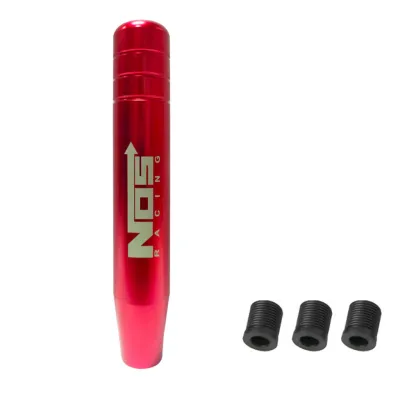
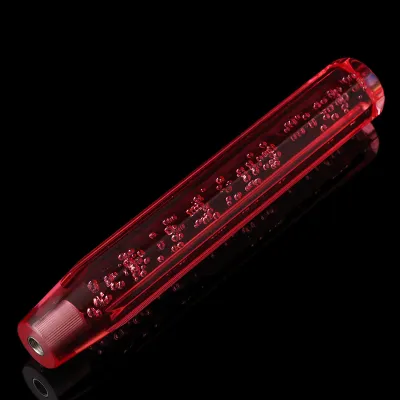

Prices are valid at publication and may change. Please refer to the product page for the latest price.
Threaded shifter shafts are highly common in manual transmissions and some older automatic models. On these vehicles, the shifter shaft is essentially a metal rod with external threads at the top, allowing the factory knob to screw directly onto it. Non-threaded shifter shafts, on the other hand, are smooth metal rods. Factory knobs on non-threaded shafts are typically secured using a small set screw, a retaining pin, or a collar mechanism that locks into a groove on the shaft. Finally, push-button or clamp-style shifters are standard on many modern automatic vehicles. These shifters require a mechanical button on the knob to release the transmission’s shift lock, allowing you to move the lever out of Park or into Reverse.
To establish the baseline requirements for a new knob, you must find your vehicle’s original thread size, which consists of the thread diameter and the thread pitch. Guessing this specification based solely on your car’s make, model, or production year is highly unreliable. Manufacturers frequently alter shifter specifications across different trim levels, engine options, or mid-cycle refreshes. Instead of guessing, check your vehicle’s official owner’s manual, contact a local dealership’s parts department with your Vehicle Identification Number (VIN), or consult verified manufacturer technical specifications.
Additionally, you must inspect your original shifter for any integrated electronic lock mechanisms, shift-lock release buttons, or reverse-lockout collars. A reverse-lockout collar is a safety feature on many manual transmissions that requires you to pull up a ring below the knob to engage reverse gear. If your vehicle has this feature, any universal replacement knob you choose must have a wide enough base cavity to accommodate the collar when it is pulled upward.
How to Match Universal Shift Knob Adapters to Your Shifter
Most aftermarket shift knobs are labeled as “universal” because they do not rely on a single, fixed thread size. Instead, they utilize an adapter system designed to bridge the gap between the replacement knob’s large internal thread and your car’s specific shifter shaft.

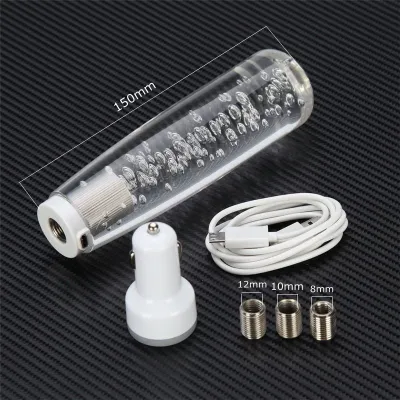
A typical universal package includes a selection of plastic or metal threaded inserts, often referred to as sleeves or adapters. These inserts have a uniform outer thread that matches the internal cavity of the aftermarket knob, but they feature different inner diameters and thread pitches to match various vehicle shafts. Common metric sizes included in these kits are M8x1.25, M10x1.25, M10x1.5, and M12x1.25. To match these adapters to your car, you must read the size markings molded or engraved on the inserts and cross-reference them with your vehicle’s verified specifications.
If you discover that your vehicle’s required thread size is missing from the universal kit, do not attempt to force an incorrect adapter onto the shaft. Forcing a mismatched size will strip the threads of both the adapter and your shifter. Instead, you should purchase a standalone, correctly sized threaded insert made of a durable material like brass or aluminum. Alternatively, you may need to pivot away from a universal option and select a vehicle-specific knob designed specifically for your car’s thread pattern.
For non-threaded shifter shafts, universal kits often provide smooth rubber or plastic sleeves combined with small metal set screws. The sleeve slides over the smooth shaft, the knob slides over the sleeve, and the set screws are tightened through the sides of the knob to pinch the shaft. When installing this type of adapter, be aware that bare set screws can easily mar, dent, or scratch the original metal shifter shaft. To prevent this damage, install a thin protective shim, such as a small strip of brass or plastic, between the set screws and the shaft. In the humid conditions of the Philippines, opting for high-quality metal adapters rather than cheap plastic sleeves is highly recommended, as plastic can degrade and lose its grip over time under extreme cabin heat.
Step-by-Step Guide to Measuring and Test-Fitting Your Shif Knob Handle
To ensure a successful installation without damaging your vehicle’s shift linkage, follow a methodical process for removal, measurement, and test-fitting.
Preparation and Safety Boundaries Before beginning, park your vehicle on a flat, level surface. Fully engage the handbrake or emergency parking brake, turn off the engine, and remove the key from the ignition. If you are working on an automatic transmission, ensure the vehicle is securely in Park. Gather the necessary tools: a digital caliper, a thread pitch gauge, a clean rag, and any wrenches or Allen keys required for your specific vehicle.
Safe Removal of the Factory Knob To remove the original knob, consult your vehicle’s factory service manual for specific disassembly instructions. For threaded shifters, grasp the knob firmly and turn it counter-clockwise. Crucial Safety Warning: Always use one hand to firmly hold and stabilize the lower portion of the shifter shaft while unscrewing or pulling the knob with your other hand. Failing to secure the shifter base can transmit excessive twisting force down the shaft, which can bend or break the internal shift linkage, plastic bushings, or shifter cables beneath the console. For non-threaded shifters, locate and loosen any hidden set screws, or gently pry away any retaining clips before pulling the knob straight upward.
Measuring the Shifter Shaft Once the factory knob is removed, use your digital caliper to measure the outer diameter of the shifter shaft’s threaded portion. Place the caliper jaws over the crest of the threads to get a reading in millimeters (e.g., 10.0 mm indicates an M10 shaft). Next, use a thread pitch gauge to identify the distance between the thread crests. Align the teeth of the gauge with the threads on the shaft until you find a perfect match without any gaps. If you do not have a thread pitch gauge, you can carefully test-fit known metric nuts (such as M10x1.25 or M10x1.5) by hand to see which one threads on smoothly.
Test-Fitting the New Adapter and Knob Select the adapter from your universal kit that matches your measurements. Thread the adapter onto the shifter shaft entirely by hand. Do not use pliers, wrenches, or power tools during this step. Once the adapter is seated, screw your new shif knob handle onto the adapter, again using only hand pressure.
Strict Stop Conditions If you encounter any grinding, binding, or unusual resistance while threading the adapter or the knob by hand, stop immediately. Do not attempt to force the components together. Grinding indicates that either the thread pitch is mismatched or the threads are misaligned. Forcing the parts will lead to cross-threading, which will permanently strip the threads on your shifter shaft, requiring a costly replacement of the entire shift lever assembly.
Final Verification Once the knob is fully threaded and hand-tightened, verify that it is completely secure. Attempt to wiggle the knob; there should be zero play or wobble. If your vehicle has a manual reverse-lockout collar or an automatic shift-lock button, test its operation thoroughly. Ensure the collar or button moves freely through its entire range of motion and returns to its resting position without sticking or rubbing against the base of the new knob.
Common Fitment Mistakes That Can Damage Your Gear Shifter
Installing an aftermarket accessory should enhance your driving experience, but common installation errors can result in expensive mechanical damage or create unsafe driving conditions.
Cross-threading is the most frequent and damaging mistake made during installation. This occurs when an adapter or knob is screwed onto the shaft at an angle, or when a mismatched thread pitch is forced using hand tools. Because the metal of the shifter shaft is often harder than the plastic or soft aluminum adapters, forcing a bad fit will strip the threads off the shaft entirely. Repairing a stripped shifter shaft typically requires disassembling the center console and replacing the entire gear shift lever assembly, a repair that can cost thousands of pesos (₱) in parts and professional labor.
For automatic transmission owners, interfering with the shift lock mechanism is a critical safety hazard. If a universal knob is installed too low on the shaft, or if it lacks the correct internal clearance, it can permanently depress or jam the shift-lock release rod inside the shifter. This can trap your vehicle in Park, preventing you from driving, or worse, allow the shifter to be accidentally bumped into Reverse or Neutral while driving without depressing the brake pedal.
Over-tightening set screws on non-threaded shafts is another common error. Many universal knobs use small grub screws to grip a smooth shaft. If you over-torque these screws using an Allen key, you can crush or deform a hollow metal shifter shaft, or crack the delicate internal plastic components of an automatic shifter assembly.
Lastly, many drivers ignore the fitment of the factory shift boot. Universal knobs often have a different base shape compared to factory knobs, which can prevent the shift boot from clipping back into place. If the boot is left loose or forced into a tight position, it can rub against the shifter mechanism, causing the leather or vinyl to tear over time. This is especially true in the high-humidity environment of the Philippines, where synthetic boot materials can become brittle and more prone to tearing if subjected to constant tension or friction.
When to Choose a Vehicle-Specific Shift Knob Instead
While universal shift knobs offer a wide variety of styles, they are not a viable or safe option for every vehicle. Certain shifter designs require a degree of precision that universal adapters simply cannot provide.
You should avoid universal knobs if your vehicle features a modern, highly complex shift-by-wire system. These systems rely on electronic sensors rather than physical linkages, and the factory knob often contains integrated electronic buttons, wiring harnesses, or digital gear displays. Attempting to install a universal knob on a shift-by-wire system can damage the wiring or trigger dashboard error codes. Similarly, vehicles with proprietary quick-release mechanisms or integrated steering wheel shift paddles that require specific clearances around the console should not be fitted with universal accessories.
In contrast, choosing a vehicle-specific shift knob offers several distinct advantages. A direct-fit knob is engineered to match your car’s exact thread diameter and pitch out of the box, eliminating the need for weak plastic adapters. It guarantees that factory safety features, such as shift-lock buttons and reverse-lockout collars, function exactly as the manufacturer intended. Furthermore, a vehicle-specific knob maintains the correct ergonomic height and weight balance, preserving the factory shift feel.
If you own a vehicle with a highly specialized shifter design, or if you cannot confidently verify your shaft’s thread measurements, investing in a direct-fit shif knob handle is the safer and more reliable path. If you are unsure about the compatibility of an accessory or lack the tools to perform the installation safely, always consult a qualified automotive technician or a professional installer to avoid damaging your vehicle’s transmission controls.
Frequently Asked Questions (FAQ)
Can I use a shift knob from a different car brand?
You can use a shift knob from a different car brand only if the thread diameter, thread pitch, and shifter type are identical to your vehicle’s specifications. Compatibility is determined entirely by these physical dimensions, not the brand logo on the package. However, even if the threads match, you must verify that the internal cavity depth of the donor knob is sufficient so it does not bottom out before tightening, and that it does not interfere with your vehicle’s shift boot or lockout mechanism.
Will a universal knob interfere with my automatic shift lock button?
Yes, a standard universal knob will interfere with your automatic shift lock if it is not specifically designed for automatic transmissions. Most basic universal knobs are designed for manual shifters and feature a solid body with no moving parts. An automatic transmission requires a mechanism to depress the internal shift-lock release rod. If you drive an automatic, you must select a universal knob that is explicitly labeled as automatic-compatible, which typically features a built-in top button or a spring-loaded design to actuate the shift lock safely.

Community discussion
Share your experience or ask a question. Comments are reviewed before publication.