
Identifying genuine brake shoes for your Honda TMX 155 requires a careful combination of packaging inspection, physical material checks, and sourcing from authorized channels. Because the TMX 155 is a workhorse on Philippine roads—often pulling heavy sidecars or carrying substantial loads through unpredictable tropical weather—maintaining reliable stopping power is absolutely critical. Counterfeit parts frequently mimic the appearance of original equipment, but they fail to deliver the same heat resistance and structural integrity. To protect yourself and your motorcycle, you must look beyond the surface label and verify the physical characteristics, part numbers, and origin of the components before installation.
Why Authentic Brake Shoes Matter for Motorcycle Safety
Braking systems operate under extreme friction and heat, converting kinetic energy into thermal energy to bring your motorcycle to a safe stop. When you install counterfeit brake shoes on a Honda TMX 155, you compromise this vital energy transfer. Substandard friction materials are highly prone to rapid brake fade, a dangerous condition where the brakes lose their stopping power during prolonged use, such as descending steep hills or navigating heavy stop-and-go traffic in high tropical humidity.
The consequences of using unverified brake components extend far beyond poor stopping distances. Low-quality friction linings can delaminate or break away from the metal backing plate entirely, leading to sudden wheel lockups or complete brake failure. Furthermore, abrasive or unevenly mixed materials in fake shoes can score and warp the inner surface of your wheel hub’s brake drum. Replacing a damaged wheel hub or drum assembly is significantly more expensive than investing in genuine brake shoes from the start.
Products mentioned in this guide
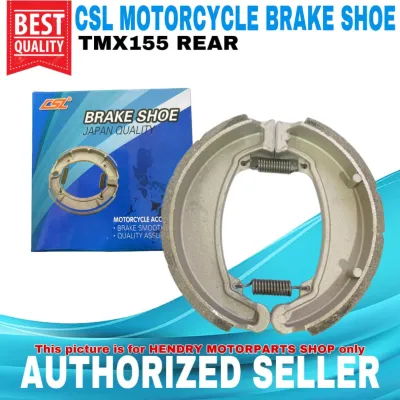
![[KRCP] TMX155 REAR BRAKE SHOE Genuine Part 06430-KB5-900 from Indonesia](https://img.lazcdn.com/g/p/9ec42b7200b479a7525d0b0a7ed7c7fb.jpg_400x400q80.jpg_.webp)
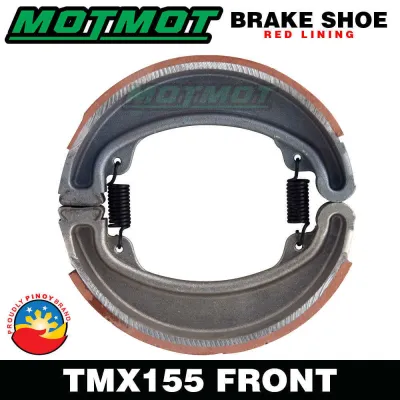
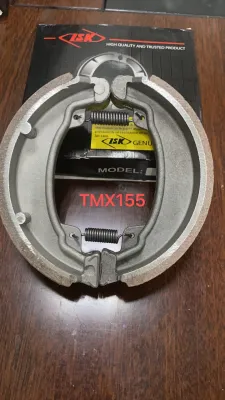
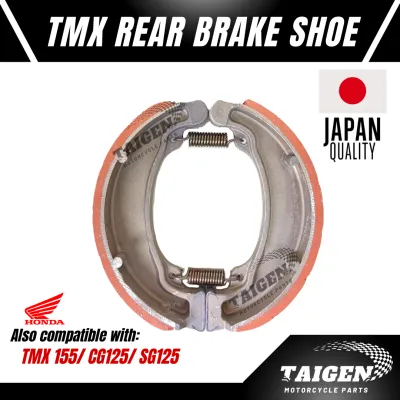
![[KV] Honda TMX155 FRONT BRAKE SHOE 06450-KB5-900 Genuine Packing](https://img.lazcdn.com/g/p/1de358dfb1ceacec6d9159525953714a.jpg_400x400q80.jpg_.webp)
![[KRCP] TMX155 FRONT BRAKE SHOE 06450-KB5-900 Genuine Packing](https://img.lazcdn.com/g/p/ac2c98c2cec57cc7fdace8d9dcb0bdac.jpg_400x400q80.jpg_.webp)
Prices are valid at publication and may change. Please refer to the product page for the latest price.
Because brakes are a primary safety-critical system, any disassembly, inspection, or replacement of your motorcycle’s brake shoes must be performed with strict adherence to the original-vehicle manufacturer instructions. If you are not a trained technician, always have a qualified mechanic install and adjust your brake components. Operating a motorcycle with incorrectly installed or unverified braking parts poses an immediate road hazard to you and other motorists.
Visual and Physical Checks for Authenticity
Detecting a counterfeit brake shoe requires a methodical inspection of the product before it ever touches your motorcycle. Counterfeiters have become highly sophisticated, often replicating the outer boxes and labels with surprising accuracy. Therefore, you should never rely on a single visual indicator to confirm that a part is genuine.

The most reliable physical verification method is to compare the suspect brake shoes directly against a known genuine benchmark, such as a part purchased directly from an authorized flagship dealership. By holding an established genuine component side-by-side with the new purchase, you can observe subtle differences in weight, metal casting quality, and the texture of the friction lining. Keep in mind that packaging designs and security labels can change over time as manufacturers update their anti-counterfeiting measures, making physical material checks an indispensable part of your inspection.
Inspecting Packaging and Labeling
Genuine packaging serves as the first line of defense against counterfeit parts, as legitimate manufacturers maintain strict quality control standards even for their boxes and labels. Start by examining the print quality on the packaging; original boxes feature sharp, clear text, accurate brand logos, and consistent color saturation. Counterfeit packaging often displays blurry text, slightly altered brand colors, or even obvious spelling mistakes in the instructional text or product descriptions.
Next, cross-reference the part number printed on the packaging label with the official specification listed in your Honda TMX 155 owner’s manual or official parts catalog. Genuine parts will have a part number that matches the exact model year and drum dimension requirements of your motorcycle. Be skeptical of generic labels that claim universal compatibility across highly diverse motorcycle models without specifying the exact dimensions.
Additionally, look for official security features such as tamper-evident stickers, holographic seals, or unique serial numbers. Genuine holographic labels should shift colors smoothly when tilted under direct light and should not peel off easily without leaving a pattern or tearing the cardboard. If the seal appears poorly glued, off-center, or lacks the characteristic multi-dimensional depth of a true hologram, the product requires closer scrutiny.
Evaluating Build Quality and Materials
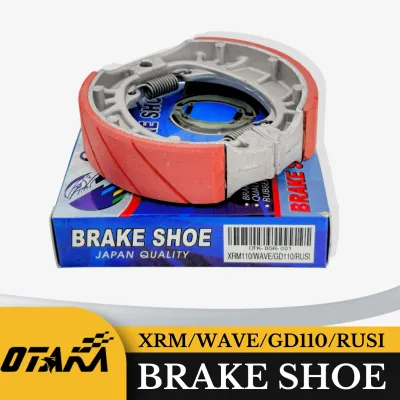
Once you open the packaging, focus your attention on the physical construction of the brake shoes, starting with the friction material. Genuine brake shoes feature a highly uniform friction lining with a consistent texture, free from large metallic clumps, cracks, or uneven air pockets. The lining must be securely bonded to the metal shoe with no visible gaps, adhesive run-off, or loose edges along the contact seam.
Examine the metal backing plate and the accompanying hardware, including the return springs and pins. Original components are manufactured from high-grade alloys that resist corrosion and mechanical stress under heavy loads. The metal casting should be smooth, clean, and free from rough flashing, sharp burrs, or pre-existing rust. The return springs must exhibit proper tension and a uniform coil structure; weak or poorly wound springs can fail to pull the shoes away from the drum, causing the brakes to drag and overheat.
Finally, assess the weight and overall feel of the brake shoes in your hand. Counterfeit parts often use cheaper, less dense metal alloys to cut production costs, resulting in a noticeably lighter product. If the brake shoes feel unusually light or flimsy compared to the sturdy, substantial feel of an original component, they are highly unlikely to withstand the daily rigors of road use.
Safe Purchasing Channels and Verification Steps
The most effective way to guarantee the authenticity of your Honda TMX 155 brake shoes is to control where you buy them. Prioritize purchasing your replacement parts directly from authorized Honda dealerships and official service centers. Sourcing parts from these established businesses eliminates the risk of acquiring counterfeit stock, as their supply chains are directly managed and audited by the manufacturer.
If you must purchase from third-party sellers on online marketplaces or local retail shops, perform a thorough background check on the vendor. Look for official distributor badges, high customer satisfaction ratings, and a history of positive reviews specifically mentioning genuine parts. Avoid sellers who offer prices that seem too good to be true, as extremely low prices are a primary indicator of counterfeit goods. Whenever possible, choose online sellers that also operate verifiable physical stores, as this provides a clear point of contact for returns or inquiries.
Many modern manufacturers include digital verification tools on their packaging to help consumers confirm authenticity. Look for scratch-off panels revealing unique serial numbers or QR codes that link directly to the manufacturer’s official verification portal. Always verify that the website URL opened by the QR code is the official, secure domain of the manufacturer, rather than a spoofed website designed to mimic the brand. Finally, always request an official receipt with your purchase; this document is essential for securing refunds, processing warranties, and exercising your consumer rights if the part is later found to be counterfeit.
What to Do If You Suspect a Counterfeit Part
If your visual inspection or physical measurements raise any doubts about the authenticity of the brake shoes, stop the installation process immediately. Attempting to install or use a suspected counterfeit brake shoe on your motorcycle is an unacceptable safety risk that can lead to sudden brake failure on the road. Keep the product in its original packaging and handle it carefully to preserve any evidence of its condition.
Contact the seller or the customer support team of the e-commerce platform where you made the purchase to initiate a return and refund request. Clearly document your concerns by taking clear, high-resolution photographs of the packaging anomalies, printing errors, or physical defects you discovered. Most reputable platforms have buyer protection policies that cover counterfeit items, provided you report the issue within their specified return window.
To help prevent other riders from purchasing dangerous components, report the suspected counterfeit product to the manufacturer’s local representative or your national consumer protection agency. Providing details about the seller and the product packaging helps authorities track down illicit supply chains. Finally, consult a qualified mechanic at an authorized service center to source and install a verified, genuine replacement, ensuring your motorcycle is safe to ride.
Frequently Asked Questions (FAQ)
Can I mix original and aftermarket brake shoes on the same wheel?
No, you should never mix original and aftermarket brake shoes, or different brands of brake shoes, on the same wheel hub. Different manufacturers use distinct friction material formulations, which results in varying coefficients of friction, heat dissipation rates, and wear characteristics. Mixing them can cause uneven braking force, pulling, unpredictable lever feel, and accelerated wear on both the brake shoes and the drum. Always replace brake shoes in complete, matching sets per wheel to ensure balanced and predictable stopping performance.
How often should I replace the brake shoes on my TMX 155?
There is no fixed mileage interval for replacing brake shoes, as wear rates depend heavily on your riding style, cargo loads, and environmental conditions like dust and rain. Instead of relying solely on a mileage estimate, perform regular visual inspections of the friction lining thickness during routine maintenance. Consult your Honda TMX 155 owner’s manual for the specific wear limit measurements, and replace the brake shoes immediately if the lining is worn down to the service limit indicator or if you notice a significant drop in braking responsiveness.

Community discussion
Share your experience or ask a question. Comments are reviewed before publication.