
Verifying whether a Gille helmet carries a genuine Philippine Standard (PS) or Import Commodity Clearance (ICC) certification is a critical step before taking your motorcycle onto public roads. To confirm authenticity, you must inspect the physical security sticker, match its serial or reference numbers against the Bureau of Philippine Standards (BPS) database, and verify the physical build quality of the helmet. Riding with a counterfeit or uncertified helmet compromises your safety in a crash and exposes you to heavy fines at Land Transportation Office (LTO) checkpoints.
Purchasing riding gear requires careful attention to detail, especially in a market where counterfeit products can easily mimic the visual appearance of established brands. Gille helmets have gained significant popularity among Filipino riders due to their modern designs and accessible pricing. However, this popularity has also made the brand a target for unscrupulous manufacturers producing imitation helmets that lack the structural integrity required to save lives. Understanding how to distinguish a genuine, certified Gille helmet from a dangerous imitation is an essential skill for every motorcyclist.
Why Verifying PS and ICC Marks Matters for Gille Helmets
The Bureau of Philippine Standards (BPS), an agency under the Department of Trade and Industry (DTI), is responsible for the certification of all protective helmets sold and used in the Philippines. Under Republic Act No. 10054, also known as the Motorcycle Helmet Act of 2009, all motorcycle riders must wear standard protective helmets that bear the official PS or ICC marks. These marks serve as proof that a specific helmet model has passed rigorous laboratory testing, including shock absorption, penetration resistance, and chin strap strength tests.
Products mentioned in this guide
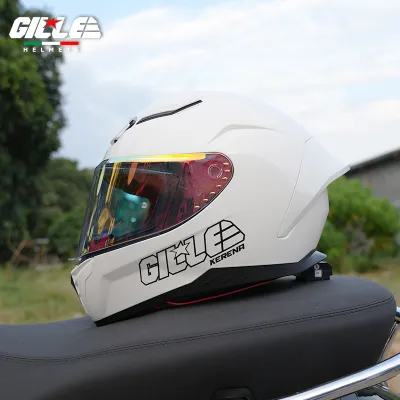
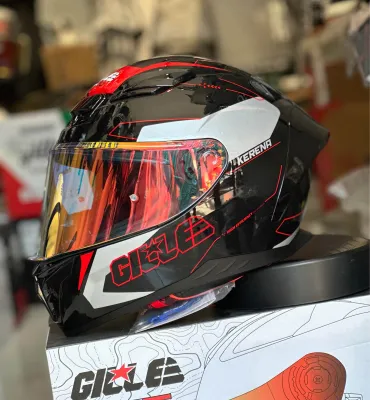
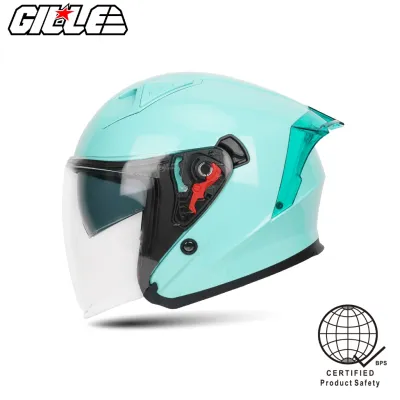
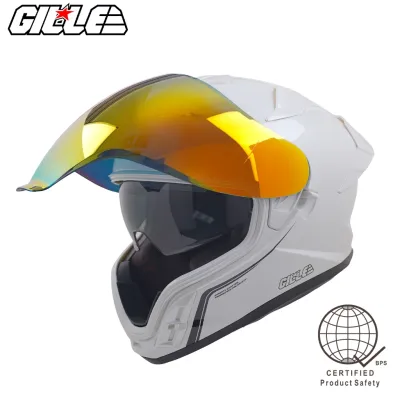
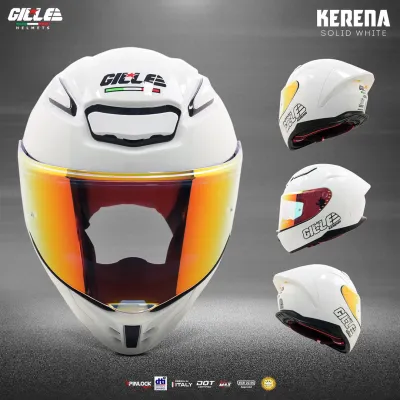
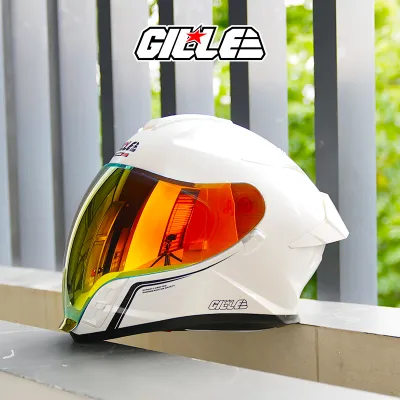
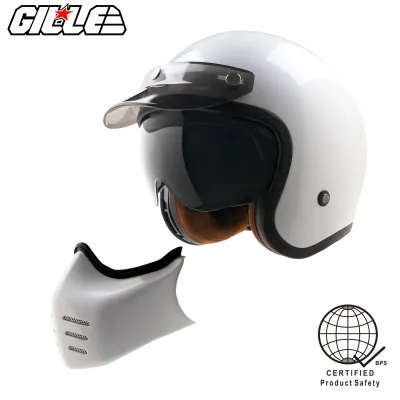
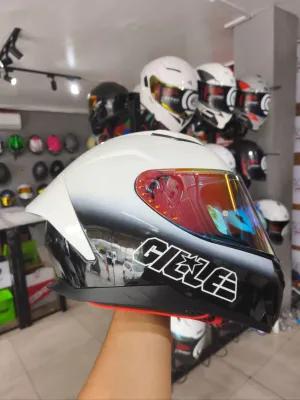
Prices are valid at publication and may change. Please refer to the product page for the latest price.
Using an uncertified or counterfeit helmet poses severe physical safety risks. Genuine Gille helmets are constructed with a high-impact polycarbonate outer shell and a thick, high-density Expanded Polystyrene (EPS) inner liner designed to absorb and distribute impact forces. In contrast, counterfeit helmets often use cheap, recycled plastics for the shell and low-density packaging foam for the liner. During an accident, these substandard materials fail to absorb the energy of the impact, transferring the force directly to the rider’s skull. Furthermore, weak retention systems on fake helmets can snap or release during a slide, leaving the rider completely unprotected.
Beyond the physical dangers, riding with a non-compliant helmet carries strict legal and financial penalties. The LTO and local traffic units conduct regular checkpoints across the country to verify helmet compliance. If you are caught wearing a helmet without a genuine PS or ICC sticker, or if the sticker is determined to be fake, you face substantial fines along with the potential confiscation of your driver’s license. Ensuring your Gille helmet is properly certified protects both your physical well-being and your driving privileges.
Where to Find Authentic Certification Marks on Gille Helmets
A common point of confusion among riders is whether a genuine Gille helmet must have both the PS and ICC marks. In reality, a genuine helmet will carry either a PS mark or an ICC mark, but almost never both on the same unit. The PS mark is reserved for products manufactured or assembled locally within the Philippines under a valid PS license. The ICC mark is issued for imported finished goods that undergo inspection and clearance upon arrival. Since Gille helmets are imported products, the vast majority of genuine units sold in the local market will feature the holographic ICC sticker.

Locating and Identifying the PS (Philippine Standard) Mark
If you encounter a Gille helmet variant that was processed under a local assembly framework, it will feature the PS mark. The PS sticker has a distinct visual layout consisting of the stylized BPS logo, which depicts a globe surrounded by the letters “PS” and “BPS”. Directly below or adjacent to this logo, the sticker must display the specific license number issued to the manufacturer, along with the applicable Philippine National Standard (PNS) reference number, such as PNS UNECE R22.05.
The PS mark is typically located on the lower rear section of the outer shell, positioned near the base or neck roll where it is easily visible to traffic inspectors. On some certified batches, a matching fabric tag containing the PS license details is also sewn directly into the comfort liner or the chin strap padding. This dual placement allows for easy verification even if the outer sticker becomes scuffed over time.
Locating and Identifying the ICC (Import Commodity Clearance) Mark
Because Gille helmets are imported, the holographic ICC sticker is the most common certification mark you will find. The genuine ICC sticker is a highly secure, metallic-looking label that exhibits a distinct color-shifting holographic effect when tilted under direct light. It displays the BPS logo, the words “Import Commodity Clearance,” a unique serial number consisting of a sequence of letters and numbers, and the specific year the clearance was issued.
The ICC sticker is permanently affixed to the rear of the outer shell, usually centered just above the bottom edge. The adhesive used for genuine ICC stickers is industrial-grade and tamper-evident. If someone attempts to peel the sticker off to transfer it to an uncertified helmet, the sticker will self-destruct, tearing into pieces or leaving behind a distinct residue that prevents reuse. The printing on a genuine sticker is exceptionally sharp, with micro-text and fine lines that are difficult for standard commercial printers to replicate.
Red Flags: Spotting Fake or Non-Compliant Gille Helmets
When shopping for a Gille helmet, you must remain vigilant against several physical and commercial warning signs that indicate a product is counterfeit or non-compliant.
Sticker and Print Anomalies
Counterfeiters often try to replicate the ICC or PS stickers using cheap vinyl or paper decals. Inspect the sticker closely under a bright light. Red flags include pixelated or blurry BPS logos, washed-out colors, and misspelled words in the official text. If the sticker lacks the characteristic holographic shift when tilted, or if it feels like a standard flat sticker with lifting edges, it is highly likely to be a fake.
Missing or Incorrect Standard Numbers
An authentic certification sticker must display a valid, trackable license or certificate number. If the sticker has a blank space where the serial number should be, or if the printed PNS number does not correspond to motorcycle helmets, the certification is fraudulent. Be suspicious of stickers that feature generic, repeated serial numbers across multiple helmets in the same shop.
Build Quality Discrepancies
Before purchasing, perform a thorough physical inspection of the helmet’s construction. Genuine Gille helmets are built to demanding safety standards, resulting in a solid, reassuring weight—typically between 1400 and 1600 grams depending on the model. If a helmet feels unusually light, like a toy, it likely lacks the necessary internal reinforcement and EPS density.
Press your thumb firmly against the EPS liner inside the helmet (beneath the removable comfort padding). Genuine EPS is highly dense and rigid; it should not compress or deform under thumb pressure. If the liner feels soft, squishy, or resembles cheap white packaging styrofoam, the helmet is a dangerous counterfeit. Additionally, inspect the chin strap and buckle system. Genuine Gille helmets utilize heavy-duty metal double-D rings or robust, reinforced micro-metric quick-release buckles. Flimsy plastic buckles that bend easily, loose stitching on the chin strap, and a rattling or poorly sealing visor mechanism are clear signs of substandard manufacturing.
If you plan to install aftermarket accessories, such as Bluetooth intercoms or action camera mounts, always follow the accessory manufacturer’s instructions and Gille’s original guidelines. Avoid drilling into the shell or altering the EPS liner, as any unauthorized modification compromises the helmet’s structural safety boundary, voids its warranty, and invalidates the official PS or ICC certification.
Pricing and Packaging
The market price of genuine Gille helmets in the Philippines is highly consistent, generally ranging from ₱2,500 to over ₱5,000 depending on the specific model and features. If a seller offers a “brand new” Gille helmet for an incredibly low price, such as ₱800 to ₱1,200, it is a major red flag. Genuine Gille helmets are always sold in a high-quality, branded cardboard box with clear graphics, accompanied by a custom-fit fabric helmet bag, a comprehensive user manual, and an official warranty card. If a seller offers the helmet wrapped only in bubble wrap or in a generic, unbranded box, do not proceed with the purchase.
Step-by-Step Verification: Checking Labels and Official Channels
To guarantee that your Gille helmet is fully compliant and safe for road use, follow this systematic verification process before making a purchase or riding.
Visual Tamper Check
Begin by inspecting the physical state of the certification sticker on the helmet shell. Run your finger over the sticker to check for bubbling, uneven edges, or signs of adhesive residue around the perimeter. A genuine sticker is applied flatly and cleanly at the factory. If the sticker appears crooked, scratched, or shows signs of being peeled and reapplied, it may have been harvested from a damaged or discarded helmet and placed onto a non-compliant shell.
When maintaining your helmet, use only label-authorized cleaners as specified in the Gille care manual. Harsh chemical solvents or unauthorized fluids can degrade the polycarbonate shell, compromise the EPS foam, or dissolve the adhesive on your genuine ICC/PS security stickers, rendering them unreadable. Always check the manufacturer’s instructions before applying any care products to the helmet’s outer shell or visor.
Database Verification
The most reliable way to confirm authenticity is to cross-reference the sticker’s details with the official BPS registry. You can access the DTI-BPS certified products directory online. Search for the specific Gille importer or the certificate number printed on your ICC sticker. The database should show an active, valid license that matches the exact brand (Gille) and the specific helmet model you are holding. If the database query returns no results, or if the certificate number belongs to a different product category, the helmet is not legally certified.
QR Codes and Barcodes
Newer batches of BPS certification labels feature an integrated QR code. Use your smartphone’s camera or a dedicated QR scanning app to scan the code. This action should immediately redirect you to a secure, official government portal (look for the “.gov.ph” domain suffix in the URL). The landing page must display the official clearance details, including the importer’s name, the Gille brand, the specific model, and the certified batch number. If the QR code redirects to a generic website, a third-party cloud storage link, or displays an error, the label is counterfeit. Note that older helmet batches may rely solely on alphanumeric serial numbers, which must be verified manually through the BPS database.
Batch and Serial Matching
Locate the fabric manufacturer’s label sewn into the comfort liner of the helmet. This tag contains essential production data, including the model name, manufacturing date, and batch number. Compare these details with the information on the external packaging box and the records retrieved from the BPS database query. All serial numbers and batch codes must align perfectly. Any discrepancy between the inner label, the outer sticker, and the official records indicates a tampered or non-compliant product.
Trusted Channels for Buying Genuine Gille Helmets
The most effective way to protect yourself from counterfeit helmets is to buy exclusively from reputable, authorized sources.
Whenever possible, purchase your Gille helmet from established physical motorcycle gear dealerships and official brand distributors. Visiting a physical store allows you to perform all the necessary quality and certification checks before making a payment. It also ensures you can verify the exact sizing and fitment of the helmet against Gille’s official product documentation, which is crucial because an improperly fitting helmet cannot provide optimal protection in a crash.
If you prefer to shop online, only use verified official flagship stores or authorized mall merchants on major ecommerce platforms. These stores carry official platform guarantees of authenticity and offer secure return policies if any issues arise. Avoid purchasing from unverified individual sellers on social media marketplaces, classified sites, or unauthorized third-party resellers. Be particularly wary of listings that use stock photos and refuse to provide real, high-resolution photographs of the actual helmet’s ICC/PS stickers, inner tags, and packaging prior to shipment.
What to Do If You Suspect a Counterfeit Helmet
If you discover that your Gille helmet is counterfeit or lacks genuine BPS certification, you must take immediate action to protect yourself and other riders.
First, stop using the helmet for riding immediately. A counterfeit helmet does not meet basic safety standards and will not protect your head during an impact. Additionally, wearing it on public roads exposes you to LTO penalties and fines.
Next, initiate a return and refund request through the ecommerce platform or the retail store where you purchased the item. Select “counterfeit product” or “item not as described” as the official reason for the return. Upload clear photos of the fake sticker, the poor build quality, and any failed database or QR code search results to support your claim.
Finally, report the fraudulent seller to the ecommerce platform’s customer support team to have their listing removed. You should also file a formal consumer complaint with the DTI Fair Trade Enforcement Bureau (FTEB) or the BPS. Reporting these sellers helps authorities crack down on the distribution of dangerous, non-compliant safety gear in the Philippine market.
Frequently Asked Questions (FAQ)
Can I use a Gille helmet with only a DOT or ECE mark but no PS or ICC mark in the Philippines?
No, you cannot legally use a helmet on Philippine roads if it only carries international marks like DOT (US Department of Transportation) or ECE (Economic Commission for Europe) without the local PS or ICC certification. While these international markings indicate that the helmet has passed rigorous safety evaluations abroad, Philippine law explicitly mandates that all helmets must bear the official BPS PS or ICC sticker to be considered road-legal. Riding with a helmet that lacks the local certification sticker can result in fines at LTO checkpoints.
Do all Gille helmet models require both PS and ICC marks on the same unit?
No, a single Gille helmet will never carry both the PS and ICC marks simultaneously. The PS mark is designated for helmets manufactured or assembled locally within the Philippines, whereas the ICC mark is designated for helmets imported from overseas. Because Gille helmets are imported, they will almost exclusively feature the holographic ICC sticker. Having only the ICC sticker is completely normal and correct, provided you can verify its authenticity through the official BPS database or QR code system.

Community discussion
Share your experience or ask a question. Comments are reviewed before publication.