
To verify if an ORZ motorcycle helmet has a valid Product Standards Bureau (PSB) or Import Commodity Clearance (ICC) certification, you must perform a physical inspection of the security stickers on the helmet and cross-reference the unique serial number through the Department of Trade and Industry (DTI) database. In the Philippines, riding a motorcycle requires protective gear that meets strict national safety standards. Ensuring your helmet carries a genuine, untampered certification mark is the only reliable way to guarantee it has undergone the rigorous impact and penetration testing required to protect your life on the road.
Understanding PSB and ICC Marks for Motorcycle Helmets
Under the Motorcycle Helmet Act of 2009 (Republic Act No. 10054), all motorcycle riders on Philippine roads must wear standard protective helmets. The law mandates that these helmets bear official certification marks issued by the Bureau of Philippine Standards (BPS), an agency under the DTI. These marks prove that a helmet model has passed laboratory evaluations measuring shock absorption, penetration resistance, and chin strap retention.
The BPS administers two certification marks based on manufacturing origin. The Philippine Standard (PS) mark, or PSB mark, is issued to locally manufactured helmets or brands whose production plants undergo direct audits by Philippine authorities. This mark certifies that the manufacturing process consistently adheres to national safety standards.
Products mentioned in this guide
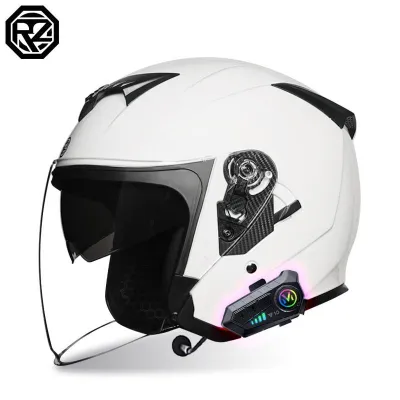
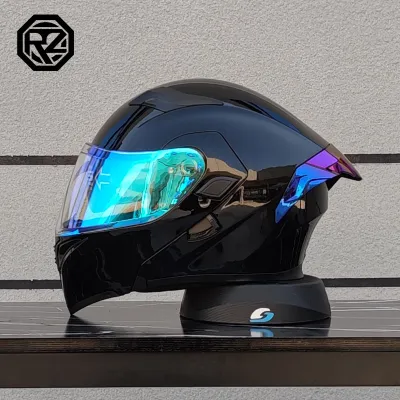
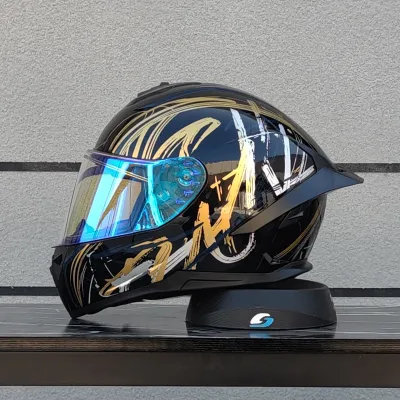
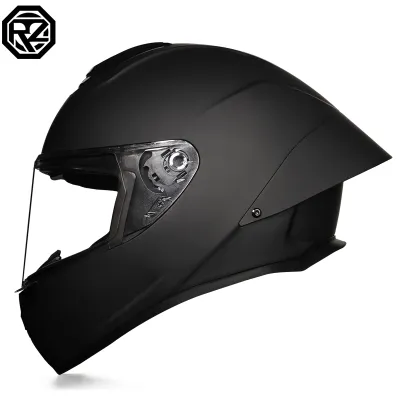
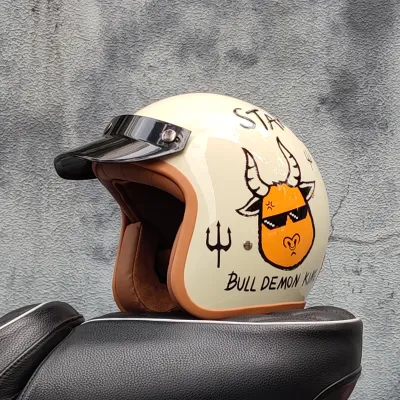
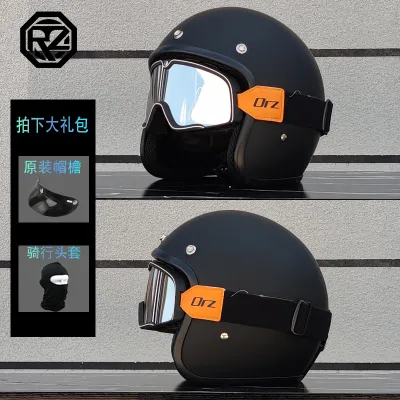
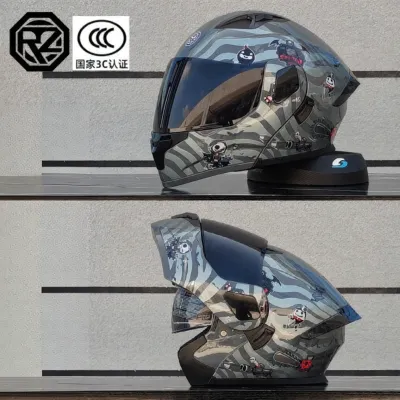
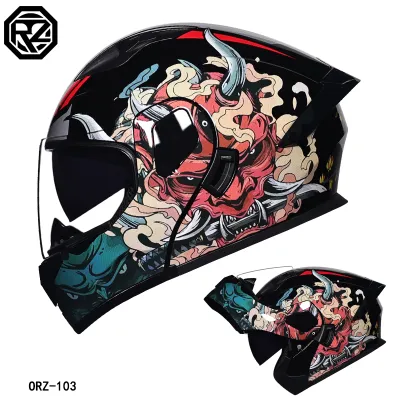
Prices are valid at publication and may change. Please refer to the product page for the latest price.
For imported helmets like ORZ, the BPS issues the Import Commodity Clearance (ICC) sticker. Because these products are manufactured abroad, every imported shipment must undergo physical inspection and random sampling upon arrival. Once the batch passes safety tests, the DTI issues the ICC stickers, which must be affixed to each helmet before retail distribution.
Using a helmet without these marks compromises safety and exposes you to legal penalties. Traffic law enforcement agencies, such as the Land Transportation Office (LTO), check for these stickers during routine inspections. Riding with an uncertified helmet can result in heavy monetary fines, vehicle impoundment, or license confiscation.
Physical Inspection: Locating and Checking the Labels
The first step in verifying your ORZ helmet is a physical inspection of the certification labels. Genuine ICC and PS stickers are tamper-evident decals engineered to tear apart if anyone attempts to peel them off. This design prevents sellers from transferring legitimate stickers from old helmets onto uncertified counterfeits.

On a genuine ORZ helmet, the ICC or PS sticker is affixed to the lower rear portion of the outer shell. The sticker is placed in a visible area, often near the base, and is sometimes protected under a clear coat. Additionally, check the inner comfort liner and chin strap, where manufacturers often sew a fabric tag containing the model name, manufacturing date, and international standards like ECE or DOT.
Examine the security features of the sticker under direct light. A genuine ICC sticker features a holographic background that shifts colors and displays a metallic sheen when tilted. It also contains the official DTI logo, the words “Import Commodity Clearance,” and a unique serial number printed in a clean, crisp, and perfectly aligned font.
Inspect the print quality and adhesive strength to spot potential counterfeits. In the hot and humid tropical climate of the Philippines, low-quality adhesives on counterfeit stickers degrade rapidly, causing them to peel, bubble, or fade under intense sunlight. If the sticker is crooked, has air bubbles underneath, or shows signs of peeling at the corners, it is likely a fake.
Furthermore, check the physical integrity of the helmet. A genuine certified helmet features a high-density expanded polystyrene (EPS) foam liner fitting snugly inside a robust outer shell, along with a secure chin strap buckle. If the helmet feels unusually light, flexes easily when squeezed, or has a thin, soft foam liner, it is a major safety hazard.
Official Verification Methods for PSB and ICC
Because counterfeiters can replicate holographic stickers, physical inspection alone is not enough. To be certain, you must verify the unique serial number printed on the sticker through official government channels. The DTI and BPS maintain public registries of all certified products, importers, and issued clearances.
Locate the unique serial number or license number printed on your helmet’s ICC or PS sticker. You can then visit the official BPS portal or use their dedicated mobile verification tools to input the serial number. This system allows consumers to instantly check the validity of the certification mark against the government’s master database.
When you enter a valid ICC serial number, the database should return specific details matching your helmet exactly. This includes the importer’s name, manufacturer, brand (ORZ), exact model designation, and the clearance date. If the search returns no results, or if the serial number corresponds to a completely different brand or product category, the sticker is fraudulent.
If the online verification portal is offline, you can contact the BPS directly through their official email or consumer hotlines. Provide the representatives with the brand name, model, and the exact serial number shown on your sticker to request a manual verification check.
You can also contact the authorized local distributor of ORZ helmets in the Philippines. Legitimate distributors keep detailed records of all imported batches and can quickly verify whether your specific serial number belongs to an officially imported shipment. If a seller refuses to provide the serial number, avoid the purchase entirely.
Evaluating the Seller and Purchase Channel
Where you buy your ORZ helmet plays a critical role in ensuring you receive a genuine, certified product. Purchasing from authorized physical dealers, official brand flagship stores on major e-commerce platforms, or well-established motorcycle accessory shops significantly reduces the risk of acquiring a counterfeit helmet. These reputable sellers source their inventory directly from authorized importers who comply with DTI regulations.
Be highly cautious when browsing third-party online marketplaces or social media classifieds, where unverified sellers operate with minimal oversight. While legitimate discounts occur, a price that is dramatically lower than the average market rate for an ORZ helmet is a major red flag. Counterfeiters frequently use low prices to lure unsuspecting riders into buying sub-standard gear that fails to meet basic safety requirements.
Examine the product packaging and included accessories upon delivery. A genuine ORZ helmet is supplied in a high-quality, branded cardboard box featuring clear graphics, model specifications, and bar codes matching the helmet inside. The package should also include a branded fabric helmet bag, an owner’s manual containing safety instructions, and a protective film covering the visor. Counterfeit helmets are often shipped in plain, unbranded boxes or simple bubble wrap.
Before finalizing your purchase, ask the seller for proof of compliance, such as a copy of the Import Commodity Clearance certificate or an official receipt from an authorized distributor. Legitimate businesses will gladly provide this documentation to prove authenticity, whereas fraudulent sellers will often offer vague excuses or refuse to share any verifying information.
What to Do If You Suspect a Counterfeit Helmet
If your physical inspection or official database check reveals that your ORZ helmet has a fake or invalid certification, stop using it immediately. Uncertified helmets are often constructed from cheap, brittle plastics and low-density foam that fail to absorb impact energy during a crash. Using a counterfeit helmet offers no guaranteed protection and can lead to catastrophic head injuries in an accident.
If you purchased the helmet through an online marketplace, immediately initiate a return and refund request under the platform’s buyer protection policies. Document your findings thoroughly by taking clear, high-resolution photos of the suspicious sticker, the poor print quality, and a screenshot of the database search results showing the invalid serial number. This evidence will help secure a prompt refund.
Report the fraudulent listing and the seller to the e-commerce platform’s customer support team so they can take appropriate action, such as suspending the seller’s account. Additionally, file a formal complaint with the DTI Fair Trade Enforcement Bureau (FTEB) to report the sale of uncertified consumer products. Reporting these activities helps authorities crack down on dangerous riding gear and keeps the motorcycle community safe.
Frequently Asked Questions (FAQ)
Can I legally ride with an ORZ helmet that lacks a PSB or ICC mark in the Philippines?
No, it is illegal to ride a motorcycle on public roads in the Philippines using a helmet that lacks a valid PSB or ICC certification mark. Under Republic Act No. 10054, traffic law enforcement officers, including LTO agents and local traffic enforcers, are authorized to apprehend riders wearing uncertified helmets. Violators face substantial monetary fines for the first and subsequent offenses, and repeated violations can lead to the confiscation of your driver’s license.
Does a higher price guarantee an authentic ORZ helmet?
No, a higher price does not guarantee authenticity. Unscrupulous sellers frequently list counterfeit helmets at or near the standard retail price to deceive buyers into thinking they are purchasing a genuine, certified product. This is why physical inspection of the security features and official database verification of the ICC or PSB serial number remain absolutely essential, regardless of how much you paid for the helmet.

Community discussion
Share your experience or ask a question. Comments are reviewed before publication.