
Installing a whistling exhaust on your motorcycle is illegal for public road use in the Philippines. While some riders search for a “wistle for motorcycle” insert or specialized tailpipe attachment to give their underbone, scooter, or backbone motorcycle a distinct, high-pitched sound, these modifications directly violate the strict noise and safety regulations enforced by the Land Transportation Office (LTO) and local government units (LGUs). Operating a motorcycle with an excessively loud, whistling, or altered exhaust system on public streets puts you at immediate risk of traffic apprehension, heavy fines, and vehicle impoundment.
Is a Whistling Exhaust Legal on Philippine Roads?
In the local riding community, a whistling or high-pitched modified exhaust is often achieved by installing a specialized whistle insert, modifying the internal baffles of the muffler, or using custom pipes sometimes referred to as “boga” style exhausts. These modifications are designed to produce a sharp, piercing sound that intensifies as the engine RPM increases. This high-frequency sound is vastly different from the deep, bass-heavy tone produced by high-quality, street-legal aftermarket mufflers that are designed to comply with standard noise regulations.
Under LTO regulations, installing any exhaust system that produces excessive, unusual, or disruptive noise for public road use is strictly illegal. The law draws a clear distinction between purely aesthetic modifications and functional modifications that alter the vehicle’s noise emissions. For example, cosmetic upgrades such as carbon fiber heat shields, anodized exhaust brackets, or decorative outer sleeves that do not alter the sound profile or emission levels of the motorcycle are generally permitted. However, any modification that alters the internal structure of the muffler to increase noise or create a whistling sound is a direct violation.
Products mentioned in this guide
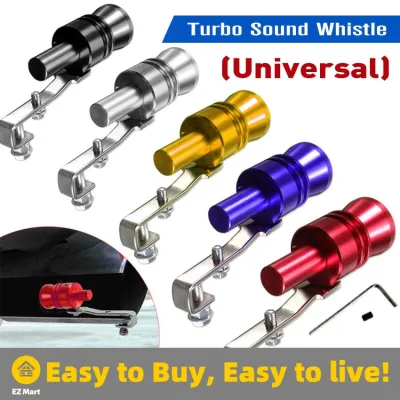
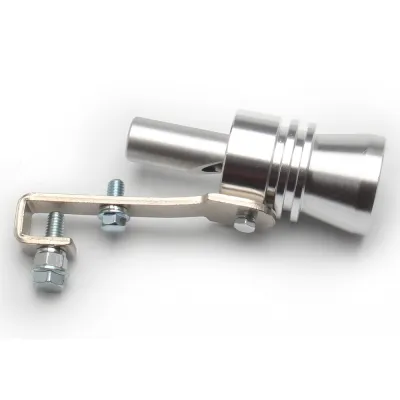
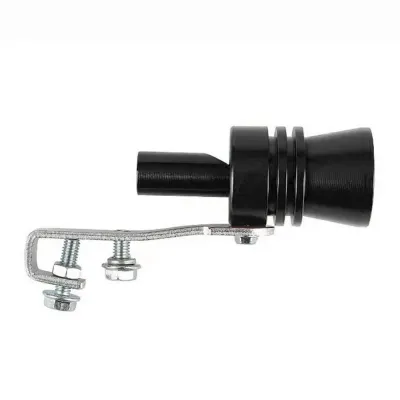
Prices are valid at publication and may change. Please refer to the product page for the latest price.
The primary intent of these laws is to mitigate noise pollution, safeguard public health, and ensure road safety. High-pitched whistling sounds can be highly distracting to other motorists, potentially leading to sudden maneuvers and accidents on busy roads. Furthermore, these disruptive noises disturb the peace in residential areas, school zones, and hospital perimeters, which is why national agencies and local municipalities coordinate closely to enforce quiet streets.
LTO and DENR Noise Limits: What the Law Says
The regulatory framework governing vehicular noise in the Philippines is jointly managed by the LTO and the Department of Environment and Natural Resources (DENR). While the DENR establishes the environmental standards for noise and emissions control, the LTO is the primary agency responsible for enforcing these standards during vehicle registration and road operations. Together, they ensure that all motorized vehicles operating on public highways do not exceed acceptable environmental limits.

Vehicle noise is officially measured in A-weighted decibels, written as dB(A). During an official noise inspection, enforcers use a calibrated sound level meter (decibel meter) under specific testing conditions. The standard protocol requires the microphone to be placed at a specific distance—typically 0.5 meters—from the exhaust outlet, positioned at a 45-degree angle to the exhaust flow. The engine is then revved to a specified RPM, which is usually half of the engine’s maximum rated speed, to get an accurate reading of the operational noise level.
Because specific numerical decibel limits and testing protocols can be updated through new administrative orders or local city ordinances, riders must verify the current official decibel limits directly from the latest LTO guidelines or DENR administrative orders. For instance, many cities across Metro Manila have enacted localized “anti-muffler” ordinances that set stricter decibel limits than the national baseline. Keeping abreast of these local rules is essential, as municipal traffic enforcers can apprehend you based on local ordinances even if you are passing through on a national highway.
Whistling exhausts inherently fail standard noise and compliance tests due to their high-frequency sound profiles. Even without a decibel meter, the piercing, shrill pitch of a whistling exhaust is easily detectable by eye and ear. Enforcers do not always need to perform a formal decibel test on the spot to flag a vehicle; if the exhaust is visibly modified with a whistle insert or is clearly producing an unusual, non-standard sound, it is highly likely to be deemed non-compliant during a visual and auditory inspection.
Apprehension Risks and Penalties for Non-Compliant Exhausts
Apprehension for a non-compliant exhaust is a common occurrence on Philippine roads, especially during targeted operations. LTO enforcers, the Philippine National Police – Highway Patrol Group (PNP-HPG), and local government traffic bureaus frequently establish joint checkpoints—often referred to as “Oplan Sita” or “Oplan Ligtas”—along major thoroughfares, provincial highways, and known rider routes. Roving enforcers also patrol public roads, actively listening for modified motorcycles that stand out from normal traffic flow.
If you are caught operating a motorcycle with an illegal whistling exhaust, you will face significant penalties. Under Joint Administrative Order (JAO) No. 2014-01, the fine for driving a vehicle with a modified, defective, or exceptionally loud muffler starts at ₱5,000 for the first offense. Local government ordinances may impose additional fines, community service, or administrative citations. Beyond the monetary penalty, there is a very high risk of vehicle impounding, especially if the exhaust modification is severe or if you are a repeat offender.
When a motorcycle is impounded, it is towed or ridden by an authorized enforcer to an official LTO or municipal impounding yard. To retrieve your motorcycle, you must go through a multi-step process: paying the official fines at an authorized LTO office, presenting updated vehicle registration documents, and—crucially—reverting the exhaust system to a compliant state. In many cases, owners are required to bring their original stock exhaust or a certified silent muffler to the impounding yard and physically install it on-site before the vehicle is legally cleared for release.
Some riders attempt to bypass these penalties by carrying fake modification permits, presenting forged compliance certificates, or attempting to settle the violation informally on the spot. You must avoid these actions entirely. Presenting forged documents or offering bribes to traffic enforcers constitutes a serious criminal offense under Philippine law, which can lead to immediate arrest, criminal prosecution, and the permanent revocation of your driver’s license.
How to Choose a Street-Legal Aftermarket Exhaust
If you want to upgrade your motorcycle’s exhaust system without risking legal trouble, you must understand the difference between “slip-on” mufflers and full-system replacements. A slip-on exhaust replaces only the muffler canister, leaving the original header pipes and catalytic converter intact. This modification generally has a minimal impact on emissions and noise, making it easier to keep within legal limits. In contrast, a full-system replacement swaps out the entire exhaust assembly from the engine manifold to the exhaust tip, which significantly alters engine backpressure, emissions, and sound levels, requiring much closer attention to compliance.
To keep your aftermarket exhaust street-legal, you must ensure it utilizes a high-quality DB killer (decibel reducer) or a robust internal baffle system. These components are designed to restrict the flow of exhaust gases slightly, dampening the sound waves and preventing the exhaust from emitting high-frequency whistles or excessively loud tones. When shopping for an aftermarket pipe, verify that the DB killer is securely welded or bolted in place; removing the silencer for public road use immediately renders the exhaust illegal.
Before purchasing any aftermarket exhaust, check the manufacturer’s specifications, compatibility guidelines, and compliance labels. Look for brands that explicitly state compliance with international noise standards or local regulatory limits. Additionally, consult your motorcycle’s manufacturer manual and check with your authorized dealer, as installing an unapproved aftermarket exhaust can void your vehicle’s engine and electrical warranties, leaving you unprotected against mechanical failures.
Finally, always keep your original stock exhaust in excellent, clean, and dry condition. Do not sell or discard it. The stock exhaust is your safest fallback and is often required during annual LTO registration renewals, emission testing at Private Emission Testing Centers (PETCs), or inspections at Private Motor Vehicle Inspection Centers (PMVICs). If you ever need to clear an LTO noise violation or pass a strict inspection, having your stock exhaust ready to install will save you significant time, money, and stress.
What to Do If You Are Apprehended for Exhaust Noise
If an LTO, PNP-HPG, or local traffic enforcer flags you down for an exhaust noise violation, the most important step is to remain calm and pull over safely to the right side of the road. Turn off your engine immediately, remove your helmet if requested, and keep your hands visible to ensure a safe and respectful interaction. Avoid arguing, raising your voice, or acting defensively, as a cooperative attitude helps keep the situation manageable.
Always verify the identity of the apprehending officer by politely asking to see their official identification card and checking if they are wearing their official uniform and badge. When they issue a citation, carefully review the details written on the Temporary Operator’s Permit (TOP) or Ordinance Violation Receipt (OVR). Make sure your personal details, license number, vehicle plate or conduction sticker number, and the exact violation (such as “modified muffler” or “excessive noise”) are recorded accurately before you sign the receipt.
To settle the violation, follow the official, legal channels. You must pay the prescribed fine at an authorized LTO district office, LGU treasury, or accredited electronic payment center within the designated grace period, which is typically 5 to 15 days from the date of apprehension. If your driver’s license was confiscated, it will be forwarded to the resolving office, where you can retrieve it after presenting your proof of payment and, if required, showing proof that the illegal whistling exhaust has been replaced with a compliant one.
Never attempt to negotiate an on-the-spot, unofficial cash settlement with an enforcer. Engaging in bribery is illegal, exposes you to severe criminal charges, and does not clear the violation from your official LTO driver record. Settling your ticket through the proper legal channels ensures that your record remains clean and that you receive an official receipt, protecting your driving privileges in the long run.
Frequently Asked Questions (FAQ)
Can I use a whistling exhaust if I only ride on private tracks?
Yes, you can use a whistling exhaust or any other modified pipe if you restrict your riding strictly to private properties, closed racing circuits, or dedicated off-road tracks. LTO traffic laws, vehicle modification regulations, and noise limits apply exclusively to public roads, highways, and municipal streets. However, you must transport the modified motorcycle to and from the private track using a trailer, pickup truck, or ramp van. Riding the motorcycle on public roads to reach the venue, even for a short distance, still carries the full risk of apprehension, fines, and impoundment.
Does the LTO check exhaust noise during annual registration renewal?
Yes, the LTO and its accredited testing facilities inspect the exhaust system during the annual registration renewal process. When you take your motorcycle to a Private Motor Vehicle Inspection Center (PMVIC) or a standard LTO inspection point, inspectors conduct a visual check to ensure the exhaust is not structurally damaged, leaking, or excessively modified. While some basic emission testing centers may not perform a precise decibel test on every motorcycle, any vehicle equipped with a visibly modified, exceptionally loud, or whistling exhaust will fail the inspection. You will be required to reinstall a compliant stock or silent muffler and undergo a re-inspection before your registration renewal can be approved.

Community discussion
Share your experience or ask a question. Comments are reviewed before publication.