
Installing an aftermarket exhaust like an SC Project muffler on your motorcycle in the Philippines is not automatically illegal, but its road legality depends entirely on strict compliance with Land Transportation Office (LTO) regulations, local government ordinances, and environmental laws. While many riders associate aftermarket exhausts with enhanced performance and a deeper exhaust note, riding with an excessively loud pipe or removing emission control components will quickly lead to traffic apprehensions, heavy fines, or vehicle impoundment.
To stay on the right side of the law, you must understand how the LTO evaluates motorcycle modifications. Upgrading your exhaust system is permissible under specific conditions, but the responsibility lies with you to ensure your setup meets the required decibel limits and emission standards. This guide explains the legal framework, noise regulations, emission compliance, and practical steps you should take before installing an aftermarket muffler on Philippine roads.
Understanding LTO Rules for Aftermarket Exhausts
The Land Transportation Office regulates all motor vehicle modifications in the Philippines to maintain road safety, minimize environmental impact, and control noise pollution. When it comes to exhaust systems, the LTO distinguishes between direct Original Equipment Manufacturer (OEM) replacements—which match the factory specifications of your motorcycle—and performance-oriented aftermarket systems. While aftermarket upgrades are popular, any modification that significantly alters the vehicle’s original specifications is subject to close regulatory scrutiny.
Products mentioned in this guide
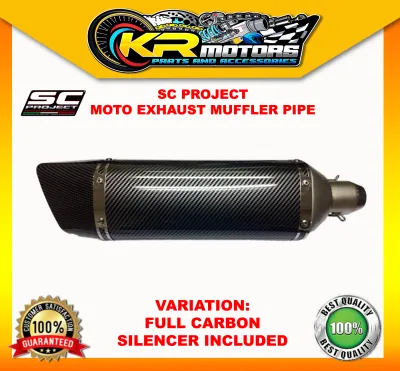
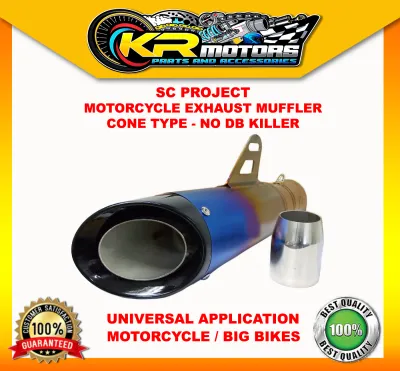
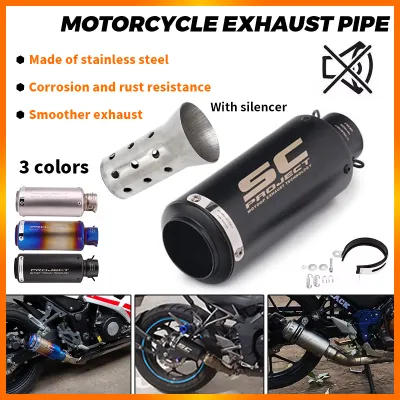
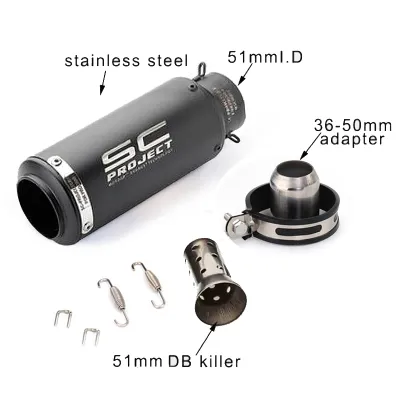
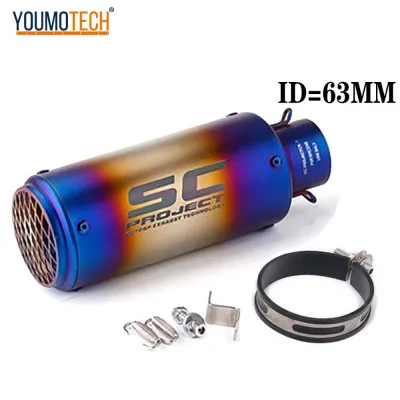
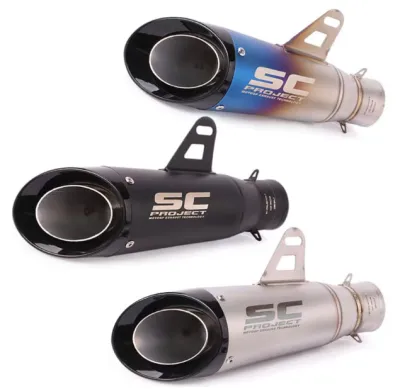
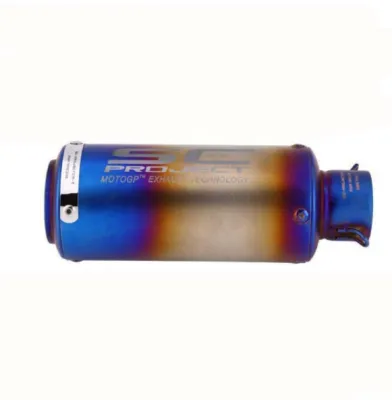
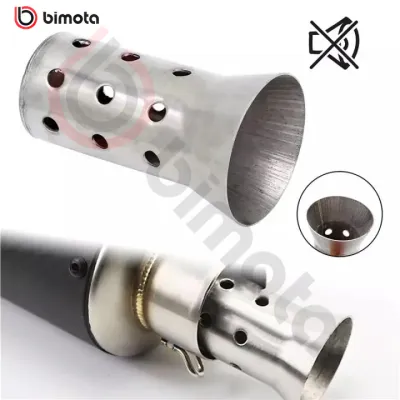
Prices are valid at publication and may change. Please refer to the product page for the latest price.
Under existing LTO guidelines, motorcycle owners are generally permitted to replace their stock mufflers, provided the new system does not compromise safety or violate environmental standards. However, the LTO’s stance on modifications is dynamic. It is highly recommended to regularly check the latest LTO Administrative Orders and Memorandum Circulars, as enforcement priorities and specific guidelines can be updated.
Riders often assume that purchasing a premium, globally recognized brand like an SC Project muffler automatically guarantees legal compliance. In reality, brand reputation does not grant an automatic exemption from local traffic laws. Manufacturers design different exhaust models for different purposes, ranging from street-legal slip-ons to loud, high-performance systems meant exclusively for closed-circuit racing. It is your responsibility to verify that the specific model you choose is designed and configured for public road use in the Philippines.
Noise Limits and the Importance of the DB Killer
Noise control is one of the most heavily enforced aspects of motorcycle modifications in the Philippines. The primary tool for keeping an aftermarket exhaust within legal noise limits is the DB killer, also known as a silencer insert or baffle. This physical component restricts exhaust gas flow slightly to dampen the sound waves, preventing the muffler from emitting an excessively loud, disruptive roar.

Removing the DB killer from your SC Project muffler for aesthetic preferences or to mimic a racetrack sound is a direct path to legal trouble on public roads. An open, unbaffled exhaust pipe easily exceeds the noise thresholds enforced by traffic authorities. While a loud exhaust might be acceptable on a closed racing track, it is considered a public nuisance on public highways and residential streets.
To determine if an exhaust is compliant, you should look for stamped noise level indicators, laser-engraved compliance labels, or homologation markings on the muffler body. These markings indicate that the manufacturer designed the exhaust to meet specific international noise standards. However, local traffic enforcers in the Philippines have the final authority during roadside inspections.
Roadside noise enforcement is conducted using both objective and subjective methods. Authorized LTO officers and deputized agents may use calibrated decibel meters to measure your exhaust volume at a specific distance, angle, and engine RPM. Standard national regulations typically set a maximum allowable limit, often cited around 99 decibels, but local government units (LGUs) in various cities and municipalities frequently enforce stricter local ordinances with lower decibel limits. If your motorcycle is deemed excessively loud, even without a formal decibel meter reading, you may still face apprehension based on the enforcer’s observation of an altered, non-compliant exhaust system.
Emissions Compliance and Catalytic Converters
Beyond noise levels, your motorcycle’s exhaust system plays a critical role in controlling harmful emissions. Under the Philippine Clean Air Act, all motor vehicles must meet strict emission standards to operate on public roads. The key component responsible for filtering toxic gases is the catalytic converter, which is typically integrated into the stock exhaust piping.
Installing a “race-only” or “de-cat” (decatalyzed) exhaust system that removes the catalytic converter is illegal for road use. While removing this restriction can slightly improve exhaust flow and engine performance, it significantly increases the volume of harmful pollutants released into the atmosphere. A motorcycle without a catalytic converter will almost certainly fail the mandatory emission testing required during your annual LTO registration renewal.
When shopping for an SC Project muffler, you must understand the difference between a slip-on muffler and a full-system exhaust. A slip-on muffler replaces only the rear canister of the exhaust, usually retaining the stock header pipes and the original catalytic converter. This makes slip-ons a much safer choice for legal compliance. In contrast, a full-system exhaust replaces the entire assembly from the engine exhaust ports to the tailpipe, which often eliminates the catalytic converter unless you specifically purchase a system that includes an integrated, emission-compliant catalytic unit. Always check the product description and manufacturer documentation for terms like “street legal” or “homologated” versus “off-road use only” or “racing use only.”
Legal and Practical Risks of Non-Compliant Mufflers
Riding with a non-compliant or excessively loud aftermarket muffler carries significant legal and practical risks in the Philippines. Traffic enforcement agencies, including the LTO, the Philippine National Police Highway Patrol Group (PNP-HPG), and local LGU traffic bureaus, regularly conduct checkpoints and targeted anti-modification operations. These operations specifically look for motorcycles with modified exhausts, open pipes, or missing silencers.
If you are apprehended with an illegal exhaust system, the penalties can be severe. You can expect to receive a traffic citation ticket accompanied by substantial monetary fines. In many jurisdictions, traffic enforcers are authorized to confiscate the non-compliant muffler or impound the entire motorcycle until you restore the vehicle to its original, compliant state. The cost of retrieving an impounded motorcycle, paying the fines, and purchasing a replacement exhaust can quickly exceed the original cost of the upgrade.
There are also secondary risks to consider, particularly regarding motorcycle insurance. If you are involved in a road accident, your insurance provider will inspect the vehicle during the claims process. If they discover that your motorcycle has unauthorized, non-compliant modifications that violate local road laws, they may use this as grounds to delay, reduce, or completely deny your insurance claim, especially if the modification is deemed to have contributed to the incident or altered the vehicle’s safety profile.
Furthermore, riding an excessively loud motorcycle damages community relations. Local residents frequently report loud motorcycles to their barangay officials or local police, leading to increased surveillance and checkpoints in your neighborhood. Respecting your community by keeping your exhaust noise within reasonable, legal limits helps prevent unnecessary friction and keeps the riding community in a positive light.
Pre-Purchase Checklist for Legal Compliance
Before spending your hard-earned money on an SC Project muffler or any other aftermarket exhaust, you should follow a systematic verification process to ensure your purchase is as compliant as possible.
First, verify the presence of recognized international homologation marks on the muffler body. Look for markings such as the European “E-mark” (e.g., e3, e4) or Japanese “JASMA” certification. While these certifications are issued by foreign regulatory bodies, they serve as strong evidence that the exhaust was engineered to meet strict noise and emission limits. Keep in mind, however, that local LTO guidelines and LGU ordinances always have the final say on Philippine roads.
Second, ensure that the specific muffler model you are purchasing includes a removable or permanently installed DB killer. Confirm with the seller that the silencer is included in the package and is designed for your exact motorcycle model. Avoid purchasing open-pipe designs or race-specific models that do not support a baffle.
Third, always retain your original stock exhaust system. Do not sell, discard, or damage your factory muffler and header pipes. Keeping your stock exhaust in storage provides a reliable backup. If you ever face an LTO apprehension, need to clear a vehicle inspection at the Motor Vehicle Inspection System (MVIS), or decide to sell the motorcycle later, having the original parts on hand is invaluable.
Fourth, consult with reputable, authorized local motorcycle shops and professional installers. Experienced mechanics can advise you on the compatibility of the exhaust with your specific motorcycle model and year. They can also ensure a proper, leak-free installation that does not damage oxygen sensors or other critical engine components. Professional installation is highly recommended to maintain the safety and structural integrity of your motorcycle.
Finally, when in doubt, visit your local LTO district office or consult their official online channels before making a purchase. Asking for clarification on current modification guidelines can save you from costly mistakes and ensure your motorcycle remains fully road-legal.
Frequently Asked Questions (FAQ)
Can I use an SC Project muffler for daily commuting?
Yes, you can use a compliant SC Project muffler for daily commuting, provided it is equipped with an active DB killer and retains the catalytic converter. The exhaust must not exceed the noise limits enforced by the LTO and local government units along your daily route. If you commute through quiet residential areas or strict municipal zones, keeping the noise level as close to stock as possible is highly recommended. Race-specific versions of these mufflers, which lack silencers and are designed solely for closed tracks, are strictly prohibited on public roads.
Will an aftermarket exhaust void my motorcycle warranty?
Installing an aftermarket exhaust can potentially void parts of your motorcycle’s manufacturer warranty. Dealerships and manufacturers typically evaluate warranty claims on a case-by-case basis. If an engine, electrical, or exhaust-related failure occurs, and the dealer can prove that the aftermarket muffler or improper installation caused or contributed to the damage, they may deny coverage for those specific repairs. However, unrelated warranty claims, such as issues with the suspension, brakes, or bodywork, should generally remain unaffected. Always review your motorcycle manufacturer’s warranty terms and consult your dealer before performing any modifications.
Do I need to register my modified exhaust with the LTO?
Generally, minor slip-on muffler replacements that do not alter the motorcycle’s engine displacement, chassis structure, or primary vehicle classification do not require a formal update to your LTO Certificate of Registration (CR). However, the modification must still comply with all noise and emission standards. For major modifications, such as full-system exhausts that alter the engine’s operating characteristics or structural layout, you may need to undergo inspection at an LTO Motor Vehicle Inspection System (MVIS) facility. It is highly recommended to keep your stock exhaust system handy, as you may need to reinstall it to pass the annual emission and safety inspections if your aftermarket setup fails to meet local standards.

Community discussion
Share your experience or ask a question. Comments are reviewed before publication.