
Quick Answer: Is Petron Super Coolant Right for Your Car in the Heat?
Whether petron super coolant is suitable for your vehicle in the Philippine tropical climate depends entirely on matching the specific product variant’s chemical formulation and boiling point performance with your vehicle manufacturer’s precise specifications. Petron is a highly visible, established local brand in the Philippines, offering both ready-to-use (pre-mixed) and concentrated formulations designed to handle elevated operating temperatures. However, no single coolant is a universal solution for every engine.
To determine compatibility, you must verify the product’s technical specifications—such as its additive technology (OAT, HOAT, or IAT) and its boiling point elevation—against your vehicle’s owner’s manual. This verification is crucial for protecting your engine during stop-and-go traffic on congested highways like EDSA or during long climbs up to Baguio. Always prioritize your vehicle manufacturer’s guidelines over generic product categories.
If the specifications on the bottle align with your owner’s manual, this coolant can serve as an effective defense against overheating. If they conflict, or if your vehicle requires a specialized proprietary fluid, using an incompatible formula risks severe cooling system damage.
Products mentioned in this guide
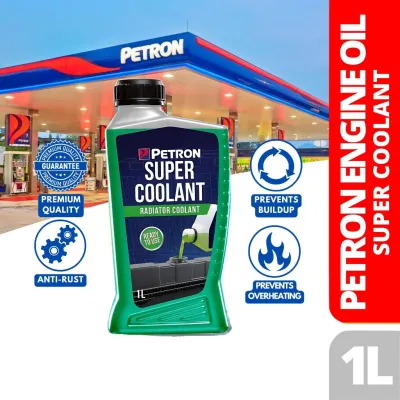
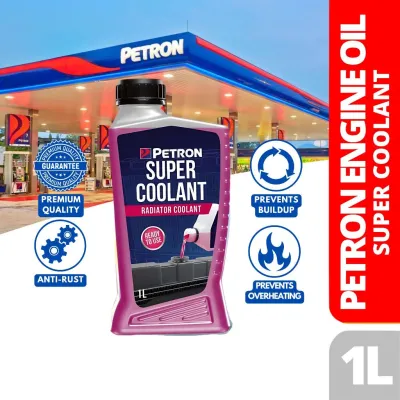
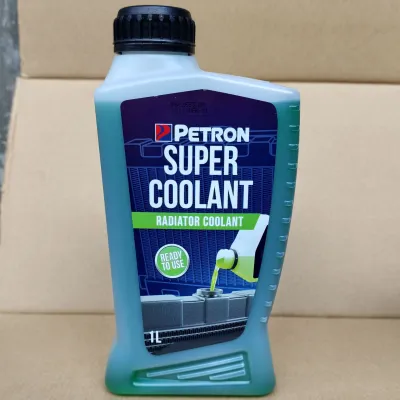
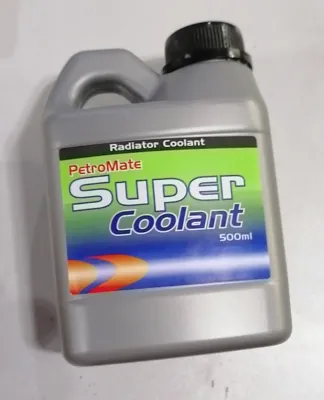
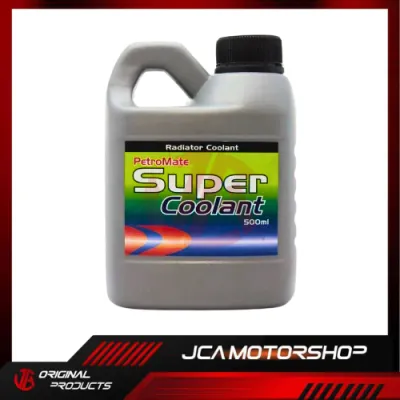
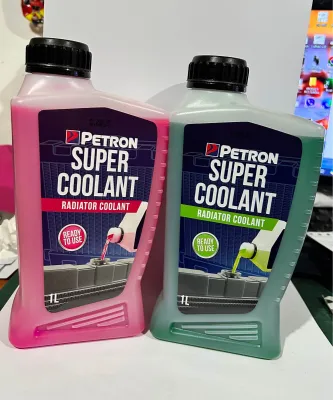
Prices are valid at publication and may change. Please refer to the product page for the latest price.
How Tropical Heat and Heavy Traffic Stress Your Cooling System
Driving in the Philippines presents a unique combination of environmental and operational challenges that place immense thermal stress on an internal combustion engine. Ambient temperatures frequently exceed 35°C, especially during the dry season, meaning the temperature differential between the engine and the surrounding air is significantly reduced. This narrow margin makes it much harder for the radiator to shed heat efficiently.

The problem is compounded by severe urban traffic congestion. When a vehicle is idling in gridlock, there is no natural ram-air effect—the airflow generated by the vehicle’s forward motion—passing through the radiator grille. The cooling system must rely entirely on electric radiator fans to pull air through the core. This prolonged idling under high ambient heat causes engine compartment temperatures to soar, rapidly elevating the temperature of the coolant.
Under these extreme conditions, an inadequate or degraded coolant will quickly reach its boiling point. When a coolant boils, it vaporizes into gas pockets. Steam cannot transfer heat away from metal engine components; instead, it acts as an insulator, leading to localized hot spots, cylinder head warping, or a blown head gasket.
Furthermore, high temperatures accelerate chemical reactions, including oxidation and corrosion. Without a robust, thermally stable additive package, the heat will break down the protective inhibitors in the fluid. This leaves the radiator’s delicate aluminum tubes, the water pump impeller, and the internal engine passages vulnerable to rust, scale, and cavitation damage, ultimately leading to premature cooling system failure.
What to Check on the Label Before Using Petron Super Coolant
Before purchasing or pouring petron super coolant into your radiator, you must inspect the product label or consult its Technical Data Sheet (TDS). The most critical factor is the chemical additive technology used in the formula. Modern vehicles are engineered to use specific coolant chemistries, and choosing the wrong one can lead to catastrophic system failure.
Look closely for the specific additive technology classification:
- Inorganic Additive Technology (IAT): Traditionally used in older vehicles (typically pre-mid-1990s), utilizing silicates and phosphates to provide fast-acting but shorter-lived corrosion protection.
- Organic Acid Technology (OAT): Commonly specified for newer aluminum engines, offering long-lasting protection without silicates or phosphates, but requiring longer to build its protective layer.
- Hybrid Organic Acid Technology (HOAT): A blend of both worlds, often used by specific European or Asian manufacturers to meet strict material compatibility requirements.
Verify the boiling point specifications listed on the packaging. A high-quality coolant should have a boiling point well above 100°C when pressurized within a sealed system. Ensure that the boiling point elevation meets or exceeds the minimum threshold specified by your vehicle’s manufacturer to prevent boil-over during extreme tropical idling.
A common and dangerous misconception among car owners is that coolant color indicates compatibility. You might assume that any green fluid can be mixed with another green fluid, or pink with pink. In reality, coolant color is merely a dye added by manufacturers and is not standardized across the industry; a green coolant from one brand might be an IAT formula, while another brand’s green fluid could be an OAT or hybrid formula.
Always cross-reference the industry standards printed on the bottle (such as ASTM D3306 or JIS K2234) with the requirements listed in your vehicle’s manual. If your vehicle manufacturer’s instructions conflict with the product label, or if your vehicle is still under warranty and requires a proprietary OEM fluid, do not use the product. Consult a qualified professional or the vehicle manufacturer to avoid voiding your warranty or damaging internal seals.
Mixing Ratios and Water Quality for Maximum Heat Protection
When selecting your coolant, you will generally find it in two forms: pre-mixed (often labeled as “Ready-to-Use” or RTU) and concentrated. Understanding the differences between these options, and how they are prepared, is vital for maintaining optimal heat transfer and corrosion protection.
Ready-to-use formulations are pre-diluted to a specific ratio, typically 50/50 or 30/70 coolant-to-water. These are highly convenient because they require no mixing and can be poured directly into the radiator or overflow reservoir. Concentrated formulas, on the other hand, must be diluted with water before installation.
The physics of coolant dilution require a careful balance. Ethylene glycol (the primary ingredient in most coolants) has a lower specific heat capacity than pure water, meaning water is actually better at absorbing and carrying away heat. However, water boils at 100°C at atmospheric pressure and promotes rapid rust and scale.
If you dilute a concentrate with too much water, you lower the boiling point and dilute the critical anti-corrosion additives, exposing the system to boil-over and rust. Conversely, if you use too little water (an overly rich glycol concentration), the fluid’s heat transfer efficiency drops significantly, causing the engine to run hotter because the fluid cannot shed heat quickly enough.
If you are diluting a concentrated variant, you must use only distilled or demineralized water. Never use tap water, well water, or bottled mineral water. Tap water contains dissolved minerals like calcium and magnesium. Under the intense heat of your engine, these minerals precipitate out of the solution, forming hard scale deposits inside the radiator tubes and engine block passages.
These scale deposits act as a thermal insulator, trapping heat inside the engine and restricting coolant flow. Over time, this mineral buildup will clog the radiator’s tiny passages, leading to chronic overheating issues that are difficult and expensive to resolve.
Essential Cooling System Maintenance for Tropical Driving
Even the highest-quality coolant cannot protect your engine if the physical components of the cooling system are neglected. Regular preventative maintenance is essential to ensure your vehicle can withstand the demanding thermal environment of the Philippines.
Perform routine visual and physical inspections of your cooling system components:
- Check the overflow reservoir: Ensure the coolant level is between the "Min" and "Max" marks. Safety Warning: Always perform this check when the engine is completely cold. Never open the radiator cap or the pressurized reservoir cap on a hot engine, as pressurized steam and boiling liquid can escape and cause severe burns.
- Inspect the rubber hoses: Squeeze the upper and lower radiator hoses. They should feel firm but pliable. If they feel spongy, brittle, swollen, or show visible cracks, replace them immediately, as they are at high risk of bursting under pressure.
- Examine the radiator cap: Inspect the rubber seal on the underside of the radiator cap for tears, cracking, or deformation.
The radiator cap is not just a lid; it is a critical pressure-regulating valve. By keeping the cooling system under pressure (typically around 15 to 16 psi), the cap physically raises the boiling point of the coolant mixture by about 25°C to 30°C. If the cap’s seal is compromised, the system cannot hold pressure, causing the coolant to boil at a much lower temperature and escape through the overflow tank.
Always adhere to the flush and replacement intervals recommended by your vehicle manufacturer. It is important to note that stop-and-go city driving in high ambient temperatures is classified as a “severe driving condition” by almost all automakers. Under these severe conditions, the coolant’s chemical additives degrade faster, meaning you may need to flush and replace the fluid more frequently than the standard highway-driving schedule suggests.
If you notice persistent coolant loss, white smoke from the exhaust, or a sweet smell under the hood, stop driving and consult a qualified professional immediately. These are signs of a system leak or internal engine damage that must be diagnosed before adding more fluid.
Frequently Asked Questions (FAQ)
Can I mix Petron Super Coolant with other coolant brands?
No, you should avoid mixing different coolant brands or formulations unless you have verified that they share the exact same chemical additive technology. Mixing incompatible types—such as an Organic Acid Technology (OAT) formula with an older Inorganic Additive Technology (IAT) formula—can cause a chemical reaction that precipitates silicates or forms a thick, gel-like sludge. This sludge will clog the narrow passages of your radiator and heater core, leading to engine overheating. If you are switching to a different brand or formulation, always perform a complete system flush with distilled water first.
Does a faulty radiator cap cause coolant boil-over in hot weather?
Yes, a faulty radiator cap is a common cause of coolant boil-over, particularly in hot tropical weather. The cooling system must remain sealed and pressurized to raise the fluid’s boiling point safely above the engine’s operating temperature. If the radiator cap has a worn rubber seal or a weak spring, it will fail to maintain this pressure. This loss of pressure allows the coolant to boil at a lower temperature, leading to rapid vaporization, fluid loss through the overflow reservoir, and subsequent engine overheating.

Community discussion
Share your experience or ask a question. Comments are reviewed before publication.