
When navigating the busy streets of the Philippines, from the congested lanes of Metro Manila to the scenic highways of provincial routes, safety and legal compliance are paramount for every motorcycle rider. If you are considering the NHK K5R helmet for your daily commute, a critical question arises: is this specific model certified for legal road use? To ride legally on Philippine roads, any motorcycle helmet must bear a valid Import Commodity Clearance (ICC) sticker or a Philippine Standard (PS) mark. While the NHK K5R is a popular full-face helmet option, its legality under the Land Transportation Office (LTO) depends entirely on whether your specific unit has been officially imported and certified. Simply buying a helmet online does not guarantee it is road-legal locally; you must ensure it carries the official physical markers required by Philippine law.
Understanding PSB and ICC Marks for LTO Compliance
To understand why these certifications are non-negotiable, it helps to look at how safety standards are regulated in the country. The Bureau of Philippine Standards (BPS)—often colloquially referred to as the Philippine Standard Bureau—operating under the Department of Trade and Industry (DTI), is tasked with testing and certifying that life-saving equipment meets rigorous national safety criteria. For imported motorcycle helmets like the NHK K5R, the DTI issues an Import Commodity Clearance (ICC) certificate. This certification is represented by a unique, holographic ICC sticker applied directly to the helmet. While some riders confuse local requirements with foreign standards, the local legal mandate in the Philippines specifically demands either the PS mark for locally manufactured goods or the ICC sticker for imported riding gear.
The Land Transportation Office (LTO) strictly enforces these standards under Republic Act No. 10054, otherwise known as the Motorcycle Helmet Act of 2009. This law mandates that all motorcycle riders—both drivers and pillion passengers—must wear heavy-duty protective helmets equipped with the official ICC or PS marks while operating on any public road or highway. LTO officers and deputized traffic enforcers actively conduct roadside checkpoints to inspect these safety markers, ensuring that riders are protected by gear that meets national standards.
Products mentioned in this guide
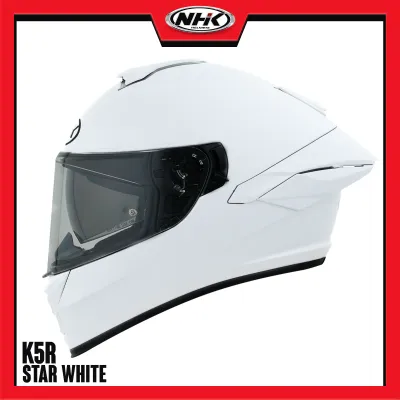
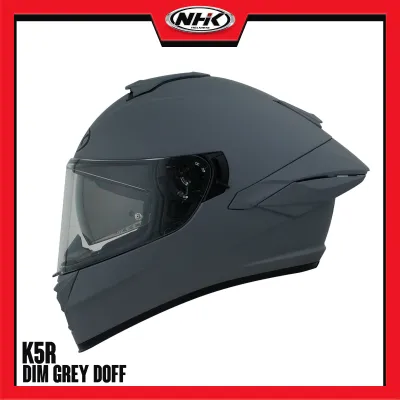
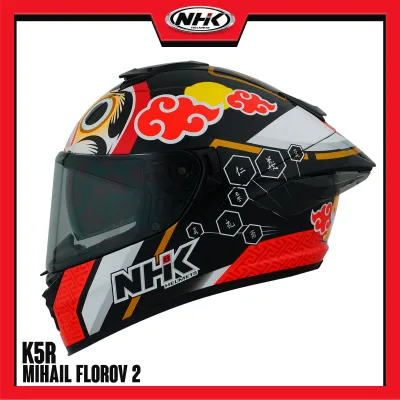
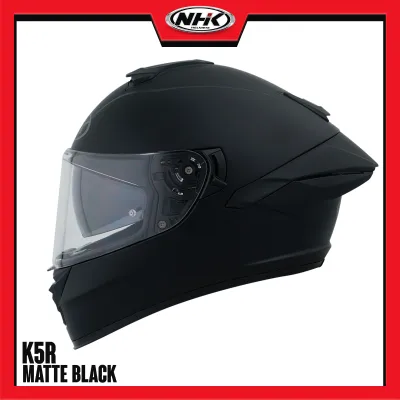
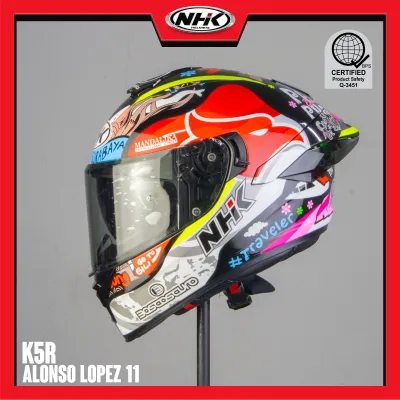
Prices are valid at publication and may change. Please refer to the product page for the latest price.
A common point of confusion among riders is the relationship between international safety standards and local regulations. The NHK K5R is manufactured to meet respected international standards, such as the European Economic Commission’s ECE standard or the United States Department of Transportation’s DOT standard. While these certifications prove that the helmet has undergone advanced impact and penetration testing abroad, they do not grant automatic legality in the Philippines. The LTO does not accept a standalone DOT or ECE stamp as a substitute for the local ICC sticker. Without the official ICC sticker issued by the DTI, a helmet is legally classified as non-compliant, leaving the rider vulnerable to heavy fines and potential confiscation of their driver’s license.
How to Physically Verify Certifications on the NHK K5R
Verifying the compliance of your NHK K5R requires a close physical inspection of both the exterior and interior of the helmet. The most obvious and critical marker is the official ICC sticker, which should be affixed to the lower rear portion of the helmet’s outer shell. This sticker is not a simple piece of paper; it is a highly secure, holographic label designed to prevent counterfeiting. When you tilt the helmet under direct sunlight or a bright light source, the sticker should display a distinct color-shifting pattern and reveal the official DTI logo alongside a unique serial number. If the sticker is a flat, non-reflective print, or if the serial number is blurry or missing, the unit may be non-compliant or counterfeit.

Beyond the exterior sticker, you should inspect the interior components of the NHK K5R for permanent manufacturing details. Gently pull back the comfort liner to inspect the inner EPS (expanded polystyrene) foam shell. Legitimate manufacturers often place tracking stickers or stamps directly on the EPS foam, detailing the production date, batch number, and model designation. Additionally, check the chin strap; compliant helmets typically have a woven fabric label sewn directly into the strap webbing, displaying international certification codes that should align with the official import documentation of the authorized distributor.
Riders must remain vigilant against gray-market or tampered units. Because the NHK K5R is a popular model, some unauthorized sellers import these helmets directly from overseas markets without passing through the official DTI clearance process. These gray-market helmets might be genuine products, but because they bypass local customs and quality checks, they will lack the official ICC sticker. Some unscrupulous sellers attempt to bypass this by transferring old ICC stickers from damaged helmets onto new, uncertified ones. Look closely at the edges of the sticker; if you see signs of peeling, adhesive residue, or uneven placement, it is highly likely that the certification has been tampered with, rendering the helmet illegal for road use.
Legal Penalties and Safety Risks of Non-Compliant Helmets
Riding with a non-compliant helmet in the Philippines carries severe legal and financial consequences. Under Republic Act No. 10054, the penalties for failing to wear an approved helmet with the mandatory ICC or PS mark are progressive and costly. A first-time offense results in a substantial fine, which increases significantly for second and third offenses. Subsequent violations can lead to even heavier financial penalties along with the immediate confiscation of your driver’s license. These checkpoints are common along major thoroughfares and provincial highways, making it highly risky to commute with an uncertified helmet.
Beyond the legal penalties, the safety risks of using an uncertified or counterfeit helmet are profound. The Philippines experiences extreme tropical weather, characterized by intense heat, high humidity, and torrential rains. Genuine, certified helmets are constructed using high-grade shells and specialized EPS liners designed to withstand these environmental stressors without degrading. Counterfeit or substandard helmets often use cheap plastics that become brittle when exposed to prolonged UV rays and humidity, offering virtually no protection during an impact. An uncertified helmet might split open or fail to absorb shock during a collision, leading to catastrophic head injuries.
Furthermore, wearing a non-compliant helmet can severely complicate your financial recovery after an accident. In the Philippines, many personal accident insurance policies and motorcycle insurance coverages contain clauses requiring riders to adhere strictly to local traffic laws. If you are involved in a road accident while wearing a helmet that lacks the mandatory ICC sticker, your insurance provider may classify this as a violation of traffic regulations. Consequently, they may deny your medical reimbursement claims or liability coverage, leaving you to bear the full burden of medical expenses and vehicle repairs out of pocket.
Buyer’s Checklist for Sourcing a Compliant NHK K5R
To protect your investment and ensure your safety, you must follow a systematic approach when purchasing an NHK K5R. First, always verify the credentials of the seller. Avoid buying from random, unverified profiles on social media or sketchy listings on online marketplaces that promise prices far below the standard retail rate. Instead, visit authorized physical motorcycle gear boutiques or official brand stores. Authorized distributors are legally required to sell helmets that already have the official ICC sticker pre-applied to the shell, and they can readily provide proof of compliance if requested.
Second, perform a thorough physical check before handing over your money. Inspect the helmet’s manufacturing date, which is typically printed on a label inside the helmet or stamped on the chin strap. Ensure that the helmet is relatively fresh from the factory, as safety standards recommend replacing helmets every few years from the date of manufacture due to the natural degradation of protective materials. Verify that the unique serial number on the holographic ICC sticker is intact and matches the general format used by the DTI for that specific import batch.
Finally, establish a clear protocol for what to do if you receive a non-compliant unit. If you purchase an NHK K5R online from a local seller and it arrives without the holographic ICC sticker, do not wear it on public roads. Immediately contact the seller to initiate a return or exchange, citing the lack of mandatory local certification. If the seller refuses to cooperate or is found to be actively distributing uncertified helmets, you can file a formal complaint with the DTI Consumer Protection Group. Reporting these sellers helps clean up the local market and protects fellow riders from purchasing substandard safety gear.
Frequently Asked Questions (FAQ)
Can I use a DOT or ECE certified NHK K5R without an ICC sticker?
No, you cannot legally use a DOT or ECE certified NHK K5R on Philippine public roads if it lacks the official ICC sticker. While international certifications like DOT and ECE indicate that the helmet meets high safety standards abroad, the Land Transportation Office (LTO) strictly enforces local compliance. Under Republic Act No. 10054, all imported helmets must undergo the Department of Trade and Industry’s (DTI) clearance process to receive the physical ICC sticker. Riding without this local sticker makes you liable for fines and license confiscation at any LTO checkpoint, regardless of the helmet’s foreign safety ratings.
What happens if my ICC sticker fades or falls off?
If the ICC sticker on your NHK K5R fades, peels off, or becomes unreadable due to daily wear, weather, or cleaning, you may face difficulties during strict LTO inspections. To protect yourself, always keep your original purchase receipt from the authorized dealer, as this serves as proof that you bought a legally compliant, officially imported unit. Additionally, check for permanent interior labels or stamps on the chin strap and EPS liner, which serve as secondary evidence of the helmet’s authenticity. If you want to be completely secure, you can bring the helmet and your purchase receipt to a local DTI office to inquire about verification and potential re-sticker protocols.

Community discussion
Share your experience or ask a question. Comments are reviewed before publication.