
Maintaining the cooling system of your vehicle is one of the most critical aspects of car ownership, especially when navigating the intense tropical heat and dense stop-and-go traffic characteristic of Philippine roads. If you drive a modern Toyota, you have likely encountered recommendations to use Toyota Super Long Life Coolant (SLLC) Pink. This specific fluid is engineered to handle extreme thermal loads while preventing corrosion inside your engine block, but determining whether it is the absolute right choice for your specific vehicle requires looking beyond general online advice.
Quick Answer: Do You Need Toyota Super Long Life Coolant Pink?
Toyota Super Long Life Coolant Pink is the factory-standard fluid for almost all Toyota vehicles manufactured from the mid-2000s onward. This pre-diluted formulation is specifically engineered to protect modern aluminum engines from overheating and internal corrosion. While it is highly likely that your vehicle requires this exact fluid, your owner’s manual remains the absolute final authority on fluid compatibility.
Sticking to this original equipment manufacturer (OEM) specification is vital for preserving your vehicle’s cooling efficiency and protecting its warranty. Using unverified generic alternatives can lead to chemical incompatibilities, accelerated wear on the water pump, and radiator clogging. For Philippine drivers dealing with high humidity and daily traffic congestion, using the correct OEM-specified coolant ensures that the engine’s heat-exchange system performs reliably under constant stress.
Products mentioned in this guide
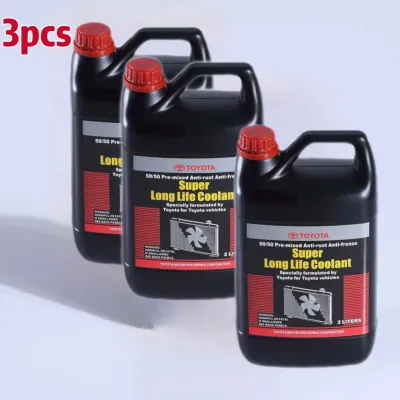
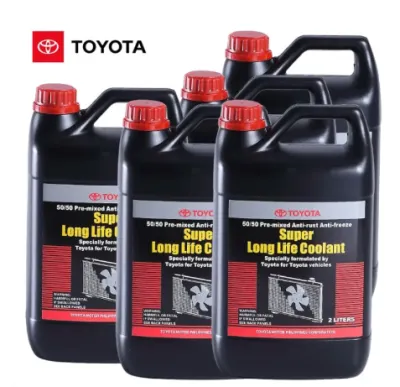
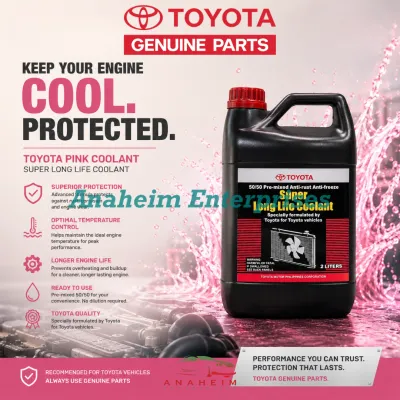
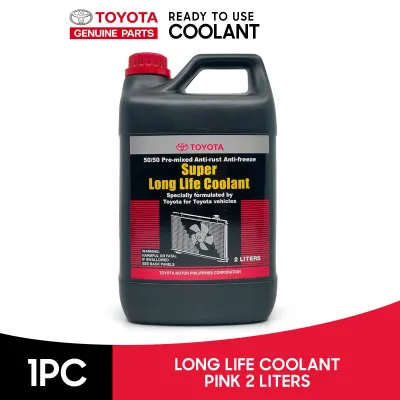
![Toyota Long Life Coolant 1 Liter (Pink) [Ready To Use]](https://img.lazcdn.com/g/p/5460d9af0d35e1556a975577b31c4835.png_400x400q80.png_.webp)
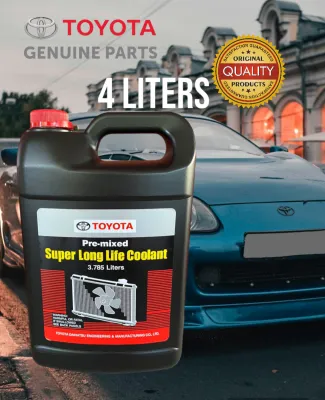
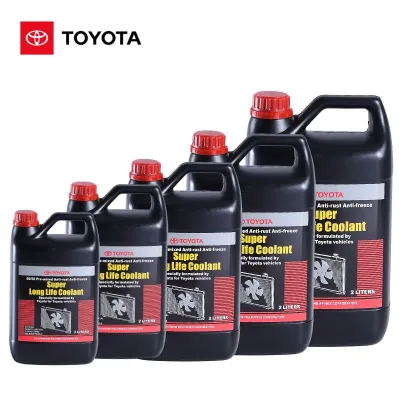
Prices are valid at publication and may change. Please refer to the product page for the latest price.
How to Verify Compatibility for Your Specific Model
Determining if your vehicle requires the Pink SLLC formulation involves a few straightforward verification steps that prioritize your car’s specific engineering standards.

Consult the Owner’s Manual
The most reliable step is to consult your vehicle’s owner’s manual. Navigate to the index and look for sections labeled “Specifications,” “Capacities,” or “Engine Maintenance.” Within these pages, the manufacturer explicitly lists the required coolant type, often specifying “Toyota Super Long Life Coolant” or a compatible equivalent meeting the same technical standards. This official documentation overrides general online forum recommendations, parts-store databases, or informal advice, ensuring you do not inadvertently void your warranty or compromise engine safety.
Inspect the Reservoir and Current Fluid
Another practical verification method is a visual inspection of the coolant expansion tank, also known as the reservoir. Ensure the engine is completely cold before opening the hood. Locate the translucent plastic reservoir tank, which is typically marked with “Full” and “Low” or “Max” and “Min” lines. Observe the color of the fluid inside; if your vehicle is currently using the factory-standard fluid, it should display a distinct, bright pink hue. Never open the pressurized radiator cap or reservoir cap on a hot engine, as pressurized steam and boiling liquid can cause severe physical injury.
Understand Model Year Transitions
Understanding the historical timeline of Toyota’s coolant formulations can help clarify why your vehicle uses a specific type. Historically, older Toyota models built before the mid-2000s utilized Toyota Long Life Coolant (LLC), which is a concentrated red fluid requiring dilution with distilled water. The transition to the pre-diluted Super Long Life Coolant (SLLC) Pink marked an upgrade to a more advanced, longer-lasting chemical profile designed for modern aluminum radiator cores. Because transition years can vary depending on the specific model, production plant, and market destination, you must verify your vehicle’s exact requirements in the manual rather than assuming compatibility based on production year alone.
Toyota Pink SLLC vs. Generic Alternatives: Is the OEM Spec Necessary?
When shopping for replacement fluids in the Philippines, you will find various “universal” or “all-makes” coolants on the market, often at lower price points. Understanding the chemical differences highlights why the OEM specification is highly recommended for your engine’s longevity.
Formulation Differences
Toyota Super Long Life Coolant Pink is a specialized Organic Acid Technology (OAT) fluid. It is formulated without silicates, amines, nitrites, or borates, which are common in older or generic coolant types. Instead, it relies on a sebacate-based inhibitor package optimized specifically for the aluminum alloys, rubber hoses, and synthetic seals used throughout Toyota’s cooling systems. This precise chemical balance prevents the formation of scale and protects metal surfaces without degrading the delicate synthetic materials inside the water pump.
Risks of “Universal” Coolants
Many generic or “universal” coolants contain silicates or phosphates to provide broad-spectrum corrosion protection across different vehicle brands. However, silicates can act as microscopic abrasives, gradually wearing down the internal seals of a Toyota water pump and causing premature leaks. Furthermore, phosphates can react with minerals commonly found in tap water, leading to solid scale deposits that coat the interior of the radiator tubes. In the hot, humid climate of the Philippines, any reduction in radiator heat transfer efficiency can quickly escalate into chronic engine overheating during heavy traffic.
The Danger of Mixing
Mixing different coolant chemistries is one of the most common causes of cooling system failure. If you mix an OAT-based coolant like Toyota Pink SLLC with an inorganic or hybrid coolant, the different chemical additives can react and precipitate out of solution. This reaction often forms a thick, gel-like sludge that settles in the narrow passages of the radiator and heater core. Once this sludge blocks fluid circulation, the engine can overheat rapidly, potentially warping the cylinder head or blowing the head gasket, resulting in exceptionally high repair costs.
Diagnostic Signs: When to Check or Replace Your Coolant
Maintaining your cooling system requires active observation. Recognizing the early signs of coolant degradation or system leaks can save you from catastrophic engine damage on the road.
Visual Inspection Cues
Regularly check the condition of the fluid inside the expansion tank. Healthy Toyota SLLC Pink should remain clear and maintain its bright pink color. If the fluid appears cloudy, dark brown, or muddy, it indicates that the corrosion inhibitors have broken down and the fluid is no longer protecting the engine block. The presence of floating black specks or metallic debris suggests that hoses or internal metal components are actively degrading, requiring immediate professional attention.
Dashboard and Performance Signals
Keep a close eye on your vehicle’s instrument cluster. If the temperature gauge needle rises above its usual middle position, or if a coolant temperature warning light illuminates, your cooling system is struggling to reject heat. In the Philippines, where ambient temperatures frequently exceed 30°C, a cooling system with degraded fluid will fail much faster under load, such as when climbing steep roads in Benguet or idling in Metro Manila traffic.
Physical Symptoms
Physical indicators of coolant issues are often easy to spot if you know what to look for. A sweet, syrup-like smell inside the cabin or near the front grille when the engine is warm strongly suggests a coolant leak, as the fluid vaporizes upon contact with hot engine components. Additionally, look for bright pink or white crusty deposits around hose clamps, the radiator cap, or the water pump weep hole. These deposits are left behind when leaking coolant evaporates, marking the exact location of a slow system leak.
Safe Maintenance: Topping Up and Replacement Guidelines
Performing basic cooling system maintenance requires strict adherence to safety protocols and manufacturer guidelines to prevent injury and vehicle damage.
Critical Safety Warning
The most important rule of cooling system maintenance is to never attempt to open the radiator cap or the expansion tank cap while the engine is hot or running. The system operates under high pressure, and opening it prematurely can cause a sudden release of boiling liquid and steam, leading to severe facial and hand burns. Always park the vehicle on a level surface, turn off the engine, and allow it to cool completely for several hours before performing any inspection or maintenance.
Topping Up Rules
If you find that the coolant level in the expansion tank is below the “Low” or “Min” line, top it up using only the exact same OEM-specified pre-diluted Toyota Pink SLLC. A 4-liter container of genuine pre-mixed Toyota Pink SLLC typically retails in the mid-to-high price tier for engine fluids, often ranging from ₱1,500 to ₱2,500 at authorized local dealerships or established automotive supply shops in the Philippines. Before adding any fluid, check the product label and your vehicle’s manufacturer instructions to confirm compatibility. If the instructions conflict, or if you cannot verify the fluid type, stop and consult the manufacturer or a qualified professional.
Adding tap water introduces harmful minerals that cause scaling, while using unapproved coolant brands can lead to chemical gelation. In a severe roadside emergency where fluid loss threatens to cause immediate engine seizure, adding a small amount of distilled water is acceptable as a temporary measure, but the system’s concentration must be corrected by a professional as soon as possible.
Flushing and Professional Service
While topping up can address minor fluid loss, a complete cooling system flush is required at the intervals specified in your owner’s manual. Flushing removes accumulated contaminants and completely refreshes the corrosion inhibitors. If you experience persistent coolant loss without visible puddles, notice milky oil on the engine dipstick (which indicates an internal head gasket leak), or are unsure of the fluid currently in your system, do not attempt a DIY flush. Stop and consult a certified Toyota dealer or a qualified professional mechanic to perform a pressure test and ensure the system is operating safely.
Frequently Asked Questions (FAQ)
Can I mix Toyota Pink coolant with Toyota Red coolant?
Although both are genuine Toyota products, mixing Toyota Pink SLLC with Toyota Red LLC is not recommended. Toyota Red is an older, concentrated formulation that requires manual dilution with distilled water, whereas Toyota Pink is a modern, pre-diluted Organic Acid Technology (OAT) fluid with a longer service life. Mixing them dilutes the advanced inhibitors in the Pink coolant, reducing its overall service life to that of the Red formulation and potentially causing minor chemical conflicts. If you wish to transition your vehicle from Red to Pink, a complete system flush is necessary to remove all traces of the older fluid.
Is it safe to use distilled water instead of Pink SLLC in an emergency?
Using distilled water is acceptable only as a temporary emergency measure to prevent immediate engine overheating and seizure when you are stranded. However, water lacks the boiling point elevation, rust prevention, and water pump lubrication properties provided by the active additives in Pink SLLC. Operating your vehicle long-term on water or a highly diluted mixture will lead to rapid internal corrosion, localized boiling inside the engine block, and accelerated wear on the water pump seals. You should have the system flushed and refilled with the correct OEM coolant concentration as soon as you reach a professional repair shop.
How long does Toyota Super Long Life Coolant Pink last?
The factory-fill Toyota Super Long Life Coolant Pink is designed to last up to 160,000 kilometers or 10 years, whichever comes first, under normal driving conditions. For subsequent replacements, also known as service fills, the recommended interval is typically shorter, often set at 80,000 kilometers or 5 years. However, severe driving conditions common in the Philippines—such as frequent short trips, prolonged idling in heavy traffic, and high ambient temperatures—can accelerate fluid degradation. You should always consult your specific owner’s manual to verify the recommended maintenance schedule for your vehicle’s operating environment.

Community discussion
Share your experience or ask a question. Comments are reviewed before publication.