
Finding the right LS2 raincoat requires balancing two opposing forces: keeping tropical downpours out while letting body heat and humidity escape. For motorcycle commuters and tourers in the Philippines, this balance is particularly difficult to strike. The local climate presents a unique challenge where heavy monsoon rains often coincide with high ambient temperatures and stifling humidity. Under these conditions, wearing a completely sealed, non-breathable plastic layer quickly creates a greenhouse effect inside the gear, leaving you just as wet from sweat as you would have been from the rain.
To make an informed choice, it is essential to understand the physical limits of waterproof riding gear. Fully waterproof materials, such as heavy-duty polyester or nylon with thick polyurethane coatings, are designed to block water molecules from entering. However, this tight barrier also inherently restricts airflow and traps body heat. While high-end technical membranes claim to allow microscopic water vapor to escape while blocking liquid water, their performance drops significantly in highly humid environments. When the air outside is saturated with moisture, there is no humidity gradient to drive the vapor through the membrane. Consequently, true comfort and breathability in tropical rain gear often rely on mechanical ventilation features—such as vents, flaps, and mesh panels—rather than membrane diffusion alone.
Key Design Features to Compare Across LS2 Raincoats
When evaluating different LS2 raincoat options, riders must look beyond basic aesthetics and focus on structural design elements that dictate performance. The brand offers various configurations, ranging from heavy-duty two-piece suits designed for maximum coverage to lightweight, packable over-jackets meant for sudden showers. To find the right balance for your daily ride, you must compare how these garments handle seam sealing, zipper protection, collar closures, and overall ventilation.
Products mentioned in this guide
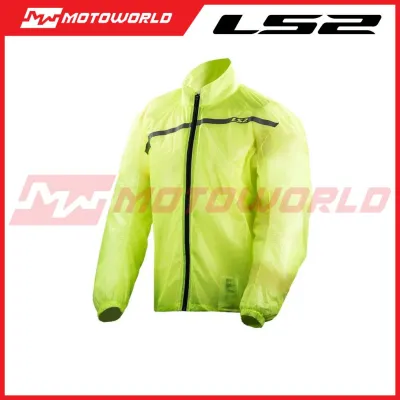
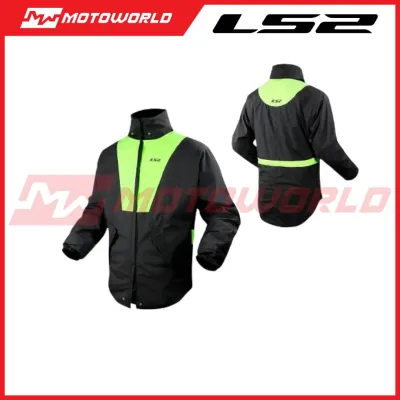
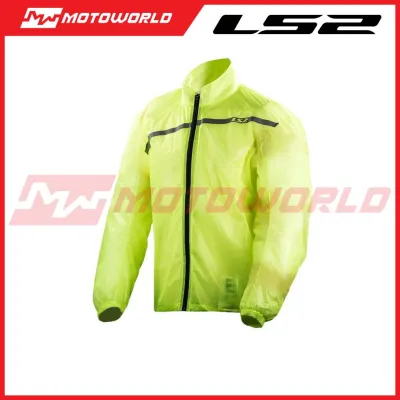
Prices are valid at publication and may change. Please refer to the product page for the latest price.
Two-Piece Rain Suits vs. Lightweight Over-Jackets
A primary decision point is choosing between a full two-piece rain suit and a lightweight over-jacket. Two-piece suits, which include both a dedicated rain jacket and matching trousers, offer comprehensive coverage against the elements. This configuration is highly effective at preventing water from pooling on your motorcycle seat and slowly wicking up through the crotch of your pants—a common and highly uncomfortable issue during prolonged rides. The full suit ensures that even when riding at highway speeds, wind-driven rain cannot find a gap between your jacket and trousers.
On the other hand, lightweight over-jackets are designed primarily for upper-body protection and quick deployment. If your daily commute is short and consists of stop-and-go city traffic, a full two-piece suit can feel excessively hot and cumbersome to put on at the side of the road. An over-jacket can be slipped on in seconds over your regular riding gear, providing immediate protection for your torso and arms where rain impacts most directly. When selecting an over-jacket, it is crucial to check for a drop-tail design. A drop-tail jacket features an extended rear hem that remains low enough to cover your lower back and seat even when you are leaned forward in an active riding position, preventing water from spraying up under the jacket.
Vented Designs vs. Fully Sealed Constructions
The battle between absolute waterproof protection and airflow comes down to how the raincoat handles ventilation. Fully sealed constructions prioritize maximum rain protection above all else. These garments feature minimal openings, with every seam taped or welded to ensure that not a single drop of water can penetrate the fabric. While this design is highly reliable during severe downpours or long-distance touring, it offers virtually no airflow, leading to rapid heat buildup and sweating in tropical climates.
Vented designs attempt to solve this issue by incorporating mechanical ventilation features, but this introduces potential points of water ingress. When comparing vented LS2 raincoats, riders should inspect whether the vents are backed by waterproof membranes or if they are simple mesh-only panels. Mesh-only vents under the arms or across the back allow excellent airflow but can let water seep in during heavy, wind-driven downpours. High-quality vented designs often feature storm flaps that cover the vents, directing water away while still allowing hot air to escape from underneath. Understanding this trade-off helps you decide whether you prefer to risk a small amount of dampness from external rain in exchange for a cooler ride, or if you prefer to remain completely dry from the rain at the cost of a warmer, sweatier interior.
Matching the Raincoat to Your Riding Conditions
Selecting the ideal LS2 raincoat configuration depends heavily on your typical riding environment, duration, and the intensity of the weather you encounter. For short urban commutes through dense city traffic, your main enemies are low speeds and high engine heat. In these stop-and-go scenarios, you do not benefit from the cooling wind of highway speeds, making ventilation your top priority. A lightweight, highly vented over-jacket that is easy to put on and take off is often the most practical choice, as it prevents you from overheating while waiting at traffic lights.

Conversely, long-distance highway touring in sustained rain demands a completely different approach. At higher speeds, the force of the wind pushes rainwater through any weak point in your gear. For these journeys, a fully sealed, two-piece rain suit is highly recommended. The complete coverage protects your entire body from wind chill and heavy rain, while the sealed seams prevent water from forcing its way through the stitching. While you may experience some heat buildup, the continuous airflow from highway speeds helps cool the exterior of the suit, making the temperature inside more manageable than in slow city traffic.
For riders who frequently encounter intermittent tropical showers, packability and ease of storage are the most critical factors. A heavy, bulky rain suit that takes up your entire top box or backpack is inconvenient for daily use. In this case, look for compact, lightweight LS2 models that can be rolled tightly into a small carrying pouch. These can be stored permanently under your motorcycle seat or in a small tail bag, ready to be deployed the moment a sudden afternoon shower begins.
Additionally, always consider the base layers you wear underneath your rain gear. Wearing a heavy cotton t-shirt under a waterproof jacket will trap moisture and make you feel damp and cold. Opting for moisture-wicking synthetic base layers or a mesh riding jacket underneath your raincoat allows air to circulate more freely, significantly improving your perceived comfort and helping the raincoat’s ventilation features work more effectively.
What to Check on the Product Label and Specifications
Before purchasing an LS2 raincoat, it is important to verify the manufacturer’s technical specifications and labels to ensure the garment meets your performance expectations. One of the most reliable indicators of a raincoat’s performance is its waterproof rating, often measured as a hydrostatic head rating in millimeters (such as 5,000mm or 10,000mm). This rating indicates the height of a water column that the fabric can support before water begins to seep through. For motorcycle riding, where wind pressure forces water against the fabric, look for higher ratings to ensure the material can withstand highway-speed downpours.
Beyond the fabric itself, the construction of the seams is a critical failure point. Standard stitched seams leave thousands of tiny needle holes that water will eventually penetrate under pressure. When reading product descriptions or inspecting a physical garment, verify that the seams are taped or welded. Taped seams feature a waterproof tape applied under heat and pressure over the stitched areas, sealing the holes and preventing leaks.
It is also important not to assume that a material name alone guarantees waterproofing. While nylon and polyester are highly durable synthetic fabrics commonly used in riding gear, they are not inherently waterproof on their own. They require a specialized polyurethane (PU) coating on the inside or an integrated waterproof membrane to block water. Always check the product label to confirm the presence of these coatings or membranes rather than relying solely on the base fabric name.
Finally, pay close attention to the care instructions detailed on the product label. Many waterproof garments are treated with a Durable Water Repellent (DWR) coating on the outer surface, which causes water to bead up and roll off instead of soaking into the fabric. Improper washing, such as using harsh household detergents, fabric softeners, or hot water, can rapidly degrade this coating and damage the internal seam tapes. Verifying the recommended cleaning methods beforehand ensures you can maintain the raincoat’s performance over many riding seasons.
Decision Framework: Which Configuration Fits Your Needs?
To simplify your decision, you can use a straightforward framework based on your primary riding habits and comfort preferences. Choose a fully sealed, two-piece LS2 rain suit if you regularly ride long distances, travel at highway speeds, or must commute through heavy, sustained monsoon rains where complete dryness is your absolute priority. This configuration provides the ultimate barrier against wind and water, ensuring you arrive at your destination dry, even if it means sacrificing some internal airflow.
Choose a lightweight, vented LS2 over-jacket if your rides consist mostly of short city commutes, if you ride primarily in high-humidity environments where overheating is a major concern, or if you need a highly packable solution that can be stored easily under your seat. This setup prioritizes convenience, quick deployment, and mechanical ventilation, keeping you reasonably dry without causing excessive sweating in stop-and-go traffic.
Verify first if your motorcycle setup or riding style introduces unique challenges. For instance, if you use an aftermarket textured seat, water can pool in the crevices and put extra pressure on the seat of your rain pants, requiring a higher waterproof rating or reinforced fabric in that specific area. Additionally, always ensure you test the fit of the raincoat over your regular riding jacket and safety gear. A raincoat that is too tight will restrict your movement and put stress on the seams, leading to premature tearing, while a raincoat that is too loose will flap violently at high speeds, causing distraction and rapid wear of the material.
Frequently Asked Questions (FAQ)
How do I properly dry an LS2 raincoat after riding in the rain?
After riding in wet weather, always hang your LS2 raincoat on a wide, sturdy hanger in a well-ventilated, shaded indoor area. Allow it to air dry completely before folding or storing it away, as packing a damp raincoat can lead to mold, mildew, and unpleasant odors. Keep the garment away from direct sunlight, radiators, or other direct heat sources, as excessive heat and ultraviolet rays can degrade the waterproof coatings, melt the seam tapes, and weaken the synthetic fibers. Never use a clothes dryer or an iron on your rain gear, as the high temperatures will permanently damage the internal waterproof membranes.
Can I wash my LS2 raincoat in a washing machine?
You should always consult the specific care label sewn inside your LS2 raincoat before attempting to clean it. In general, machine washing is not recommended for waterproof riding gear because the aggressive agitation of the washing machine and the spinning cycle can delaminate the waterproof backing and peel away the protective seam tapes. Furthermore, standard laundry detergents often contain harsh chemicals and additives that strip away the outer Durable Water Repellent (DWR) coating. If the label allows machine washing, use a gentle cycle with cold water and a specialized technical wash designed for waterproof fabrics. Otherwise, hand washing the garment in cold water with a mild, additive-free soap is the safest way to remove road grime without compromising its waterproof integrity.

Community discussion
Share your experience or ask a question. Comments are reviewed before publication.