
When purchasing a motorcycle helmet in the Philippines, safety certifications are your primary guide to ensuring the gear meets legal and protective standards. For riders eyeing the LS2 Stream 2, the presence of the Philippine Standard Bureau (PSB) or Import Commodity Clearance (ICC) mark is a critical indicator of regulatory compliance. These marks signify that the helmet has successfully passed the mandatory import and quality checks required by the government for road use.
However, it is vital to understand that these certifications represent a baseline standard for legal market entry rather than an open-ended guarantee of safety. A certified helmet is a starting point for protection, and its real-world performance depends heavily on authenticity, proper fit, and regular maintenance. By learning how to interpret these marks and verify them on your specific LS2 Stream 2, you can ride with confidence knowing your gear complies with local laws and is built to handle the demands of daily commuting.
Understanding PSB and ICC Marks for Motorcycle Helmets
The Philippine Standard Bureau (PSB) and the Import Commodity Clearance (ICC) systems are the cornerstones of motorcycle helmet regulation in the country. Managed under the Department of Trade and Industry (DTI), these certification programs ensure that all protective headgear distributed in the local market adheres to established safety guidelines. For an imported helmet model like the LS2 Stream 2, these marks serve as proof that the product has undergone the necessary evaluation processes before reaching retail shelves.
Products mentioned in this guide
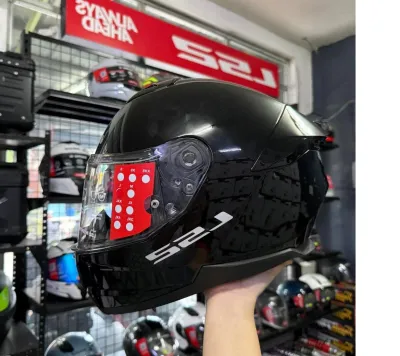
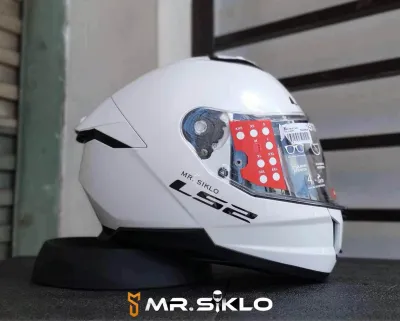
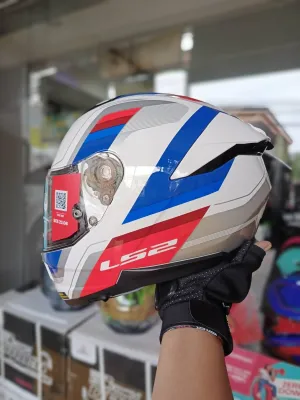
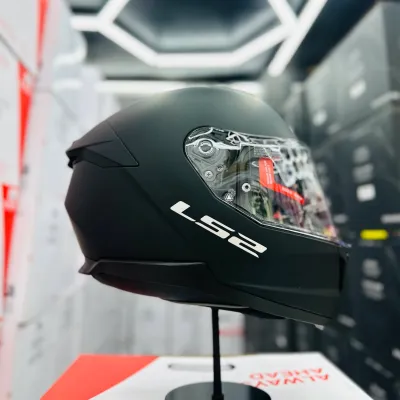
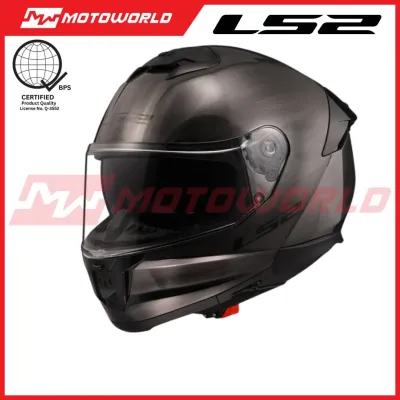
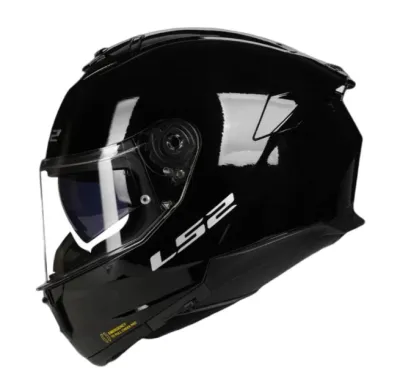
Prices are valid at publication and may change. Please refer to the product page for the latest price.
The PSB mark is typically issued to locally manufactured products or manufacturers that have undergone factory audits and consistent quality control assessments. On the other hand, the ICC mark is specifically designed for imported goods. Since the LS2 Stream 2 is manufactured abroad and brought into the local market, it primarily carries the ICC sticker, which features a unique serial number and a holographic security design to verify its legitimate importation and compliance.
It is crucial to recognize that these marks indicate regulatory adherence rather than a comparative performance ranking. An ICC sticker does not mean one helmet is inherently safer than another certified model; rather, it confirms that both have met the minimum threshold of impact absorption, penetration resistance, and retention system strength required by Philippine standards. These baseline tests are designed to ensure that any helmet sold legally can offer a reliable level of protection during an accident.
Riders must also understand that certification is not a blanket approval for an entire brand. Just because a manufacturer produces certified helmets does not mean every single model, shell size, or production batch automatically carries the same compliance status. Each specific model, such as the LS2 Stream 2, must be individually tested and cleared. When purchasing your gear, you must verify the certification on the exact unit you intend to buy, ensuring that the specific batch was officially cleared by regulatory authorities.
How to Verify Authentic Certifications on Your LS2 Stream 2
With the prevalence of counterfeit riding gear in the market, physically inspecting your LS2 Stream 2 for authentic certification marks is a necessary safety step. Genuine ICC stickers are designed with specific security features that make them difficult to replicate. When examining your helmet, look for a metallic or holographic sticker typically affixed to the rear of the outer shell or placed securely under the protective clear coat. The sticker should display a clear, legible serial number that can be traced through official regulatory databases.

In addition to the external sticker, authentic helmets often feature internal labeling that details the manufacturing batch, model name, and production date. On the LS2 Stream 2, you should inspect the area beneath the comfort liner and EPS (expanded polystyrene) foam. Genuine units will have printed labels or stamps that match the documentation provided in the original packaging. If the model name on the box, the internal label, and the external sticker do not align perfectly, the helmet’s compliance is highly questionable.
Cross-referencing your purchase with authorized dealer records is another highly effective verification method. Purchasing your helmet from an official distributor or a recognized retail partner in the Philippines significantly reduces the risk of acquiring a counterfeit product. Authorized dealers can provide official receipts and import documentation that link your specific helmet’s batch number to the approved ICC shipment. If you are purchasing from an online marketplace, ensure the seller is an authorized dealer and avoid listings that seem unusually cheap or lack clear product documentation.
Recognizing the red flags of counterfeit gear can save you from riding with compromised protection. Fake ICC stickers are often printed on low-quality paper, lack the characteristic holographic shimmer, or can be easily peeled off with a fingernail. Misspellings of regulatory bodies, blurred text, or a complete absence of a unique serial number are immediate warning signs. Furthermore, if a seller claims a helmet is certified but cannot show any physical marks or official packaging, you should decline the purchase and report the vendor to local consumer protection authorities.
Local Compliance vs. Real-World Protection: Setting Expectations
While local compliance marks like the ICC sticker are legally required for road use in the Philippines, they represent only one aspect of a helmet’s overall safety profile. Global manufacturers like LS2 design their helmets to meet international testing frameworks, which often involve different or more stringent evaluation criteria. The LS2 Stream 2 is typically engineered to comply with international standards such as the United Nations Economic Commission for Europe (ECE) standard—specifically the newer ECE 22.06 standard—or the United States Department of Transportation (DOT) standard.
These international testing frameworks subject helmets to a wide array of physical challenges. For instance, ECE 22.06 testing includes rotational impact assessments, high and low-velocity impact tests, and rigorous visor shatter resistance evaluations. When a helmet carries both an international certification like ECE 22.06 and a local ICC sticker, it indicates that the gear has successfully navigated both global engineering standards and local import regulations.
However, no certification mark—whether local or international—can guarantee absolute safety in every real-world scenario. The protective capability of your LS2 Stream 2 depends heavily on variables that testing labs cannot fully replicate, such as the exact angle of an impact, the speed of the vehicle, and the presence of obstacles. Most importantly, a helmet’s ability to absorb energy is directly tied to how well it fits your head. A certified helmet that is too loose will shift during a crash, greatly reducing its effectiveness and potentially causing secondary injuries.
To assess the overall build quality of your helmet, look beyond the stickers and evaluate its physical construction. Inspect the rigidity of the outer shell, the density of the internal EPS liner, and the smooth operation of the visor mechanism. The retention system, such as a micrometric quick-release buckle, should fasten securely without slipping under tension. By combining regulatory verification with a hands-on inspection of these physical components, you can make an informed decision about the level of protection your gear actually provides on the road.
Essential Safety Boundaries and Helmet Maintenance
To preserve the protective integrity of your LS2 Stream 2 over its lifespan, you must adhere to strict safety boundaries and maintenance protocols. The most critical rule of helmet safety is the immediate replacement policy following any significant impact. Helmets are designed to deform and compress internally to absorb impact energy; once the internal EPS liner has compressed during a fall or a crash, it cannot recover its protective properties. Even if the outer shell appears undamaged after a drop from a handlebar or a minor accident, the helmet must be replaced immediately, as invisible structural compromises may have occurred.
Environmental factors and daily wear also play a significant role in the degradation of helmet materials, especially in the hot and humid tropical climate of the Philippines. Sweat, hair oils, and road grime can accumulate quickly, necessitating regular cleaning. When maintaining your LS2 Stream 2, use only mild soap and lukewarm water to clean the outer shell and the removable comfort liner. Avoid harsh chemical cleaners, solvents, or petroleum-based products, as these substances can chemically degrade the polycarbonate shell, weaken the EPS liner, and damage anti-fog or scratch-resistant visor coatings.
Proper storage is equally vital to prevent premature aging of the helmet’s components. Store your helmet in a cool, dry place away from direct sunlight, fuel vapors, or high-heat sources like exhaust pipes. High temperatures and humidity can weaken the adhesives holding the trim and comfort liner in place, while prolonged UV exposure can degrade the outer shell material over time.
Finally, always ensure a proper fit and correct strap adjustment before every ride. The chin strap should be tightened so that no more than two fingers can fit between the strap and your throat. A snug fit ensures that the helmet remains securely positioned over your brow and the back of your head during sudden movements. Regularly check the retention strap for signs of fraying or wear, and inspect the buckle mechanism to ensure it locks firmly into place.
Frequently Asked Questions (FAQ)
Is it legal to ride in the Philippines without an ICC sticker?
No, it is illegal to ride a motorcycle on public roads in the Philippines without a compliant helmet that bears an official ICC or PSB mark. Under national land transportation laws, riders and passengers must wear standard protective motorcycle helmets that have been cleared by the Department of Trade and Industry. Traffic law enforcement officers look for the physical ICC or PSB sticker during routine checks, and operating a motorcycle without a certified helmet can result in significant fines and the confiscation of your driver’s license.
Can I add an ICC sticker myself if my helmet is missing one?
No, you cannot legally purchase, transfer, or apply an ICC sticker to a helmet yourself. Official ICC stickers are controlled security items issued exclusively to authorized importers and manufacturers after their specific product batches have passed inspection. Applying an unofficial or transferred sticker to a helmet is a violation of consumer product laws and is considered a fraudulent act. If your helmet is missing a legitimate sticker, it indicates that the unit was not officially cleared for import, is a counterfeit, or has not undergone the necessary safety evaluations required for legal road use.

Community discussion
Share your experience or ask a question. Comments are reviewed before publication.