
Quick Answer: Which Siphoning Hose Pump Should You Choose?
When you need to transfer fuel from your motorcycle, choosing between a manual and an electric siphoning hose pump depends on your immediate environment, frequency of use, and safety requirements.
- Choose a manual siphoning hose pump if you need a highly portable, lightweight, and battery-free tool for emergency roadside situations, occasional small-volume transfers, or trail rides where power sources are unavailable.
- Choose an electric siphoning hose pump if you regularly perform maintenance in a home garage, need to drain large fuel tanks quickly, require a consistent flow rate, and have access to compatible batteries or a 12V power source.
Before purchasing either type, always verify that the pump materials are explicitly rated for gasoline. If you choose an electric model, ensure it features ignition-proof or intrinsically safe certifications to prevent catastrophic electrical sparks near volatile fuel vapors.
Critical Safety Rules for Motorcycle Fuel Transfer
Handling highly flammable gasoline requires strict adherence to safety protocols to prevent fire, chemical burns, and respiratory hazards. Because fuel vapors are heavier than air and highly volatile, any spark or heat source can ignite them instantly.
Products mentioned in this guide
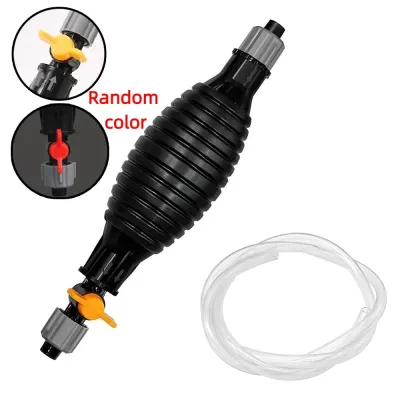
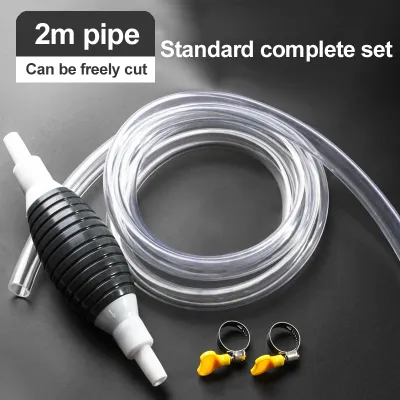
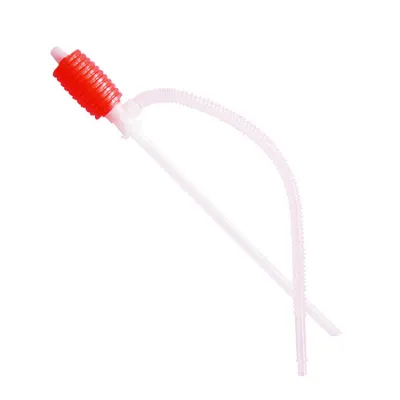
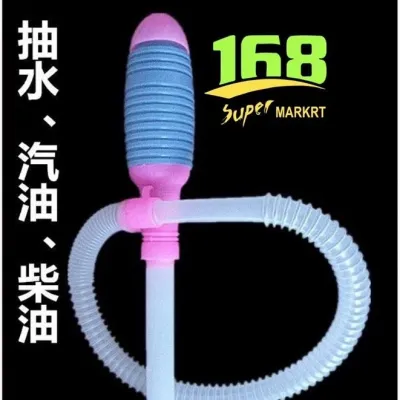
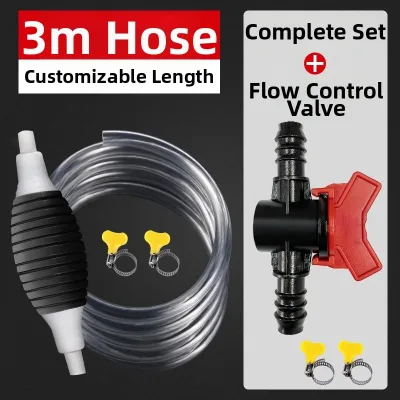
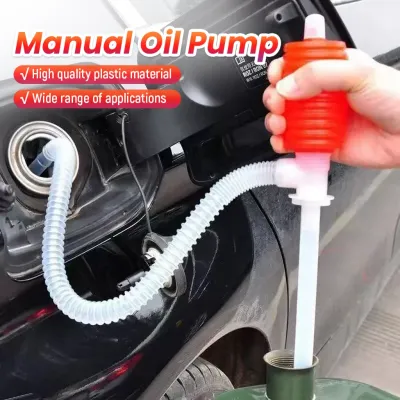
Prices are valid at publication and may change. Please refer to the product page for the latest price.

First, always check the manufacturer labels to confirm that both the hose and the pump housing materials are explicitly rated for gasoline. Standard utility or water pumps often use plastics and rubber seals that degrade rapidly when exposed to petroleum products. This degradation can lead to leaks, or cause static electricity buildup in non-conductive materials, creating a direct ignition hazard.
Second, perform all fuel transfers in a well-ventilated outdoor area, far from open flames, pilot lights, sparks, or hot motorcycle engine components like the exhaust pipe. Keep a Class B fire extinguisher nearby and easily accessible. Never leave a running pump unattended, and avoid wearing synthetic clothing that easily generates static electricity.
Finally, stop the process immediately and consult a professional mechanic if you encounter sealed fuel systems, integrated anti-siphon valves, or rollover valves that resist standard siphoning methods. Forcing a rigid hose past these safety barriers can damage internal tank components, puncture fuel filters, or cause fuel to spray under pressure.
Manual Siphoning Hose Pumps: Operation and Best Use Cases
Manual siphoning hose pumps rely on physical force and gravity to move fuel from one container to another. The most common designs feature a flexible rubber squeeze bulb or a hand-crank mechanism integrated into a fuel-resistant hose. To initiate the flow, you place the intake hose into the motorcycle tank, position the discharge hose in the receiving container (which must be lower than the fuel level to maintain gravity flow), and squeeze the bulb several times. Once the liquid passes the high point of the hose, gravity takes over, allowing the fuel to flow continuously without further pumping. Another popular manual option is the shaker or “jiggle” siphon, which uses a check-valve brass tip that you shake up and down inside the tank to prime the line.
The primary advantage of a manual pump is its absolute independence from external power. It requires no batteries, electrical outlets, or wiring harnesses, making it an indispensable addition to an underbone or adventure motorcycle’s emergency tool kit. Whether you are stranded on a remote provincial road or helping a fellow rider who ran out of fuel, a manual pump works instantly in any weather condition.
However, manual pumps have distinct limitations. They offer slower flow rates compared to motorized options, and maintaining a steady flow requires careful positioning of the receiving container. User fatigue can become an issue during larger transfers, such as draining a full adventure bike tank. Additionally, manual priming carries a higher risk of accidental fuel exposure, skin contact, or inhalation of toxic fumes if the hose slips or if you attempt to use improvised, non-valved hoses.
Electric Siphoning Hose Pumps: Operation and Best Use Cases
Electric siphoning hose pumps utilize a small, motorized impeller to draw fuel through the line, eliminating the need for manual priming or gravity-assisted positioning. These pumps are typically powered by standard alkaline batteries (such as AA or D-cell batteries), rechargeable lithium-ion packs, or 12V clips that connect directly to your motorcycle’s battery terminals. Before operating an electric model, you must verify that the voltage requirements match your power source and that the battery compartment is completely sealed against moisture and fuel vapors.
The standout benefit of an electric pump is its hands-free, highly consistent flow rate. It allows you to drain or fill a motorcycle tank quickly and with minimal physical strain, which is highly beneficial during routine garage maintenance, winterization, or when preparing a bike for transport. Because the motor does the work, you can focus on holding the hoses securely in place, reducing the likelihood of spills.
Despite their convenience, electric pumps demand extreme caution regarding electrical safety. You must never use a standard electric water pump or utility pump for gasoline transfer. Gasoline is highly volatile, and a non-certified electric motor can produce internal sparks that ignite fuel vapors, leading to an immediate explosion. Only use electric pumps that are explicitly certified as ignition-proof or intrinsically safe for flammable liquids. Additionally, these pumps are heavier, bulkier, and dependent on battery life, making them less practical for emergency roadside kits where space is limited.
Feature-by-Feature Comparison: Manual vs Electric Pumps
To help you decide which tool fits your garage or riding kit, it is helpful to compare their operational characteristics side-by-side.
| Feature | Manual Siphoning Pump | Electric Siphoning Pump |
|---|---|---|
| Power Dependency | None; fully human-powered | Requires batteries (AA, D-cell, or 12V clips) |
| Priming Effort | Manual squeezing, cranking, or shaking | Instant, automatic push-button start |
| Flow Rate Consistency | Variable; depends on gravity and manual input | Highly consistent and continuous |
| Portability | Excellent; lightweight, compact, easily fits under seats | Moderate; bulkier due to motor and battery housing |
| Best Environment | Roadside emergencies, remote trails, quick transfers | Home garage, workshop, routine maintenance |
| Maintenance | Minimal; simple rinse and dry | High; requires battery removal and contact cleaning |
When shopping on your preferred online marketplace, use this checklist of specifications to verify on the product packaging or manufacturer description before making a purchase:
- Hose Material: Look for high-grade polyurethane, PVC, or nitrile rubber explicitly rated for gasoline and oil resistance.
- Hose Diameter: Ensure the outer diameter is small enough (typically 1/4 inch to 1/2 inch) to navigate the narrow filler necks of modern motorcycle tanks.
- Flow Rate Rating: Check the rated liters per minute (LPM) to ensure it meets your expectations for transfer speed.
- Safety Certifications: For electric models, look for clear markings indicating explosion-proof, ignition-protected, or UL/CE safety compliance for flammable liquids.
How to Verify Compatibility and Flow Requirements for Your Motorcycle
Before attempting to siphon fuel, you must perform a physical check of your motorcycle’s fuel tank design, as modern bikes often feature internal obstructions that prevent standard hoses from reaching the fuel.
Start by measuring the inner diameter of your motorcycle’s fuel filler neck. Many modern sportbikes, underbones, and scooters have narrow openings or metal plates with small slots designed to accept only standard fuel pump nozzles. If your siphoning hose is too thick, it will not bypass these openings, or worse, it could become wedged inside the tank.
Next, inspect the interior of the tank using a flashlight (never use a lighter or open flame). Many fuel tanks contain internal baffles, integrated fuel pump assemblies, fuel filters, or rollover check valves. These components are designed to prevent fuel from sloshing or leaking during a tip-over, but they also block straight hoses from reaching the bottom of the tank. If you feel resistance when inserting the hose, do not force it. Forcing the hose can tear internal filters or damage delicate fuel level sending units.
Finally, always review your motorcycle’s official owner’s manual or factory service manual before draining the fuel system. Some fuel-injected motorcycles maintain high pressure within the fuel lines even when the ignition is turned off. If you need to disconnect any fuel lines to bypass internal tank obstructions, you must follow the manufacturer’s specific procedures for depressurizing the system safely to avoid high-pressure fuel spray.
Frequently Asked Questions (FAQ)
Can I use a standard water siphoning pump for motorcycle gasoline?
No, you must never use a standard water siphoning pump for transferring gasoline. Water pumps are typically constructed from plastics, rubbers, and adhesives that dissolve or degrade rapidly when exposed to the harsh chemical solvents in petroleum products. This degradation leads to immediate leaks, hose failure, and potential fuel spills. Furthermore, standard water hoses lack anti-static properties. As gasoline flows through non-conductive plastic hoses, it generates static electricity. Without proper grounding or anti-static materials, this static buildup can discharge as a spark, igniting the highly flammable fuel vapors and causing a severe fire or explosion.
What should I do if my motorcycle has an anti-siphon valve?
If your motorcycle is equipped with an anti-siphon valve or an internal baffle that blocks physical access to the fuel, you must never attempt to force a siphoning hose past the barrier. Doing so can permanently damage the valve, puncture the fuel tank lining, or destroy the internal fuel pump assembly. Instead, consult your motorcycle’s official service manual to identify the approved method for draining the tank. In many modern fuel-injected motorcycles, the safest method involves disconnecting the main fuel feed line at the quick-connect coupling and using the bike’s internal fuel pump to prime and drain the tank into an approved container. If you are uncomfortable performing this procedure, seek assistance from a qualified professional mechanic to avoid damaging your fuel system or voiding your vehicle’s warranty.

Community discussion
Share your experience or ask a question. Comments are reviewed before publication.