
Choosing between Mobil 1, Shell Helix, Castrol EDGE, and Motul 8100 in the 5W-30 viscosity grade depends on matching your vehicle manufacturer’s exact specifications, your driving conditions, and your budget. There is no single universal winner; instead, the right choice is the one that carries the specific original equipment manufacturer (OEM) approvals required by your car’s manual. In the tropical climate of the Philippines, where stop-and-go traffic and high ambient temperatures place significant stress on engines, selecting a high-quality fully synthetic oil is crucial for long-term engine health.
Understanding 5W-30 Fully Synthetic Oil Basics
The viscosity grade of an engine oil determines how it flows at different temperatures. In a 5W-30 oil, the “5W” stands for winter and indicates the oil’s flow characteristics at low temperatures, ensuring rapid lubrication during cold startups. The “30” represents the operating viscosity at 100°C, which dictates how thick the oil remains once the engine reaches its normal operating temperature. This balance makes 5W-30 a highly versatile grade suitable for a wide range of modern passenger vehicles.
Fully synthetic oils differ fundamentally from mineral and semi-synthetic oils in their manufacturing process and molecular structure. While mineral oils are refined directly from crude oil, fully synthetic oils are synthesized from highly purified chemical compounds. This controlled manufacturing process results in uniform molecular sizes, which significantly reduces internal friction and improves thermal stability. Consequently, fully synthetic oils resist breaking down under extreme heat, flow better in cold conditions, and maintain their protective properties longer.
Products mentioned in this guide
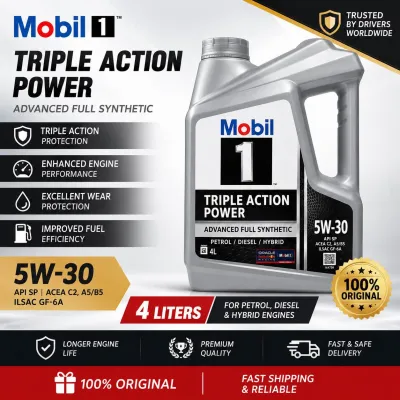
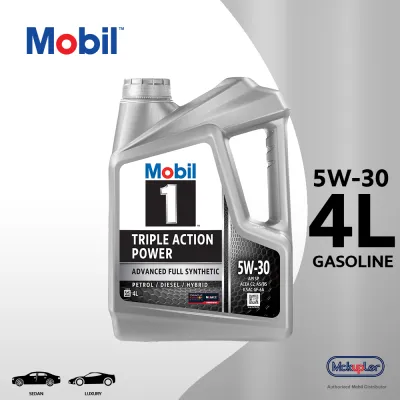
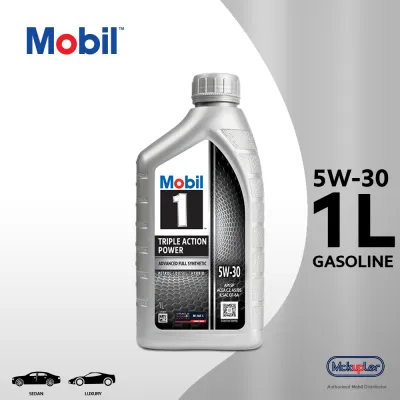
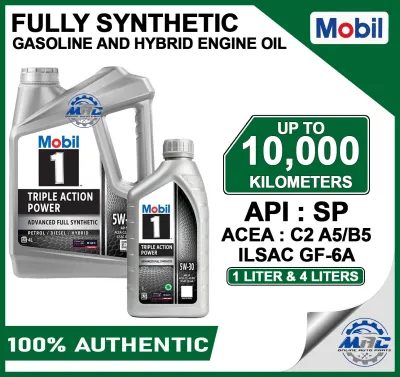
![Mobil 1 Triple Action Power 5W-30 Fully Synthetic API SP ACEA C2 A5/B5 ILSAC GF-6A 4L ( 4 Liters ) [ for gas / diesel engines ]](https://img.lazcdn.com/g/p/d7894f67b066a471dc71c274f7ed6347.jpg_400x400q80.jpg_.webp)
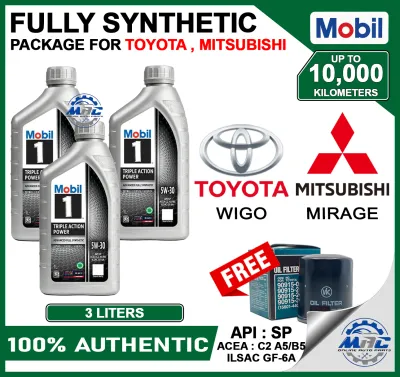
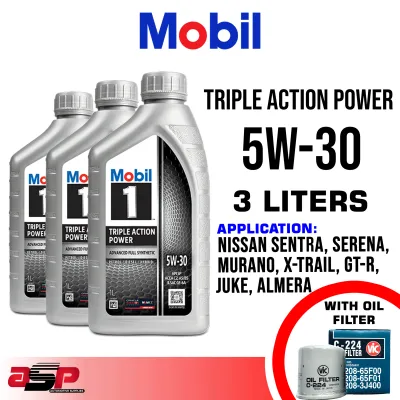
![Mobil 1 Triple Action Power 5W-30 Fully Synthetic Oil Change Package for Honda Civic Honda City Honda Jazz Brio Mobilio Honda CR-V CRV BR-V HR-V [ 4 Liters + Vic filter ]](https://img.lazcdn.com/g/p/69dd843c2e9828c064fc51e2c400112e.jpg_400x400q80.jpg_.webp)
Prices are valid at publication and may change. Please refer to the product page for the latest price.
Despite the general suitability of 5W-30, you must always verify your vehicle’s requirements in the owner’s manual. Using an incorrect viscosity grade can lead to increased engine wear, reduced fuel efficiency, or even oil starvation in tight engine clearances. The manual is the ultimate authority on whether your engine is designed to handle 5W-30 or if it requires a different viscosity altogether.
Comparing the Four Major Brands: Specifications and Formulations
Mobil 1 is a pioneer in synthetic lubrication, widely recognized for its focus on advanced wear protection and thermal stability. Formulations like Mobil 1 Triple Action Power or ESP (Emission System Protection) are engineered with proprietary additive systems designed to combat sludge and deposit buildup. These products typically carry a wide array of OEM approvals, including dexos standards and various European manufacturer certifications, making them a robust choice for modern turbocharged engines.

Shell Helix, particularly the Ultra range, stands out due to its unique gas-to-liquid (GTL) base oil technology, marketed as PurePlus Technology. This process converts natural gas into a crystal-clear base oil that is virtually free of the impurities found in crude oil. Combined with active cleansing technology, Shell Helix is formulated to keep engines closer to factory cleanliness. This focus on preventing deposit formation makes it highly suitable for drivers concerned about long-term engine efficiency.
Castrol EDGE is formulated with a focus on fluid strength under extreme pressure. Modern engines are smaller and more efficient, yet they operate at higher pressures than their predecessors, which can cause oil film breakdown. Castrol utilizes titanium-based additives designed to physically transform the oil’s behavior under pressure, increasing its film strength to prevent metal-to-metal contact. This formulation is highly targeted at drivers who demand maximum engine performance under heavy loads.
Motul 8100 is a premium, 100% synthetic engine oil series highly favored by automotive enthusiasts and owners of European vehicles. Products within the 8100 range, such as X-cess or Eco-nergy, are tailored to meet specific European Automobile Manufacturers’ Association (ACEA) standards and strict OEM specifications from brands like BMW, Mercedes-Benz, Porsche, and Volkswagen. Motul focuses on high-temperature shear stability and excellent oil flow, ensuring robust protection for high-performance and luxury engines.
When comparing these brands, it is vital to look past marketing slogans and focus on the technical specifications printed on the back label. Every bottle lists its API (American Petroleum Institute) and ACEA classifications, alongside specific OEM approval codes. These certifications are the only objective proof of an oil’s performance capabilities and compatibility with your specific engine.
Key Decision Factors for Your Vehicle and Driving Conditions
Your daily driving environment plays a massive role in determining which oil formulation is most suitable. For instance, navigating the dense, stop-and-go traffic of major Philippine metropolitan areas constitutes severe driving conditions because prolonged idling and frequent acceleration generate high engine temperatures with minimal cooling airflow. In such environments, an oil with exceptional thermal stability and shear resistance is necessary to prevent the oil from thinning out prematurely.
Your expectations regarding oil change intervals should also guide your choice. While fully synthetic oils are designed to resist degradation over longer periods, operating in high-humidity and dusty environments can introduce contaminants into the crankcase. If you prefer to stretch your drain intervals to the maximum allowable limit, you should look for formulations specifically labeled for extended performance, while still adhering to the time limits recommended by your vehicle manufacturer.
Vehicle age and mileage are equally critical factors. As engines age, internal clearances can widen, and rubber seals can become brittle, leading to minor oil consumption or leaks. While standard 5W-30 fully synthetic oil provides excellent protection, high-mileage vehicles may benefit from specialized formulations containing seal conditioners. If your vehicle has surpassed 100,000 kilometers, check if the brand you choose offers a high-mileage variant that meets your required specifications.
Finally, consider your engine’s specific technology, such as turbocharging and direct injection. These modern systems are highly efficient but are susceptible to a phenomenon known as Low-Speed Pre-Ignition (LSPI), which can cause severe engine damage. To protect against this, ensure the oil you select meets the latest API SP or ILSAC GF-6 standards, which are specifically formulated to mitigate LSPI risks in modern downsized engines.
How to Verify Compatibility and Read Oil Labels
To ensure absolute compatibility and protect your vehicle’s warranty, you must learn to read and interpret the technical labels on engine oil bottles. Start by opening your vehicle’s owner’s manual and locating the engine oil specification page. Here, you will find the required viscosity grade alongside specific industry standards or proprietary manufacturer codes, such as VW 504.00/507.00, BMW Longlife-04, or GM dexos1 Gen 3.
Next, examine the back label of the oil bottle you intend to purchase. Look for the API service symbol (often called the API Donut) or the technical specifications list. The API service category is represented by a two-letter code; for gasoline engines, look for the latest standards like SP or SN Plus. If your vehicle is European, pay close attention to the ACEA sequences, such as A3/B4 for high-performance gasoline and light diesel engines, or C3 for vehicles equipped with diesel particulate filters.
Cross-reference the OEM approval list on the bottle with the codes from your manual. It is not enough for an oil to be recommended for a certain specification; it should ideally carry the official approval from the vehicle manufacturer. This indicates that the oil formulation has undergone rigorous testing and has been officially certified by the OEM to protect their specific engine designs.
Establish a strict rule for your maintenance routine: if the specifications on the oil bottle do not align perfectly with the requirements in your vehicle manual, do not use it. Using incompatible oil can lead to accelerated component wear, emissions system failure, or voided warranties. If you encounter any conflicting information or are unsure about a specific specification, abort the purchase and consult a qualified professional or an authorized dealership service center.
Value Assessment: Pricing and Availability in the Philippines
Fully synthetic engine oils represent a premium investment in your vehicle’s longevity, and pricing in the Philippines reflects this high-tier positioning. Generally, a high-quality 5W-30 fully synthetic oil ranges from approximately ₱500 to over ₱1,200 per liter. Motul 8100 and specialized Mobil 1 formulations typically occupy the higher end of this price range due to their imported status and specialized OEM approvals. Shell Helix Ultra and Castrol EDGE often provide highly competitive options that balance premium performance with broader market availability.
Due to the premium price of these oils, counterfeit products are a persistent issue in the local market. Using fake engine oil can cause catastrophic engine failure due to inadequate lubrication and rapid thermal breakdown. To protect your engine, always purchase oil from authorized physical dealers, official brand stores on reputable online marketplaces, or well-known automotive service chains. Be highly suspicious of online listings offering these premium brands at prices significantly lower than the established market average.
When calculating the total cost of an oil change, remember to look beyond the price of the oil itself. A standard oil change requires purchasing the correct volume of oil—usually between 4 and 6 liters for most passenger cars and compact SUVs—alongside a high-quality replacement oil filter. If you do not have the tools or expertise to perform the oil change safely at home, you must also factor in professional labor fees at a trusted local service center. Proper disposal of the used engine oil is also a critical safety and environmental consideration that professional shops handle automatically.
Final Selection Framework: Which 5W-30 Oil Fits Your Needs?
To make your final decision, align your vehicle’s specific requirements and your driving priorities with the core strengths of each brand. Choose Mobil 1 if your vehicle manual requires specific American or Japanese OEM approvals and you want a highly trusted, globally proven formula designed for long-lasting wear protection and thermal stability.
Select Shell Helix if your primary goal is maintaining internal engine cleanliness, preventing sludge buildup, and you prefer a highly refined base oil derived from natural gas. Shell Helix is also an excellent choice if you value the convenience of purchasing and servicing your vehicle at widely accessible local Shell stations across the country.
Opt for Castrol EDGE if you drive a high-compression, modern turbocharged engine that operates under high loads, and you want an oil formulated to maximize oil film strength and reduce friction under extreme pressure.
Choose Motul 8100 if you own a European vehicle that demands strict compliance with specific manufacturer standards, such as those from BMW, Mercedes-Benz, or the Volkswagen Group, and you prefer a premium, enthusiast-grade formulation with high-temperature shear stability.
Before making your final purchase, always verify if your vehicle has any aftermarket performance modifications or unique operating requirements that might necessitate a specialized lubricant. If your required OEM specification is missing from all four of these options, do not compromise; continue searching for a product that carries the exact certification specified by your vehicle’s manufacturer.
Frequently Asked Questions (FAQ)
Can I mix different brands of 5W-30 fully synthetic oil?
While mixing different brands of 5W-30 fully synthetic oil is generally safe in an emergency top-up situation to prevent low oil levels, it is not recommended for a standard oil change. Each brand utilizes a unique, proprietary blend of chemical additives designed to work cohesively. Mixing different brands can dilute the effectiveness of these additive packages, potentially reducing the oil’s overall protective capabilities and lifespan. For optimal performance, always perform a complete oil change using a single brand and product line.
How often should I change my 5W-30 fully synthetic oil?
You should always determine your oil change interval based on your vehicle owner’s manual and your actual driving conditions, rather than relying solely on the maximum mileage claims printed on the oil bottle. In the tropical climate and heavy stop-and-go traffic of the Philippines, engines operate under severe conditions. Consequently, most manufacturers recommend changing fully synthetic oil every 5,000 to 10,000 kilometers, or every six months, whichever comes first, to ensure continuous engine protection and prevent oil degradation.

Community discussion
Share your experience or ask a question. Comments are reviewed before publication.