
To get a motorcycle USB charger that actually fast charges your phone while riding, you must match the charger’s output protocol and wattage to your phone’s specific fast-charging requirements. Simply buying a charger labeled “fast charge” is rarely enough. If the protocols do not align, your phone will default to a slow, standard charging rate, which often fails to keep up with the power drained by GPS navigation and high screen brightness under the bright midday sun.
Navigating busy highways or winding provincial roads requires a reliable power source. When your phone is mounted on the handlebars, it continuously fights battery drain from active mobile data, GPS tracking, and maximum screen brightness to combat glare. Understanding how to align your phone’s power needs with your motorcycle’s electrical accessories ensures your device stays powered throughout your journey.
Identify Your Phone's Fast Charging Protocol
The first step in selecting a motorcycle charger fast charge setup is identifying which fast-charging protocol your phone uses. Modern smartphones rely on specific communication standards to negotiate higher voltages and currents safely. The two most common open standards are USB Power Delivery (PD) and Qualcomm Quick Charge (QC).
Products mentioned in this guide
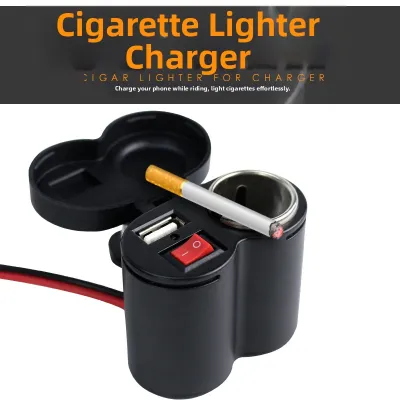
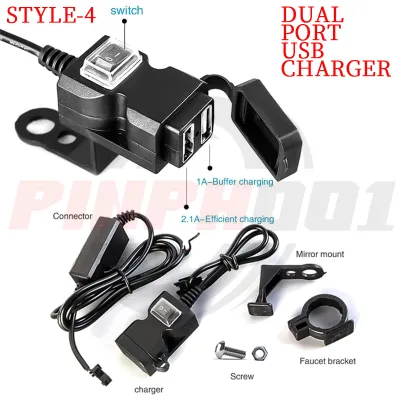
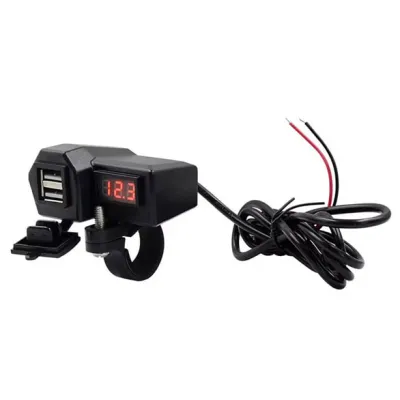
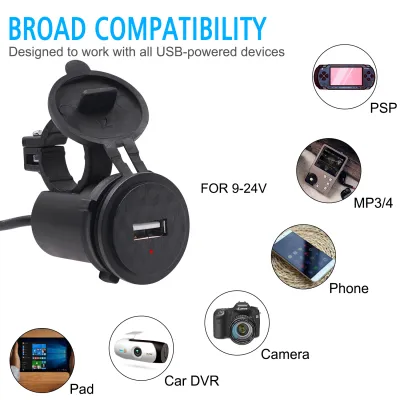
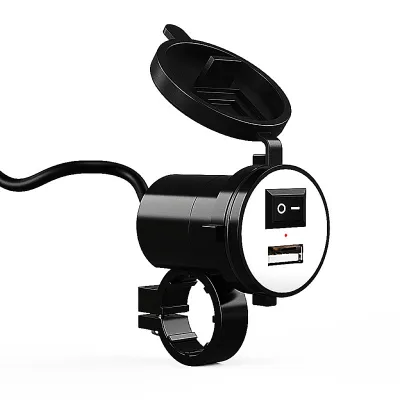
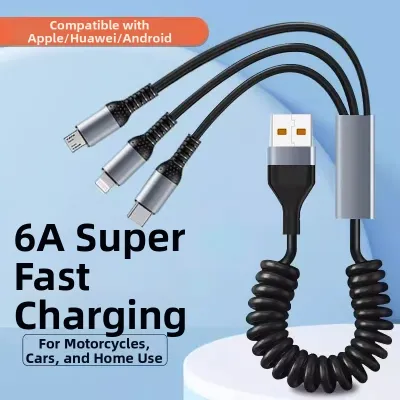
Prices are valid at publication and may change. Please refer to the product page for the latest price.
USB Power Delivery is the standard used by most modern devices, including iPhones and Google Pixel phones. This protocol almost always requires a USB-C to USB-C or USB-C to Lightning connection to function. If your motorcycle charger only features older USB-A ports, it will not support the fast-charging rates required by PD-enabled devices.
On the other hand, many Android devices utilize Qualcomm Quick Charge. This protocol is highly common on chargers with USB-A ports, particularly QC 3.0. While some newer versions of Quick Charge are compatible with USB PD, older QC-only chargers will not fast charge a PD-dependent phone.
Additionally, several manufacturers use proprietary fast-charging technologies, such as VOOC, SuperVOOC, or Warp Charge. If your phone relies on one of these proprietary systems, it will typically revert to standard, slower charging speeds (usually 10W) when connected to a generic third-party motorcycle charger. To achieve the fastest speeds for these devices, you must verify if the motorcycle charger explicitly supports their specific proprietary protocol, or accept a standard fast-charging rate via USB PD or QC.
Match the Wattage to Your Device's Maximum Input
Once you know the correct protocol, you must match the charger’s wattage to your phone’s maximum wired charging input. You can find this specification in your phone’s user manual or on the manufacturer’s official website. Common fast-charging wattages range from 18W to 45W, though some high-end devices can accept much more.
Using a motorcycle charger with a higher wattage rating than your phone requires is completely safe. For example, if your phone maxes out at 20W, plugging it into a 45W USB PD motorcycle charger will not damage the device. The phone’s internal power management system regulates the power intake, drawing only the maximum wattage it is designed to handle.
However, buying an underpowered charger will prevent fast charging. If your phone requires 25W to fast charge and you connect it to a 10W port, it will charge slowly. On a motorcycle, this slow rate might not even cover the power consumed by running a navigation app with the screen turned on, resulting in a battery that slowly drains even while plugged in.
To ensure reliable performance, select a charger that offers a slight wattage buffer. A dual-port charger that delivers at least 18W to 30W from a single USB-C port is generally ideal for most modern smartphones. If you plan to charge two devices simultaneously, such as your phone and an intercom headset, ensure the charger’s specifications state that it can deliver high wattage to both ports at the same time, rather than splitting a low total wattage between them.
Evaluate Motorcycle-Specific Charger Features
Unlike car chargers that sit safely inside a cabin, a motorcycle charger is exposed to harsh environmental conditions. Riding in tropical climates like the Philippines means your gear must withstand intense heat, high humidity, and sudden heavy downpours.
First, verify the charger’s input voltage range. Most motorcycle electrical systems operate on a 12V DC system, but some chargers are designed to handle 12V to 24V. Always check the product label to ensure compatibility with your specific bike’s battery output.
Second, prioritize weatherproofing and physical durability. Look for a charger with an IP65 or IP66 dust and water resistance rating. It should feature a tight-fitting, durable rubber cap that completely seals the USB ports when not in use to prevent water intrusion, which can cause short circuits or corrosion. Avoid cheap, unbranded chargers that lack safety fuses, as they pose a risk to your bike’s wiring.
Finally, safety protections are critical. Because motorcycle alternators can experience voltage fluctuations, the charger must have built-in safeguards. Ensure the manufacturer’s specifications list overcurrent, overvoltage, short-circuit, and over-temperature protections.
Safety Boundary Warning: Installing a charger involves electrical work on your motorcycle. Incorrect wiring can drain your battery, damage your bike’s electrical harness, or void your warranty. Always refer to your original vehicle documentation for wiring guidelines. If you are not experienced with motorcycle electronics, it is highly recommended to have the charger installed by a qualified motorcycle mechanic or auto electrician, particularly when connecting it to a switched power source that turns off with the ignition.
Step-by-Step Compatibility Checklist Before You Buy
Before purchasing a motorcycle charger, run through this quick verification process to ensure you get genuine fast-charging performance on the road:
- Check Phone Specs: Identify your phone's fast-charging protocol (PD or QC) and its maximum supported wattage.
- Verify Charger Output: Confirm the charger's port (USB-C or USB-A) supports that exact protocol and matches or exceeds the required wattage.
- Select the Right Cable: Ensure your charging cable is rated for the target wattage. A standard, cheap cable will bottleneck the power transfer and drop the speed to standard charging.
- Confirm Mounting and Clearance: Verify the charger's mounting bracket fits your handlebars or mirror stem without obstructing your steering, brake levers, or instrument cluster.
- Plan the Wiring: Decide whether to connect directly to the battery (requiring an inline fuse and manual switch) or to a switched power source, and consult a professional if needed.
Frequently Asked Questions (FAQ)
Will a high-wattage motorcycle charger damage my phone's battery?
No, a high-wattage charger will not damage your phone. Modern smartphones feature sophisticated internal power management circuits that communicate with the charger to negotiate the exact voltage and current needed. The phone will only draw its maximum supported power, even if connected to a much more powerful charger.
Why is my phone charging slowly even with a fast motorcycle charger?
Slow charging on a motorcycle is usually caused by a bottlenecked cable, using the wrong port, or thermal throttling. In hot tropical climates, direct sunlight combined with the heat generated by running GPS navigation can cause your phone to overheat. To protect the battery from permanent heat damage, the phone’s operating system will automatically throttle or halt charging until the device cools down.

Community discussion
Share your experience or ask a question. Comments are reviewed before publication.