
When navigating the busy streets of Manila or cruising along provincial highways in the Philippines, a reliable motorcycle helmet is your most critical piece of safety gear. If you have been searching for “sec helmet” certifications, you are likely trying to verify whether your headgear meets the legal and physical safety requirements for local roads. To clear up a very common misconception right away: “SEC” is a popular local brand of motorcycle helmets (SEC Motosupply), not an official safety certification or regulatory body.
In the Philippines, the Securities and Exchange Commission (SEC) regulates corporate registrations, not road safety equipment. The actual authorities responsible for testing and certifying motorcycle helmets are the Department of Trade and Industry (DTI) and the Bureau of Philippine Standards (BPS). For any helmet to be road-legal in the country, it must bear either a Philippine Standard (PS) mark or an Import Commodity Clearance (ICC) sticker. This guide will decode what these safety marks mean, how they differ, and how you can ensure your helmet keeps you safe and compliant under local laws.
The "SEC" Misconception: Understanding DTI-BPS and the PS/ICC Marks
The confusion surrounding “sec helmet” searches usually stems from a mix-up between a brand name and a government acronym. SEC Motosupply is a well-known, widely distributed brand in the local riding community, offering affordable full-face, modular, and dual-sport helmets. Because these helmets are highly visible on the road, some riders mistakenly assume “SEC” is a safety standard similar to DOT or ECE. In reality, the Securities and Exchange Commission has absolutely nothing to do with impact testing or helmet approvals.
Products mentioned in this guide
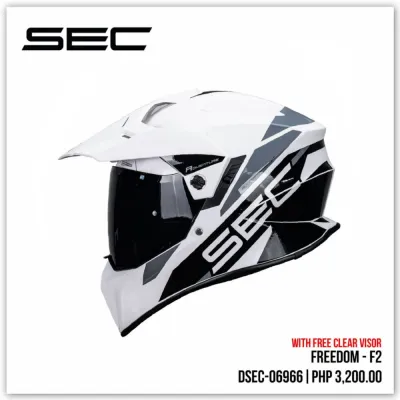
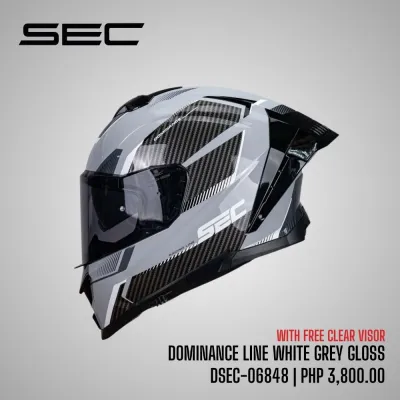
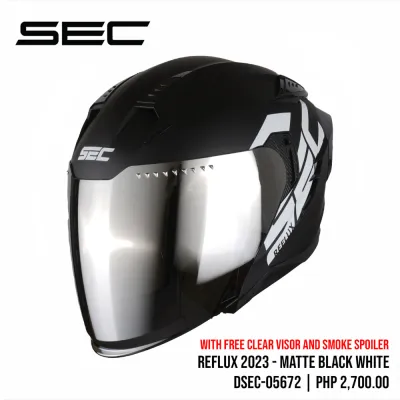
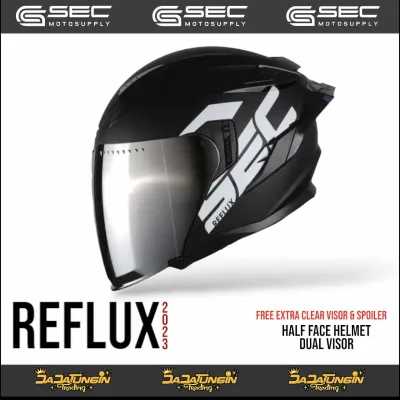
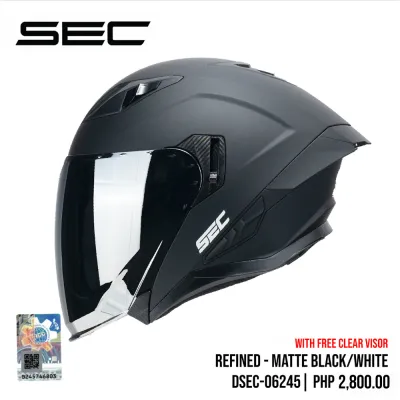
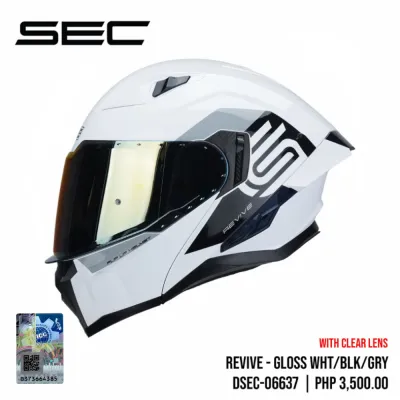
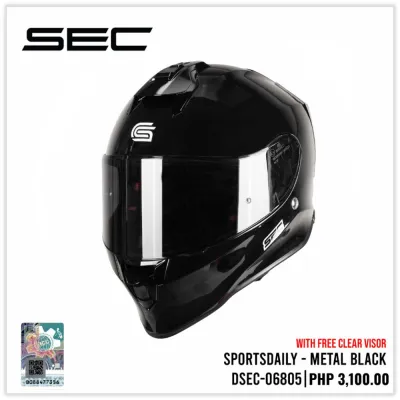
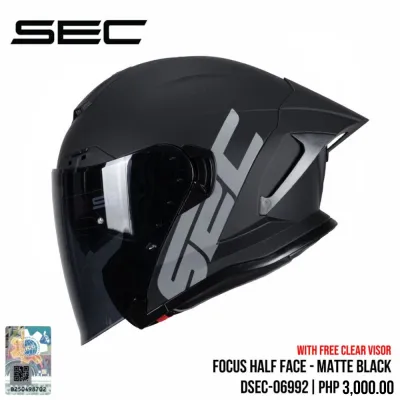
Prices are valid at publication and may change. Please refer to the product page for the latest price.
To guarantee that a helmet can withstand a crash, the DTI and the BPS subject protective headgear to rigorous national safety evaluations. The BPS is the sole government entity tasked with implementing the Philippine National Standards (PNS) for consumer products. Helmets are classified as mandatory products, meaning they cannot be legally sold or used on public roads without undergoing strict quality audits.
The BPS manages this regulatory oversight through two distinct certification programs: the PS mark and the ICC mark. These stickers serve as proof that the helmet has passed standardized tests simulating real-world crash scenarios. Whether you ride a premium imported model or a budget-friendly local brand, your helmet must carry one of these official seals to be deemed road-worthy.
Decoding the Specifications: PS Mark vs. ICC Mark
While both the PS and ICC marks guarantee that a helmet complies with the Philippine National Standard, they apply to different manufacturing origins. Understanding the difference helps you make informed decisions when browsing gear at your local motorcycle shop.

The PS (Philippine Standard) mark is issued to helmets manufactured locally within the Philippines. To obtain this certification, domestic manufacturers must submit their production facilities to regular BPS factory audits. These audits ensure that the manufacturing process remains consistent, quality control is maintained, and every batch of helmets produced meets the national standard. The PS license number is typically printed directly on the sticker or the helmet’s packaging.
The ICC (Import Commodity Clearance) mark, on the other hand, is designed for imported helmets. Since the vast majority of helmets sold in the Philippines are manufactured overseas, the ICC sticker is the most common certification mark you will see. Before an importer can distribute a batch of helmets, the BPS conducts random sampling and testing on the shipment. Once the batch passes these checks, the importer is issued physical ICC stickers with unique serial numbers to be affixed to each individual helmet.
Both certifications guarantee that the helmet has successfully undergone national safety testing. These evaluations assess critical performance metrics, including:
- Impact absorption: How well the inner EPS liner dampens and distributes crash forces to protect the brain.
- Retention system strength: Ensuring the chinstrap and buckle remain securely fastened during sudden movements or impacts.
- Field of vision: Verifying that the helmet's shell and visor design do not excessively obstruct the rider's peripheral sight.
- Penetration resistance: Testing the outer shell's ability to resist piercing by sharp objects during an accident.
Legal Requirements and the Motorcycle Helmet Act (RA 10054)
Riding without a certified helmet in the Philippines is not just dangerous—it is a serious traffic violation. The primary legislation governing this is Republic Act No. 10054, also known as the Motorcycle Helmet Act of 2009. While general traffic regulations fall under older codes like RA 4136, RA 10054 specifically mandates the use of standard protective motorcycle helmets.
Under this law, all motorcycle riders—including both the driver and the pillion passenger—are strictly required to wear a standard protective helmet while operating a motorcycle on any road or highway. The law explicitly states that these helmets must bear the valid PS or ICC certification mark. This mandate applies to all types of trips, whether you are commuting to work in heavy city traffic or taking a quick ride to a nearby convenience store.
The law also clarifies what does not qualify as a standard protective helmet. Non-compliant headgear, such as bicycle helmets, skateboard helmets, construction hard hats, “half-helmets” (which do not cover the ears or the back of the head), and uncertified novelty skull caps, are strictly illegal for motorcycle use. These substandard options fail to provide adequate protection during high-speed impacts or slides on asphalt.
Enforcement of RA 10054 is carried out by the Land Transportation Office (LTO) and authorized local traffic enforcers. Rather than relying on static or outdated online lists of fine amounts, riders should regularly check official LTO advisories and guidelines. Penalties for failing to wear a certified helmet, or for carrying a passenger without one, can include substantial fines and the temporary confiscation of your driver’s license.
How to Verify Certification Labels and Avoid Counterfeits
Due to the high demand for compliant helmets, counterfeit PS and ICC stickers have unfortunately become common in some unauthorized markets. Riding with a fake sticker on a substandard helmet exposes you to severe head injuries. Fortunately, you can perform several low-risk visual and physical checks to verify your helmet’s authenticity.
First, closely inspect the physical characteristics of the certification sticker. Genuine ICC stickers issued by the DTI-BPS feature a distinct holographic background that shifts color when tilted under light. They also display a clear, high-resolution DTI logo and a unique, printed serial number. If the sticker is a flat, non-holographic print, or if the text is blurry and poorly aligned, it is highly likely a counterfeit.
Second, look beyond the sticker and check the helmet’s permanent interior labels. High-quality, certified helmets feature a permanent fabric tag sewn into the chinstrap or the inner comfort liner. This tag typically lists the manufacturer’s name, model designation, production date, and the specific safety standards the helmet meets (such as ECE or DOT). If a helmet has an ICC sticker on the outside but lacks any permanent manufacturing labels on the inside, treat it with extreme suspicion.
Third, consider the environmental factors of riding in the Philippines. The intense tropical heat, high humidity, and heavy monsoon rains can cause adhesive stickers to peel or degrade over time. A genuine sticker is made of durable material designed to withstand these conditions, whereas cheap, counterfeit stickers often peel off easily with a fingernail or bubble up under direct sunlight.
To guarantee you are purchasing a genuine, certified product, always buy your riding gear from authorized dealers, official brand stores, or reputable physical motorcycle accessory shops. These establishments source their inventory directly from official distributors, ensuring that your helmet comes with a valid manufacturer warranty and genuine BPS certification.
Local Marks vs. International Standards (DOT, ECE, Snell)
When shopping for helmets, you will frequently see acronyms like DOT, ECE, and Snell printed on the back of the shell. These represent highly respected international safety standards:
- DOT (Department of Transportation): The federal safety standard required for helmets sold in the United States (FMVSS 218).
- ECE (Economic Commission for Europe): The widely accepted European standard (such as ECE 22.05 or the newer ECE 22.06), which involves rigorous batch testing and is used by many professional racing organizations.
- Snell: A voluntary, highly demanding testing standard managed by the independent Snell Memorial Foundation.
While these international certifications often involve testing procedures that are equal to or more stringent than local standards, they do not automatically grant legal road status in the Philippines. Under local law, even if a premium helmet is certified by ECE or Snell, it must still carry a valid PS or ICC sticker to be legally used on public roads. The BPS must officially validate the import batch to ensure the product entering the local market complies with Philippine regulations.
However, having these international marks is an excellent supplementary indicator of quality. A helmet that carries both an ECE certification and a local ICC sticker offers the best of both worlds: world-class impact protection and complete legal compliance on Philippine roads.
Frequently Asked Questions (FAQ)
Can I use a helmet with only a DOT or ECE mark without a PS or ICC sticker?
Legally, no. While a DOT or ECE mark indicates that the helmet meets high international safety standards, Philippine law (RA 10054) specifically mandates that all helmets worn on public roads must bear a valid PS or ICC sticker issued by the DTI-BPS. If you purchase an imported helmet that only has international marks, you must ensure it has undergone the official import clearance process and received an authentic ICC sticker before using it on the road.
How do I verify if a helmet's PS or ICC mark is authentic?
You can verify authenticity by conducting a visual inspection of the sticker’s holographic security features, checking for a unique serial number, and looking for the permanent manufacturer label sewn inside the helmet’s lining. Additionally, you can cross-reference the helmet’s brand and model with the list of certified products on the official DTI-BPS portal, or purchase directly from authorized distributors who provide official receipts and warranties.
Are open-face helmets required to have the same PS/ICC certification as full-face helmets?
Yes, the legal requirement applies to all standard protective motorcycle helmets regardless of their design style. Whether you choose a full-face, modular, or open-face (three-quarter) helmet, the product must meet the Philippine National Standard and carry a valid PS or ICC mark. However, extremely minimalist designs like half-helmets, novelty skull caps, or bicycle helmets do not qualify as standard protective gear and remain illegal for motorcycle use on public roads.

Community discussion
Share your experience or ask a question. Comments are reviewed before publication.