
When you purchase a motorcycle helmet in the Philippines, you will likely notice a distinct sticker affixed to the back of the shell. These stickers, bearing either the PSB or ICC logo, are not mere decorative decals; they are critical indicators of safety compliance and legal road worthiness. Understanding what these marks represent, how they differ, and how to verify their authenticity is essential for protecting your life and avoiding costly traffic fines.
Navigating the market for protective riding gear can be challenging, especially with the influx of counterfeit products on online marketplaces. To ensure your head protection is genuinely capable of absorbing impact during an accident, you must know how to distinguish legitimate certification marks from cheap, unauthorized replicas. This guide breaks down the regulatory framework behind these safety standards and provides a practical verification process.
What the PSB and ICC Marks Actually Mean
The PSB and ICC marks serve as the official seals of approval from the Bureau of Philippine Standards (BPS), an agency operating under the Department of Trade and Industry (DTI). These marks verify that a motorcycle helmet has undergone rigorous quality and safety evaluations to ensure compliance with the Philippine National Standards (PNS). While both marks carry the same legal weight for road use, they apply to different product origins.
Products mentioned in this guide
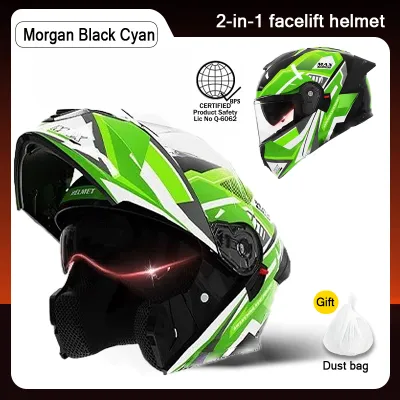
Prices are valid at publication and may change. Please refer to the product page for the latest price.
The PSB (Product Standards Bureau) mark, often referred to as the PS mark, is typically issued to locally manufactured helmets or specific regulated products produced within domestic facilities. When a manufacturer produces helmets within the Philippines, the BPS conducts regular audits of the factory’s production processes and subjects random product samples to laboratory testing. Once the manufacturer proves consistent compliance with safety standards, they are authorized to print or affix the PS license mark on their products.
Conversely, the ICC (Import Commodity Clearance) mark is mandatory for imported motorcycle helmets. Because the manufacturing facilities for these helmets are located outside the Philippines, the BPS cannot easily conduct continuous factory audits. Instead, imported shipments are subjected to sampling and testing upon arrival at Philippine ports. If the imported batch successfully meets the required safety parameters, the DTI issues an ICC certificate along with corresponding holographic stickers to be placed on each individual helmet before they enter local retail channels.
Ultimately, the distinction between the two marks comes down to where the helmet was made or assembled. A locally produced helmet will bear the PS mark, while a fully built imported helmet will feature the ICC sticker. Both indicate that the specific model has been cleared by the Philippine government for retail and consumer use.
Why These Certifications Matter for Safety and Legality
Operating a motorcycle on public roads in the Philippines requires strict adherence to national traffic safety laws. Under Republic Act No. 10054, also known as the Motorcycle Helmet Act of 2009, all motorcycle riders and backriders must wear standard protective motorcycle helmets while riding. The law explicitly mandates that these helmets must bear the official ICC or PSB/PS certification marks to be considered legally compliant.

During routine checkpoints or random inspections, traffic enforcers from the Land Transportation Office (LTO) and local government units actively inspect helmets for these stickers. Riding with a helmet that lacks a visible, legitimate certification mark can result in heavy administrative fines, license confiscation, or even vehicle impoundment. These legal penalties are designed to deter riders from using substandard gear that fails to provide adequate protection.
Beyond legal compliance, these marks represent a baseline of physical safety. Before a helmet receives its certification, representative samples are subjected to dynamic testing simulating real-world crash scenarios. These evaluations check the helmet’s performance across several critical categories:
- Impact Absorption: Measuring how well the inner EPS liner cushions the head and dissipates forces during a collision.
- Penetration Resistance: Ensuring sharp objects cannot easily pierce the outer shell and reach the rider's skull.
- Retention System Strength: Testing the chin strap and buckle to ensure the helmet remains securely on the rider's head during an impact.
- Peripheral Vision: Verifying that the helmet's design does not dangerously obstruct the rider's field of view.
Using uncertified “novelty” helmets or cheap counterfeits exposes you to extreme physical danger. These substandard products often feature thin plastic shells and low-grade packing foam instead of high-density expanded polystyrene (EPS). In a crash, a non-compliant helmet can easily crack or fly off, offering virtually zero protection against traumatic brain injuries.
How to Verify the Authenticity of PSB and ICC Marks
Because of the strict legal requirements, unscrupulous sellers often print counterfeit ICC or PSB stickers and apply them to cheap, uncertified helmets. To protect yourself from purchasing a fraudulent product, you should perform a thorough three-step verification process before buying any motorcycle helmet.
1. Perform a Visual Inspection
Legitimate ICC and PSB stickers are manufactured with specific security features that are difficult for counterfeiters to replicate. When examining a sticker, look for the following physical characteristics:
- Holographic Properties: Genuine stickers feature a distinct metallic, multi-colored holographic sheen. When you tilt the helmet under direct light, the background colors and patterns should shift smoothly.
- Crisp Micro-Printing: The text, BPS logo, and borders on a real sticker are sharp and clear. Counterfeit stickers are often printed on basic adhesive paper using low-resolution printers, resulting in pixelated edges, blurry text, or bleeding colors.
- Tamper-Evident Material: Official stickers are designed to tear or self-destruct if someone attempts to peel them off. If a sticker looks easily removable, has lifted edges, or appears to have been transferred from another helmet, treat it with high suspicion.
- Unique Serial Numbers: Every legitimate sticker contains a unique alphanumeric serial number printed clearly on its face.
2. Check the Certificate Number
The unique serial number or license number on the sticker is your direct link to the DTI database. You can verify this number to confirm if the helmet model and brand are genuinely certified:
- Locate the alphanumeric code printed on the ICC or PS sticker.
- Visit the official website of the Bureau of Philippine Standards or use the DTI's online verification portals, if available.
- Cross-reference the serial number to check if it matches the registered brand, model, and importer details.
- If online databases are temporarily offline, you can contact a regional DTI office to verify the legitimacy of the certificate number.
3. Evaluate the Seller and Packaging
Where you buy your gear is just as important as the sticker itself. Avoid buying helmets from unverified, third-party sellers on online marketplaces or informal roadside stalls, as these are common sources of counterfeit goods. Instead, purchase your gear from authorized physical dealerships, official flagship brand stores, or highly reputable retail chains.
Additionally, check the helmet’s original packaging. A genuine, certified helmet will typically come in a branded box containing a user manual, a protective cloth bag, and matching documentation or warranty cards. These documents often reference the local distributor responsible for importing and clearing the product through the BPS.
Local Marks vs. International Standards (DOT, ECE, SNELL)
Many premium motorcycle helmets sold in the Philippines are designed and manufactured by global brands. These helmets often carry prominent labels indicating compliance with international safety standards, such as DOT (United States), ECE (Europe), or SNELL (Snell Memorial Foundation). While these international certifications represent excellent safety benchmarks, they do not automatically grant legal compliance for road use in the Philippines.
Under local regulations, any imported helmet must still undergo the official BPS evaluation and import clearance process to receive an ICC sticker. Even if a helmet is certified under the highly rigorous European ECE 22.06 standard, it is technically not cleared for retail or road use in the local market until the importer completes the local documentation and the BPS issues the physical ICC sticker. Traffic enforcers are trained to look specifically for the local holographic sticker, and they may still issue a citation if your helmet only features international markings.
For the highest level of safety and complete legal peace of mind, the ideal setup is a helmet that carries both international and local certifications. A premium, legally compliant helmet will typically feature an ECE, DOT, or SNELL label integrated into the helmet’s graphics or sewn directly into the interior comfort liner, alongside a valid, verifiable ICC sticker affixed to the exterior shell. Always refer to the helmet manufacturer’s original user manual for specific guidance on fit, proper strap adjustment, and shell care to maintain the integrity of these safety systems.
Frequently Asked Questions (FAQ)
Is it legal to ride with a helmet that only has a DOT or ECE mark but no ICC/PSB sticker?
No, it is not legally compliant to ride on public roads in the Philippines with a helmet that only displays international marks like DOT or ECE. While these marks prove that the helmet meets high global engineering and safety standards, Philippine law specifically requires the physical presence of the local ICC or PSB/PS sticker issued by the BPS. If a traffic enforcer stops you during a checkpoint and finds no local certification sticker, you can still be apprehended and fined for violating the Motorcycle Helmet Act.
Can I use a second-hand motorcycle helmet if the PSB/ICC mark is faded or missing?
Using a second-hand helmet with a missing or faded certification mark is highly discouraged for both safety and legal reasons. From a legal standpoint, if the sticker is no longer visible or legible, traffic enforcers cannot verify its compliance, leaving you vulnerable to fines.
From a safety standpoint, helmets have a limited operational lifespan and degrade over time due to UV exposure, humidity, and sweat. More importantly, helmets are designed to protect you from a single major impact; once a helmet has been dropped or involved in an accident, its internal EPS liner collapses to absorb the force, rendering it useless for future impacts. Because you cannot easily verify the structural history or age of a used helmet, it is always safer to purchase a brand-new, fully certified helmet from an authorized dealer.

Community discussion
Share your experience or ask a question. Comments are reviewed before publication.