
Choosing the right spark plug cap for a motorcycle is essential for maintaining a strong, consistent spark and protecting your engine’s electrical system. There is no single “longest-lasting” material that fits every motorcycle universally. Instead, durability depends on the outer boot material’s heat resistance, the internal resistor design, and precise compatibility with your specific ignition system. In tropical climates like the Philippines, where high humidity, heavy monsoon rains, and intense engine heat are constant factors, selecting a high-quality cap is critical to prevent moisture ingress and electrical leakage. This guide compares physical shapes, internal electrical configurations, and outer boot materials to help you make an informed, condition-based replacement decision. By verifying physical and electrical specifications against your motorcycle’s requirements, you can prevent misfires, protect your engine’s electrical components, and ensure reliable ignition performance.
Understanding Spark Plug Cap Shapes and Internal Structures
Motorcycle spark plug caps come in various physical shapes and internal configurations designed to match specific engine layouts and ignition systems. The physical shape of the cap is primarily dictated by the clearance around the cylinder head and the routing of the high-voltage ignition wire. Straight boots are typically used in engines where the spark plug is easily accessible from the top with ample overhead clearance. Conversely, 90-degree (elbow) boots are essential for tight spaces, such as underbone motorcycles or scooters, where the frame, fuel tank, or engine shrouds sit directly above the cylinder head. Other angles, such as 120-degree or 135-degree bends, are engineered to accommodate specific cylinder head designs, ensuring the ignition wire does not bend too sharply or rub against hot engine components.
Beyond physical shape, the internal electrical configuration of the cap is critical for system compatibility. Spark plug caps are divided into resistor and non-resistor types. Resistor caps, which typically feature an internal 5kΩ (kilohm) ceramic resistor, are designed to suppress electromagnetic interference (EMI) and radio frequency interference (RFI) generated by the ignition spark. This suppression is vital for preventing electrical noise from disrupting digital speedometers, engine sensors, and electronic control units (ECUs). Non-resistor caps allow unrestricted current flow but lack this interference protection, making them suitable only for older, purely mechanical ignition systems.
Products mentioned in this guide
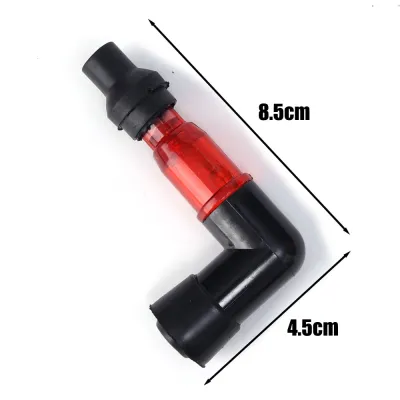
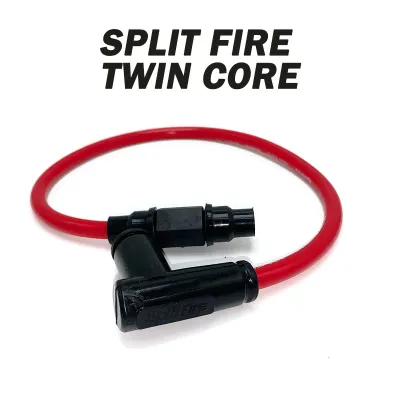
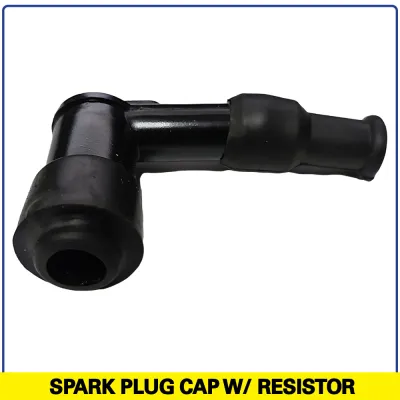
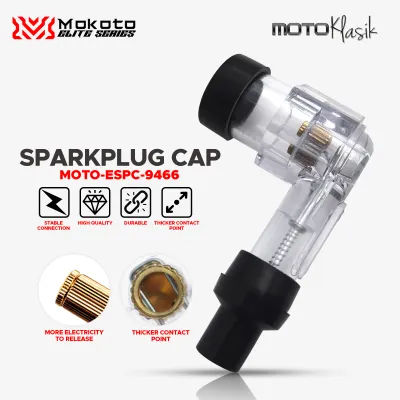
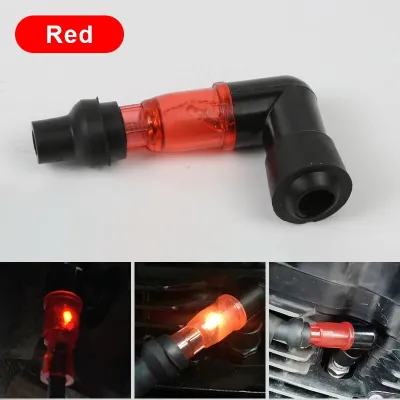
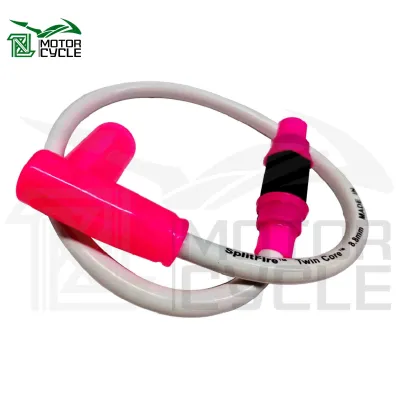
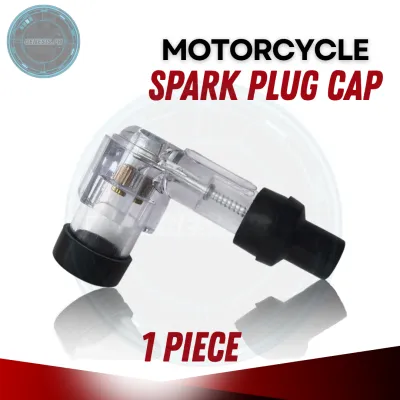
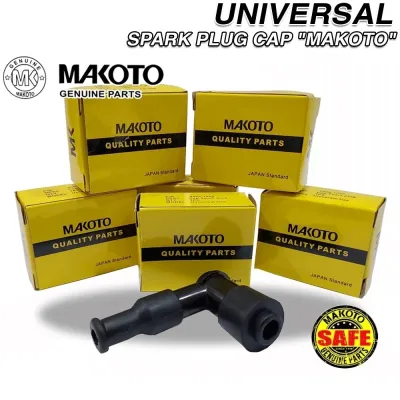
Prices are valid at publication and may change. Please refer to the product page for the latest price.
Physical shape and resistance are not the only factors to consider; the internal terminal connection must also match your spark plug and ignition wire. Spark plugs feature different terminal configurations, such as a threaded stud or a solid terminal nut. The cap’s internal terminal must match this design to ensure a secure, vibration-resistant connection. A loose connection can cause electrical arcing inside the boot, which degrades the terminal and leads to weak spark or misfires. Additionally, the connection to the high-voltage wire must be secure, typically utilizing a threaded pin that screws into the wire’s core or a spring-loaded crimp connector.
Comparing Boot Materials: Rubber vs. Silicone for Heat and Aging
The outer insulation material of a spark plug cap plays a vital role in protecting the internal electrical connections from heat, moisture, and environmental degradation. The two most common materials used for spark plug boots are standard rubber compounds, such as Ethylene Propylene Diene Monomer (EPDM), and silicone rubber. EPDM rubber is highly durable, offering excellent mechanical strength, resistance to tearing, and effective sealing against water and road grime. However, under continuous exposure to extreme engine heat, UV rays, and ozone, standard rubber compounds tend to lose their flexibility over time. This leads to hardening, brittleness, and the formation of micro-cracks, which can allow moisture to penetrate the boot and cause electrical shorting.

Silicone rubber boots offer superior temperature tolerance compared to standard rubber, remaining highly flexible at both extremely high and low temperatures. Silicone is exceptionally resistant to UV degradation and ozone aging, making it highly durable in hot, tropical environments where engine temperatures run high. This flexibility also makes silicone boots less prone to cracking over years of service. However, silicone is generally softer than EPDM rubber and has lower tear strength. If a silicone boot is pulled or twisted aggressively during removal or installation, it can tear more easily, compromising its sealing ability.
It is important to note that material names alone do not guarantee an absolute lifespan. When selecting a replacement cap, you must verify the manufacturer’s stated temperature ratings, environmental resistance, and sealing lip design. A high-quality cap features robust sealing ribs at both the spark plug entry and the wire connection point to keep out water, dust, and road salt.
The durability of the cap also depends heavily on its internal metal components. In humid or coastal environments, moisture can easily find its way into the cap, leading to corrosion. High-quality caps utilize brass or stainless-steel springs and terminals rather than cheap plated steel. Brass and stainless steel offer superior corrosion resistance, maintaining consistent electrical conductivity and preventing the buildup of high-resistance oxides that can weaken the spark and cause ignition failure.
Matching the Cap to Your Motorcycle's Ignition Specifications
Before purchasing or installing a replacement spark plug cap, verifying its compatibility with your motorcycle’s ignition specifications is critical. The first step is always to consult your motorcycle’s official service manual or parts catalog. This documentation provides the exact Original Equipment Manufacturer (OEM) part number, physical dimensions, boot angle, and required internal resistance value. Installing a cap with incorrect specifications can lead to poor engine performance, ignition system strain, or electrical interference.
Using a non-resistor cap on a modern fuel-injected or digitally managed motorcycle is highly risky. Modern engines rely on sensitive electronic control units (ECUs) and various sensors to manage fuel injection, ignition timing, and emissions. Without the electromagnetic interference (EMI) suppression provided by a resistor cap, the high-voltage electrical noise can feed back into the motorcycle’s wiring harness. This interference can corrupt sensor signals, leading to erratic idling, sudden stalling, false engine trouble codes, or even permanent damage to the expensive ECU. Always ensure the replacement cap matches the exact resistance rating specified by the manufacturer.
A strict safety boundary must be maintained when dealing with ignition components. If you encounter conflicting specifications, if the aftermarket cap’s labeling is ambiguous, or if you do not have access to the official service manual, stop immediately. Do not attempt to modify a cap to fit or guess the required resistance. Using an incorrect or poorly fitted cap can lead to severe engine misfires, electrical damage, or even a fire hazard. In these situations, consult a qualified motorcycle mechanic or contact the manufacturer directly to verify compatibility before proceeding with the installation.
Diagnosing Wear: When to Replace Your Spark Plug Boots
Regular inspection of your spark plug caps is a key part of preventative motorcycle maintenance. Before performing any inspection, ensure the motorcycle’s engine is completely cool, the ignition key is removed, and the battery’s negative terminal is disconnected to eliminate any risk of electrical shock.
Begin with a thorough visual inspection. Gently slide the boot off the spark plug by gripping the hard body of the cap—never pull on the high-voltage wire itself, as this can damage the internal core. Inspect the outer shell for fine hairline cracks, deep splits, or areas where the material has become hard and inflexible. Look for swelling or soft spots, which typically indicate contamination from engine oil or fuel leaks.
Next, look inside the spark plug cap. Use a flashlight to inspect the metal terminal connector. If you see green or white powdery deposits, this indicates corrosion from moisture ingress. Also, look for carbon tracking—fine, black, pencil-like lines on the inside of the boot or on the ceramic insulator of the spark plug. Carbon tracking is a permanent path of carbonized material created by electrical arcing; once it forms, the high-voltage current will continue to leak along this path rather than jumping the spark plug gap.
Pay attention to how your motorcycle runs. Symptoms of a failing spark plug cap include a rough or unstable idle, hesitation when twisting the throttle, misfires under heavy load, or difficulty starting the engine, especially on damp or rainy mornings. If you observe any of these physical or operational signs of wear, do not attempt temporary repairs like wrapping the boot in electrical tape. The extremely high voltage of the ignition system will easily bypass tape, leading to continued misfires. The only safe and effective solution is to replace the compromised cap immediately.
Frequently Asked Questions (FAQ)
Can I use a non-resistor cap on a modern fuel-injected motorcycle?
No, you should not use a non-resistor cap on a modern fuel-injected motorcycle. Modern engines rely on sensitive electronic control units (ECUs) and various sensors to manage fuel injection and ignition timing. A non-resistor cap allows high-frequency electromagnetic interference (EMI) to radiate from the ignition wire, which can disrupt these electronic signals. This disruption often leads to erratic engine performance, stalling, dashboard warning lights, or even physical damage to the ECU. Always use a cap that matches the manufacturer’s specified resistance.
Does applying dielectric grease extend the life of the spark plug boot?
Yes, applying a thin layer of dielectric grease inside the spark plug boot can help extend its usable life and improve reliability. Dielectric grease is a non-conductive, silicone-based compound that seals out moisture, dirt, and salt, preventing corrosion on the internal metal terminals. It also prevents the rubber or silicone boot from fusing to the ceramic insulator of the spark plug due to engine heat, making future removal much easier and reducing the risk of tearing the boot during maintenance. However, dielectric grease cannot repair existing physical cracks, restore hardened rubber, or fix internal electrical faults.

Community discussion
Share your experience or ask a question. Comments are reviewed before publication.