
Choosing between OEM and aftermarket brake shoes for your Suzuki Burgman comes down to balancing guaranteed factory compatibility against potential cost savings. OEM parts offer exact fitment and predictable performance under tropical riding conditions, while reputable aftermarket alternatives can provide reliable stopping power if you carefully verify their specifications and source. Because brakes are critical safety components, your decision should prioritize verified manufacturing standards, proper installation, and regular maintenance over unverified performance claims.
Navigating the bustling streets of the Philippines demands a highly responsive braking system. Whether you are commuting through the heavy stop-and-go traffic of Metro Manila or navigating steep, winding roads in rural provinces, your scooter’s rear drum brake is subjected to immense thermal and mechanical stress. High humidity, sudden monsoon downpours, and road debris can quickly degrade friction materials, making the choice of replacement brake shoes a vital factor in your daily safety.
To make an informed choice, you must understand how different friction formulations behave under heat and moisture, how to verify the authenticity of the parts you purchase, and how to inspect your braking system to ensure a new set of shoes can actually do its job. This guide provides a practical, step-by-step framework to help you evaluate your options and maintain optimal stopping power.
Products mentioned in this guide
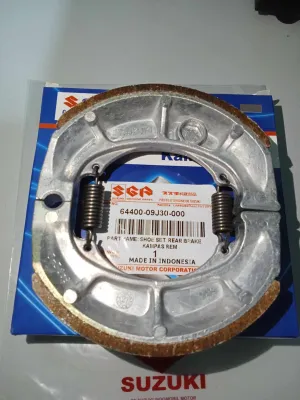
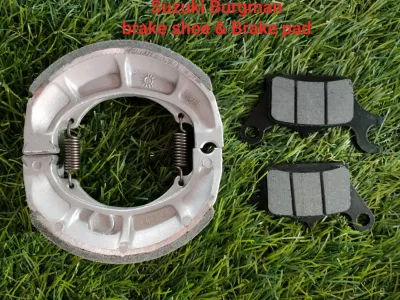
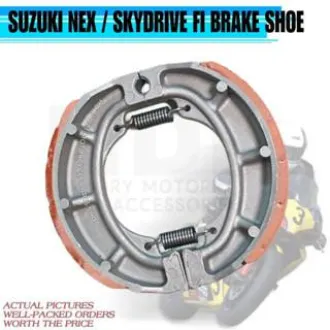
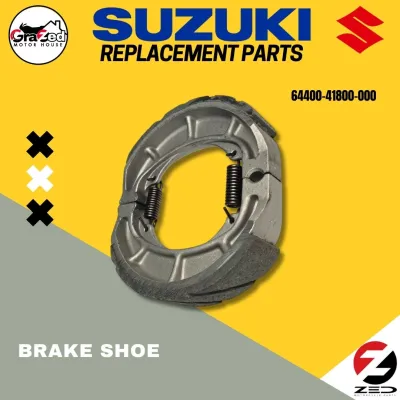
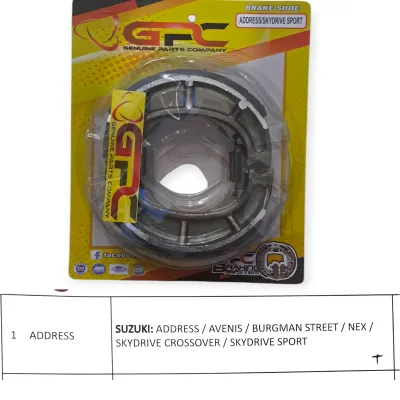
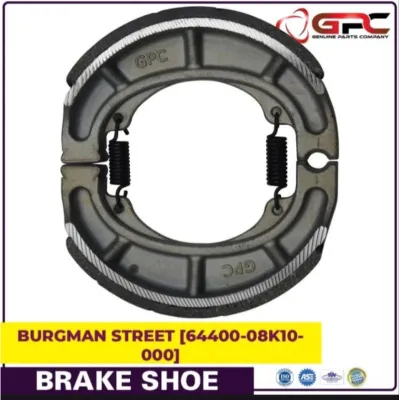
Prices are valid at publication and may change. Please refer to the product page for the latest price.
Understanding the Core Differences: OEM vs. Aftermarket Brake Shoes
Original Equipment Manufacturer (OEM) brake shoes are produced by or directly for Suzuki, adhering strictly to the exact engineering specifications of your Burgman model. Suzuki engineers select and test friction materials to deliver a balanced performance profile, ensuring predictable stopping power, minimal noise, and a wear rate that preserves the service life of the brake drum. When you buy an OEM part, you are purchasing a component that matches the exact compound and dimensions of the brake shoes that came with your scooter from the showroom floor.
In contrast, aftermarket brake shoes are manufactured by independent companies. Reputable aftermarket brands design their products to fit the physical dimensions of the Burgman’s brake assembly, but they may utilize different friction material formulations, such as organic, semi-metallic, or ceramic compounds. While some aftermarket manufacturers aim to match OEM specifications closely, others formulate their products to emphasize specific characteristics, such as enhanced initial bite or extended wear life, though often at the expense of other performance areas like drum wear or noise levels.
Because the market contains a wide variety of aftermarket options, verifying the authenticity of your purchase is critical to avoiding dangerous counterfeit parts. Genuine Suzuki parts feature specific packaging designs, clear part numbers that match the official Suzuki parts catalog, and high-quality holographic security labels that shift color when tilted. When shopping at local motorcycle shops or online marketplaces, always inspect these security features and purchase only from authorized distributors or highly rated, verified sellers to ensure you are not installing substandard, unbranded components on your scooter.
Safety and Compatibility Checks Before You Buy
Braking systems are the most critical safety feature on your Suzuki Burgman, and any maintenance or replacement must be treated with the utmost care. Before purchasing any brake shoes, you must establish a clear safety boundary: always refer to your original vehicle owner’s manual or official workshop documentation for specific torque values, wear limits, and installation procedures. If you do not possess the specialized tools, such as a calibrated torque wrench, or if you lack experience working on motorcycle brake systems, do not attempt this installation yourself; instead, have the work performed by a qualified professional mechanic.

Compatibility is another area where you cannot afford to make assumptions. The Suzuki Burgman lineup includes several variants across different model years and engine displacements, such as the Burgman Street 125, Burgman 200, and Burgman 400. Brake shoe dimensions, mounting positions, and return spring configurations can vary significantly between these models. Always cross-reference your scooter’s exact model year, chassis number, and engine variant with the product documentation or parts catalog before finalizing your purchase, as a mismatched shoe can lead to catastrophic brake failure.
Furthermore, installing new brake shoes will not resolve braking issues if the brake drum itself is compromised. Before buying new parts, perform a thorough inspection of the rear wheel hub’s internal braking surface. Look for deep scoring, grooves, heat-induced blue spots, or uneven wear that indicates an out-of-round drum. If the drum is worn beyond the maximum service limit specified by Suzuki, the new brake shoes will not make proper contact, resulting in severely reduced braking efficiency and rapid, uneven wear of the new friction material.
Evaluating Performance, Durability, and Long-Term Value
To compare OEM and aftermarket brake shoes objectively, you must look past marketing slogans and evaluate verifiable technical characteristics. When reviewing product packaging or manufacturer data sheets, pay close attention to the friction coefficient rating and the recommended operating temperature range. In the hot, humid climate of the Philippines, brake components are highly susceptible to heat fade—a condition where braking efficiency drops significantly during prolonged or heavy braking. A high-quality brake shoe should maintain a stable friction coefficient even when subjected to the high temperatures generated by continuous stop-and-go riding.
Durability is another critical factor that directly impacts your safety and maintenance schedule. Inspect the physical construction of the brake shoes; reputable options typically feature chamfered edges on the friction material to prevent squealing and ensure smoother engagement. They should also include clear wear indicator grooves or marks that allow you to monitor the remaining material thickness without fully disassembling the brake hub. Avoid shoes with visible imperfections in the bonding agent between the friction material and the metal backing plate, as this can lead to dangerous material separation under heavy load.
Evaluating long-term value requires looking at the total cost of ownership rather than just the initial price tag in Philippine Pesos (₱). While budget-friendly aftermarket options may save you money upfront, they may wear out faster or cause accelerated wear on your expensive brake drum, leading to higher long-term maintenance costs. Conversely, investing in genuine OEM parts or premium, verified aftermarket brands often yields better value over time due to their predictable lifespan, consistent performance, and reduced risk of damaging adjacent braking components.
Decision Framework: Choosing the Right Brake Shoe for Your Ride
To determine which brake shoe is the right choice for your Suzuki Burgman, you should evaluate your typical riding habits, maintenance preferences, and budget constraints against a structured decision framework.
You should choose genuine OEM Suzuki brake shoes if:
- You prioritize absolute safety and want to maintain the exact braking feel and performance engineered by the factory.
- Your scooter is still under the manufacturer's warranty, and you want to avoid any potential warranty voiding issues.
- You primarily use your Burgman for daily commuting in heavy city traffic and prefer a straightforward, drop-in replacement that requires no technical research or material compatibility checks.
You may choose reputable aftermarket brake shoes if:
- You are working within a strict budget and have identified a trusted, established aftermarket brand that explicitly lists compatibility with your specific Burgman model.
- You have verified that the seller is an authorized dealer for that brand and can provide a clear return policy and product warranty.
- The manufacturer's technical documentation confirms that the friction material meets or exceeds OEM standards for heat tolerance and wear resistance.
Regardless of your choice, you must verify the product first if the price seems unusually low compared to standard market rates, if the packaging lacks security features, or if the seller cannot provide clear compatibility documentation. Saving a small amount of money is never worth compromising your stopping power on the road.
Installation and Post-Installation Bedding-In
Once you have selected and verified your replacement brake shoes, proper installation and preparation are vital to ensure their safety and performance. Begin by thoroughly cleaning the brake drum assembly using an authorized brake cleaner to remove accumulated brake dust, road grime, and any oily residues. Inspect the brake cam, anchor pins, and return springs for signs of wear, corrosion, or binding. Apply a very thin layer of high-temperature brake grease to the pivot points and the brake cam contact areas, taking extreme care to ensure that absolutely no grease or lubricant comes into contact with the friction material of the new shoes or the inner surface of the brake drum.
After installing the new brake shoes and reassembling the rear wheel, you must perform a proper bedding-in (or burnishing) procedure before riding in normal traffic. This process allows the new friction material to conform to the unique wear patterns of your brake drum and transfers a microscopic layer of friction material to the drum surface, which is essential for achieving full braking force. To bed in the brakes, find a safe, flat, and open area free of traffic. Accelerate the scooter to a moderate speed of approximately 30 to 40 km/h, then apply the rear brake gently and progressively to bring the vehicle to a slow crawl. Repeat this process 10 to 15 times, allowing the brakes to cool slightly between applications, and avoid bringing the scooter to a complete, hard stop during this initial phase.
Finally, monitor your scooter closely during the first few rides and be prepared to stop immediately if you observe any critical warning signs. If you experience an unusually spongy or loose brake lever feel, hear harsh scraping or squealing noises, or notice a significant lack of stopping power, park the scooter safely and do not ride it further. These symptoms indicate improper installation, contaminated friction surfaces, or a mechanical mismatch that requires immediate inspection and correction by a qualified professional mechanic.
Frequently Asked Questions (FAQ)
How often should I inspect the brake shoes on my Suzuki Burgman? (FAQ)
You should inspect your brake shoes according to the maintenance schedule outlined in your Suzuki owner’s manual, which typically recommends a check every 4,000 to 8,000 kilometers. However, if you frequently ride in harsh tropical conditions—such as heavy rain, flooded streets, or dusty environments—or if you operate your scooter in constant stop-and-go city traffic, you should perform inspections more frequently. Immediate checks are necessary if you notice a significant increase in brake lever travel, a reduction in stopping power, or unusual noises when applying the brakes.
Can I mix OEM and aftermarket brake components on the same wheel? (FAQ)
No, you should never mix OEM and aftermarket brake components, such as using one OEM shoe and one aftermarket shoe, or mixing different brands of return springs and pins on the same wheel assembly. Brake shoes are designed, tested, and manufactured to function as a matched, balanced set. Mixing different friction materials or hardware components can lead to uneven wear, unpredictable braking forces, localized overheating, or mechanical binding, which significantly increases the risk of brake failure. Always replace the entire brake shoe assembly as a complete, uniform set from a single manufacturer.
What are the signs that my brake drums need resurfacing or replacement? (FAQ)
Your brake drum requires attention if you observe visual or tactile signs of severe wear. Inspect the inner surface of the drum for deep grooves, ridges, or a noticeable lip at the outer edge where the brake shoes do not make contact. You should also look for dark blue spots, which indicate localized overheating and can lead to hard spots that reduce braking friction. Use a vernier caliper to measure the internal diameter of the drum at multiple points; if the measurement exceeds the maximum wear limit stamped on the wheel hub or specified in the service manual, the drum or wheel hub assembly must be replaced to ensure safe operation.

Community discussion
Share your experience or ask a question. Comments are reviewed before publication.