
Deciding between OEM and aftermarket clutch springs for your Honda Click 125 comes down to a choice between restoring factory-smooth reliability and customizing your scooter’s acceleration behavior. For riders who use their scooter for daily commuting through heavy city traffic, original equipment manufacturer (OEM) springs offer predictable engagement, excellent fuel efficiency, and long-term durability. On the other hand, aftermarket clutch springs allow you to adjust the engine speed at which the clutch engages, which can help eliminate starting shudder (often called “drag”) and improve throttle response when climbing steep inclines or carrying heavy loads.
How Clutch Springs Affect Your Click 125's Ride
To understand how these small components impact your daily ride, it helps to look at how the Continuously Variable Transmission (CVT) operates. The clutch springs are located inside the rear pulley assembly, holding the clutch shoes inward against centrifugal force. As you twist the throttle, the engine speed increases, causing the clutch assembly to spin faster. Once the centrifugal force overcomes the tension of the clutch springs, the clutch shoes swing outward and grab the inner surface of the clutch bell, transferring power directly to the rear wheel.
The stiffness of these springs dictates the exact engine revolutions per minute (RPM) at which this engagement occurs. Soft springs, like the factory-installed OEM ones, allow the clutch to engage at a lower RPM, resulting in a smooth, quiet, and gradual takeoff that is highly efficient for standard city riding. Stiffer springs require the engine to spin faster before the shoes make contact with the bell, which launches the scooter at a higher RPM where the engine produces more torque.
Products mentioned in this guide
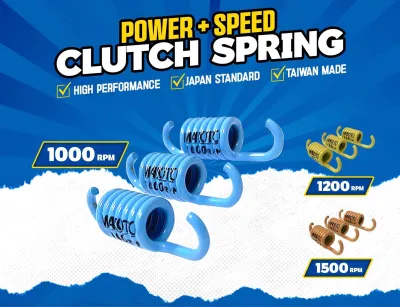
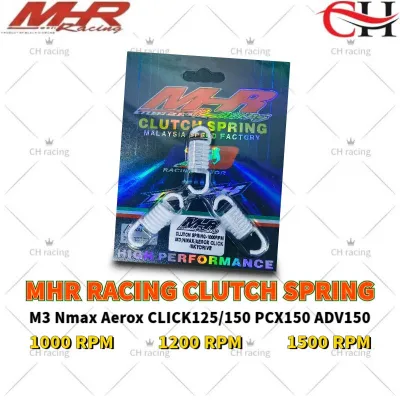
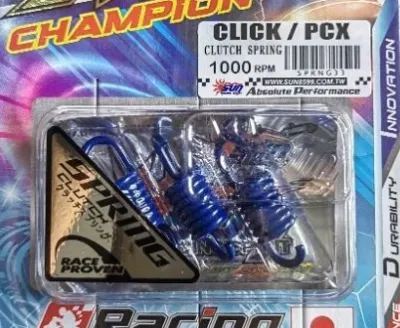
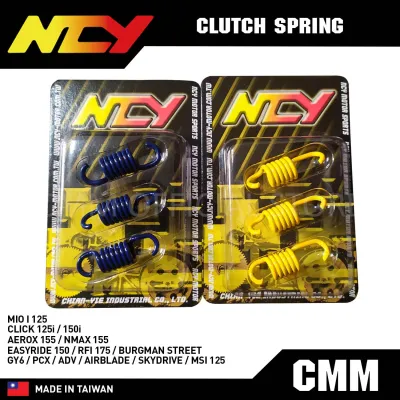
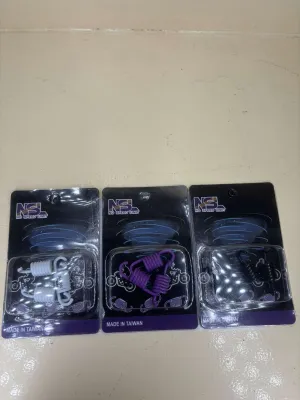
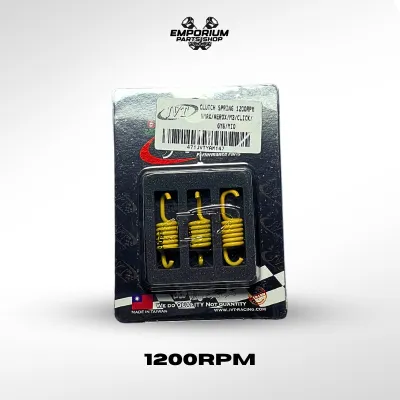
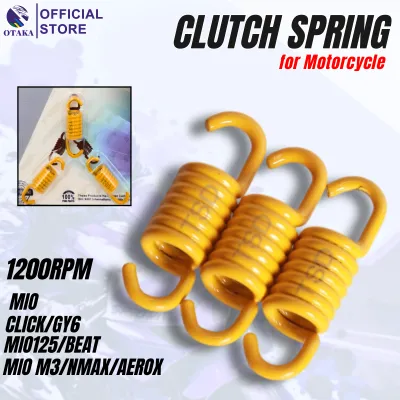
Prices are valid at publication and may change. Please refer to the product page for the latest price.
In tropical riding conditions characterized by high humidity and frequent stop-and-go traffic, the demands on your CVT are intense. Navigating congested urban roads, carrying a pillion passenger, or tackling steep flyovers requires a transmission that responds predictably. If your springs are too soft or worn out, the clutch may engage too early, causing the engine to struggle. Conversely, if the springs are too stiff, the engine will rev excessively before the scooter moves, making low-speed maneuvering jerky and uncomfortable.
OEM Honda Springs: Factory Tuning and Daily Reliability
Original Honda clutch springs are engineered specifically to balance fuel economy, rider comfort, and component longevity. Honda designs these springs to engage the clutch at a relatively low, stable RPM, ensuring that power delivery is linear and predictable. This conservative tuning minimizes friction and heat buildup inside the clutch bell, which in turn protects the clutch linings and the drive belt from premature wear. For the vast majority of Click 125 riders who prioritize a hassle-free daily commute, maintaining this factory specification is the most reliable path.

However, because OEM parts are highly sought after for their quality, the market contains numerous counterfeit components that mimic genuine Honda packaging. When purchasing replacement OEM springs, it is crucial to inspect the packaging for official holographic security seals, clear part numbers, and high-quality printing. Genuine Honda parts are typically distributed through authorized dealerships and reputable local motorcycle shops; buying from unverified sellers on online marketplaces carries a high risk of acquiring low-grade counterfeits that sag or break prematurely.
Using genuine OEM springs also ensures full compliance with your vehicle’s warranty guidelines, as third-party modifications to the drivetrain can sometimes void coverage for related transmission components. Under normal riding conditions, genuine OEM springs exhibit excellent fatigue resistance, maintaining their original tension over thousands of kilometers without requiring frequent adjustments or inspections.
Aftermarket Springs: Adjusting Engagement and Trade-offs
Aftermarket clutch springs are primarily designed for riders who want to modify their Click 125’s power delivery or solve specific performance issues. These springs are categorized by their stiffness, often labeled with ratings like 1000 RPM, 1500 RPM, or 2000 RPM, which indicate how much higher than stock the clutch will engage. By installing stiffer aftermarket springs, you delay clutch engagement, allowing the engine to reach its powerband before the scooter begins to move, which can significantly reduce starting shudder and provide a more immediate throttle response.
While the promise of quicker acceleration is appealing, altering the factory CVT dynamics introduces several trade-offs. Stiffer springs force the clutch shoes to slam into the clutch bell at higher speeds, which increases friction, generates substantial heat, and accelerates the wear of both the clutch linings and the bell itself. Over time, this elevated heat can lead to clutch slippage, glazed clutch shoes, and a noticeable drop in fuel efficiency, as the engine must constantly run at higher RPMs during low-speed cruising.
To mitigate these risks, you must select reputable aftermarket brands that publish clear compatibility lists and specifications specifically for the Honda Click 125. Avoid generic or unbranded “tuning” springs that do not specify their tension ratings, as inconsistent spring rates can cause erratic shifting and severe drivetrain vibration. Always cross-reference the manufacturer’s product labels to ensure the springs are designed to work with your specific model year and clutch configuration.
Comparing OEM and Aftermarket Options for Your Needs
Choosing between these two options requires a careful evaluation of your riding habits, typical routes, and budget. OEM springs represent a “set-and-forget” solution, offering unmatched durability and a smooth, quiet ride at a very affordable price point. Aftermarket springs, while slightly more expensive, serve as a tuning tool for riders who are willing to accept increased maintenance intervals in exchange for a more responsive takeoff and better hill-climbing performance.
The following table outlines the key differences between OEM and aftermarket clutch springs to help you make an informed decision:
| Feature | OEM Honda Springs | Aftermarket Springs |
|---|---|---|
| Primary Focus | Fuel efficiency, smoothness, and longevity | Custom acceleration and reduced starting shudder |
| Engagement RPM | Low to moderate (factory standard) | Higher (adjustable based on spring rating) |
| Durability | High; resistant to long-term heat fatigue | Variable; depends on brand and stiffness rating |
| Wear on CVT Parts | Minimal; optimized for standard component life | Increased wear on clutch shoes and clutch bell |
| Relative Cost | ₱ (Budget-friendly) | ₱₱ to ₱₱₱ (Moderate to premium) |
| Installation | Direct plug-and-play replacement | Requires careful matching with other CVT parts |
Ultimately, the trade-off is between the plug-and-play reliability of OEM parts and the customizable performance of aftermarket alternatives. If your Click 125 is completely stock and you are satisfied with its overall performance, sticking with OEM springs is highly recommended. However, if you have already modified other parts of your CVT, such as the roller weights or the center spring, aftermarket clutch springs can help harmonize the entire system.
Signs of Wear and When to Replace Your Clutch Springs
Like all mechanical components subjected to constant heat and tension, clutch springs eventually lose their elasticity or break. One of the most common signs of worn-out springs is a severe shuddering or vibrating sensation when accelerating from a complete stop, as weakened springs allow the clutch shoes to engage too early and slip against the bell. You might also notice that the engine revs excessively high before the scooter begins to move, or that the scooter creeps forward slowly while idling, indicating that a spring has stretched or snapped and is failing to pull the clutch shoe back.
Replacing clutch springs requires disassembling the rear CVT pulley, which involves significant safety risks and requires specialized tools. To perform this task safely, you must use a proper clutch holding tool (often called a flywheel holder or Y-tool) to secure the clutch bell, and a clutch spring compressor to safely release the high tension of the center spring assembly. Attempting to loosen the clutch nut without a compressor can cause the assembly to spring apart violently, risking severe personal injury or damage to the components.
Always refer to the official Honda Click 125 service manual for the correct torque specifications when reassembling the clutch nut and the outer clutch bell nut. If you do not own a torque wrench, a clutch compressor, or the necessary holding tools, do not attempt this repair yourself. Stop your DIY efforts and take your scooter to a qualified motorcycle mechanic who can safely inspect, measure, and replace the springs using professional-grade equipment.
Final Selection Rules for Click 125 Riders
To finalize your decision, apply these straightforward selection rules based on your primary riding goals. Choose OEM Honda springs if your main priority is maintaining a smooth, quiet, and fuel-efficient daily commute with guaranteed fitment and maximum component lifespan. This option is ideal for standard city riding where reliability and low maintenance are paramount.
Choose aftermarket clutch springs if you are actively trying to resolve a persistent starting shudder, frequently carry heavy loads up steep inclines, or want to complement other performance modifications in your CVT system. If you select this route, stick to reputable brands and verify the spring tension rating on the product label before installation.
Before purchasing any new parts, always inspect your entire clutch assembly first. If you observe uneven wear on the clutch shoes, deep grooves inside the clutch bell, or signs of overheating like blue discoloration on the metal, replacing the springs alone will not solve your performance issues, and you may need to replace the entire clutch assembly.
Frequently Asked Questions (FAQ)
Can I mix OEM and aftermarket clutch springs in one clutch?
No, you should never mix OEM and aftermarket clutch springs, or combine springs of different stiffness ratings, within a single clutch assembly. A clutch relies on perfectly balanced centrifugal force to ensure that all three clutch shoes engage the clutch bell simultaneously and with equal pressure. Mixing springs of different tensions will cause the shoes to engage unevenly, leading to severe drivetrain vibration, rapid and uneven wear on the clutch linings, and potential damage to the clutch bell. Always replace clutch springs as a complete, matched set from the same manufacturer.
Will stiffer clutch springs increase my Click 125's top speed?
No, stiffer clutch springs will not increase your Honda Click 125’s top speed. Clutch springs only control the initial engagement of the clutch at low speeds; once the clutch is fully engaged and the scooter is moving, the springs have no further effect on the transmission ratio. Your scooter’s top speed is determined by other factors, including the weight of the CVT rollers, the angle of the pulley faces, the condition of the drive belt, and the engine’s overall power output. If your goal is to increase top-end speed, you should look into adjusting your roller weights or upgrading your pulley system rather than changing the clutch springs.

Community discussion
Share your experience or ask a question. Comments are reviewed before publication.